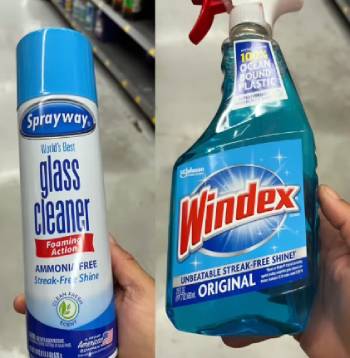
I tested Sprayway and Windex side by side on household windows mirrors shower glass and light automotive glass under the same conditions.
The main intent of this article is to show the practical differences in cleaning power streak control and surface compatibility so you can choose the glass cleaner that best matches your needs.
My focus stays on real residue behavior drying speed and everyday results rather than marketing claims alone.
You will see how the foaming ammonia-free option compares with the traditional ammonia formula.
| Feature | Sprayway | Windex |
| Formula Type | Foaming ammonia-free glass cleaner | Traditional ammonia-based glass cleaner |
| Best Known For | Clingy foam and tint-friendly cleaning | Strong cutting power and classic blue formula |
| Scent Profile | Light and clean | Distinct ammonia scent |
| Drying Behavior | Fast with light buffing | Quick yet can show streaks if technique slips |
| Common Uses | Home windows mirrors and tinted glass | General household glass and mirrors |
| Value Position | Cost-effective and widely available | Extremely common and budget-friendly |
My Experience Testing Both Cleaners Side by Side
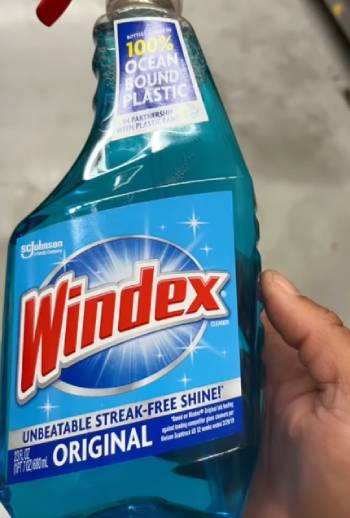
I started with Windex on a set of interior windows that held normal fingerprints and dust.
The thin liquid spread quickly and cut through the soil with familiar strength.
A microfiber towel removed most of the cleaner yet I needed an extra pass on a couple of panes to clear light streaking.
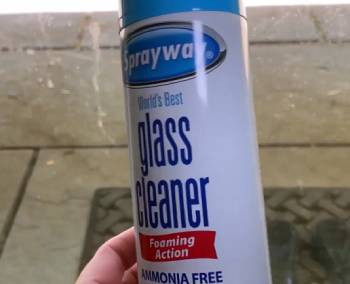
I then cleaned the matching set with Sprayway.
The foam clung to the vertical surface and gave me more time to work before it ran.
Wiping produced a clear finish with fewer secondary passes on the same glass.
On mirrors both products delivered good results when I used clean towels and wiped before the cleaner dried completely.
Shower-door glass showed a clearer difference.
Sprayway handled light soap film without the strong ammonia odor while Windex cut the film aggressively yet left a more noticeable scent in the bathroom.
I also tested both on a small section of automotive side glass.
Sprayway felt safer around the tint edge and left less residual haze in sunlight.
Windex cleaned thoroughly but required more careful buffing to reach the same optical clarity.
Overall the side-by-side work showed Windex as the stronger traditional cutter and Sprayway as the more user-friendly foaming alternative with better everyday comfort and tint compatibility.
Key features such as ammonia content versus foam cling shaped two different cleaning experiences on the same surfaces.
My repeated sessions on home and vehicle glass supplied the concrete performance notes that follow.
Cleaning Power Streaks and Final Clarity
Cleaning power streaks and final clarity decide which bottle wins for different jobs.
Windex removed heavier fingerprints and kitchen-adjacent film with noticeable strength.
Sprayway matched everyday cleaning needs and produced fewer streaks on the same glass when I used identical towels.
Final clarity under indoor lighting looked excellent with both.
Under direct sunlight on exterior glass Sprayway left slightly less residual haze.
Streak performance therefore favored Sprayway for forgiving everyday results while raw cutting power favored Windex on tougher spots.
Surface Compatibility Tint and Safety
Surface compatibility tint and safety influence where each cleaner can be used confidently.
Sprayway’s ammonia-free formula gave me more comfort on tinted side glass and near aftermarket film.
Windex required extra caution around tint edges.
Both were safe on plain household glass and mirrors when wiped properly.
Overspray on wood sills needed prompt attention with either product.
Compatibility edged toward Sprayway for mixed household and vehicle use.
Also Read: My Experience With Diamon-Fusion Glass Coating
Scent User Comfort and Indoor Use
Scent user comfort and indoor use affect how pleasant the cleaning session feels.
Windex released a strong ammonia odor that filled the room quickly.
Sprayway stayed much lighter and disappeared after wiping.
In bathrooms and small interiors the lower odor of Sprayway made the job more comfortable.
User comfort therefore ranked higher with Sprayway for frequent indoor cleaning.
Ease of Use Drying and Daily Practicality
Ease of use drying and daily practicality determine how often you reach for the bottle.
Sprayway’s foam made coverage visible and reduced drips on tall windows.
Windex applied faster yet demanded quicker wiping to avoid streaks.
Drying speed felt rapid for both when technique was good.
Daily practicality favored Sprayway for large vertical surfaces and Windex for quick small jobs where maximum cutting power mattered.
Value Availability and Long-Term Ownership
Value availability and long-term ownership shape the practical choice.
Both cleaners are inexpensive and easy to find.
Windex often edges out on pure price and universal availability.
Sprayway delivers better comfort and tint safety at a still-low cost.
Ownership confidence stayed high with both because neither damaged properly cleaned glass in my tests.
Value depends on whether you prioritize maximum cutting power or ammonia-free comfort.
Sprayway on Shower Doors and Household Glass
Sprayway on shower doors and household glass handled light soap film and everyday soil without strong fumes.
The foam helped on vertical shower panels and the finish looked clear after a proper wipe.
For regular bathroom and window maintenance it proved efficient and pleasant to use.
Windex on Mirrors and Quick Cleanups
Windex on mirrors and quick cleanups delivered bright results with its familiar cutting action.
Small mirrors and spot cleaning went fast.
The ammonia scent remained the main drawback in enclosed spaces.
Technique Tips That Help Either Cleaner
Technique tips that help either cleaner center on towel choice and timing.
Clean microfiber towels outperformed paper towels with both formulas.
Wiping while the surface was still wet produced fewer streaks.
A final dry buff removed any remaining traces.
These habits improved results regardless of which product I chose.
Pros and Cons Of Sprayway
Pros Of Sprayway
- Foaming Cling: Stays on vertical glass longer for controlled cleaning.
- Ammonia-Free Formula: Safer for many tinted windows and sensitive users.
- Light Scent: Avoids the strong ammonia smell of traditional cleaners.
- Good Streak Control: Produces clear results with proper microfiber technique.
- Fast Everyday Cleaning: Handles fingerprints and dust efficiently.
- Widely Available: Easy to find in multiple sizes.
- Cost-Effective: Delivers solid performance at a reasonable price.
- Versatile Surface Use: Works on windows mirrors and many household glass surfaces.
- Reduced Irritation Potential: Gentler for users sensitive to ammonia fumes.
- Simple Spray-and-Wipe Process: No complicated steps required.
The Analytical Cons Of Sprayway
- Less Aggressive on Heavy Soil: Stubborn film may need extra effort or pre-treatment.
- Foam Overspray Risk: Requires care near wood finishes and porous materials.
- Not a Heavy-Duty Degreaser: Built for glass rather than greasy surfaces.
- Results Still Depend on Towels: Poor-quality paper towels can leave lint or streaks.
- Limited Specialty Positioning: Some detailers prefer dedicated automotive formulas for windshields.
- Bottle Design Is Basic: Functional rather than premium.
- Scent Preference Varies: Light fragrance may still bother highly sensitive users.
- Heavy Hard-Water Spots: May need a dedicated remover for mineral deposits.
- Expectation Management: Excellent daily cleaner rather than an industrial solvent.
- Availability of Specific Scents: Limited compared with the wider Windex range.
Pros and Cons Of Windex
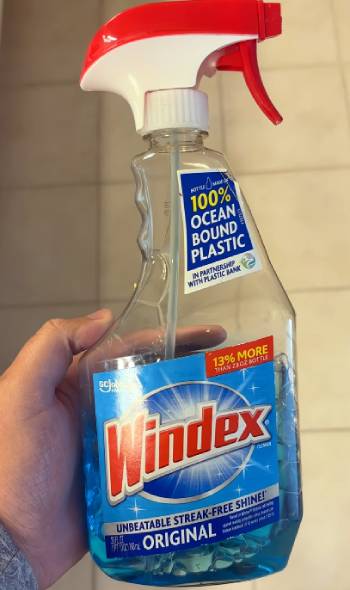
Pros Of Windex
- Strong Cleaning Power: Cuts fingerprints greasy smudges and light film effectively.
- Classic and Familiar: Most users already know the spray-and-wipe routine.
- Very Widely Available: Found in nearly every grocery and big-box store.
- Budget-Friendly: Usually low cost per bottle.
- Fast Acting: Begins working immediately on contact.
- Multiple Formula Options: Original outdoor and other variants exist.
- Good on Mirrors: Produces bright reflective results with proper technique.
- Long Market History: Trusted by generations of household users.
- Quick Drying: Allows rapid cleaning of multiple panes.
- Effective on Everyday Soil: Handles normal household glass dirt reliably.
The Analytical Cons Of Windex
- Ammonia Content: Can be harsh on some window tints and produces a strong odor.
- Streak Potential: Technique errors show more readily on large clear glass.
- Scent Lingers: Ammonia smell can remain in closed rooms.
- Tint Compatibility Concerns: Many automotive and residential tints advise against ammonia.
- Can Dry Too Fast: Leaves streaks if not wiped promptly in warm conditions.
- Less Cling on Vertical Surfaces: Thin liquid runs more easily than foam.
- Not Ideal for All Automotive Glass: Detailers often prefer ammonia-free options.
- Residue in Direct Sun: Occasional haze appears on exterior glass under bright light.
- Irritation for Sensitive Users: Fumes may bother eyes and respiratory comfort.
- Expectation Gap on Modern Glass: Newer low-residue formulas sometimes outperform it on critical surfaces.
Also Read: Comparison Of Sprayway Vs. Invisible Glass
Frequently Asked Questions (FAQs)
It ranks among the best ammonia-free foaming options for everyday household and tinted glass use.
Ammonia-free cleaners such as Sprayway or dedicated automotive formulas often perform better for tint safety and lower odor.
Many professionals use purified water with small amounts of specialized soap or pure-water systems rather than retail glass sprays.
Yes it handles light soap film and everyday residue well while avoiding strong ammonia fumes in the bathroom.
Final Thoughts
I compared Sprayway and Windex on home and vehicle glass and found clear differences in foam comfort versus traditional cutting power.
The main intent remains giving you practical side-by-side observations on streaks scent and surface safety so you can select the cleaner that fits your glass and tolerance.
Sprayway leads for ammonia-free everyday use and tint compatibility while Windex remains a strong traditional cutter for simple household jobs.
You now have the detailed experience to decide which formula belongs in your cleaning routine.