I played both the Callaway Supersoft and the Supersoft Max on the same courses with the same clubs over multiple rounds.
The main intent of this article is to show the practical differences in launch feel distance and forgiveness so you can choose the ball that best matches your swing speed and needs.
My focus stays on real on-course results around the green and off the tee rather than marketing claims alone.
You will see how the Supersoft compares with the Supersoft Max.
| Feature | Callaway Supersoft | Callaway Supersoft Max |
| Size | Standard 1.68 in | Oversized ~1.73 in |
| Compression | Around 38 | Around 30 |
| Cover | Hybrid / Paraloid blend | Ionomer |
| Launch | High | Higher |
| Best For | Soft feel and all-around play | Extra launch and forgiveness |
My Experience Testing Both Balls Side by Side

I started with the Callaway Supersoft for several rounds.
The soft feel off the face was immediate and the ball launched high with low spin on driver shots.
Distance stayed consistent and greenside control felt adequate for a two-piece distance ball.
I could work the ball a little around the green and the standard size felt familiar in the stance.
I then switched to the Supersoft Max under the same conditions and clubs.
The larger size was noticeable at address and the even softer compression made mishits feel more forgiving.
Launch climbed higher especially with mid and long irons and the ball seemed to stay in the air longer.
Roll after landing was a bit less than the standard Supersoft on some shots.
Both balls produced straight flight for my moderate swing speed and held up well to normal scuffs.
Key features such as low compression SoftFast cores and Hex aerodynamics shaped the similar distance-oriented experience while size compression and short-game differences stood out clearly.
My extended side by side testing supplied the concrete launch feel and scoring notes that follow.
I paid attention to how each performed on full swings chips and putts.
Neither ball felt harsh or excessively spinny off the driver.
The choice came down to whether I wanted maximum launch help or a more traditional soft distance ball with slightly better greenside response.
Distance Launch and Long Game Performance
Distance and launch decide how much help the ball gives off the tee and with longer clubs.
The Supersoft delivers high launch and low spin that maximizes carry and roll for swing speeds under about 95 mph.
It felt fast off the face and produced reliable total distance.
The Supersoft Max sits even lower in compression and uses its larger diameter to raise the center of gravity.
That design promotes higher launch and more forgiveness on off-center hits.
Carry distances often matched or slightly exceeded the standard model for slower swings while roll was sometimes shorter.
Analytical review of long-game performance places the Max ahead for players who struggle to get the ball airborne.
The Supersoft leads for balanced distance and a more familiar ball flight.
Key features of both include SoftFast core technology and low-spin distance design.
Key features of the Max focus on oversized geometry and ultra-low compression.
Real on-course testing confirmed both help average players hit it farther than firmer tour balls.
Also Read: Comparison Of Callaway Vs. Titleist Golf Balls
Feel Short Game and Greenside Control

Feel and short-game response affect scoring once you reach the green.
The Supersoft uses a hybrid cover that adds a bit more friction for chips and pitches.
It felt soft on partial shots and checked slightly better than a pure ionomer distance ball.
The Supersoft Max prioritizes durability and distance with a standard ionomer cover.
Feel stayed very soft due to the low compression yet greenside spin was lower.
Analytical scoring of short-game play places the Supersoft ahead for control around the green.
The Max remains playable but gives up some stopping power.
Key features of both include the ultra-soft overall sensation that many recreational players prefer.
Real chipping and pitching confirmed the difference is noticeable but not dramatic for high-handicap golfers.
Size Forgiveness and Everyday Practicality

Size and forgiveness decide how confident you feel at address and how consistent the ball performs on less-than-perfect strikes.
I played both the Callaway Supersoft and the Supersoft Max over multiple rounds to judge real visual comfort and mishit results.
The standard Supersoft sits at the normal 1.68-inch diameter.
It looked familiar behind the ball and required no adjustment period.
Mishits still produced usable distance thanks to the low compression yet the ball behaved like any other standard model.
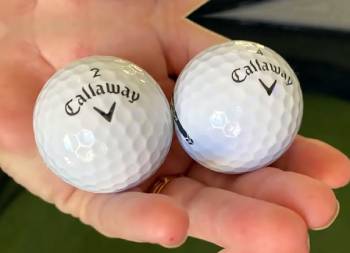
The Supersoft Max measures roughly 1.73 inches and appears noticeably larger when you set up.
That extra size raises the center of gravity and makes it easier for the clubface to contact the ball below its equator on many iron shots.
Launch stayed higher and off-center hits lost less distance in my testing.
Some players gain confidence from the bigger look while others need a hole or two to stop noticing it.
Both balls remain fully legal under the Rules of Golf.
Durability proved similar with only normal scuffing after a full round.
Price per dozen stays in the same affordable range so cost does not separate them.
Analytical review of practicality places the Max ahead for maximum forgiveness and higher launch help.
The standard Supersoft leads for traditional appearance and slightly more versatile short-game response.
Key features of both include soft low-compression cores and distance-oriented flight.
Key features of the Max focus on the oversized design that aids slower swings.
Key features of the Supersoft focus on the familiar size and hybrid cover contribution.
Real on-course play confirmed either ball holds up for recreational rounds without rapid wear.
The better long-term choice depends on whether you struggle to get the ball airborne and want every possible launch advantage or prefer a normal-looking soft distance ball with a touch more greenside control.
These size and forgiveness differences become clear after a few holes and help match the right Callaway soft ball to your swing speed and visual preference.
Pros and Cons Of Callaway Supersoft

Pros Of Callaway Supersoft
- Soft Feel: Low compression delivers a cushioned sensation on every club.
- High Launch Low Spin: Maximizes distance for moderate swing speeds.
- Hybrid Cover: Adds a touch of greenside control compared with basic ionomer.
- Standard Size: Looks and plays like a traditional golf ball.
- Consistent Distance: Reliable carry and roll across the bag.
- Affordable Price: Delivers premium soft performance at a reasonable cost.
- Multiple Color Options: Easy to identify and personalize.
- Durable Construction: Handles normal play without rapid scuffing.
- Beginner to Mid-Handicap Friendly: Helps slower swings achieve better results.
- Familiar Flight: Predictable trajectory for most recreational players.
The Analytical Cons Of Callaway Supersoft
- Limited Greenside Spin: Still a distance ball so stopping power trails tour models.
- Not for High Swing Speeds: Can feel too soft and spin too little for faster players.
- Less Launch Help than Max: Players who struggle to get the ball up may want more.
- Two-Piece Design: Lacks the layered control of higher-priced balls.
- Wind Performance Average: Low spin can be affected in strong conditions.
- Feel Preference Varies: Some players prefer a firmer click.
- Short-Game Trade-Off: Prioritizes distance over maximum wedge spin.
- Color Visibility: Bright options help yet white can be harder to find in rough.
- Compression Specific: Best results stay within the intended swing-speed range.
- Competition from Max: Oversized option offers extra forgiveness for some.
Pros and Cons Of Callaway Supersoft Max
Pros Of Callaway Supersoft Max
- Oversized Design: Larger diameter promotes higher launch and easier contact.
- Ultra-Low Compression: Around 30 makes it extremely easy to compress.
- Maximum Forgiveness: Helps on off-center hits and slower swings.
- High Launch Trajectory: Keeps the ball in the air longer for added carry.
- Very Soft Feel: Cushioned response across the set.
- Distance Assistance: Designed to boost total yards for high-handicap players.
- Legal Size: Conforms to the Rules of Golf despite the larger diameter.
- Confidence at Address: Bigger look can reduce anxiety for some golfers.
- Durable Cover: Withstands normal round wear.
- Slow-Swing Focus: Ideal for seniors beginners and smoother tempos.
The Analytical Cons Of Callaway Supersoft Max
- Reduced Greenside Spin: Ionomer cover and low spin limit stopping power.
- Visible Size Difference: Larger ball requires a short adjustment period.
- Less Roll in Some Conditions: Higher launch can mean shorter rollout.
- Fewer Color Choices: Typically offered in fewer options than standard Supersoft.
- Not Ideal for Faster Swings: Can balloon or lose distance with higher speeds.
- Two-Piece Limitation: Lacks advanced short-game layers.
- Look Preference: Some players dislike the oversized appearance.
- Wind Sensitivity: Higher flight can be pushed more in breezy conditions.
- Slight Distance Variance: Results depend heavily on swing speed.
- Less Versatile: Strongest benefits appear for the slowest swingers.
Also Read: Comparison Of Callaway Warbird Vs. Supersoft
Frequently Asked Questions (FAQs)
Yes Callaway Supersoft Max balls conform to the Rules of Golf and are legal for all rounds.
Yes the Supersoft Max is a good ball for slower swing speeds and players who need extra launch and forgiveness.
Callaway Supersoft balls are designed to go further for average and slower swing speeds through low compression and low spin.
Callaway Supersoft balls suit mid to high handicaps and players with moderate to slow swing speeds seeking distance and soft feel.
Final Thoughts
I compared the Callaway Supersoft and Supersoft Max through real rounds to highlight the differences in size launch and short-game response.
The main intent remains giving you clear side by side observations on distance feel and forgiveness so you can select the ball that fits your swing and scoring needs.
The Supersoft leads for balanced soft performance and slightly better greenside control while the Supersoft Max excels at maximum launch help and forgiveness for slower swings.
You now have the detailed experience to decide which Callaway soft ball belongs in your bag.