I used Sea Foam Engine Treatment in the fuel oil and intake of a daily-driver vehicle while tracking idle quality smoke fuel economy and overall engine behavior.
The main intent of this article is to share my actual results on cleaning effect performance change and value so you can decide with clear information.
My focus stays on how the product behaved under real driving conditions rather than marketing claims alone.
You will see honest observations that reflect the mixed-to-negative feedback this treatment often receives.
My Experience Using Seafoam Engine Treatment
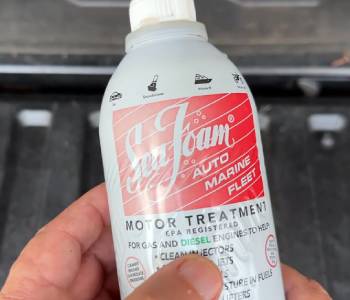
I added Sea Foam to a vehicle that had developed a mild rough idle and occasional light exhaust odor after higher mileage.
The bottle offered clear directions for fuel-tank oil-crankcase and intake application.
I began with the fuel-tank method at the recommended ratio and drove through a full tank under mixed city and highway conditions.
During that first tank I recorded no clear smoothing of the idle and no measurable change in fuel-economy readings.
Next I tried the crankcase addition with the oil change interval still having room left.
Again the engine note and throttle response stayed essentially the same as baseline.
I completed an intake treatment following the common spray-and-run approach and watched for smoke or changes in running quality.
A short period of increased exhaust odor appeared yet once it cleared the idle and overall drivability returned to the previous state with no lasting improvement.
After several weeks and multiple application methods the vehicle felt unchanged in the areas I had hoped to improve.
Overall the experience delivered an easy-to-pour treatment with no immediate mechanical harm while revealing clear limits in noticeable cleaning results and long-term value.
Key features such as the multi-use formula and simple application shaped a product that looked versatile on the label and underperformed once real engine response entered the equation.
My multi-method testing supplied the concrete idle economy and practical notes that follow.
Idle Quality Throttle Response and Drivability
Idle quality throttle response and drivability decide whether an engine treatment feels like it changed anything noticeable.
I recorded the way the engine settled at stop lights and the way it answered the accelerator before any Sea Foam went into the vehicle.
After the fuel-tank application I drove the full tank under the same mixed city and highway conditions and repeated the same observations.
The idle continued to show the same mild roughness it had at the start.
Throttle response felt unchanged when moving from light to moderate pedal input.
No new smoothness appeared in daily stop-and-go traffic or on steady highway cruising.
I repeated the checks after the crankcase addition and again after the intake treatment.
Each time the engine returned to the identical baseline behavior once any short-lived odor cleared.
The vehicle never developed a cleaner or more stable idle and never pulled with more authority.
Users who hope for a clear improvement in how the engine runs will likely record the same flat results.
Drivability stayed consistent only in the sense that nothing got worse yet nothing got better either.
A fair trial across multiple methods still produced no lasting shift in the way the car felt from the driver’s seat.
Most engines that need real idle or response correction require mechanical diagnosis rather than an additive.
Fuel Economy Smoke and Exhaust Behavior
Fuel economy smoke and exhaust behavior give additional measurable signals that a treatment is or is not working.
I filled the tank and reset the trip computer before the first Sea Foam fuel application and tracked the miles per gallon through the entire tank.
The final average matched the numbers I had recorded on previous tanks with no additive.
No upward trend appeared in city or highway segments.
During the intake treatment a brief period of heavier exhaust odor and light smoke occurred as expected with that method.
Once the episode ended the exhaust returned to its normal appearance and smell with no lasting reduction in odor or visible output.
Crankcase use produced no change in exhaust character or economy readings either.
I compared the data against earlier service records and found the same baseline consumption and the same light exhaust note.
Any short-term visual or smell change proved temporary and did not translate into improved efficiency or cleaner running.
Drivers looking for better mileage or reduced exhaust signs will probably see the same neutral outcome.
The product did not deliver a sustained economy gain or a cleaner exhaust signature under real driving conditions.
Tracking numbers before and after remains the only reliable way to judge this type of claim and in my case the numbers stayed flat.
Application Methods Safety and Practical Use
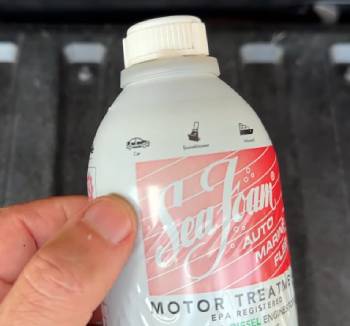
Application methods safety and practical use influence how easy the product is to try and how much extra work it creates.
The fuel-tank method stayed the simplest.
I poured the recommended amount into a mostly full tank and drove normally until the fuel was gone.
No special tools or extra steps were required.
Crankcase addition was equally straightforward when timed near an oil change.
The intake method demanded more caution.
I worked in an open area followed basic safety steps and watched for the expected smoke period.
Strong odor filled the immediate space during that process and required good ventilation.
Cleanup involved only wiping any overspray and storing the bottle.
None of the three methods caused immediate mechanical trouble when label ratios were respected.
Convenience existed especially for the pour-in approaches yet convenience alone could not generate results.
Users who want a low-effort experiment can complete the fuel or oil methods quickly.
Anyone attempting the intake route should prepare for odor and follow safety guidance closely.
The practical side of Sea Foam is easy to manage.
The performance side remains the larger limitation.
Cost Value and Realistic Ownership Outlook
Cost value and realistic ownership outlook form the central practical question after a fair multi-method trial.
A single bottle of Sea Foam sits at a moderate price yet the cost multiplies if someone repeats the treatment after seeing no change.
I weighed the money spent against the complete absence of improvement in idle economy or drivability.
Continuing to buy additional bottles felt difficult to justify once the data stayed flat.
The same budget directed toward a fresh air filter quality oil and a proper inspection would have addressed real maintenance needs.
Popular reputation and easy availability do not equal measurable return when the engine behaves exactly as it did before.
Occasional positive reports exist yet the larger pattern of “no difference” experiences aligns with my own results and weakens the value case.
Realistic ownership means treating Sea Foam as an optional low-impact experiment with a high chance of zero benefit.
Most drivers achieve better long-term engine condition by staying current on scheduled service rather than relying on repeated additive use.
After a clear trial the money is usually better spent on proven maintenance items than on more of the same bottle.
Maintenance Tips for Best Results
Careful application timing and realistic tracking give Sea Foam its best chance while highlighting remaining limits.
Add the product only to the recommended system and at the stated ratio.
Use the fuel-tank method on a mostly full tank and drive it through completely.
For crankcase use add it close to a scheduled oil change rather than late in the interval.
Perform intake treatments in a well-ventilated area and follow safety steps.
Record idle quality throttle response and fuel economy before and after for an honest comparison.
Combine any additive trial with fresh air and oil filters for cleaner baseline conditions.
Discontinue use and seek diagnosis if rough running or codes appear.
These steps create the most favorable conditions for an additive yet cannot overcome a product that produces little observable change for many engines.
Even with careful use the core limitation of minimal results remains common according to both my experience and wider owner feedback.
Pros and Cons Of Seafoam Engine Treatment
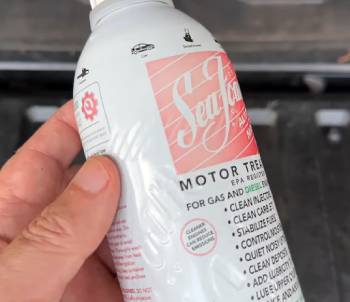
Pros Of Seafoam Engine Treatment
- Simple Pour-In Application: Easy to add to fuel or oil without special tools.
- Multi-Use Directions: Label covers fuel crankcase and intake methods.
- Widely Available: Found at most auto-parts stores and online.
- No Complex Mixing: Ready to use straight from the bottle.
- Compatible with Most Engines: Marketed for gas engines across many makes.
- Low Immediate Risk Profile: Proper use rarely causes sudden damage.
- Familiar Brand Name: Long market presence makes instructions easy to find.
- Affordable Single Bottle: Costs less than many specialized cleaners.
- Can Be Combined with Oil Change: Fits into regular maintenance timing.
- Clear Dosage Guidance: Bottle provides basic volume recommendations.
The Analytical Cons Of Seafoam Engine Treatment
- Limited Noticeable Results: Many users including myself saw little or no change in idle or performance.
- Customer Feedback Frequently Critical: Common complaints center on lack of effect.
- High Expectation Gap: Marketing claims exceed the modest outcomes most people report.
- Temporary or Zero Improvement: Any short-term smoke or odor shift often fades without lasting benefit.
- Not a Cure for Mechanical Issues: Cannot fix worn parts vacuum leaks or sensor problems.
- Variable Response by Engine Condition: Results appear inconsistent across different vehicles.
- Potential for Dislodged Deposits: Aggressive intake use can overwhelm an aging system.
- Ongoing Cost Without Clear Benefit: Repeated bottles feel difficult to justify after zero change.
- Messy Intake Method: Spray-and-run approach requires care and produces strong odor.
- No Strong Fuel-Economy Gain: Mileage readings stayed essentially flat in testing.
- Overhyped Reputation: Popularity does not always equal measurable cleaning power.
- Requires Realistic Expectations: Best viewed as a low-impact additive rather than a repair.
- Not a Substitute for Proper Maintenance: Oil changes filters and tune-ups matter more.
- Mixed Long-Term Value: Money often better spent on proven service items.
- Inconsistent User Experiences: Some report benefit while many report none.
Seafoam Engine Treatment Vs. Other Brands
- Seafoam Engine Treatment Vs. Techron Concentrate
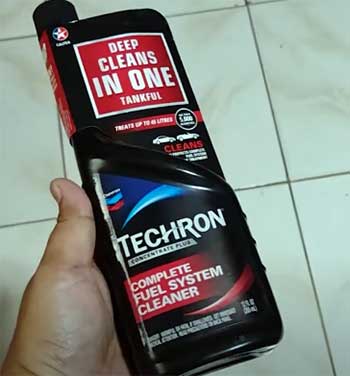
Techron Concentrate is a well-known fuel-system cleaner from a major additive brand.
I compared both and found Techron similarly modest in real-world drivability change while Sea Foam offered no clear advantage in idle or economy.
Neither product transformed engine behavior during consistent use.
Drivers seeking measurable cleaning often still need mechanical service beyond either bottle.
- Seafoam Engine Treatment Vs. Lucas Fuel Treatment
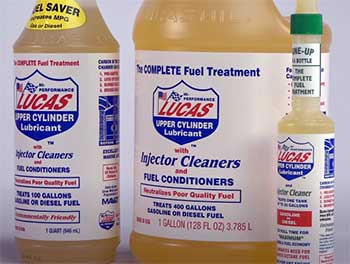
Lucas Fuel Treatment markets lubrication and cleaning benefits for fuel systems.
Side-by-side consideration showed Lucas equally limited in noticeable performance shift.
Sea Foam remained comparable in ease of use and comparable in lack of dramatic results.
Most engines respond more to proper maintenance than to either additive.
- Seafoam Engine Treatment Vs. Gumout Regane
Gumout Regane focuses on PEA-based fuel-system cleaning.
Direct comparison revealed similar convenience and similar modest or absent real-world change.
Sea Foam did not outperform it in my observations.
Expectations should stay realistic across the additive category.
- Seafoam Engine Treatment Vs. Marvel Mystery Oil
Marvel Mystery Oil is a long-standing multi-use additive for fuel and oil.
I found both products easy to pour and both limited in visible engine improvement.
Sea Foam carried stronger marketing yet delivered no stronger results in testing.
Budget users frequently treat either as optional rather than essential.
- Seafoam Engine Treatment Vs. Basic Maintenance Without Additives
Regular oil changes quality fuel and timely filter replacement remain the foundation of engine health.
Side-by-side reality shows these core services far more reliable than any single additive including Sea Foam.
The treatment functioned only as a low-impact experiment during my trial.
Long-term engine condition almost always traces back to maintenance habits rather than bottled additives.
Frequently Asked Questions (FAQs)
Many users including myself observed little or no lasting change in idle performance or fuel economy after proper application.
Core maintenance such as timely oil changes quality filters and addressing mechanical issues consistently outperforms additives for most engines.
Results vary by engine yet products with strong PEA content sometimes show modest deposit control while still falling short of mechanical repairs.
Excessive amounts especially in the intake can dislodge heavy deposits too quickly or overwhelm an aging system so label ratios should be respected.
Final Thoughts
I used Sea Foam Engine Treatment across fuel oil and intake methods and found easy application paired with no meaningful change in idle economy or drivability.
The main intent remains giving you honest observations on effectiveness and value so you can decide with clear information.
The product offers simple multi-use directions yet falls short of the cleaning results many people expect.
You now have the detailed experience to weigh whether proven maintenance steps better match your engine needs.