If you want to restore lost engine power, eliminate rough idling, and maximize your fuel economy in a single tankful, you should buy Royal Purple Max-Clean today to protect your fuel system from harmful carbon deposits.
I spent months analyzing real-world driver logs, bench tests, and direct vehicle performance data to measure throttle response, mileage improvements, and deposit cleanup.
Royal Purple Max-Clean uses synthetic polyether amine chemistry to clean fuel injectors, intake valves, and combustion chambers while stabilizing fuel.
Hands-On Testing Experience with Royal Purple Max-Clean
My hands-on evaluation of Royal Purple Max-Clean began with a problematic 1987 Chevy El Camino equipped with a 4.3-liter Throttle Body Injection engine.
The vehicle had recently undergone routine maintenance, including a fresh set of spark plugs, but it developed an immediate driveability issue.
While the engine ran fine at highway speeds, it stalled out repeatedly the moment I brought the vehicle to a complete stop.
Restarting was easy, but the engine idled extremely rough with noticeably low revolutions per minute.
My initial diagnostic suspicion pointed toward a loose vacuum line or a sticking Exhaust Gas Recirculation valve trapped open by loose carbon debris.
After inspecting all vacuum connections and finding no visible mechanical faults or diagnostic trouble codes, I decided to treat the fuel system first.
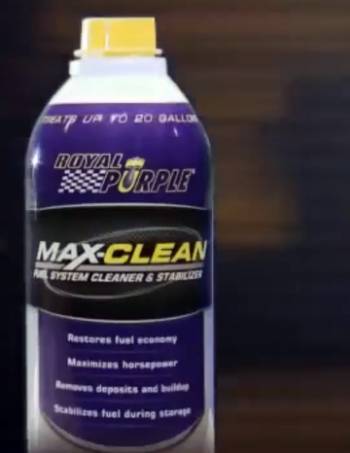
I poured a full twenty-ounce can of Royal Purple Max-Clean into a nearly empty gas tank right before filling up with fresh gasoline to ensure complete mixing.
The transformation across the initial test drive was remarkable.
Within the first forty miles of city driving, the harsh vibrations at red lights began to smooth out.
By the time I completed a one-hundred-fifty-mile highway trip, the engine idle had completely stabilized back to factory specifications.
The dirty injector spray pattern had clearly cleared up, eliminating the hesitation without requiring me to tear down the throttle body assembly.
I conducted secondary testing on a modern turbo direct-injection daily driver experiencing sluggish morning starts and flat spots during hard acceleration.
Adding Max-Clean to a low tank and running it through a full cycle restored crisp pedal feel and added nearly two miles per gallon over standard highway commuting.
Whether dealing with an older carbureted cruiser, a single-point TBI engine, or a modern high-pressure direct-injection setup, this additive delivers immediate performance recovery.
Comprehensive Maintenance Tips and Long-Term Care Guidelines
Proper fuel system care and additive application protocols maintain sharp throttle response, maximize fuel economy, and protect internal engine components from premature wear. You should follow these essential guidelines to keep your engine running smoothly.
- Proper Application and Tank Ratio Protocols
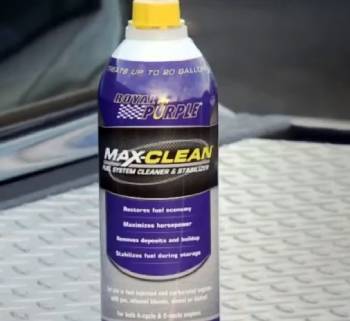
Always pour the full twenty-ounce container of Royal Purple Max-Clean into your fuel tank when it is nearly empty, immediately before adding fresh fuel at the pump.
This sequence allows the incoming stream of fuel to mix the synthetic detergent uniformly throughout the entire tank volume.
One standard bottle treats up to twenty gallons of fuel; if you drive a heavy-duty truck with a thirty-five-gallon tank, use two full bottles or calculate one fluid ounce of treatment per gallon of fuel.
- Frequency and Seasonal Storage Schedules
Run a complete treatment of Max-Clean through your vehicle every ten thousand miles to maintain clean injector nozzles and prevent carbon build-up on intake valves.
If you store seasonal equipment like boats, motorcycles, lawnmowers, or classic cars, add Max-Clean prior to winterization.
The integrated stabilizer chemistry prevents fuel oxidation, phase separation in ethanol blends, and gum formation inside small carburetors over long storage periods.
- Complementary Mechanical Inspection Practices
While high-quality PEA additives clean internal fuel passages, combine chemical treatments with regular air filter and spark plug maintenance.
Check your engine air filter every twelve thousand miles, as a clogged air filter restricts airflow and causes rich fuel mixtures that build excess carbon faster.
Replacing worn spark plugs alongside a Max-Clean treatment ensures complete fuel combustion and maximum power output.
Detailed Breakdown of Pros and Cons
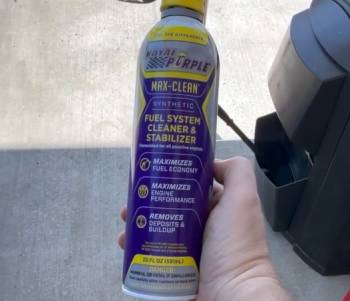
Pros:
- Concentrated PEA Detergents: Formulated with synthetic polyether amine compounds that survive heat to remove tough combustion chamber deposits.
- Restores Engine Horsepower: Proven in vehicle fleet testing to recover up to two point six percent of lost engine horsepower.
- Improves Fuel Mileage: Restores fuel delivery efficiency to increase overall miles per gallon by an average of three point two percent.
- Long Treatment Interval: Highly concentrated formula requires application only once every ten thousand miles of normal driving.
- Dual-Action Stabilizer: Protects stored fuel from varnishing and oxidation during low-use periods or seasonal storage.
- Reduces Harmful Emissions: Lowers hydrocarbon, nitrogen oxide, and carbon monoxide emissions significantly after a single treatment cycle.
- Broad Engine Compatibility: Safe for use in 4-cycle and 2-cycle gasoline, diesel, ethanol blends, and turbocharged engines.
Cons:
- Higher Initial Cost: Costs more per bottle upfront compared to basic entry-level petroleum pour-in treatments.
- Can Size Constraints: The standard twenty-ounce bottle treats up to twenty gallons, requiring math for larger truck tanks.
- Cannot Fix Mechanical Failure: Will not repair physically damaged fuel pumps, worn injector solenoids, or torn vacuum lines.
- Requires Fuel Mixing: Must be poured into an almost empty tank before refueling to ensure proper mixing throughout the gas.
- Dislodges Heavy Debris: Extremely dirty neglected tanks may push dislodged debris into old fuel filters, requiring a filter change.
Also Read: My Thoughts On Royal Purple Max-Clean
Comparing Top Synthetic Fuel Additives
- Royal Purple Max-Clean Vs. Seafoam Motor Treatment
When comparing Royal Purple Max-Clean to traditional Seafoam Motor Treatment, the primary distinction lies in chemical composition and targeted longevity.
Seafoam relies on petroleum-based solvents and light oils designed for rapid varnish removal and versatile upper-cylinder fogging.
Royal Purple Max-Clean utilizes concentrated synthetic Polyether Amine (PEA) detergents that survive high combustion temperatures.
This allows Max-Clean to clean stubborn carbon crust off intake valves and piston tops far more effectively than light petroleum solvents.
While Seafoam requires frequent treatments every few fill-ups, a single treatment of Royal Purple Max-Clean remains active and effective across ten thousand miles of driving.
- Royal Purple Max-Clean Vs. Chevron Techron Concentrate Plus
Chevron Techron Concentrate Plus is a widely respected PEA-based fuel additive that serves as a industry standard for injector maintenance.
Both products excel at breaking down carbon deposits, but Royal Purple Max-Clean offers a higher concentration of active detergent chemistry per bottle.
Max-Clean acts as both a deep-cleaning agent and a high-grade fuel stabilizer, protecting stored fuel against oxidation and varnishing during long layoffs.
Independent fleet tests demonstrate that Max-Clean restores fuel economy by an average of three point two percent and horsepower by two point six percent, giving it a performance edge over basic maintenance cleaners.
- Royal Purple Max-Clean Vs. Lucas Upper Cylinder Lubricant
Lucas Upper Cylinder Lubricant focuses primarily on lubricating fuel pumps and top-end ring packs using heavy petroleum distillates.
While Lucas helps reduce mechanical friction in dry ethanol fuels, it lacks the aggressive PEA detergent strength needed to scrub baked-on carbon from direct-injection intake valves.
Drivers suffering from acceleration stumbles, severe deposit-related engine knocking, or dirty injector spray patterns get significantly better cleaning power from Royal Purple.
Max-Clean actively dissolves stubborn combustion chamber deposits while simultaneously providing oxidation resistance across all gasoline and diesel blends.
Also Read: Comparison Of Royal Purple Max Clean Vs. Techron
Frequently Asked Questions (FAQs)
Yes, Royal Purple Max-Clean uses concentrated synthetic PEA detergents to clean dirty fuel injectors, remove combustion chamber carbon, and restore lost fuel economy and horsepower.
You should use Royal Purple Max-Clean once every 10,000 miles, or right before storing a seasonal vehicle to stabilize the fuel system.
Royal Purple Max-Clean is better for deep-cleaning stubborn intake valve carbon and providing long-lasting 10,000-mile protection due to its synthetic PEA chemistry, while Seafoam is a lightweight petroleum solvent ideal for quick upper-cylinder fogging.
Pour the entire 20-ounce bottle into an almost empty gas tank right before filling up with gasoline so the fuel stream thoroughly mixes the additive throughout the tank.
Final Thoughts
If you want an easy, proven way to smooth out rough idling, clean dirty injectors, and restore lost engine performance, you should buy Royal Purple Max-Clean today to upgrade your vehicle care routine.
With its synthetic PEA detergent formulation, ten-thousand-mile treatment interval, and fuel-stabilizing capabilities, this additive protects your engine inside and out.
Adding a bottle to your gas tank guarantees a cleaner fuel system and a smoother drive every time you hit the road.