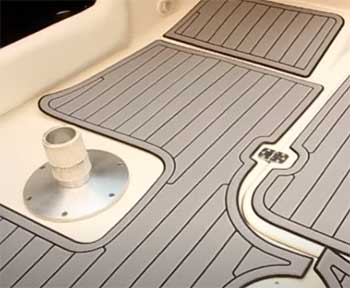
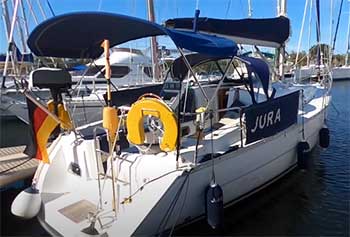
The decision of getting regular HDPE or StarBoard is something to consider. Because of the differences that can impact the decision. The most significant difference is the pricing. Starboard HDPE is much more expensive than regular HDPE.
Things get tricky because of all the other differences that you get to experience between the two choices. To help you out with it, I have this in-detail comparison lined up.
You can go through this and find out which one out of the two is suitable for your project.
A Quick Comparison Table
| Specifications | HDPE | StarBoard |
| Sturdiness | Good | Top-notch |
| Purpose | Smaller projects | Large/ Marine projects |
| Features | Limited | Offers additional value |
| Pricing | Very affordable | Expensive |
| Ease of use | A bit complex | Easy to use |
Key Differences Between HDPE And StarBoard
- Sturdiness
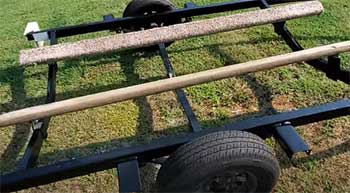
Both are essentially HDPE, but StarBoard is more of a specialized HDPE.
StarBoard goes through some processing and becomes a much sturdier material than HDPE. They have better strength and durability than regular HDPE.
Regular HDPE is still quite durable. The core feature of HDPE is its high-impact strength. So, you get that in both choices without thinking or asking for it.
It’s just the fact that, with StarBoard, you get much more than that. Because of their specialized processing, they tend to be a bit stronger than HDPE. This makes the boards suitable for a variety of different projects out there.
So, if you need something quite strong and have the sturdiness to withhold something heavy, then StarBoard is the way to go. Other than that, HDPE works too.
Also Read: Alternatives To King StarBoard.
- Purpose
Where you can use the materials play a huge role in choosing one of them. It is the key factor in selecting the perfect option. You can get the best choice based on the projects you plan to use them on.
Diving right into the project, if you are doing something heavy or large like marine construction, then StarBoard is a far better pick than regular HDPE. They are just better in terms of use and have better results for your project.
As for HDPE, they are much more suitable for smaller projects. For example, they are building a ramp around the house or a platform for the kids to play at. It’s not ideal for heavy tasks.
Based on the two differences, you can easily choose the option that suits your purpose more than the other. You won’t have any confusion whatsoever.
- Benefits
There are several differences in the benefits you get from the two boards. Get the primary benefits you should get from HDPE on the StarBoard. But some additional features make it a bit more different and give you that extra value.
First of all, Starboard comes with excellent UV protection. It is one of the critical benefits of having Starboard over regular HDPE.
Some other benefits include high tensile strength, excellent abrasion resistance, good energy absorption, and resistance against stress cracks.
On the other hand, HDPE will give you only one feature, which is good impact strength. Other than that, you don’t get many benefits on this one over StarBoard.
So, if your projects need the features I discussed above, you can go with StarBoard. If they don’t, then HDPE still works out for you.
- Pricing
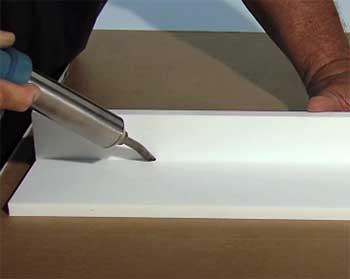
Here’s the factor that dictates the decision to choose one option without complications.
You can easily decide whether to pick HDPE or StarBoard based on the cost.
StarBoard is a costly board choice over regular HDPE. The cost comes from all the additional benefits you learned about earlier.
So, in a way, those benefits don’t come without a price. Considering that, it’s pretty expensive.
On the other hand, you have regular HDPE, which is much lower than the StarBoard. At the same time, they don’t have that many benefits or qualities either.
It all comes down to if the extra cost is worthwhile or not. You have to think about the project at hand. If that requires the features from StarBoard, you have to pay the extra price and get them.
- Ease of use
Now, when it comes to the two materials, ease of use is also something to consider. No matter who you are, you will always want to get something straightforward to use.
In that factor, StarBoard is always ahead in the game. Because they are processed, you will have a much easier time shaping them and joining them. On the other hand, there is HDPE in its normal state. It can be tricky as it doesn’t have the same tensile strength.
Pros of generic HDPE
- Lower purchase price: If I am building a shop jig, a hidden spacer, or a one-season prototype, commodity HDPE wins on the invoice. I can buy a 4×8 and still have money left for hardware.
- Easy to source and cut: Big-box and plastics distributors stock natural, black, and white. I can get a sheet same day. Standard table saws, CNC routers, and drills handle it.
- Chemical and moisture resistance: Salt, bleach solutions, and bilge splash do not eat it. It will not rot or delaminate the way plywood does when a seal coat fails.
- Recyclable base polymer: HDPE is widely recycled as #2 plastic. Offcuts from a clean natural sheet are easier to send back into the stream than mixed painted wood.
- Adequate strength for many non-structural parts: For a cutting board blank, a tank baffle, or a low-load liner, tensile and impact numbers are plenty.
Cons of generic HDPE
- Weak or uneven UV performance: This is the disadvantage that shows up first. Non-stabilized sheet chalks. Color shifts. Edges get dusty. After a couple of seasons the part looks tired even if it has not cracked yet.
- Inconsistent flatness and color: Imported lots vary. A cabinet door that should sit flush against a frame can crown. Matching a replacement panel a year later is a gamble.
- Glossy face shows every scratch: A shiny sheet records every cooler slide and sandpaper nick. Dirt films sit in those marks.
- Limited marine color range: You get industrial black and white more often than boat-interior gray or off-white. The part looks like shop plastic, not original equipment.
- Creep under long-term load: HDPE can slowly deform if you hang a heavy load from a thin panel in heat. I do not use cheap sheet as a stressed backing plate or a long unsupported span in the sun.
- Bonding is still a fight: Low surface energy is a polymer trait, not a brand trait. Flame treating and specialty adhesives help. Wood glue does not.
Pros of King StarBoard
- UV stability mixed through the sheet: When I route a radius or sand a stain, I am not cutting through a thin UV skin. The stabilizers stay with the part.
- Color that belongs on a boat: Whites and grays match gelcoat and vinyl better than warehouse HDPE. Pigments are chosen to hold up in sun instead of looking bright on day one and chalky on day 400.
- Flat, consistent sheets: OEM builders specify it partly because doors and hatch lids stay true. I waste less time fighting twist.
- Matte face that hides wear: Foot traffic, fish boxes, and cooler slides leave fewer obvious scars. Light sanding can refresh a stained spot.
- Product family for specific jobs: Need grip on a swim step? King StarBoard AS. Need to shave weight on an upholstery substrate? XL or StarLite XL. I can stay inside one brand language instead of mixing mystery sheets.
- Long service with almost no finish work: No varnish schedule. No rot inspection. Wash it. That is the maintenance plan I actually keep.
- Food-contact story on the base resin: For cutting boards and galley parts, the FDA/USDA claim on the raw material is useful. I still clean it like any food surface.
Cons of King StarBoard
- Higher cost per sheet: A 3/4 inch 4×8 marine sheet can run roughly double a commodity HDPE sheet, sometimes more depending on color and thickness. You pay for process control and the UV package.
- Still HDPE mechanically: It is not aluminum. Flexural modulus is modest compared with metal or thick plywood over a short span. Long shelves need stiffeners. Sustained point loads in heat can still creep.
- Thermal movement is real: Coefficient of expansion is high versus wood or metal. If I screw a long panel tight to a rigid frame with no slots, the sheet will oil-can when the deck cooks.
- Fastener and adhesive limits: Screw withdrawal is decent with the right length and pilot, but it is not oak. Ordinary construction adhesive peels off. You plan joints like plastic, not like lumber.
- Heat softening: Around 180°F continuous service is the practical ceiling people cite. A black panel on a trailer in August can get soft at the surface. I keep dark colors off unshaded, thin, load-bearing lids when I can.
- Cosmetic limits: It will never look like varnished teak. Woodgrain versions exist in the family, but most sheets read as quality polymer, not timber.
Which One Is A Better Option For You?
The easiest way I would go about this is to think about the projects I plan to do. So, when you have difficulty choosing between them, don’t consider the price first.
You will have to consider the purpose or usability factor. Think about the project that you plan to do with the boards. If it’s a heavy-duty project, you can’t use the regular HDPE, and they don’t have the strength to back up a heavy project. In that scenario, StarBoard is your only option.
But if you are doing a smaller project that you can do within a budget, then HDPE is a good option. They are affordable, and they are more than enough for smaller projects.
Also Read: Trailer Bunk Carpet Substitutes.
Frequently Asked Question (FAQ)
Starboard is a type of HDPE you can use for your construction projects.
Apache Zeppelin, SageMath, Deepnote, Jupyter, and Franchise are some boards you can compare to StarBoard.
HDPE is a specialized Polyethylene material that goes through a process to become strong enough for marine conditions.
StarBoard is a polyethylene material. Specifically, it’s a marine-grade Polyethylene material with a pretty high density. It goes through a rigorous process and becomes strong enough to endure rough conditions.
Conclusion
To sum up, deciding between HDPE and StarBoard requires you to consider your projects. Whether your projects require better strength and quality plays a significant role. If they need that, don’t overthink and go with StarBoard straight away.
But if you don’t need that much strength, then think about if the StarBoard is worth the money for you or not. Choosing HDPE over StarBoard for smaller projects is wise as they can be expensive.