I spent more time than I care to admit standing in parking lots wrestling tow bars, comparing hookup angles, and second-guessing whether I bought the right system for my motorhome and toad.
My goal here is simple: help you decide between Blue Ox and Roadmaster based on how these systems actually perform on the road, at the campsite, and after thousands of miles.
I looked at capacity, hookup ease, durability, features, and real ownership experience so you can pick the setup that matches your vehicle and travel style.
A Quick Comparison Of The Tow Bars
| Specifications | Blue OX | Roadmaster |
| Material | Steel | Aluminum |
| Looks | Top-notch | Decent |
| Versatility | Only tow bars | Different equipment |
| Installation | Easy to install | It can be a bit tricky |
Key Differences Between Roadmaster And Blue Ox Tow Bars
- Material
There is no need to tell you why you should consider the material as the deciding factor for your two bars. Since there is a difference between the two choices, it’s easy to decide which one you should get for your needs.
First up, the Blue Ox tow bars come with steel construction. Because of that, the strength and sturdiness you get on them are thoroughly impressive. You can rely on the structure a bit more compared to Roadmaster.
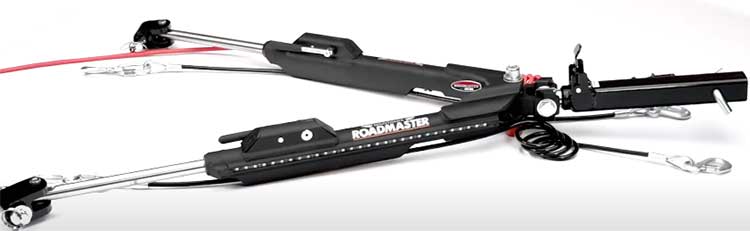
While the Roadmaster tow bars fall a little behind with their aluminum construction, it doesn’t let you down in strength. They might not have the same level of sturdiness that you get in the Blue Ox tow bars, yet they serve the fundamental purpose of tow bars quite well.
So, when you have to decide between the two bars, you think about what you prefer to have. If you want a sturdier steel construction that provides better strength, go for the Blue Ox tow bars.
But if you are seeking a lightweight and sleek tow bar, Roadmaster should be your pick.
Also Read: Differences Between Hensley Arrow And ProPride Hitch.
- Looks
Speaking of the looks, it’s for sure a significant factor for a lot of people. The tow bar will be on the exterior of your car, so it must look good. You can see a difference between the two tow bars when you think of the looks.
In this factor, Blue OX is way ahead of the game. They are much more stylish in looks, and you can see the beauty of the two bars.
The finish on the bars is pretty clean and makes them look premium. When you install the bars on your car, you will significantly enhance your vehicle’s looks.
On the other hand, the looks of Roadmaster bars aren’t the best. They lack that premium-looking finish you would love in a tow bar for your car. That said, it’s a pretty standard-looking tow bar, so there is nothing much to complain about.
Still, I have to pick Blue OX over the Roadmaster without second thoughts regarding going with the better looks.
- Versatility
When it’s about the versatility of the two brands, you will always find Roadmaster as the winner.
By versatility, I mean the type of products and collections they have for their customers.
Roadmasters come up with fantastic tow bars, but that’s not the only thing they are good at.
You can get several other pieces of equipment for your vehicle from their website.
They have a wide range of collections for different types of products and tow bars.
On the other hand, Blue Ox doesn’t explore other vehicle equipment areas. They are strictly focused on tow bars for your vehicle. The purpose is to provide the best possible quality to the users.
Choosing a brand between them is simple. Blue Ox is the way to go if you only need two bars and want the best ones without confusing yourself. But if you require some other equipment alongside tow bars, I recommend going with Roadmaster.
- Installation
How easy or difficult it is to install the two bars will also play a role in the decision. You have to decide whether it works out for you or not.
Starting with the Blue Ox tow bars, they are straightforward to install. There is an easy-to-understand and clear instruction manual. You can use that to install the tow bars on your car by yourself.
With the Roadmaster, the installation can get a bit tricky. You may face some trouble installing the bars on your car. Without overthinking, I would choose Blue Ox over the Roadmaster tow bars.
Blue Ox Tow Bar Pros
- Capacity and Strength for Heavier Toads: I like that Blue Ox gives you clear capacity steps. The Avail handles 10,000 lbs with steel arms that feel planted when I pull a heavier SUV or half-ton truck. The extra length on some models helps the toad track better through tight turns. When I load extra gear in the toad, that extra rating gives me a comfort margin I notice on grades.
- Triple-Lug Connection That Feels Secure: The three-lug-to-two-lug handshake with a single pin is simple once you have done it a few times. I find it less fussy than some competing pin setups. The offset lugs reduce binding for me when the vehicles sit at a slight angle. Rubber boots on the arms keep grit out, which matters after dusty campground roads.
- Self-Aligning Arms and Non-Binding Latches: I hook the arms, pull the motorhome forward a few feet, and the arms extend and lock. The release levers let me drop tension even when I parked on a slope. That saved me more than once after a long day when the toad sat slightly off-center.
- Included Safety Cables on Popular Models: Many Blue Ox bars ship with cables. I appreciate not hunting for a matching pair on day one. The overall package feels complete for a first-time flat-tower.
Blue Ox Tow Bar Cons
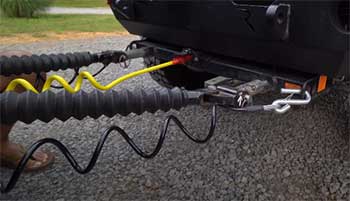
- External Cables and Less Built-In Polish: Cables hang outside on most models. They work, but they collect more dirt and look busier than internally routed designs. I also miss built-in lighting when I hook up at dusk.
- Warranty Length Versus Competitors: The common three-year coverage is shorter than some lifetime offers. I treat that as a reminder to inspect pins, bushings, and boots on a schedule rather than a deal-breaker.
- Weight on Steel Models: Steel construction on the Avail and similar bars adds pounds. Lifting and folding the bar at the end of a trip is more work than an aluminum counterpart.
Roadmaster Tow Bar Pros
- Freedom Latch and Large Hookup Radius: The Freedom Latch is the feature I notice most. A modest pull on the lever multiplies force and releases tension even when the vehicles sit at an awkward angle. Combined with a wide hookup window, I spend less time lining everything up perfectly. That matters after a long drive when I just want to park and walk away.
- Internal Cable Routing and Cleaner Look: Premium models like the Nighthawk route cables and the power cord through channels. Nothing drags, nothing slaps, and the rear of the motorhome looks tidier. I also like the one-step storage latch that clicks the bar up against the coach.
- LED Lights on the Nighthawk: The integrated LEDs make the gap between motorhome and toad more visible to other drivers. I did not think I needed them until I used them at night. They are not for me during hookup; they are for everyone else on the highway.
- Stainless Inner Arms and Corrosion Resistance: Aluminum bodies with stainless inner tubes resist rust better in wet or salted climates. The ride stays smoother longer because the sliding surfaces stay cleaner.
- Warranty Confidence: Limited lifetime coverage on many Roadmaster bars reduces the “what if it wears out” conversation. I still service the unit, but the paperwork feels more generous.
Roadmaster Tow Bar Cons
- Price on Feature-Rich Models: The Nighthawk and similar all-terrain bars sit at the higher end of the range. You pay for lights, internal routing, and the latch design. If your budget is tight, the extra dollars add up fast.
- Capacity Differences Across the Line: Some popular aluminum models sit at 8,000 lbs. That covers most Jeeps and mid-size SUVs, but I double-check ratings when the toad is a loaded truck.
- Brand-Specific Base Plates: Roadmaster bars prefer Roadmaster plates for the cleanest fit. Mixing brands usually means an adapter. That is solvable, but it is one more part to buy and install.
Which Tow Bar Is A Better Choice For You?
Whenever you try to get a tow bar between the two choices I discussed, I have to say Blue Ox is the better option. Whether it’s the material, durability, installation, or looks, you will find the Blue Ox a bit better in all aspects than the Roadmaster.
However, the difference is very significant. So, if you find a better deal and seek versatility, Roadmaster might be the perfect option for you.
Also Read: Differences Between Harmonic Balancer And Crankshaft Pulley.
Frequently Asked Question (FAQ)
Blue Ox tow bars are made in Pender, Nebraska.
No, it’s better not to back up with a Roadmaster tow bar, especially when it’s towed.
Yes, a Blue Ox tow bar needs to be level. Otherwise, you will have trouble with safety and extra pressure.
Yes, some models from Blue Ox can be used for backing up while towing.
Conclusion
Wrapping it all up, I have to say, in the battle of Blue Ox and Roadmaster, Blue Ox always emerges as the winner by a little. The difference is significant, so you don’t have too much to worry about. Either one works out for you.
It just comes down to what kind of deal you are getting on the two bar options. But if even the slightest difference is essential to you, get the Blue Ox, as it’s a bit better in terms of the material and looks.