Where should you buy the Wolfbox mirror dash cam? You need to pick up this system directly from authorized automotive tech retailers or the official Wolfbox online store to ensure you receive a genuine product, complete with the original 32GB high-speed memory card.
The external GPS antenna, and the full twelve-month manufacturer warranty. Skipping unverified third-party sellers ensures you are fully covered against any sudden technical glitches or component failures.
My First-Hand Driving Experience With the Wolfbox System
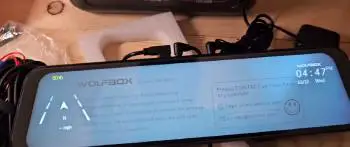
Right after pulling this massive twelve-inch smart device out of the box, I was incredibly eager to get it mounted in my vehicle.
I have owned several traditional dashboard cameras over the years, and I have even spent weekends routing cables through my son’s compact sedan to install safety gear.
The moment I held this unit, I realized it belonged to an entirely different class of automotive electronics. Installing the primary hardware over my existing factory rearview mirror was completely non-intimidating.
The flexible, heavy-duty rubber straps clipped securely around my stock glass in less than five minutes, providing an immediate physical foundation that did not shake or vibrate when I hit the road.
To simplify the electrical connection, I opted for the specialized OBD port hardwire kit, which turned what could have been a confusing electrical chore into a straightforward ten-minute plug-and-play task.
Hiding the clean, long wiring along the interior headliner panels and down the weather stripping was simple, resulting in a professional, clutter-free cabin layout.
When I took the vehicle out for its inaugural test drive, the immediate expansion of my field of view was nothing short of staggering.
The massive screen provides roughly one-point-five times the total visibility footprint of a standard automotive glass mirror.
Sitting in the driver seat, I noticed that my usual blind spots along the rear quarter panels had virtually vanished.
The front-facing lens captures a panoramic one-hundred and seventy-degree sweep of the road ahead, while the rear camera monitors a wide one-hundred and forty-degree arc behind the bumper.
Watching the smart split-screen mode operate in real-time allowed me to monitor tailgating traffic and oncoming lane mergers simultaneously.
The daytime recording clarity from the front lens is outstanding, rendering crisp four-K details like license plate characters and distant road signs with sharp legibility.
When I transitioned into dark highway zones later that evening, the integrated high dynamic range software instantly balanced out the harsh, blinding glare of trailing headlights, keeping the rear display clean and legible.
The companion smartphone application connected seamlessly over the fast five-point-eight gigahertz wireless band, allowing me to review past driving clips, track my exact GPS travel routes, and save critical video clips directly to my phone’s media gallery without needing to pull out the MicroSD card.
Real Road Performance and Screen Usability Insights
When you keep a digital monitor running constantly right in your primary line of sight, screen reflectivity becomes a major factor during midday operation.
Because the surface is built out of highly polished mirror glass to allow for standard reflection when powered down, it can collect significant cabin reflections when the sun hits the interior at certain angles.
To resolve this completely, I found that adding a low-cost matte anti-glare screen protector transforms the viewing experience, eliminating reflections while maintaining excellent visibility.
The built-in low-reflectivity LCD layer works well under overcast skies, but adding that extra matte layer makes it highly effective during bright summer drives.
The fluid responsiveness of the capacitive touch interface is highly impressive, allowing you to swipe up or down on the glass panel to instantly adjust the vertical viewing angle of the rear camera.
This tracking flexibility proves incredibly useful when you are parallel parking or reversing into tight garage spaces, as you can see low curbs and ground obstacles that standard mirrors hide completely.
The internal loop recording engine functions reliably in the background, cutting footage into organized segments and automatically locking files when the internal G-sensor detects sudden stops or sharp turns.
You never have to worry about manually managing the included thirty-two gigabyte storage card because the system smoothly overwrites the oldest unlocked footage once the card reaches full capacity.
Long Term Care and Maintenance Protocols
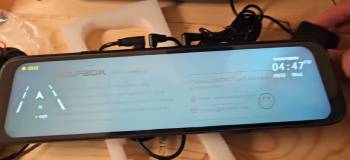
Proper upkeep ensures your safety camera functions perfectly during critical driving incidents.
Clean the exterior front lens and the rear bumper camera once every two weeks using a damp microfiber cloth to remove dust and road film.
Format the internal memory card through the device settings menu once a month to clear out corrupted file segments and maintain fast read-write speeds.
Inspect the condition of the top-mounted rubber mounting bands every six months to ensure they have not degraded from cabin heat exposure.
Verify that the rear camera mount screws remain tightly anchored so highway vibrations do not cause your rear video to shake.
Update the companion smartphone app regularly to ensure the wireless connection and GPS mapping features function smoothly.
Avoid spraying liquid glass cleaners directly onto the mirror housing; always apply the fluid to a cleaning cloth first to protect the internal circuitry.
Check the rear lens element for water spots or mud splatter after driving through heavy rain storms to ensure your reversing view stays clear.
The Pros and Cons of the Smart Mirror Architecture
The Advantages of the Smart Mirror Architecture
- The ultra-wide twelve-inch display increases your rearward vision by roughly one-point-five times compared to basic factory glass mirrors.
- Native four-K resolution on the front-facing lens captures sharp alphanumeric license plate details across multiple highway lanes.
- The integrated five-point-eight gigahertz wireless module provides high-speed video transfers directly to your iOS or Android smartphone app.
- The external GPS antenna continuously logs real-time vehicle speed and precise geographic coordinates for insurance documentation.
- The comprehensive dual-channel split-screen viewing mode permits simultaneous monitoring of front and rear road developments.
- Advanced WDR and HDR processing algorithms balance out intense nighttime headlight glare and deep daytime shadows instantly.
- The optional OBD port hardwire kit cuts down installation times by allowing direct power access without tapping into fuse blocks.
Drawbacks and Design Limits to Note:
- Analog low resolution rear lens performance: The rear-facing camera records at a maximum of ten-hundred and eighty-p resolution, which looks noticeably softer and less detailed than the sharp four-K front lens footage when viewed on a large computer monitor.
- Cluttered top mounted cable interface design: All primary power, camera, and GPS input ports are positioned along the very top edge of the mirror casing, which can make the upper windshield area look slightly messy if you do not bundle the wires neatly.
- Short bundled rear camera wiring loom: The included rear video cable lacks the necessary length to reach the rear bumper of long minivans and full-size SUVs comfortably, meaning you will need to buy a separate extension cable for large vehicles.
- High surface reflectivity under direct sunlight: The highly polished glass panel reflects bright cabin light during sunny days, which means you will likely want to add an aftermarket matte anti-glare film to maintain clear screen visibility.
Also Read: Comparison Of Wolfbox G930 Vs. G840S
Wolfbox Mirror Dash Cam Review Vs. Other Brands
- Wolfbox Mirror Dash Cam Review Vs. VanTop H610
When you put the VanTop H610 next to the Wolfbox, the contrast in build quality and connection speeds becomes obvious.
The VanTop model relies on an older two-point-four gigahertz wireless channel that causes noticeable lag when transferring large video files to a mobile phone.
The Wolfbox system features an upgraded five-point-eight gigahertz wireless module that sends files to your smartphone gallery much faster.
The VanTop front lens can struggle to handle fast light changes when entering or exiting dark highway tunnels.
The Wolfbox utilizes advanced high dynamic range tuning to keep your footage well-balanced in changing light conditions.
The physical glass on the VanTop unit suffers from heavy internal reflections that make it difficult to read on bright days.
The Wolfbox uses a specialized low-reflectivity screen layer that handles bright glare much better than its competitor.
- Wolfbox Mirror Dash Cam Review Vs. Akaso DL12
The Akaso DL12 positions itself as a budget choice, but it cuts corners on screen real estate and overall video sharpness.
The Akaso uses a smaller ten-inch display screen that leaves a significant portion of your factory rearview mirror exposed on the sides.
The Wolfbox features a large twelve-inch curved glass panel that covers your factory mirror completely for a clean look.
The front sensor on the Akaso drops down in resolution when you choose dual-lens recording mode, which reduces video clarity.
The Wolfbox maintains its clear four-K front resolution even while recording ten-hundred and eighty-p rear video at the same time.
The customer support team at Akaso can be difficult to reach if you run into installation problems or need replacement hardware parts.
The Wolfbox brand provides a solid twelve-month guarantee along with responsive customer service to help you fix setup issues.
Also Read: My Thoughts On Wolfbox G900 Vs. G900 Pro
Frequently Asked Questions (FAQs)
Yes, the unit features a highly polished glass panel that functions perfectly as a traditional reflective rearview mirror whenever you power the digital screen down completely.
Yes, Wolfbox is an automotive electronics brand based in China that distributes its high-quality dash cam systems and smart accessories to drivers worldwide.
Yes, it is highly reliable, offering solid hardware engineering, consistent loop recording performance, and responsive after-sales customer service backed by a full twelve-month warranty.
The G840S model represents the best overall balance of price and features, delivering crisp four-K front video, fast five-point-eight gigahertz wireless transfers, and a large twelve-inch display screen.
Final Thoughts
Where should you buy this product to secure your vehicle?
You should buy your smart dash cam through authorized automotive tech sellers or the official company website to ensure you get authentic accessories and full warranty support.
Investing in this smart mirror upgrade gives you clear, dual-channel protection and complete peace of mind on every single drive.