Are you feeling confused trying to decide between the premium Wolfbox G900 vs G900 Pro mirror dash cams for your vehicle?
In this comparative analysis, I will help you discover the exact sensor upgrades, wireless file sharing changes, and low-light video capture performance shifts so you can easily choose the ideal system for your safety requirements.
Wolfbox G900 Vs. G900 Pro Detailed Specification Differences
| Feature Matrix | Wolfbox G900 Base Model | Wolfbox G900 Pro Model |
| Front Lens Sensor | Older generation custom CMOS chip | Sony STARVIS 2 IMX678 |
| Front Video Output | Interpolated/Upscaled 4K resolution | Native True 8MP 4K resolution |
| Rear Lens Sensor | Older generation custom CMOS chip | Sony STARVIS IMX335 |
| Rear Video Output | 1080P / 3MP sensor capacity | 2.5K / 5MP sensor capacity |
| Wireless Module | Completely absent from build | Dual-band 2.4GHz and 5.8GHz Wi-Fi |
| Voice Interface | Manual touchscreen only | Smart hands-free voice control |
| Maximum Storage | Up to 256GB MicroSD card | Up to 512GB MicroSD card |
| Night Processing | Basic software exposure adjustments | Physical 1/1.8″ large sensor with 3DNR |
Real World Performance Analysis
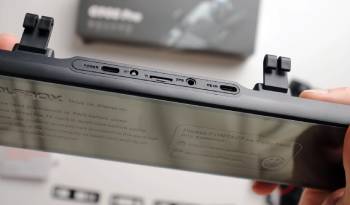
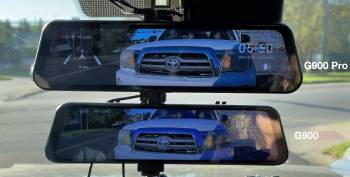
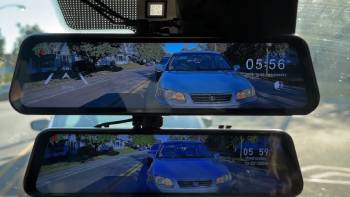
When you mount these massive twelve-inch smart mirrors over your factory glass, the physical differences in daytime use seem minimal at first glance.
Both systems replace your regular mirror view with a vibrant, high-definition screen that completely eliminates back-seat headrest blind spots.
However, the moment you take them out onto real highways, the functional differences quickly become obvious.
The base model utilizes older processing hardware that upscales its pixels to achieve a 4K label.
When you pull clips onto a computer screen, signs and license plates at medium distances can appear blurry due to compression artifacts.
The upgraded pro model handles light capturing in a completely different manner.
Because it utilizes a genuine native eight-megapixel Sony STARVIS 2 image processor on the front camera, every frame is recorded with precise sharpness.
You can crop deeply into a video frame to clearly read tiny alphanumeric details on a vehicle license plate down the road.
The rear view performance gap is even wider. While the original unit gives you usable day footage, its small rear image sensor struggles in heavy downpours or dark environments.
The pro version relies on an upgraded five-megapixel rear sensor operating at full 2.5K clarity, which provides balanced exposure even when trailing cars point their bright headlights directly at your trunk.
Another major daily functional variance involves managing your video files. If an incident occurs while using the base camera system, you have to physically turn off the unit, eject the storage card, and slide it into a laptop adapter to save the proof. If you travel without a computer, accessing the files instantly is nearly impossible.
The pro camera solves this completely by integrating a rapid five-point-eight gigahertz wireless transmitter directly into its internal framework.
You just open the smartphone companion application while sitting in your driver seat, select the required file, and transfer it over to your phone’s camera roll within a matter of seconds.
Core Product Feature Breakdown
- Front Facing Optical Hardware
The standard unit functions with standard light processing chips that can struggle to balance high contrast scenes, such as when you exit dark mountain tunnels into bright afternoon sun.
The premium model addresses this balance issue by using a much larger physical one-over-one-point-eight-inch primary sensor array.
This larger sensor area allows the camera to collect significantly more ambient photons, which vastly improves the high dynamic range performance during sunrise or sunset drives.
- Rear Camera Sensor Integration
The rear lens setup on the base model uses a basic resolution matrix that captures traffic patterns but misses finer identifying characteristics of tailgating vehicles.
The pro version completely updates the rear housing by installing an upgraded high-resolution sensor.
This hardware change makes the rear camera an excellent reversing tool that helps you spot tiny curbs and low obstacles through the smart mirror display.
- Wireless File Management Architecture
The pro unit contains a dual-frequency wireless board that enables you to customize your pairing preferences.
By utilizing the high-speed five-point-eight gigahertz channel, data flows quickly between the mirror and your mobile phone without blocking your cellular internet connection.
The original base unit completely lacks this internal wireless hardware, requiring manual wire connections or card readers for all video transfers.
- Smart Hands Free Voice Systems
Operating the base model requires you to physically tap the glass screen while driving to toggle camera views or lock specific files, which can distract you from the road.
The pro model adds built-in smart voice command recognition.
You simply speak direct commands like turn off screen or lock the video out loud, and the system executes them instantly without requiring you to take your hands off the steering wheel.
Maintenance and Longevity Tips
To ensure your premium dash cam records reliably over years of daily travel, you must follow a consistent maintenance routine.
Clean the front and rear external optical lenses once every two weeks using a clean microfiber cloth and dedicated lens cleaner to remove road grime, dust, and fingerprint smudges.
Format the internal MicroSD storage card at least once a month directly through the mirror’s settings menu to clear out corrupted file paths and maintain fast write speeds.
Check the rubber mounting straps every six months for small cracks or signs of dry rot caused by solar heat exposure, and replace them if they lose their elasticity.
Verify that the rear camera mounting bracket screws remain tightly fastened to prevent high-speed wind vibrations from blurring your rear footage.
Update the system firmware whenever the manufacturer releases new software versions to optimize the automated parking monitoring performance and fix bugs.
Avoid exposing the smart mirror screen to direct interior glass cleaner sprays; always apply the liquid directly to a cloth first to protect the sensitive anti-glare coatings.
Regularly check the hardwire kit connections beneath your vehicle’s dashboard to ensure the low-voltage cutoff safety function operates correctly.
- Wolfbox G900 Vs. Nextbase iQ
When you look at the Nextbase iQ, you are looking at a standalone dashboard camera system that mounts onto your windshield and relies heavily on a constant four-G cellular data connection.
The Nextbase requires you to pay ongoing monthly subscription fees to access cloud storage space and remote live views.
With the Wolfbox G900, the design philosophy focuses on replacing your actual rearview mirror with a large, interactive twelve-inch touch screen.
You do not have to worry about recurring monthly bills because all your footage is stored locally on a high-speed MicroSD card.
The Nextbase iQ offers intelligent driver assistance warnings, but its small status screen cannot match the clear view provided by the Wolfbox panoramic mirror system.
The Wolfbox provides an immediate safety upgrade by completely eliminating physical blind spots inside your cabin.
If your primary goal is gaining an expanded rearview perspective without committing to an expensive monthly subscription plan, the Wolfbox mirror setup is the practical choice.
- Wolfbox G900 Pro Vs. Vantrue N4 Pro
The Vantrue N4 Pro focuses on providing multi-channel coverage by using a traditional three-way camera body that sticks directly onto your windshield glass.
The Vantrue system includes a small internal cabin lens to document passengers, which is helpful for rideshare drivers but clutters your front windshield area.
The Wolfbox G900 Pro keeps your interior clean by integrating its front-facing lens directly behind a sleek, functional smart mirror housing.
The Wolfbox completely changes your driving experience by converting your standard mirror into a live digital display, while the Vantrue requires you to look at a tiny two-inch screen to check alignment.
The Vantrue N4 Pro offers high-quality recording, but it cannot double as an active, full-time electronic rearview mirror while you drive.
The Wolfbox Pro model outclasses traditional dash cams by combining premium native 4K video recording with a wide-angle digital rearview image.
Choosing the Wolfbox Pro gives you an advanced safety mirror and a high-performance accident recording system in one sleek package.
Analytical Pros And Cons Performance Framework

Pros Of Wolfbox G900 Base Model
- Affordable Entry Level Dual Channel Recording Price Structure: The budget-friendly retail cost allows you to implement functional front and rear monitoring protection across your vehicle fleet without spending a fortune.
- Expansive Twelve Inch Anti Glare Full IPS Screen Interface: The large touch display provides an immediate panoramic view of surrounding lanes that matches the premium dimensions of high-end camera models.
- Reliable External Global Positioning System Speed Tracking Antenna: The included plug-in receiver continuously records accurate vehicle velocity and geographical coordinates for legal incident verification needs.
- Highly Sturdy Rubber Strap Universal Rearview Mirror Mounting System: The heavy-duty elastic attachment bands allow you to securely fix the camera housing over almost any stock vehicle mirror shape in minutes.
The Analytical Cons Of Wolfbox G900 Base Model
- Upscaled Video Output Processing Limitations in High Contrast Scenes: The digital processor relies on interpolation to achieve its resolution targets, which can blur license plate characters when vehicles are moving fast.
- Total Absence of Wireless Network Modules for Onboard File Management: You are forced to physically extract the tiny storage card whenever you need to check, save, or share accident clips on external devices.
- Lower Density Rear Camera Image Sensor Performance Deficiencies: The smaller three-megapixel rear sensor lacks the clarity needed to capture clear footage through heavily tinted rear windshield glass.
- Reduced Maximum Memory Expansion Volume Restricting Loop Storage Lifespans: The internal motherboard limits storage cards to a maximum of two-hundred and fifty-six gigabytes, which means older files are overwritten much faster.
Also Read: Comparison Of Wolfbox G930 Vs. G900
Pros and Cons Of Wolfbox G900 Pro Model
Pros Of Wolfbox G900 Pro Model
- Native Premium Sony Starvis Two Front Visual Sensor Integration: The high-end physical sensor element captures true uncompressed four-K definition footage to deliver great daytime lane clarity.
- Rapid Dual Band Wireless Transfer Chipset for Instant Clip Sharing: The onboard five-point-eight gigahertz wireless module sends large video files directly to your smartphone app at high speeds.
- Hands Free Voice Command Recognition for Safer In Drive Operations: The smart audio receiver interprets verbal instructions instantly so you can lock crucial accident clips without touching the glass panel.
- Upgraded High Density Two Point Five K Rear Camera Security Coverage: The five-megapixel rear camera sensor ensures clear lane monitoring and excellent performance when used as a reversing assist camera.
- Expanded Extended Storage Space Architecture for Long Distance Road Trips: The system easily manages high-capacity five-hundred and twelve gigabyte cards, which doubles your overall loop recording duration before overwriting files.
- Advanced Two and Three Dimensional Noise Reduction Low Light Processing: The custom night engine cleans up pixel grain to keep details sharp in poorly lit tunnels and alleyways.
The Analytical Cons Of Wolfbox G900 Pro Model
- Higher Initial Capital Investment Cost for Premium Sensor Systems: The upgraded camera hardware, wireless modules, and advanced sensors mean a higher price tag compared to standard base models.
- Cumbersome External Cable Management Requirements Due to Separate GPS Modules: The non-integrated design means you have to hide a separate antenna wire along your vehicle’s headliner panels.
- Increased Battery Power Draw Tendencies During Constant Parking Monitoring Operations: The powerful dual processors consume more electrical current, which requires a smart hardwire kit to protect your vehicle’s battery from draining.
- Proprietary Rear Camera Connection Standards Limiting Old Wire Reusability: The upgraded high-bandwidth rear video connection requires you to pull fresh cables through your car instead of reusing old base model cords.
Also Read: Comparison Of Wolfbox G930 Vs. G840S
Frequently Asked Questions (FAQs)
The Wolfbox G900 Pro is currently the best dual-channel mirror model because it combines a premium native 4K Sony STARVIS 2 sensor, rapid 5.8GHz wireless file sharing, and convenient hands-free voice commands.
Yes, the original G900 remains a very reliable entry-level choice that offers stable performance, clear twelve-inch touch controls, and dependable GPS logging for drivers who do not need wireless smartphone syncing.
No, the standard base G900 model does not include internal wireless modules, so you must manually remove the MicroSD card to view and save files on a computer.
Yes, the G900 Pro features excellent low-light performance thanks to its advanced Sony STARVIS 2 IMX678 sensor and custom 3D noise reduction tech, which effectively eliminate pixel blur in dark environments.
Final Thoughts
Ultimately, choosing between the Wolfbox G900 vs G900 Pro comes down to whether you prefer budget-friendly simplicity or advanced wireless convenience and sharper low-light recording.
You should purchase your chosen camera setup from authorized automotive accessory suppliers or official brand portals to ensure you receive a genuine product along with full warranty coverage.
Upgrading your vehicle with a premium smart mirror system ensures your daily commutes remain fully documented, clear, and safe from every angle.