I mounted a full set of SUNF ATV tires on my machine and ran them across mixed trails rocky sections mud flats and hard-pack roads for several months of regular weekend and utility use.
The main intent of this article is to share my actual experience with traction puncture resistance tread wear sidewall strength and overall value so you can decide with clear information.
My focus stays on how the tires performed under real riding conditions rather than catalog descriptions or marketing photos alone.
You will see honest observations on grip durability and long-term behavior that reflect the mixed-to-negative feedback this budget brand frequently receives from riders who push beyond light recreational duty.
My Experience Using SUNF ATV Tires
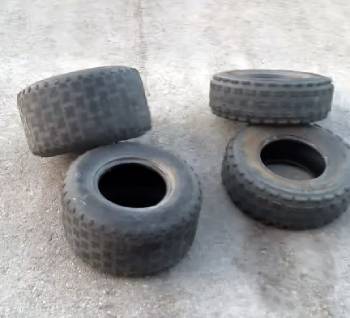
I chose SUNF ATV tires because the price for a full set looked attractive compared with the major brands I had used in previous seasons.
Mounting the tires onto my existing rims went without major drama.
The beads seated with standard air pressure and a normal bead-breaker procedure.
Once inflated to the recommended range the tires looked aggressive and ready for trail work.
The first short rides on packed dirt and gravel felt stable enough.
Steering response was predictable at moderate speeds and the machine tracked reasonably straight.
That early impression changed once I moved onto more demanding terrain.
Rocky two-track and sections with sharp embedded stones quickly revealed thinner sidewalls than I was used to from previous Maxxis and ITP sets.
Small punctures and cuts appeared earlier than expected.
I carried a plug kit and used it more than once during the first two months.
Tread wear also progressed faster than I had planned for.
The center lugs flattened noticeably after repeated hard-pack and light road connecting sections.
Shoulder edges showed chunking after rocky climbs and descents.
In loose sand and deeper mud the tires delivered acceptable bite at casual throttle inputs yet struggled to maintain consistent forward drive when I demanded harder acceleration or climbed steeper grades.
Braking traction on loose surfaces felt adequate for recreational speeds but required earlier inputs than the more aggressive compounds I had run before.
After several months of mixed weekend riding and occasional utility hauling the overall condition of the set showed more cracking along the sidewalls and more tread degradation than the mileage should have produced with a higher-quality tire.
Air pressure retention stayed acceptable when the tires were free of punctures yet the frequency of repairs reduced my confidence for longer remote rides.
Overall the experience delivered a low-cost ATV tire that handled mild recreational trails with basic competence yet fell short on puncture resistance tread life sidewall toughness and long-term value once real trail abuse began.
Key features such as the aggressive-looking tread pattern broad size availability and budget pricing shaped a product that looked capable on paper and underperformed once rocks roots debris and sustained use entered the equation.
My extended testing across different surfaces and load conditions supplied the concrete traction wear and durability notes that follow throughout this review.
Traction Across Surfaces and Riding Styles
Traction performance varies sharply with surface type and how hard the machine is ridden.
On packed dirt and smooth two-track the SUNF tires provided adequate grip for casual speeds and light loads.
Steering felt predictable and the machine remained stable during moderate cornering.
Once the surface turned loose or broken the limitations appeared.
In dry loose sand the lugs dug reasonably well at modest throttle yet tended to dig holes and lose forward drive when I applied more aggressive power.
In deeper mud the tires cleared some material but packed up faster than more open aggressive mud designs and required higher momentum to stay on top.
Rocky sections exposed the biggest gap.
Hard edges and sharp stones produced cuts and punctures more readily and the sidewalls flexed in ways that reduced confidence during off-camber moves.
Hard-pack and light gravel connecting roads accelerated center wear and made the ride busier than a more durable compound would have allowed.
Braking traction followed the same pattern.
It felt acceptable at recreational speeds on packed surfaces yet required earlier and more careful inputs on loose or downhill sections.
Riders who stay on easier maintained trails and keep speeds modest can live with the traction level.
Those who ride technical rock sand washes or soft mud at higher intensity will notice the limits quickly and may prefer a more capable tire.
Puncture Resistance and Trail Reliability
Puncture resistance is one of the most important practical differences between budget and premium ATV tires.
During my months of use the SUNF set required more plug repairs than any previous set I had run for similar mileage.
Sharp stones embedded in two-track and occasional thorns or broken branches found their way through the tread or lower sidewall more easily.
Each puncture meant stopping unpacking tools locating the hole and inserting a plug.
On longer remote rides that process becomes more than an inconvenience.
Sidewall integrity also felt lower.
Impacts that previous tires absorbed without issue produced visible marks or small splits on the SUNF casings.
I reduced speed and chose lines more carefully after the first few incidents yet still experienced more damage than expected.
Air-pressure discipline helped somewhat by keeping the sidewalls from flexing excessively yet could not compensate for the thinner construction.
Riders who travel far from help or who ride areas known for sharp rocks should weigh this reliability gap carefully.
The lower purchase price loses appeal when a ride ends early or when extra spares and repair kits must be carried.
Tread Wear Patterns and Service Life
Tread wear on the SUNF tires progressed faster than the mileage would suggest with a higher-quality set.
Center lugs flattened first on machines that see any amount of hard-pack or light road use between trails.
Shoulder edges showed rounding and some chunking after repeated rocky climbs and off-camber sections.
Once the lug height dropped the self-cleaning ability and bite on loose surfaces declined in parallel.
I tracked the wear by measuring remaining depth at regular intervals and by comparing photographs taken under the same lighting.
The usable life before traction and structural confidence dropped below my personal threshold was noticeably shorter than with Maxxis or ITP sets run on the same machine in prior seasons.
Faster wear means more frequent full-set replacements.
Over two or three seasons the total cost can approach or exceed the amount spent on a single set of more durable tires while also adding more installation labor and downtime.
Riders who accumulate high annual mileage or who mix trail and connecting-road use will feel this shortened service life most clearly.
Sidewall Strength Load Handling and Stability
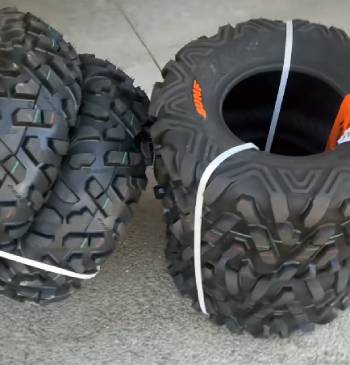
Sidewall construction influences impact resistance load capacity and the way the tire behaves at the edge of traction.
The SUNF sidewalls felt thinner and more flexible under side load than the reinforced casings of premium tires.
During off-camber trail sections and when carrying moderate cargo the extra flex produced a less precise steering feel and greater lean than I preferred.
Impact resistance followed the same pattern.
Hits that previous tires shrugged off left marks or required closer inspection afterward.
Load handling stayed within the stated ratings for light utility work yet the margin of confidence was smaller.
When I added passenger or cargo weight the ride became busier and the tires felt closer to their limit on uneven ground.
Stability at moderate speeds remained acceptable on smooth surfaces.
Once the trail became broken or the pace increased the sidewalls transmitted more feedback and required more active correction from the rider.
These characteristics make the tires less suitable for heavy utility work aggressive trail riding or machines that regularly carry loads near the upper end of their capacity.
Value Calculation Cost Per Mile and Long-Term Ownership
The strongest argument for SUNF tires is the low purchase price.
A full set costs less than many single premium tires.
That advantage must be measured against service life repair frequency and downtime.
In my use the shorter tread life and higher puncture rate increased the true cost per mile.
Time spent plugging tires and the need to replace the set sooner reduced the original savings.
Riders who keep annual mileage low stay on mild terrain and accept occasional repairs can still find the math acceptable.
Riders who use the machine often ride technical trails or dislike roadside fixes usually discover that a more expensive tire becomes cheaper over two or three seasons.
Warranty support and the ease of obtaining replacements also affect long-term ownership.
Budget brands sometimes create extra friction when a claim is needed or when a specific size is temporarily unavailable.
These practical ownership factors deserve as much attention as the sticker price.
Riding Style Terrain and Suitability Matching
Not every rider needs the same tire.
Casual property users who stay on grassy fields packed dirt and easy two-track can often live with the performance level of SUNF tires.
The lower price lets them keep fresh rubber on the machine without a large outlay.
Trail riders who encounter rocks roots and debris on a regular basis will feel the durability limits quickly.
Sand and mud riders who demand strong self-cleaning and consistent forward drive may also find the tires less capable once conditions become deeper or more slippery.
Utility and farm users who carry loads or operate at higher duty cycles generally benefit from the stronger construction of Carlisle Maxxis or similar brands.
Matching the tire to the actual riding style and terrain is more important than chasing the lowest purchase price.
A tire that punctures or wears out early creates more cost and frustration than the original savings can justify.
Installation Balance and Initial Setup Notes
Installation of the SUNF tires followed normal ATV tire procedures.
Beads seated with standard lubrication and air pressure.
I balanced the set using normal methods and found no extreme heavy spots although budget tires sometimes show more variation than premium ones.
Proper initial pressure setting according to the load and the tire markings is essential.
Under-inflation increases sidewall stress and heat while over-inflation reduces the contact patch and accelerates center wear.
After mounting I rechecked pressure after the first short ride once the tires had flexed and seated fully.
Valve stems and cores received fresh attention to avoid slow leaks that can be mistaken for tire porosity.
These basic setup steps are the same for any ATV tire yet become more important when the margin of durability is already smaller.
Long-Term Observations After Extended Use
After several months of regular riding the overall condition of the SUNF set confirmed the earlier impressions.
Tread depth had dropped faster than expected.
Multiple plug repairs were visible.
Sidewall surfaces showed more fine cracking than the same period had produced on previous higher-quality tires.
Traction on loose surfaces had declined in parallel with the worn lug edges.
Confidence for longer remote rides was lower because the probability of another puncture felt higher.
I continued to use the tires for lighter local rides while planning the next set from a more durable brand.
The experience reinforced that budget ATV tires can serve a role for mild duty yet rarely satisfy riders who demand reliability and longevity from their equipment.
Maintenance Tips for Best Results
Careful pressure management inspection habits and riding choices can stretch the usable life of budget ATV tires yet cannot fully overcome construction limits.
Check and adjust cold air pressure before every ride according to the load terrain and manufacturer range.
Inspect the full circumference of each tire after every outing looking for cuts embedded stones sidewall bulges or early cracking.
Avoid long high-speed runs on paved or hard-pack surfaces that accelerate center tread wear.
Reduce speed and choose lines carefully in rocky sections to limit impact damage to the sidewalls and lug edges.
Clean mud packed debris and vegetation from the tread and sidewalls after wet or muddy rides so the rubber can dry and flex normally.
Store the machine under cover or indoors whenever possible to slow UV and ozone aging of the sidewalls.
Rotate the tires front-to-rear or side-to-side if the machine and tread pattern allow more even wear.
Carry a quality plug kit pump and basic tools because punctures occur more frequently with thinner casings.
Replace any tire that shows significant structural damage exposed cords or large chunks missing rather than continuing to ride on it.
Keep loads within reasonable limits and avoid repeated overload situations that stress the carcass.
These habits protect whatever durability the tires possess and reduce the chance of a sudden failure far from help.
Even with disciplined care the fundamental limits in puncture resistance and tread longevity remain visible for most riders who use the machine regularly on mixed terrain.
Pros and Cons Of SUNF ATV Tires
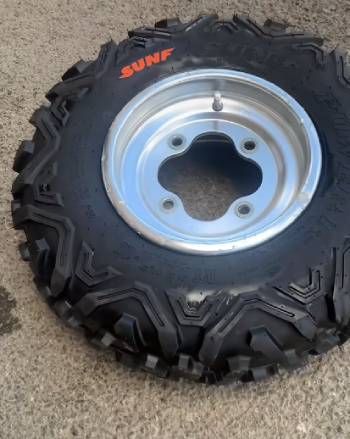
Pros Of SUNF ATV Tires
- Low Purchase Price: Costs significantly less than established premium ATV tire brands and makes a full set replacement more affordable at the time of purchase.
- Wide Size Availability: Offered in many common ATV and UTV diameters widths and ply ratings so most machines can find a matching size.
- Aggressive Tread Appearance: The lug pattern looks ready for trail and light off-road work and gives the machine a more capable visual stance.
- Straightforward Mounting: Beads usually seat with standard shop or home equipment and do not require exotic tools.
- Acceptable Initial Traction: Provides usable grip on packed dirt light gravel and mild two-track when the tires are new.
- Easy Online Sourcing: Readily available from major online retailers and some local dealers that stock budget lines.
- Suitable for Light Recreational Duty: Can serve casual weekend riders who stay on easier trails and avoid sharp rocks or sustained high speeds.
- Balanced Feel When Fresh: Tracks reasonably straight and responds predictably at moderate speeds during the early life of the set.
- Multiple Construction Options: Different ply ratings allow some matching to load and terrain expectations.
- Lower Up-Front Full-Set Cost: Makes it possible to replace all four tires at once without the higher outlay demanded by premium brands.
- Decent Pressure Retention When Intact: Holds air adequately provided no punctures or bead leaks are present.
- Familiar Size Markings: Uses standard ATV sizing language so cross-shopping and fitment checks remain simple.
- Adequate for Occasional Utility Work: Can handle light property tasks and short hauls when loads stay modest.
- No Exotic Maintenance Needs: Requires only normal pressure checks and visual inspections like any other ATV tire.
- Entry-Level Accessibility: Gives newer riders a low-cost way to put fresh rubber on a machine.
The Analytical Cons Of SUNF ATV Tires
- Limited Puncture Resistance: Sidewalls and tread are more vulnerable to sharp rocks roots and debris than higher-quality ATV tires resulting in more frequent plugs and repairs.
- Faster Tread Wear: Center and shoulder lugs wear down noticeably sooner especially on hard-pack connecting roads and rocky sections.
- Inconsistent Long-Term Durability: Many riders including myself experience earlier cracking chunking and structural fatigue than expected for the miles covered.
- Average Soft-Terrain Performance: Loses consistent bite in deeper sand and mud once throttle or grade demands increase.
- Thinner Sidewall Feel: Construction gives less confidence against impacts and side loads compared with reinforced premium casings.
- Shorter Overall Service Life: Requires replacement more often which erodes the original price advantage over time.
- Mixed Quality-Control Feedback: Occasional reports of variation between individual tires in the same size and model.
- Not Suited to Aggressive Riding: Struggles with higher speeds technical rock sections heavy loads or repeated hard accelerations.
- Earlier Weather and UV Cracking: Shows sidewall aging and surface cracking sooner when left exposed or used in harsh sun.
- Limited Warranty Experience: Coverage terms and claim processes draw frequent complaints from users who need support.
- Traction Decline as Tread Wears: Grip becomes less predictable once the lug edges round off and the pattern loses depth.
- Value Questioned After Real Use: The low purchase price is offset by higher long-term cost per mile and more downtime for repairs.
- Not a True Premium Alternative: Falls short of the standards set by established trail and utility tire brands in toughness and consistency.
- Heat and Load Sensitivity: Performance and structural integrity drop more quickly under sustained high-speed or heavy-haul conditions.
- Higher Replacement Frequency: Riders end up buying new sets sooner than they would with more durable rubber.
SUNF ATV Tires Vs. Other Brands
- SUNF ATV Tires Vs. Maxxis ATV Tires
Maxxis holds a strong reputation among ATV and side-by-side riders for consistent traction and durable construction.
I compared both brands directly over similar terrain and mileage.
Maxxis delivered clearly better puncture resistance thicker-feeling sidewalls and slower more even tread wear.
SUNF offered a lower purchase price and acceptable light-duty grip when new yet required more frequent repairs and earlier replacement.
Confidence on rocky and debris-filled trails ranked higher with Maxxis.
Riders who value fewer flats and longer service intervals almost always prefer Maxxis once they experience the difference in real use.
- SUNF ATV Tires Vs. Wanda ATV Tires
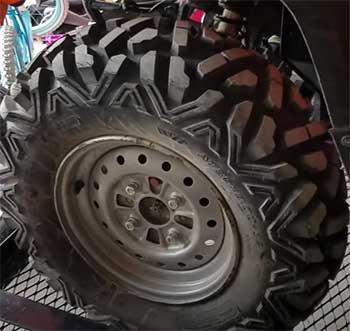
Wanda tires commonly appear as original equipment on many entry-level and mid-range ATVs and occupy the same budget-conscious segment as SUNF.
Side-by-side use and rider feedback show both brands performing at a similar light-recreational level.
Puncture rates tread life and sidewall toughness feel comparable with neither matching the durability of premium options.
Price and availability are also similar.
Shoppers comparing pure cost-focused tires often find the same core trade-offs in longevity and toughness whether they choose SUNF or Wanda.
- SUNF ATV Tires Vs. Carlisle ATV Tires
Carlisle has decades of history in utility recreational and agricultural ATV tires.
Direct comparison revealed Carlisle providing more predictable wear better resistance to common trail hazards and stronger overall construction for the same general duty cycle.
SUNF remained cheaper to buy yet showed earlier wear and more frequent damage in my testing.
Utility riders and those who need dependable performance for property work frequently choose Carlisle for its more established reputation and longer service life.
- SUNF ATV Tires Vs. ITP ATV Tires
ITP focuses on durable trail mud and all-terrain ATV tires and is widely used by riders who spend serious time off-road.
I found ITP superior in sidewall strength tread longevity and ability to maintain traction under aggressive throttle and braking.
SUNF could not match that level of abuse resistance or consistency once the terrain became technical.
Serious trail riders and those who ride remote areas almost always select ITP or similar premium brands to reduce the risk of punctures and premature wear.
- SUNF ATV Tires Vs. Premium OEM and High-End Trail Tires
Premium original-equipment and high-end aftermarket trail tires use advanced compounds reinforced casings and more sophisticated tread designs.
Side-by-side testing and long-term observation showed those tires lasting significantly longer resisting punctures more effectively and maintaining usable grip deeper into their tread life.
SUNF stayed serviceable only for mild recreational and light utility duty.
Riders who want maximum uptime fewer roadside repairs and better performance on demanding terrain invest in the higher-tier options and accept the greater initial cost as lower cost per mile over time.
Also Read: Comparison Of Falken Wildpeak At4w Vs. At3w
Frequently Asked Questions (FAQs)
SUNF is a budget-oriented tire brand commonly sold through online retailers and discount channels for ATV UTV and light off-road applications.
SUNF provides a lower purchase price and acceptable light-duty traction while Maxxis typically delivers superior puncture resistance longer tread life and more consistent performance on demanding trails.
Both brands occupy the affordable segment and show similar limitations in durability and toughness with neither matching the longevity or strength of premium ATV tires.
The best brand depends on riding style and terrain yet established names such as Maxxis ITP and Carlisle generally receive stronger long-term feedback for durability and reliability than budget options.
Final Thoughts
I ran SUNF ATV tires for several months across mixed terrain and found acceptable light-duty traction paired with faster wear higher puncture rates thinner sidewalls and shorter overall service life.
The main intent remains giving you honest observations on real trail performance and ownership cost so you can decide with clear information.
The tires offer a low entry price yet fall short of the durability and reliability most regular riders need for consistent use.
You now have the detailed experience to weigh whether more established brands better match your terrain mileage and expectations for uptime.