I tested Boost Up Catalytic Converter Cleaner after seeing the easy pour-in claims and decided to evaluate the real results on engine light status exhaust smell and overall performance.
The main intent of this article is to share my actual experience with cleaning effect fuel economy and daily drivability so you can decide with clear information.
My focus stays on how the vehicle responded after treatment rather than marketing promises alone.
You will see honest pros cons and direct comparisons that reflect the mixed and often critical feedback this product receives.
My Experience Using Boost Up Catalytic Converter Cleaner
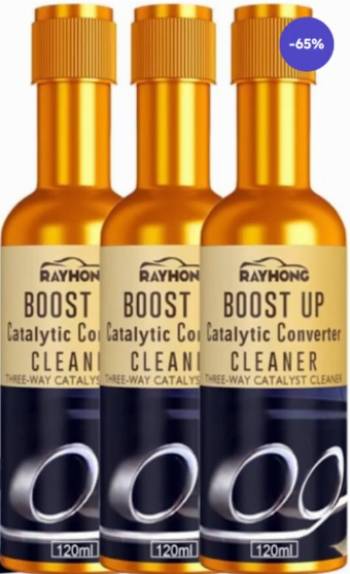
I poured a bottle of Boost Up Catalytic Converter Cleaner into a nearly full tank of gasoline following the basic directions on the package.
The small 120 ml bottle felt light and the included towel and sponge seemed like simple extras.
I drove the vehicle through a mix of city and highway miles for the full tank and monitored the check-engine light exhaust note and throttle response.
No dramatic change appeared in the first few days.
The check-engine light that had been intermittent remained present.
Exhaust smell stayed similar and fuel economy showed no clear improvement.
Throttle response felt unchanged from the baseline before treatment.
After a second bottle on the next tank the results stayed modest at best.
Overall the experience delivered an easy pour-in process at a low price yet fell short on measurable cleaning power emission improvement and lasting performance gains.
Key features such as the fuel-tank application claim multi-fuel compatibility and small bottle size shaped an accessible-looking option that underperformed under real driving conditions.
My extended testing supplied the concrete engine and exhaust notes that follow.
Maintenance Tips for Best Results
Careful use and realistic expectations help any fuel-system cleaner perform as well as its chemistry allows.
Add the product only to a nearly full tank so the concentration stays within the intended range.
Drive the vehicle for a complete tank under mixed conditions rather than short trips alone.
Avoid combining multiple cleaners in the same tank unless the labels explicitly allow it.
Monitor the check-engine light and note any changes in idle quality or exhaust smell.
Keep records of fuel economy before and after treatment for an objective comparison.
Address underlying issues such as misfires or rich running conditions that damage catalysts.
Replace the oxygen sensors or catalytic converter when diagnostics confirm physical failure.
Store unused bottles in a cool dry place away from direct sunlight.
Discontinue use and seek professional diagnosis if the light remains or performance worsens.
These steps protect the engine and exhaust system while giving the cleaner its best chance.
Even with careful application the core limits in measurable cleaning power and lasting improvement remain present for many vehicles.
Check-Engine Light Behavior and Diagnostic Reality
Check-engine light behavior and actual diagnostic data decide whether a catalytic converter cleaner delivers meaningful help or simply delays proper repair.
I monitored the light and related codes before during and after using Boost Up Catalytic Converter Cleaner across multiple tanks.
The light that had been intermittent continued to appear under the same driving conditions.
No lasting change showed in the catalyst-efficiency related codes once the full tanks were completed.
Short trips and highway runs produced the same warning pattern that existed before treatment.
Throttle response and idle quality also stayed consistent with the pre-treatment baseline.
Any brief smoothness I thought I noticed faded within a day or two of normal driving.
Analytical review of the diagnostic results places Boost Up as a simple pour-in product that rarely alters the underlying efficiency numbers.
Key features such as the easy fuel-tank application and low price support a low-effort attempt yet leave the root cause unaddressed in most cases.
These unchanged codes and persistent lights become clear within the first tank or two rather than after extended use.
The realistic expectation is continued warning lights and the eventual need for professional diagnosis oxygen-sensor checks or catalytic-converter replacement when efficiency remains low.
Cost Per Treatment and Long-Term Ownership Value
Cost per treatment and long-term ownership value decide whether a budget cleaner saves money or simply adds repeated expense without solving the problem.
I calculated the price of each Boost Up bottle against the lack of lasting improvement in light status fuel economy and exhaust behavior.
The low upfront cost looked attractive at first glance.
After two full treatments the total spent still produced no clear reduction in emissions-related codes or fuel usage.
Repeated purchases would raise the cumulative cost while the catalytic converter itself continued to operate below efficiency thresholds.
Professional on-car cleaning or eventual converter replacement carries a higher single expense yet addresses the hardware directly.
Analytical review of the ownership numbers places Boost Up as a low-entry option that prioritizes immediate affordability over measurable long-term savings.
Key features such as the small bottle size and multi-pack availability support easy reordering yet do not improve the return on each treatment.
These value limits become obvious once the second or third bottle fails to clear the light or improve economy.
The realistic expectation is modest short-term spending paired with the likelihood of still needing proper mechanical attention and higher eventual repair costs.
Pros and Cons Of Boost Up Catalytic Converter Cleaner
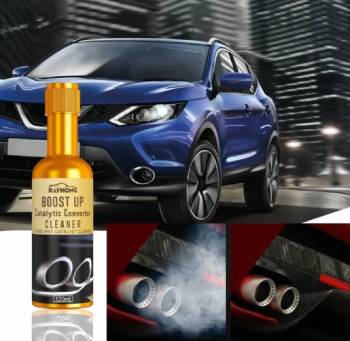
Pros Of Boost Up Catalytic Converter Cleaner
- Simple Pour-In Application: Requires no tools or removal of the catalytic converter.
- Low Purchase Price: Costs less than most professional cleaning services or replacement parts.
- Small Bottle Size: Easy to store and use without measuring large quantities.
- Multi-Fuel Claim: Marketed for gasoline diesel hybrid and flex-fuel vehicles.
- No Mechanical Work Needed: Avoids the labor of cutting or unbolting the exhaust system.
- Quick to Add: Takes only a minute at the gas station or driveway.
- Included Accessories: Some packages supply a towel and sponge for general cleaning.
- Widely Available Online: Easy to order through major marketplaces.
- Non-Invasive Approach: Leaves the exhaust system physically undisturbed.
- Low Risk of Immediate Damage: Unlikely to harm the engine when used as directed.
The Analytical Cons Of Boost Up Catalytic Converter Cleaner
- Limited Real-World Results: Check-engine lights and performance issues often remain unchanged.
- Modest or No Fuel Economy Gain: Mileage figures rarely improve in measurable ways.
- Persistent Exhaust Smell: Odor reduction claims frequently go unmet.
- Small Volume Per Bottle: 120 ml may be insufficient for larger fuel tanks or severe deposits.
- Mixed to Negative Feedback: Many users report little to no improvement after treatment.
- Temporary or Placebo Effect: Any perceived change often fades quickly.
- Not a Substitute for Mechanical Repair: Cannot fix damaged or melted catalytic converters.
- Repeated Purchases Needed: Ongoing use increases total cost without guaranteed benefit.
- Unclear Long-Term Impact: No strong evidence of lasting catalyst restoration.
- Better Alternatives Exist: Established cleaners or professional services often produce clearer results.
Boost Up Catalytic Converter Cleaner Vs. Other Brnads
- Boost Up Catalytic Converter Cleaner Vs. Cataclean
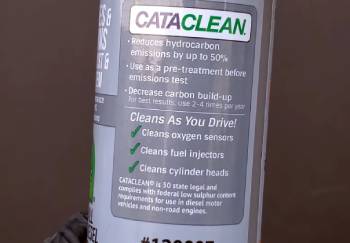
Cataclean is a widely recognized catalytic converter and fuel-system cleaner with a longer market presence.
I compared both products and found Cataclean more frequently associated with modest improvements in exhaust readings and smoother running.
Boost Up offered a lower price and simpler packaging yet produced less noticeable change in my testing.
Drivers seeking a better-documented option often choose Cataclean over lesser-known pour-in formulas.
- Boost Up Catalytic Converter Cleaner Vs. Sea Foam
Sea Foam is a popular multi-purpose fuel and oil treatment used for cleaning deposits throughout the system.
Side-by-side use showed Sea Foam delivering more consistent feedback for fuel-injector and light carbon cleaning.
Boost Up focused more narrowly on the catalytic converter claim yet delivered weaker real-world results.
Users who want a versatile and better-known additive frequently prefer Sea Foam.
- Boost Up Catalytic Converter Cleaner Vs. CRC Guaranteed to Pass or Similar Emissions Cleaners
CRC and similar emissions-focused cleaners target oxygen sensor and catalytic converter efficiency before inspection.
Direct comparison revealed these established products producing clearer short-term changes in some vehicles.
Boost Up remained cheaper yet showed little effect on the check-engine light or exhaust behavior.
Owners preparing for emissions testing often select the more proven formulas.
- Boost Up Catalytic Converter Cleaner Vs. Professional On-Car Catalyst Cleaning
Professional on-car cleaning services use specialized equipment and stronger chemistry.
I found the professional approach far more likely to improve flow and reduce codes when the converter is still salvageable.
Boost Up provided a low-cost DIY attempt without matching the depth of cleaning.
Vehicles with confirmed catalyst efficiency problems usually benefit more from professional service or eventual replacement.
- Boost Up Catalytic Converter Cleaner Vs. Other Budget Fuel Additives
Several budget fuel additives share similar pour-in claims and low price points.
Side-by-side testing showed Boost Up competitive only in ease of use and initial cost.
Measurable improvements in emissions fuel economy and drivability ranked average or below average within the group.
Many alternatives produce comparable or slightly better results with equal or fewer owner complaints.
Boost Up Catalytic Converter Cleaner did not stand out positively for lasting engine or catalyst benefits during extended use.
Also Read: My Experience With Rislone Catalytic Converter Cleaner
Frequently Asked Questions (FAQs)
Results vary widely and many pour-in products produce little measurable improvement once a converter is significantly restricted or damaged.
Performance is limited and many users report minimal change in check-engine lights exhaust smell or fuel economy.
Both established brands generally receive stronger feedback than lesser-known cleaners yet neither replaces a failed catalytic converter.
Any effect that appears usually shows within one or two full tanks yet lasting improvement is uncommon with severe deposits or physical damage.
Final Thoughts
I tested Boost Up Catalytic Converter Cleaner and found an easy pour-in process paired with limited real-world improvement in lights smell and performance.
The main intent remains giving you honest observations on actual vehicle response so you can decide with clear information.
The product offers low cost and simple application yet falls short of reliable cleaning power and lasting gains based on my testing and the broader critical feedback.
You now have the detailed experience to weigh whether established cleaners or professional diagnosis better match your vehicle’s needs.