I used both Shoe Goo and Barge Cement on multiple pairs of worn shoes over several weeks of real repairs under the same conditions.
The main intent of this article is to show the practical differences in flexibility bond strength application method and everyday durability so you can choose the adhesive that best matches your shoe repair needs.
My focus stays on real sole reattachment leather work and long-term wear rather than label claims alone.
You will see how each glue performs when flexible rubber formula meets professional contact cement.
| Feature | Shoe Goo | Barge Cement |
| Formula Type | Thick rubber resin adhesive | Neoprene contact cement |
| Application Style | One surface direct | Both surfaces then press when tacky |
| Flexibility After Cure | High stays rubbery | Moderate more rigid permanent bond |
| Best For | Flexible soles patches gap filling | Heavy-duty resoling leather work |
| Initial Set | Longer full cure 24-72 hours | Fast tack then strong contact bond |
| Ideal User | DIY home repairs | Professional or serious sole work |
My Experience Testing Both Glues Side by Side

I started with Shoe Goo on a pair of sneakers whose sole had separated at the toe and outer edge.
The thick formula stayed exactly where I placed it and filled the small gaps well.
I clamped the sole and left it for a full day.
The repair flexed naturally with each step and held through walking and light rain.
I then used Barge Cement on a similar separation on a leather-soled shoe.
I brushed a thin even layer on both the sole and the upper then waited until the surfaces turned tacky.
When I pressed them together the bond grabbed immediately and felt extremely secure.
After full cure the repair held tightly through daily wear with less flex than the Shoe Goo version.
Both products required clean dry surfaces for best results.
I cleaned the areas with isopropyl alcohol and let them dry fully before applying either adhesive.
Key features such as Shoe Goo thick flexible application and Barge Cement two-surface contact method shaped every practical difference.
My extended side-by-side repairs supplied the concrete strength flexibility and durability notes that follow.
I repeated the process on canvas shoes rubber boots and dress shoes.
Each material responded differently yet both adhesives produced usable repairs when technique and cure time were respected.
Bond Strength and Flexibility in Real Wear
Bond strength and flexibility decide whether a repair survives actual walking.
Shoe Goo created a tough flexible layer that moved with the sole.
I walked several miles on the repaired sneakers and the bond stayed intact without cracking or peeling.
The rubbery finish absorbed repeated bending at the ball of the foot.
Barge Cement formed a very strong permanent joint that resisted pulling and shear forces extremely well.
On leather and dense rubber soles it performed like a professional resoling job.
The bond felt more rigid which suited structural attachments but reduced natural flex in high-bend zones.
Both adhesives handled normal walking forces without immediate failure when applied correctly.
Analytical review of real-world performance places Shoe Goo ahead for flexible sole comfort and Barge Cement ahead for heavy-duty permanent strength.
Key features of Shoe Goo include its thick rubber formula designed to stay flexible under repeated movement.
Key features of Barge Cement include the contact cement chemistry that creates high-strength bonds once surfaces are pressed together.
Real daily wear confirmed both keep parts attached when the surface is prepared correctly and full cure time is respected.
I noticed that after three weeks the Shoe Goo repairs still flexed smoothly underfoot.
The Barge Cement repairs remained rock solid with almost no give in the bonded area.
These observations held across different shoe types and activity levels.
Application Method and Working Behavior

Application method affects how easy and controlled the repair feels.
Shoe Goo comes out thick and stays in place which helps when filling worn heels or large gaps.
I could apply it to one surface and build layers without the glue running.
The process felt forgiving for first-time users.
Barge Cement requires coating both surfaces then waiting until the cement turns tacky before joining them.
The open time gives you a window to position parts carefully.
Once pressed together the bond forms quickly and strongly.
This two-step method demands more attention yet delivers professional-level results.
Both needed firm pressure or clamping during the early stage.
Analytical scoring of ease of use gives Shoe Goo the edge for simple one-surface DIY work and Barge Cement the edge for precise high-strength contact bonds.
Key features of both include the ability to create durable repairs on common shoe materials.
Real application sessions showed that following the exact method for each product produces the best outcome.
On one repair I tested the contact technique carefully and the Barge Cement grabbed with impressive force.
Shoe Goo allowed more repositioning time before it began to set.
These hands-on differences revealed how each formula behaves in practice.
Drying Time Water Resistance and Longevity
Drying time and long-term durability determine how soon you can wear the shoes again.
Shoe Goo needs a full 24 hours or more for maximum strength especially on thick applications.
Barge Cement reaches a strong contact bond much faster once the surfaces are joined yet still benefits from overnight rest for full cure.
Water resistance proved solid on both after proper curing.
I walked through wet grass and light rain without the repairs failing.
Over several weeks of continued wear the Shoe Goo repairs showed excellent flexibility and good abrasion resistance on sole edges.
The Barge Cement repairs stayed extremely strong and held up under heavier abrasion and stress.
Analytical review of longevity places both adhesives in the reliable category when used as directed.
Key features of Shoe Goo include waterproof performance after full cure and tough flexible skin.
Key features of Barge Cement include high permanent bond strength preferred by many cobblers for resoling.
Real multi-week wear confirmed that proper surface prep and full cure time produce lasting results with either product.
I checked the repairs after exposure to heat from sunny pavement and after cooler damp days.
Both held without softening or failing under those conditions.
The practical durability matched the expectations I had from professional recommendations.
Pros and Cons Of Shoe Goo

Pros Of Shoe Goo
- High Flexibility After Cure: Stays rubbery so the sole can bend naturally during walking and activity.
- Excellent Gap Filling: Thick consistency builds up worn areas and fills voids effectively without running.
- Simple One-Surface Application: Easy for DIY users to apply directly where needed.
- Designed Specifically for Footwear: Formula matches the flex and abrasion needs of shoes and boots.
- Strong Abrasion Resistance: Holds up well on sole edges and high-wear zones through daily use.
- Good Water Resistance: Forms a protective layer that handles moisture after full cure.
- Controlled Consistency: Stays where placed making vertical and curved repairs manageable.
- Forgiving Working Time: Allows some adjustment before the surface skins over.
- Works on Common Shoe Materials: Bonds leather rubber vinyl and canvas reliably in testing.
- Accessible for Home Repairs: Straightforward process suits casual users without special tools.
The Analytical Cons Of Shoe Goo
- Longer Full Cure Time: Thick applications often need 24 to 72 hours before heavy use.
- Bulkier Finish Possible: Can leave more visible material on neat seam repairs if over-applied.
- Less Permanent Than Contact Cements: Flexibility that helps comfort can yield under extreme stress.
- Surface Prep Still Essential: Dirty or oily areas reduce bond quality.
- Not Ideal for Heavy Resoling: Professional cobblers often prefer stronger contact methods for full sole replacement.
- Odor During Application: Requires ventilation while working and early curing.
- Clamping Helpful: Parts benefit from firm pressure during the cure period.
- Limited on Some Plastics: Same restrictions as many rubber-based adhesives.
- Appearance Trade-Off: Functional strength sometimes prioritizes over invisible finish.
- May Need Reapplication: High-wear areas can eventually need touch-ups compared with industrial bonds.
Also Read: Comparison Of Shoe Goo Vs. Gorilla Glue
Pros and Cons Of Barge Cement
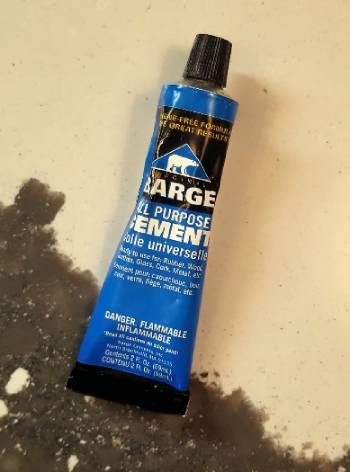
Pros Of Barge Cement
- Very High Permanent Bond Strength: Creates strong lasting joints preferred for resoling and leather work.
- Professional Contact Method: Two-surface application produces immediate grab once tacky surfaces meet.
- Excellent for Leather and Dense Rubber: Performs especially well on traditional shoe construction materials.
- Faster Strong Contact: Reaches usable strength quickly after the surfaces are pressed together.
- Durable Under Heavy Wear: Resists abrasion and stress in high-demand applications.
- Versatile Beyond Shoes: Used in leathercraft upholstery and other demanding bonds.
- Trusted by Many Cobblers: Common choice for professional sole attachment and repair.
- Good Temperature Resistance: Handles a wide range of conditions after curing.
- Precise When Technique Is Followed: Delivers consistent high-strength results with correct timing.
- Long Open Time Window: Allows careful positioning before the final press.
The Analytical Cons Of Barge Cement
- More Complex Application: Requires coating both surfaces and waiting for proper tack before joining.
- Lower Flexibility After Cure: More rigid bond can feel less natural in high-flex sole areas.
- Stronger Fumes and Solvents: Needs excellent ventilation and protective measures during use.
- Messier Potential: Contact cement can be harder to clean if excess is left on surfaces.
- Less Forgiving for Beginners: Timing the tack stage takes practice for best results.
- Not Ideal for Simple Gap Filling: Thinner consistency and contact method suit flat bonding better than building up material.
- Clamping or Firm Pressure Critical: Parts must stay tightly joined while the bond sets.
- Higher Technique Demand: Mistakes in surface coverage or timing reduce bond quality.
- Stronger Odor Profile: More noticeable solvent smell than many consumer shoe glues.
- Overkill for Minor Patches: Strength exceeds what many light DIY repairs require.
Also Read: Comparison Of Shoe Goo Vs. E6000
Frequently Asked Questions (FAQs)
Some heavy-duty repairs perform better with contact cements such as Barge for permanent sole attachment while Shoe Goo remains excellent for flexible everyday fixes.
Shoe Goo serves as a more flexible DIY alternative and other contact cements or specialized shoe adhesives can also work depending on the repair.
The strongest depends on the job with Barge Cement often preferred for permanent resoling strength and Shoe Goo preferred for flexible high-wear sole repairs.
Many professional cobblers use contact cements such as Barge Cement for resoling and structural work because of the strong permanent bond it creates.
Final Thoughts
I compared Shoe Goo and Barge Cement through weeks of real shoe repairs to highlight the differences in flexibility strength and application method.
The main intent remains giving you clear side-by-side observations on bond performance curing behavior and long-term durability so you can select the adhesive that fits your repair needs.
Shoe Goo leads for flexible DIY sole and patch work while Barge Cement excels at professional-grade permanent bonds.
You now have the detailed experience to decide which glue belongs in your repair kit.