Buying a premium portable speaker usually feels like a game of compromises where you sacrifice battery life for sound quality or drop durability just to get a stylish design that looks good on your shelf.
If you want a rugged, pocket-sized powerhouse that delivers absolute 360-degree sound, has a massive 30-plus hours of playtime, and carries an iconic rock ‘n’ roll design, you should buy this product right now because it completely redefines portable audio.
My Hands-On Experience With The Marshall Emberton II
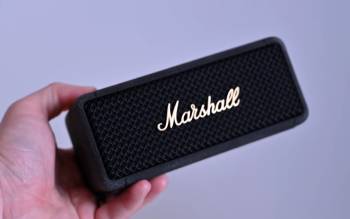
The moment I pulled this speaker out of its box, I felt an immediate wave of nostalgia mixed with genuine awe at the build quality.
It weighs just 0.7 kg, but holding it feels like holding a solid brick of pure musical history.
The textured silicone sleeve mimics the classic vinyl casing of the legendary Marshall amplifiers that my grandfather used to line up in his music room.
It feels incredibly sturdy, premium, and remarkably high-quality in the hand, far removing itself from the cheap, plasticky feel of typical modern Bluetooth speakers.
My true testing phase started on a weekend getaway with friends where we spent the afternoon sitting by the water, enjoying some adult beverages and taking turns playing tracks.
I paired the speaker with my phone in less than ten seconds, completely skipping the frustrating, intrusive app setup processes that other high-end audio brands force upon you.
The first track I blasted was a classic rock recording, and the sound that came out of this tiny frame left everyone at the table completely stunned.
If you heard it before actually looking at it, you would never believe that such a massive, wide soundstage was originating from a device this compact.
The vocals came through with pristine clarity, instruments remained entirely distinct, and the bass had a punchy, tight presence that brought the music to life without sounding muddy.
Throughout an entire weekend of continuous outdoor use at high volumes, the battery level barely budged, proving that the claim of 30-plus hours of portable playtime is not just marketing fluff.
I even accidentally knocked it onto the damp ground near the water, but thanks to its IP67 dustproof and waterproof rating, I wiped the dirt right off the metal grille without a single worry.
It became the absolute star of our outdoor trip.
Maintenance Tips For Keeping Your Speaker Pristine
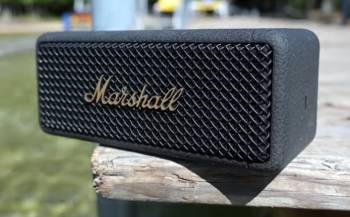
Maintaining the textured silicone sleeve requires regular, gentle cleaning to prevent dirt, dust, and outdoor grime from settling deep into the vinyl-like grooves.
You should wipe the exterior surface down once a week using a soft, slightly damp microfiber cloth without applying harsh chemical solvents or abrasive cleaning pads.
If mud or sticky spills get onto the silicone casing, leverage the IP67 waterproof design by rinsing the closed unit under a gentle stream of lukewarm tap water while keeping water pressure low.
Caring for the front and rear metal grilles involves removing fine particles that can lodge inside the tiny perforation holes over time.
Use a clean, dry, soft-bristled toothbrush to gently sweep across the iconic script logo and the metal mesh to dislodge dust without pushing the debris deeper into the internal driver chambers.
Never stick sharp objects, pins, or compressed air canisters directly into the grille holes, as high-pressure air streams can permanently warp the delicate passive radiators positioned right behind the mesh.
Managing long-term battery health involves following proper lithium-ion charging practices to prevent premature capacity degradation over the years.
Avoid leaving the speaker connected to a live charger continuously for weeks at a time once it reaches full capacity, and try to keep the battery level between 20 percent and 80 percent when storing it long-term.
Store the device in a cool, dry environment away from direct sunlight, as prolonged exposure to extreme heat inside a parked car or on a sunny window sill can degrade the battery cells and warp the protective silicone sleeve.
The Pros Of This Rock Heritage Speaker
The Pros Of This Rock Heritage Speaker
- True Stereophonic Technology: The integration of unique multi-directional tuning ensures that this compact device pushes audio out uniformly across a complete 360-degree plain, turning every single listening angle into an absolute acoustic sweet spot.
- Massive Battery Lifespan: Delivering over 30 hours of continuous wireless playback on a single charge completely removes the regular anxiety of traveling without a charging brick, while its modern USB-C interface ensures a full recovery in 3 hours.
- Rugged All-Weather Engineering: Boasting a fully verified IP67 dustproof and waterproof rating ensures that the internal components stay pristine whether the unit is dropped in muddy soil or submerged under a meter of water.
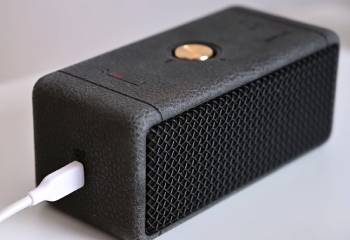
- Intuitive Tactile Controls: Utilizing a gold multi-directional control knob provides an effortlessly smooth physical navigation interface where users can skip tracks, pause playback, or adjust system volume levels with a simple click.
The Cons Every Buyer Should Consider
- The maximum volume ceiling: While the audio output is incredibly rich and clear, it has distinct physical limitations when trying to compete with loud ambient environments like heavy traffic, outdoor waterfalls, or massive backyard parties where multiple groups are shouting over each other.
- The dependent volume synchronization: The physical volume level matches your smartphone volume directly, meaning you cannot leave your phone on medium volume and expect the speaker to provide an independent secondary layer of amplification juice.
- The lack of an auxiliary port: This device relies entirely on wireless Bluetooth connectivity, which completely removes the option to plug in older, non-Bluetooth media players or instruments via a standard 3.5mm audio cable.
- The minimal equalizer customization: The dedicated mobile application functions smoothly for seamless over-the-air firmware updates, but the available equalizer presets are highly restrictive and do not allow you to manually adjust specific bass, mid, or treble frequencies to your exact personal taste.
Marshall Emberton II Vs. Other Brands
- Marshall Emberton II Vs. JBL Flip 6
The battle between these two iconic portable designs centers entirely around your spatial layout requirements and preferred music styles.
The Marshall device implements a dual-sided spatial audio configuration that fires identical high-fidelity sound waves from the front and back grilles simultaneously, producing a wide and lively acoustic environment.
The JBL competitor depends on a singular racetrack-shaped woofer paired with a separate directional tweeter, creating a narrow sound field that loses high-end sharpness when you step around behind the body.
When looking closely at long-distance operation away from an electrical outlet, the retro-style unit dominates the interaction by running for 30 hours, whereas the rival model shuts down after roughly 12 hours of playback.
However, if your daily playlists consist mostly of heavy modern electronic or trap tracks that demand deep low-end thuds, the rival speaker leverages its dedicated amplification channels to hit slightly harder in the lowest bass octaves.
- Marshall Emberton II Vs. Bose SoundLink Flex
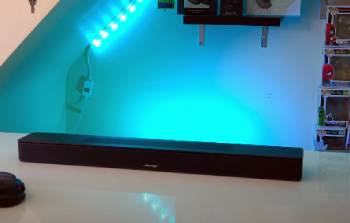
Choosing between these two premium options comes down to an analytical trade-off between classic industrial aesthetics and modern utility.
The vintage script look stands out as a luxurious piece of home art that looks perfect resting on wooden office desks, minimalist bookshelves, or modern outdoor patios.
The Bose alternative chooses a basic, powder-coated steel layout that looks entirely utilitarian and lacks any sort of unique historical flair.
The sonic profiles differ wildly, as our rock-themed device focuses heavily on absolute instrument separation, delivering highly textured mid-frequencies and realistic vocal projection.
The alternative option depends on intensive digital algorithms to pump up low-end presence artificially at lower volume stages, which frequently masks the finer acoustic textures during complex multi-instrument tracks.
The gold physical multi-directional knob on the vintage unit also wins out dramatically over the stiff rubber buttons found across the top of the competing frame.
- Marshall Emberton II Vs. Sony SRS-XE200
This matchup highlights a fundamental difference between a room-filling indoor audio experience and highly directional outdoor projection.
The vintage brick design radiates an evenly dispersed soundstage using its internal stereo layout, making it the perfect option for small apartment spaces, tabletops, and intimate gatherings.
The Sony competitor integrates a unique line-shape diffuser inspired by professional concert arrays, which is engineered to shoot sound far out in a narrow, targeted line across open backyard spaces.
In terms of physical space efficiency and packing readiness, the vintage option is significantly smaller and more streamlined to toss into a small backpack pocket.
The alternative option uses a bulky, tall pentagonal column shape that takes up substantial bag space.
Battery testing also shows a massive gap, with the retro unit crossing the 30-hour playback boundary while the tall column competitor runs empty after 16 hours of standard use.
- Marshall Emberton II Vs. Ultimate Ears Wonderboom 4
This comparison puts a sophisticated, detailed personal listening device head-to-head with a rugged, floating pool accessory.
The Marshall layout relies on its premium signature audio tuning to prioritize crisp guitar riffs, clear vocal layers, and realistic separation across acoustic and rock genres.
The circular alternative drops fine instrumental detail in exchange for brute loudness, blasting out omnidirectional party music that can cut through splashing water and loud shouting.
The physical construction designs point toward entirely different outdoor lifestyles.
While both hold an identical IP67 rating against dirt and water, the round rival is engineered to float completely on the water surface, making it superior for direct use inside a swimming pool.
The vintage option will sink if dropped into deep water, but it answers back by offering triple the total runtime and a much faster USB-C quick-charge system.
- Marshall Emberton II Vs. Soundcore Motion 300
This final comparison matches an artistic premium legacy speaker against a budget-focused device loaded with high-resolution digital features.
The Soundcore option comes with an extremely appealing price tag and includes advanced wireless codec support like LDAC to stream high-resolution tracks from compatible Android devices.
The vintage unit relies on standard Bluetooth codecs but outperforms the budget model by utilizing superior physical drivers and housing materials that prevent cabinet resonance.
The application experience also showcases a distinct contrast in user philosophy.
The budget option requires you to adjust complicated multi-band graphic sliders constantly to find an acceptable sound profile for different rooms.
The legacy speaker arrives perfectly tuned out of the box, offering three simple, professionally optimized presets that immediately deliver rich sound without forcing you to become an audio engineer.
Also Read: Comparison Of Bose Soundbar 600 Vs. 700
Frequently Asked Questions (FAQs)
Yes, it is absolutely worth the investment if you value premium build quality, crisp audio clarity, balanced sound, and an exceptional battery life that outlasts almost every other option in its class.
The combinations of IP67 resilience and a timeless aesthetic make it a reliable companion for daily indoor and outdoor use.
The standout features include more than 30 hours of continuous playback, full IP67 dust and water resistance, and True Stereophonic 360-degree multi-directional sound.
It also includes a multi-speaker Stack Mode for linking multiple units, a gold multi-directional control knob, and a durable textured silicone sleeve.
The second generation model remains the smarter buy for users who want proven, reliable performance, exceptional battery stability, and excellent value for money.
While newer iterations might introduce minor software adjustments, the core hardware, soundstage, and rugged durability of this specific version deliver everything you need without unnecessary inflation.
Final Thoughts
A dedicated pairing button sits right next to the knob to handle wireless device connections instantly.
If you are tired of weak audio, cheap construction, and constantly hunting for a power outlet, you should buy this product right now because it delivers the ultimate blend of style and stamina.
Investing in this speaker means bringing home an absolute audio masterpiece that looks incredible, sounds massive, and survives every single adventure you take it on.