Finding the perfect mid-tier wireless headphones can feel incredibly overwhelming, but my goal with this hands-on evaluation is to help you easily choose between the Sennheiser Accentum and the Accentum Plus based on your budget and feature preferences.
| Feature | Sennheiser Accentum | Sennheiser Accentum Plus |
| Retail Launch Price | $179.95 | $229.95 |
| Control Interface | Physical tactile buttons | Touch-sensitive gesture panel |
| Active Noise Cancellation | Standard Hybrid ANC | Adaptive Hybrid ANC |
| Wired Audio Options | USB-C Digital Audio Only | 3.5mm Analog Audio + USB-C |
| Smart Pause Wear Sensor | Not Available | Integrated On-Ear Detection |
| Included Accessories | USB-C charging cable | Padded travel case, 3.5mm cable, USB-C |
| Driver Architecture | Straight 37mm dynamic drivers | Angled 37mm dynamic drivers |
| Battery Life Performance | Up to 50 hours with ANC active | Up to 50 hours with ANC active |
| Codec Compatibility | SBC, AAC, aptX, aptX HD | SBC, AAC, aptX, aptX Adaptive |
| Quick Charge Efficiency | 10 minutes for 5 hours playback | 10 minutes for 5 hours playback |
Real World Testing Impressions and Daily Usability

When I first unboxed both sets of wireless headphones, the physical similarities immediately struck me because they share a nearly identical matte plastic silhouette.
However, the daily operational experience shifts dramatically the moment you physically place them on your head and attempt to adjust your media volume.
The baseline Accentum relies entirely on a row of small, tightly clustered physical buttons along the rim of the right ear cup.
During my morning walks, I found myself constantly fumbling around with my thumb, trying to remember which tiny plastic bump mapped to track skipping versus active transparency switching.
Switching over to the Accentum Plus completely resolved this interface friction.
The entire outer surface of the right ear cup acts as a smooth, highly responsive touch panel.
I could easily swipe upward to boost the volume, tap once to pause my podcast, or swipe forward to skip tracks without looking like I was aggressively rubbing the side of my head.
The inclusion of the Smart Pause wear sensor on the Plus model completely transformed my office workflow.
Whenever a coworker stepped up to my desk to chat, I simply lifted the headphones down to my neck, and the music paused instantly.
Sliding them back into place resumed the track exactly where I left off without a single missed beat.
With the standard Accentum, the music just keeps blasting into empty space unless you manually locate that tiny pause button.
From an acoustic perspective, both models utilize 37mm dynamic drivers, but Sennheiser subtly angled the transducers inside the ear cups of the Accentum Plus.
When I played back intricate live acoustic recordings, this internal structural tweak delivered a noticeably wider and more natural soundstage.
The standard Accentum sounds punchy and clean, but the music feels firmly trapped inside the center of your skull.
The Plus model pushes the imaginary instruments slightly further outward, giving the audio performance a realistic sense of three-dimensional space and separation.
Maintenance and Care Protocol for Long-Term Durability
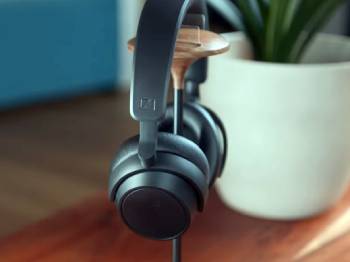
Maintaining the pristine physical condition and internal battery health of either Sennheiser headset requires a disciplined care routine.
You must clean the synthetic leather ear pads at the end of every week using a completely dry, lint-free microfiber cloth to remove accumulated facial oils, sweat, and cosmetics.
Allowing skin grease to sit on the delicate protein leather padding will eventually cause the material to stiffen, crack, and peel prematurely.
Never spray liquid rubbing alcohol or glass cleaners directly onto the plastic chassis, as these harsh chemicals can dissolve the matte protective coatings and ruin the touch sensors.
When charging the massive fifty-hour battery, always use the provided factory USB-C cord and connect it to a stable power brick.
Avoid using ultra-fast laptop chargers that pump excessive wattage, because over-provisioning electrical currents can over-stress the lithium-ion cells and shorten their lifespan.
If you own the Accentum Plus, make a habit of zipping it securely into its fabric case instead of tossing it loosely into a backpack filled with sharp keys or pens.
For standard Accentum owners, always store the unit flat on a clean desk or a dedicated headphone stand away from direct solar radiation.
Leaving your headphones exposed to hot sunlight inside a locked car will warp the delicate internal speaker diaphragms and permanently degrade your sound quality.
Detailed Pros and Cons of the Standard Accentum
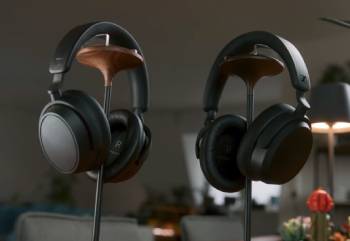
Pros:
- Reliable tactile control security: The physical click buttons guarantee you never suffer from accidental track skips or volume spikes when adjusting the headband with wet fingers or wearing thick winter gloves.
- Lighter upfront financial investment burden: The lower initial retail price provides an incredibly affordable entry point into the signature audiophile sound profile of the German audio brand without breaking your budget.
- Clean and predictable hybrid active isolation: The built-in noise cancellation consistently attenuates predictable low-frequency ambient hums like air conditioning units and distant traffic without creating uncomfortable inner-ear pressure.
- Massive marathon fifty-hour battery endurance: The internal power cell easily survives a full week of heavy office commuting and gym sessions on a single complete charging cycle with the active cancellation engaged.
- Ultra-crisp upper treble frequency definition: High-pitched instrumental details, cymbals, and female vocal registers ring out with immense clarity and resolution without ever becoming uncomfortably sharp or sibilant.
Cons:
- Complete omission of a protective travel case: Shipping the unit with only a soft charging cable forces you to buy a separate aftermarket shell to prevent backpack scuffs.
- Restricted physical wired connectivity choices: Lacking a standard 3.5mm analog input jack prevents you from plugging into legacy airline entertainment systems or older gaming controllers.
- Flippant button navigation layouts: The tiny size and close spacing of the physical buttons make fast blind adjustments highly frustrating during active workouts.
- Fixed environmental cancellation parameters: The standard hybrid noise-canceling software cannot automatically adjust its defense strength when you move from quiet rooms into loud streets.
Also Read: My Thoughts On Audio Technica ATH M50x
Detailed Pros and Cons of the Accentum Plus Upgrade
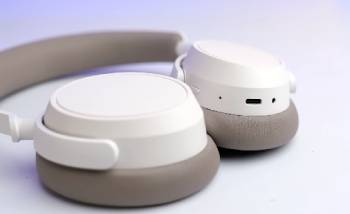
Pros:
- Intelligent adaptive hybrid noise attenuation: The integrated microphone array continuously samples changing external soundscapes and automatically scales up the isolation power to mute sudden loud spikes.
- Premium and elegant touch gesture interface: The highly responsive outer shell allows for effortless volume sliding and media management through intuitive sweeps of your bare fingertips.
- Universal dual-mode wired compatibility infrastructure: Packing both a traditional 3.5mm analog audio jack and a modern digital USB-C connection offers total freedom across all playback devices.
- Flawless automatic on-ear wear detection: The built-in proximity sensor instantly preserves your battery life by pausing media playback the exact millisecond the headphone leaves your crown.
- Expansive and realistic structural soundstage imaging: Angling the internal dynamic drivers allows the sonic presentation to feel wider, deeper, and far more natural than its smaller sibling.
- Robust premium protective transit accessories: Receiving a classy, durable fabric zip case ensures your expensive listening equipment remains completely safe from accidental crushing during travel.
Cons:
- Increased initial out of pocket monetary requirement: The higher retail premium demands a larger upfront capital investment for lifestyle conveniences rather than a massive leap in raw driver power.
- Occasional touch control sensitivity issues: High humidity or light rain drops hitting the exposed gesture pad can sometimes trigger accidental track navigation commands.
- Marginally slower physical setup times inside the application: Unlocking the custom sound personalization features requires a multi-step listening test that adds friction to the first unboxing.
- Slightly more complex mechanical failure points: Introducing capacitive sensors and internal wear detectors adds sophisticated electronic components that could eventually glitch after years of sweat exposure.
Also Read: My Thoughts On Razer BlackShark V2 X
Frequently Asked Questions (FAQs)
The Accentum Plus adds capacitive touch controls, adaptive active noise cancellation, a 3.5mm analog headphone jack, automatic on-ear wear detection, and a premium protective zip storage case.
Reddit audio communities emphasize that while both share identical underlying sound quality and battery life, the Plus version features angled drivers that create a wider, more natural soundstage.
The Sennheiser Accentum delivers far more detailed audiophile treble accuracy and nearly double the battery life, but the Bose QC provides vastly superior raw noise-canceling power and plush comfort.
Yes, it is an outstanding mid-tier headphone that effectively marries the premium touch controls and adaptive isolation features of the flagship Momentum series with an accessible price tag.
Final Thoughts
Choosing between these two exceptional German audio systems ultimately comes down to analyzing your personal daily workflow, but my definitive conclusion is that you should buy the model that perfectly matches your lifestyle needs.
If you value smooth touch gestures, adaptive noise muting, and a protective travel case, the Accentum Plus is worth every penny.
Your ears deserve a crisp, detailed listening experience free from constant charging anxiety.