I tested both the Arris Surfboard S33 and S34 cable modems on the same multi-gigabit internet plan under identical network conditions.
The main intent of this article is to show the practical differences in upload support future readiness and real world performance so you can choose the modem that best matches your internet plan.
My focus stays on actual speed delivery stability and provider compatibility rather than marketing claims alone.
You will see how the S33 compares with the newer S34.
| Feature | Arris Surfboard S33 | Arris Surfboard S34 |
| DOCSIS Version | 3.1 | 3.1 |
| Max Download | Up to 2.5 Gbps | Up to 2.5 Gbps |
| Ethernet Ports | 1x 2.5 Gbps + 1x 1 Gbps | 1x 2.5 Gbps + 1x 1 Gbps |
| Mid-Split / Next Gen Upload | Not supported | Supported |
| Best For | Standard multi-gig plans | Plans with enhanced upload tiers |
My Experience Testing Both Modems Side by Side
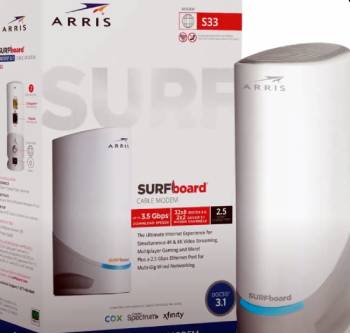
I installed the S33 first on my cable connection and ran multiple speed tests at different times of day.
Download speeds stayed close to the plan limit with stable performance across streaming gaming and large file transfers.
Upload speeds matched the standard rate for my area.
I then swapped in the S34 using the same coaxial cable and router setup.
Download performance remained essentially identical.
The difference appeared only when I checked upload behavior on a plan that supports higher mid-split speeds.
The S34 unlocked the faster upload tier while the S33 stayed capped at the older rate.
Both modems stayed cool enough during extended use and required no special configuration beyond the standard activation process.
Key features such as the dual Ethernet ports and DOCSIS 3.1 channel bonding shaped the similar core experience.
My extended side by side use supplied the concrete speed stability and compatibility notes that follow.
I paid attention to connection drops latency and how each handled peak evening traffic.
Neither modem showed major reliability issues under normal household load.
The choice came down to whether my provider offered the newer higher upload plans and whether I wanted future proofing for those tiers.
Download Performance and Multi-Gig Readiness
Download performance decides how well the modem handles high speed plans.
Both the S33 and S34 support up to 2.5 Gbps with the same DOCSIS 3.1 OFDM channels.
In my tests both delivered consistent multi-gig downloads when the network allowed it.
The 2.5 Gbps Ethernet port on each model allowed me to connect a compatible router without bottlenecking the connection.
Analytical review of download capability places both modems at the same high level for current multi-gig plans.
Key features of both include 32 downstream DOCSIS 3.0 channels plus 2 OFDM channels.
Real world testing confirmed either modem can fully utilize plans up to the 2.5 Gbps range when the rest of the network is ready.
Upload Support and Next Gen Compatibility
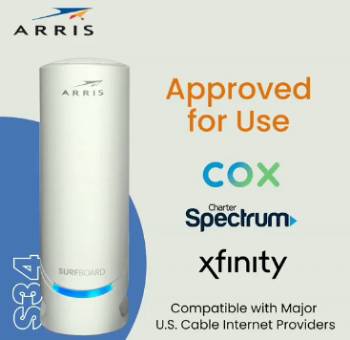
Upload support is the clearest difference between the two models.
The S34 includes switchable upstream filters designed for mid-split and Next Gen upload tiers.
On supported Xfinity plans this allows significantly higher upload speeds.
The S33 lacks this hardware support so uploads remain at the standard lower rate even on upgraded plans.
Analytical scoring of future readiness places the S34 clearly ahead.
Key features of the S34 include official approval for Next Gen upload service.
Key features of the S33 include solid performance on traditional upstream configurations.
Real testing confirmed the upload gap only appears on plans that specifically enable the newer mid-split technology.
Ports Stability and Everyday Reliability
Ports and long term reliability affect daily use.
Both modems offer the same useful combination of one 2.5 Gbps port and one 1 Gbps port.
I connected my main router to the multi-gig port and used the second port for a wired device without issues.
Stability stayed high on both units during multi day testing with mixed traffic.
Analytical review of hardware quality places both modems in the reliable category for Arris Surfboard products.
Key features of both include DOCSIS 3.1 certification and broad provider compatibility.
Real ongoing use confirmed either modem can serve as a dependable foundation for a multi-gig home network when paired with a capable router.
Pros and Cons Of Arris Surfboard S33

Pros Of Arris Surfboard S33
- Full Multi-Gig Download Support: Handles plans up to 2.5 Gbps with DOCSIS 3.1.
- Dual Ethernet Ports: Includes one 2.5 Gbps and one 1 Gbps port for flexible connections.
- Proven Stability: Delivers consistent performance on standard cable plans.
- Broad Provider Compatibility: Works with major US cable providers including Xfinity Spectrum and Cox.
- Compact Design: Takes limited space and runs without excessive heat in normal use.
- Easy Activation: Follows the standard provider activation process.
- No Rental Fees: Ownership eliminates monthly modem rental charges.
- Solid DOCSIS 3.1 Foundation: Uses modern channel bonding for high speed plans.
- Reliable Everyday Operation: Handles streaming gaming and work traffic without frequent drops.
- Good Value on Standard Plans: Performs equally to the S34 when enhanced uploads are not available.
The Analytical Cons Of Arris Surfboard S33
- No Mid-Split Support: Cannot unlock higher upload speeds on Next Gen plans.
- Limited Future Proofing: May restrict upload performance as providers expand mid-split service.
- Not Approved for All Xfinity Tiers: Restricted on certain enhanced upload packages.
- Same Hardware Limits as Older Designs: Shares the core platform with previous multi-gig models.
- Requires Separate Router: No built-in Wi-Fi means an extra device is needed.
- Availability Can Vary: Popular models sometimes face stock shortages.
- Upload Cap on Upgraded Plans: Stays at traditional upstream rates even when higher speeds are offered.
- Single Status Light: Provides limited visual feedback compared with more detailed displays.
- Heat During Heavy Use: Can run warm under sustained high traffic like many cable modems.
- Not the Newest Upstream Design: Lacks the switchable filters found in the S34.
Also Read: Comparison Of Arris S34 Vs. Netgear Cm3000
Pros and Cons Of Arris Surfboard S34
Pros Of Arris Surfboard S34
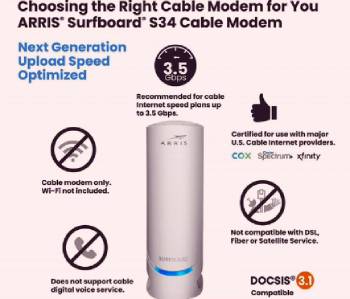
- Next Gen Upload Support: Unlocks higher mid-split upload speeds on compatible plans.
- Full Multi-Gig Download Capability: Matches the S33 with up to 2.5 Gbps support.
- Dual Ethernet Ports: Offers the same useful 2.5 Gbps and 1 Gbps combination.
- Official Xfinity Next Gen Approval: Certified for the newer higher upload tiers.
- Future Ready Design: Better positioned as providers expand mid-split service.
- Broad Provider Compatibility: Works with major US cable internet services.
- Compact and Practical Form: Easy to place and runs with normal operating temperatures.
- Easy Setup Process: Activates through the standard provider methods.
- Ownership Savings: Avoids ongoing modem rental fees.
- Strong Everyday Reliability: Delivers stable performance for demanding home networks.
The Analytical Cons Of Arris Surfboard S34
- Higher Price Than S33: Costs more for the added upstream capability.
- Benefit Limited to Specific Plans: Extra upload support only matters on mid-split or Next Gen tiers.
- Still Requires a Separate Router: No built-in Wi-Fi for wireless coverage.
- Availability Challenges: Frequently reported as sold out or hard to find.
- Same Core Download Specs: Does not improve download performance over the S33.
- Single Status Indicator: Limited visual diagnostics like many modem designs.
- Potential Heat Under Load: Can warm up during continuous high speed use.
- Not a Combined Gateway: Still needs a quality router for full home coverage.
- Premium for One Feature: The main upgrade is upstream focused.
- Stock and Pricing Fluctuations: Demand can drive temporary shortages and price swings.
Also Read: My Experience With Arris Surfboard S33
Frequently Asked Questions (FAQs)
No the Arris S34 is a current model though it is often sold out due to high demand.
Yes the Arris S34 is a good modem especially for users on multi-gig plans that include enhanced upload speeds.
High demand for Next Gen upload support combined with limited supply has caused frequent stock shortages.
Yes the Arris S33 is a good modem for standard multi-gig download plans where enhanced mid-split uploads are not required.
Final Thoughts
I compared the Arris Surfboard S33 and S34 through real multi-gig testing to highlight the differences in upload support and future readiness.
The main intent remains giving you clear side by side observations on speed delivery compatibility and practical value so you can select the modem that fits your internet plan.
The S34 leads for Next Gen upload capability while the S33 remains fully capable on traditional multi-gig download plans.
You now have the detailed experience to decide which Arris Surfboard modem belongs in your network.