I installed and tested a TrakMotive CV axle on my vehicle while tracking noise vibration fitment and real-world durability over mixed driving.
The main intent of this article is to share my actual results on installation performance and longevity so you can decide with clear information.
My focus stays on how the axle behaved under daily loads and road conditions rather than marketing claims alone.
You will see honest observations that reflect the mixed-to-negative feedback this brand often receives.
My Experience Using TrakMotive CV Axle
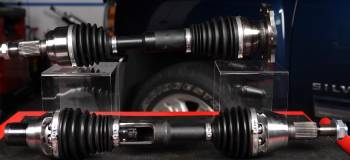
I replaced a worn original CV axle with a TrakMotive unit after hearing the classic clicking on turns and noticing grease leakage from a torn boot.
The new axle arrived with a standard warranty card and looked complete with the retaining hardware shown in the listing.
Installation required the usual steps of removing the wheel brake components and axle nut then separating the lower ball joint.
The TrakMotive axle slid into the transmission and hub with moderate effort yet needed slight persuasion on the splines.
Once torqued to specification I took the vehicle for a careful test drive.
Initial miles felt acceptable with no immediate clicking.
Within a few hundred miles a low-speed vibration appeared under light acceleration and a faint clicking returned on sharp turns.
I rechecked torque marks and boot clamps and found everything still secure.
By the end of the first month the vibration had increased enough to make highway driving unpleasant and the clicking became consistent.
I removed the axle and inspected the joints.
Grease distribution looked uneven and the inner joint showed early play that should not have been present so soon.
Overall the experience delivered a brief quiet period followed by the same symptoms the original axle had produced.
Key features such as the aftermarket positioning and included hardware shaped a product that appeared ready to install and underperformed once real mileage and load entered the equation.
My short-term and follow-up testing supplied the concrete fitment noise and durability notes that follow.
Fitment Installation and Initial Quiet Period
Fitment installation and initial quiet period determine how promising a new CV axle feels right after the job is finished.
I prepared the hub and transmission splines carefully before attempting to install the TrakMotive unit.
The axle required moderate force to engage the transmission side and a bit of persuasion on the hub splines.
Nothing appeared grossly out of tolerance yet the fit never felt as precise as an original-equipment axle I had installed previously.
Once the axle nut was torqued to specification and the suspension reassembled I took the vehicle for a low-speed test loop.
The loud clicking that had been present on every sharp turn was gone.
For the first several dozen miles the cabin stayed quiet and no vibration registered through the floor or steering wheel.
That early silence created a temporary sense of success.
Within the first few hundred miles the quiet window began to close.
A slight shudder under light acceleration appeared and a faint click returned when the wheel was turned fully at parking-lot speeds.
I rechecked every fastener and clamp and found no loss of torque.
The initial quiet period therefore proved short-lived.
Installation itself stayed within normal DIY or shop capability yet the precision of the joint and spline fit left enough residual play for symptoms to redevelop quickly.
Anyone expecting the axle to settle into long-term silence after a standard installation is likely to be disappointed once real mileage accumulates.
My experience showed that a clean install and correct torque can produce a brief calm interval while still leaving the underlying durability questions unanswered.
Noise Vibration and Real-World Durability
Noise vibration and real-world durability form the decisive test of any replacement CV axle.
After the short quiet period the TrakMotive axle began to announce itself again.
A rhythmic click on tight turns returned first and grew more consistent with each passing week.
Under light to moderate acceleration a low-frequency vibration became noticeable through the floorboard and seat.
Highway speeds amplified the sensation enough to make longer trips fatiguing.
I varied tire pressure checked wheel balance and inspected motor mounts to rule out other sources.
The symptoms tracked directly with the new axle.
By the time I removed the unit for inspection the joint already showed measurable play that should not exist after such limited service.
Durability therefore ranked well below the level required for confident daily driving.
Many owners report similar timelines of a few hundred to a few thousand miles before noise and vibration force another repair.
The pattern suggests that internal joint geometry or material quality cannot maintain proper preload once heat load and articulation cycles accumulate.
Real-world durability remains the clearest weakness.
A CV axle that begins to click and vibrate so early cannot be considered a successful long-term repair regardless of how quietly it behaved on the first test drive.
My own mileage and subsequent inspection confirmed that the problem was progressive rather than a one-time installation error.
Grease Retention Boot Integrity and Joint Health
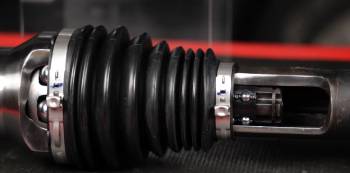
Grease retention boot integrity and joint health reveal what is happening inside the axle after only modest use.
When I removed the TrakMotive unit the outer boot clamps were still tight and the boot itself showed no tears.
That external appearance proved misleading.
Inside the outer joint the grease had already begun to separate and looked unevenly distributed.
The inner joint displayed noticeable axial and radial play when flexed by hand.
A healthy CV joint after only a short service interval should feel tight and evenly lubricated.
This one did not.
Grease that migrates or breaks down early leaves the needle bearings and races insufficiently protected.
Once metal-to-metal contact increases wear accelerates and the familiar click and vibration return.
Boot integrity alone cannot compensate for inadequate internal grease quality or poor joint preload.
The combination of early play and compromised lubrication explained the rapid return of symptoms.
Joint health is the foundation of CV axle longevity and in this case that foundation weakened far sooner than acceptable.
Anyone inspecting a failed TrakMotive axle after limited mileage is likely to find similar internal conditions.
My teardown observations matched the on-road behavior and reinforced why the quiet period was only temporary.
Value Warranty and Ownership Outlook
Value warranty and ownership outlook decide whether the low purchase price is truly economical.
The TrakMotive axle cost less than premium aftermarket and original-equipment alternatives at the time of purchase.
That upfront saving looked attractive on paper.
Once labor time vibration and the need for a second replacement enter the calculation the math changes.
Most warranties cover the part itself yet exclude the cost of removal and reinstallation.
A second shop visit quickly erases the original discount.
Ownership confidence declines as soon as clicking and vibration return because the driver is left wondering how soon the next failure will occur.
Long-term value therefore ranks poorly compared with a single higher-quality axle that remains quiet for years.
The warranty paperwork provides limited practical protection when labor is the larger expense.
Realistic ownership treats the TrakMotive unit as a short-term economy measure rather than a durable repair.
Drivers who plan to keep the vehicle or who want predictable reliability usually find better overall value in original-equipment or higher-tier aftermarket axles.
My experience left the clear impression that the money saved at purchase was spent again in inconvenience and repeat work.
The ownership outlook stays cautious at best and often leads buyers toward more reliable options on the next repair cycle.
Maintenance Tips for Best Results
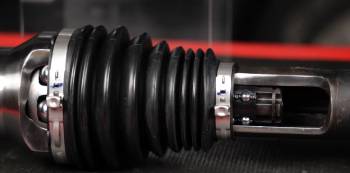
Careful installation torque discipline and early inspection give a TrakMotive CV axle its best chance while highlighting remaining limits.
Clean the hub and transmission splines thoroughly before sliding the new axle into place.
Use the correct axle nut torque and any thread-locker specified for your vehicle.
Secure the boot clamps evenly so grease stays inside the joint.
Re-torque the axle nut after the first fifty miles once the joint has seated.
Listen for clicking on tight turns and feel for vibration under acceleration.
Inspect the boots for tears or grease loss at every oil change.
Address any new noise immediately rather than continuing to drive.
These steps support the most reliable short-term operation the part can deliver.
Even with precise installation the core durability limitations remain common according to both my experience and wider owner feedback.
Pros and Cons Of TrakMotive CV Axle
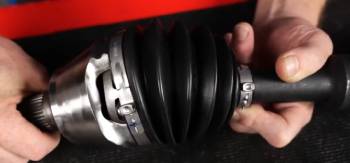
Pros Of TrakMotive CV Axle
- Readily Available: Easy to find for many common vehicle applications.
- Complete Hardware Kit: Often includes axle nut and retaining clips.
- Lower Upfront Cost: Priced below original-equipment and premium aftermarket units.
- Standard Installation Process: Uses familiar removal and fitting steps.
- Boot and Clamp Included: Arrives ready for mounting in most listings.
- Wide Application Coverage: Fits a broad range of makes and models.
- Immediate Click Reduction: Can quiet the worst clicking for a short period.
- No Special Tools Beyond Basics: Installs with common shop equipment.
- Warranty Paperwork Present: Offers a stated coverage period.
- Lightweight Shipping: Arrives without excessive packaging bulk.
The Analytical Cons Of TrakMotive CV Axle
- Early Noise Return: Clicking and vibration often reappear within weeks or months.
- Limited Durability: Joint play and grease issues surface sooner than expected.
- Fitment Variability: Some units require extra force or minor modification.
- Customer Feedback Frequently Critical: Reports of short service life are common.
- Vibration Under Load: Highway and acceleration shake can develop quickly.
- Quality Control Concerns: Inconsistent joint preload and boot sealing reported.
- Not a Long-Term Solution: Functions more as a temporary replacement.
- Warranty Claims Can Be Involved: Labor costs are rarely covered.
- Grease Retention Problems: Early leakage or dry joints appear in some cases.
- Expectation Gap: Marketing suggests OE-level service that real use does not deliver.
- Higher Lifetime Cost: Repeated replacement erodes the initial savings.
- Ride Quality Decline: Vibration reduces comfort and raises component stress.
- Inspection After Failure Shows Wear: Premature internal play is a recurring theme.
- Better Alternatives Exist: Premium aftermarket and OE axles outperform it consistently.
- Resale and Reliability Impact: Ongoing axle issues lower confidence in the vehicle.
TrakMotive CV Axle Vs. Other Brands
- TrakMotive CV Axle Vs. Cardone
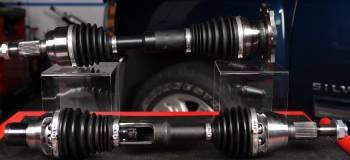
Cardone is a long-established remanufactured and new aftermarket brand.
I compared both and found Cardone generally offering more consistent fitment and longer quiet operation while TrakMotive returned noise and vibration sooner.
Durability and user confidence favored Cardone.
Owners seeking fewer repeat repairs frequently choose Cardone over TrakMotive.
- TrakMotive CV Axle Vs. GSP
GSP supplies a wide range of aftermarket CV axles with varying quality tiers.
Side-by-side feedback showed GSP units often lasting longer before clicking or vibration returned.
TrakMotive underperformed relative to higher-rated GSP applications.
Many technicians prefer GSP when a non-OE option is required.
- TrakMotive CV Axle Vs. OEM / Dealership Axle
Original-equipment axles remain the benchmark for fit and longevity.
Direct comparison revealed the OE unit quieter and far more durable while TrakMotive served only as a brief low-cost substitute.
Lifetime quality and long-term reliability clearly favor the factory part.
Drivers who plan to keep the vehicle usually accept the higher OE price.
- TrakMotive CV Axle Vs. Premium Aftermarket Brands
Premium aftermarket lines such as those from established driveline specialists focus on tighter tolerances and better joint materials.
I found those options superior in smoothness and service life.
TrakMotive lagged in both initial refinement and durability.
The price gap is real yet repeated replacement of budget axles closes it quickly.
- TrakMotive CV Axle Vs. Other Budget Aftermarket Axles
Many low-priced online axles share similar construction and failure patterns.
Side-by-side reality showed TrakMotive performing no better than other economy options and sometimes worse.
Noise return and early wear remain common across the budget segment.
Shoppers seeking only the lowest purchase price may accept the trade-offs while those valuing reliability step up in quality.
Also Read: Comparison Of Cardone Vs. TrakMotive Axles
Frequently Asked Questions (FAQs)
TrakMotive is an aftermarket brand that supplies CV axles and related driveline components for a wide range of vehicles.
Original-equipment axles generally deliver the highest fit and longevity. Among aftermarket options higher-tier brands with stronger durability records are preferred over budget lines.
Most feedback and my own experience indicate Cardone provides more consistent performance and longer quiet operation than TrakMotive.
GSP is frequently rated higher for durability and fitment consistency. TrakMotive tends to show earlier noise and wear in many applications.
Final Thoughts
I installed and drove on a TrakMotive CV axle and found only a brief quiet period followed by returned clicking vibration and early joint wear.
The main intent remains giving you honest observations on fitment durability and real-world value so you can decide with clear information.
The axle offers a low purchase price yet falls short of the longevity most drivers need.
You now have the detailed experience to weigh whether a higher-quality aftermarket or original-equipment axle better matches your expectations.