When you are planning a weekend escape or a week-long expedition into the wild, you should buy a YETI Tundra because the reliability of your ice retention can make or break your entire outdoor experience.
I have spent years hauling gear across rugged terrain and testing the limits of rotomolded insulation to help you understand which size truly fits your lifestyle.
My intent is to provide an analytical breakdown of the Yeti 45 vs 65 so you can decide which legendary cooler belongs in your truck bed.
You should choose your cooler based on your specific capacity needs and physical mobility.
Comparison Table: Yeti Tundra 45 Vs. Yeti Tundra 65
| Feature | Yeti Tundra 45 | Yeti Tundra 65 |
| Actual Capacity | 32.9 Quarts | 52 Quarts |
| Empty Weight | 23 lbs | 29 lbs |
| Can Capacity (2:1 Ice Ratio) | 28 Cans | 42 Cans |
| Ice Capacity (Ice Only) | 34 lbs | 52 lbs |
| External Length | 25.5 inches | 30.5 inches |
| Internal Length | 18.3 inches | 23.3 inches |
| Best Use Case | Day trips / Overnighters | 3-5 day camping / Fishing |
My personal experience with the Yeti 45 and 65
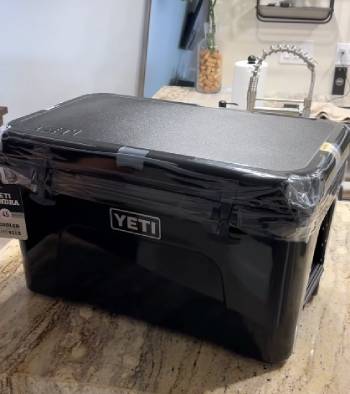
I remember the first time I loaded up a Yeti Tundra 45 for a solo fishing trip; I was struck by how rugged it felt, but I quickly realized that the “45” in the name didn’t quite mean I had 45 quarts of space.
I am a stickler for organization, so I meticulously packed my drinks and pre-chilled my steaks, only to find that once I added the recommended two-to-one ice ratio, my “spacious” cooler was suddenly very full.
I found that the 45 is a dream for one person to handle; I can easily swing it from the garage to the tailgate without feeling like I need a trip to the chiropractor the next morning.
However, when I took the family on a four-day camping trip to the mountains, the 45 stayed home and I graduated to the Yeti Tundra 65.
I am an analytical packer, and the extra five inches of internal length in the 65 changed the game entirely.
I was able to fit a full-sized brisket and several racks of ribs along with enough beverages for three adults without playing a game of Tetris every time someone wanted a soda.
The weight difference when empty is only about six pounds, but I noticed that once the 65 is fully loaded with 50 pounds of ice and a weekend’s worth of food, it becomes a completely different animal.
You will likely find that while the 65 is the “Goldilocks” size for groups, it is significantly more difficult to maneuver alone.
I once tried to carry a loaded 65 down a steep embankment by myself and quickly regretted not asking for help; the sheer width of the cooler makes it awkward to hold against your body.
In my experience, the 45 is the ultimate “utility” cooler that fits in the trunk of a sedan or the backseat of a truck, while the 65 is a stationary powerhouse meant for the boat deck or the campsite.
I think it is vital for you to consider your physical strength and your vehicle’s cargo space before making the jump to the larger model, as “bigger” is only better if you can actually move it.
Pros and Cons of the Yeti Tundra 45
Pros of the Yeti Tundra 45
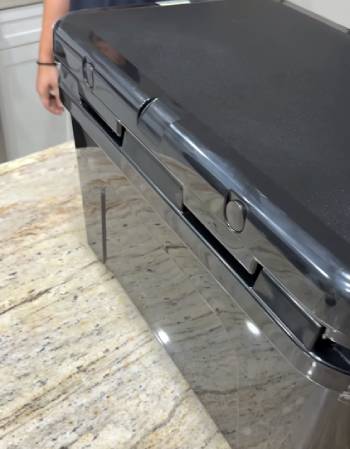
- Superior Portability for Solo Adventurers: This model is the largest Yeti that I consider truly “one-person portable”: the weight and dimensions allow you to carry it using the integrated handles without it banging against your shins: this makes it perfect for the lone fisherman or the solo camper.
- Fits Easily in Compact Vehicle Trunks: Unlike its larger sibling, the 45 has a footprint that fits comfortably in the trunk of most mid-sized cars: you don’t need a massive pickup truck to transport this cooler safely: this accessibility makes it a great “all-rounder” for daily use.
- Exceptional Ice Retention for Short Trips: Because the interior volume is smaller, it is easier to keep the thermal mass consistent: I have found that with proper pre-chilling, the 45 can keep ice for four to five days in moderate temperatures: this is more than enough for a long weekend getaway.
- Doubles as a Perfect Casting Platform: The height and stability of the 45 make it a great seat or standing platform on a small boat: it feels rock-solid underfoot thanks to the non-slip feet: this adds multi-functional value to your gear list.
- Ideal for Resting Large Cuts of Meat: Many BBQ enthusiasts, myself included, use the 45 specifically for resting briskets or pork butts: the thick insulation acts as a high-end cambro: this keeps your meat at food-safe temperatures for hours.
- Lower Price Point for Entry-Level Quality: You get the full “over-engineered” Yeti experience for a smaller financial investment: this allows you to access the rotomolded durability without spending the extra $50 to $75 for the 65: this is a smart analytical choice for those on a tighter budget.
- Included Dry Goods Basket is Highly Useful: The 45 comes with a basket that keeps your bread or eggs out of the ice melt: because the cooler is shallower, the basket is easy to reach: this prevents your sandwiches from becoming a soggy mess.
Cons of the Yeti Tundra 45: What to watch out for:
- Misleading naming convention regarding actual volume: despite the “45” moniker, the interior only holds about 33 quarts: this can be a shock if you are switching from a traditional 45-quart Coleman: this requires you to be very selective with what you pack.
- Fills up incredibly fast with the 2:1 ice ratio: once you put in two bags of ice, you only have room for about 28 cans: this makes it tight for anything more than two people on a multi-day trip: this often forces you to choose between more food or more drinks.
- Not tall enough for most wine or 2-liter bottles: if you prefer standing your bottles upright to prevent leaks, the 45 will disappoint you: the internal height is just under 10 inches: this means most tall bottles have to be laid on their side, taking up valuable floor space.
- Internal length limits the size of your catch: if you are a fisherman targeting larger species like redfish, the 18-inch internal length is quite restrictive: this may force you to bend or fillet your fish on the spot: this is a major analytical downside for coastal anglers.
- Price per quart is higher than larger models: when you break down the cost per gallon of storage, the 45 is technically less efficient than the 65: you are paying a premium for the “portable” size: this makes the 65 look like a better value on paper.
- Heavy empty weight relative to its small capacity: at 23 pounds empty, it is still a heavy piece of equipment for its size: this is the trade-off for the thick walls: this can be a deterrent for users who prefer lightweight gear.
- Limited color availability in some seasons: Yeti often prioritizes its most popular sizes (like the 65 and Haul) for limited-edition color runs: you might find that the 45 has fewer “fun” options during certain releases: this is a minor aesthetic point but worth noting.
Pros and Cons of the Yeti Tundra 65
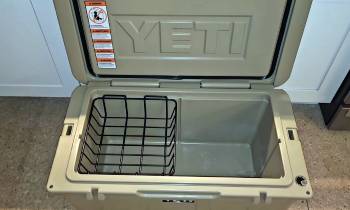
Pros of the Yeti Tundra 65
- The Versatile Industry Standard for Capacity: The 65 is widely considered the “perfect” size for a family of four for a weekend: it holds roughly 52 quarts of actual volume: this provides enough room for a varied diet of proteins, veggies, and plenty of ice.
- Accommodates Larger Items with 23-Inch Length: You can fit full-sized racks of ribs or large fish without struggling: the extra length is the most significant upgrade over the 45: this allows for much more creative packing and better organization of your perishables.
- Superior Thermal Mass for Longer Ice Retention: Because it holds more ice (up to 52 pounds), it stays colder for longer once it reaches a steady state: I have seen the 65 hold ice for a full seven days in the back of a covered truck: this makes it a true expedition-grade cooler.
- Fits Standard Wine and 2-Liter Soda Bottles: The 65 is just a bit taller than the 45, which makes all the difference for beverages: you can stand up most standard wine bottles: this prevents messy spills and makes it easier to grab a drink.
- Better Value Propositon for the Price Increase: For usually just a $50 difference, you get nearly 40% more storage space: analytically, the 65 is the most logical choice if you can handle the size: this makes it the “smart buy” for frequent campers.
- Highly Stable as a Two-Person Bench: The 30-inch width makes it a comfortable seat for two adults at a campsite: it is built to handle the weight without the lid bowing: this replaces the need for extra camping chairs in your setup.
- Excellent Performance in Extreme Heat: Because of the thick walls and large volume, it resists ambient temperature changes better than smaller coolers: this is the cooler I take when I know I’ll be in 100-degree weather: this provides peace of mind for food safety.
Cons of the Yeti Tundra 65: The downside of size:
- Extremely heavy and unwieldy when fully loaded: a packed 65 can easily exceed 80 to 90 pounds: this makes it nearly impossible for one person to carry safely over any distance: this usually requires two people using the rope handles.
- Large footprint takes up significant vehicle space: at 30.5 inches long, it won’t fit in many car trunks: you almost certainly need an SUV or a truck bed: this can be a logistical headache if you are trying to pack other camping gear around it.
- Takes a long time to pre-chill effectively: because there is so much insulation and volume, you need to “prime” it with a sacrificial bag of ice the night before: if you skip this step, the warm walls will melt your first bag of ice in hours: this requires extra planning.
- Higher cost for those who don’t need the space: if you are usually a solo traveler, the 65 is overkill: you will end up spending more on ice just to fill the empty air space: this is an inefficient use of both money and physical effort.
- The drain plug can be easy to lose: unlike some competitors, the Yeti drain plug is not tethered to the cooler: if you drop it in the grass or at a dark campsite, you are in trouble: this is a small design flaw that can have big consequences.
- Difficult to clean the bottom of a deep cooler: if something leaks at the bottom, you have to reach quite deep to scrub it out: the 65’s depth can make this a bit of a literal reach for some: this makes maintenance slightly more choresome.
- Lacks wheels for such a heavy piece of gear: many users eventually wish they had bought the Yeti Haul (the wheeled version) instead: the Tundra 65 is a “lugger,” not a “roller”: this limits where you can take it without a cart or a partner.
Maintenance and tips for Yeti Cooler longevity
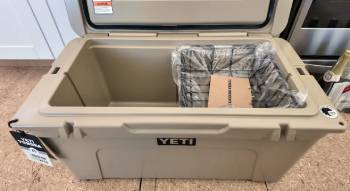
- Always Pre-Chill Your Cooler Before Loading: You should place a “sacrificial” bag of ice in your Yeti the night before your trip. This brings the temperature of the thick polyurethane foam down so that your “real” ice doesn’t waste energy cooling the plastic walls, which is the most common reason people complain about poor ice retention.
- Use the 2:1 Ice-to-Contents Ratio: You should prioritize ice volume over food volume if you want your items to stay cold for more than 48 hours. Air is the enemy of ice, so filling the gaps with extra ice or even crumpled newspaper ensures there is no “dead air” for the cold to escape into, which is an analytical necessity for long-term storage.
- Clean with Mild Soap and Warm Water After Every Use: You should never store your Yeti with the lid closed if it hasn’t been thoroughly dried. Use a mixture of water and dish soap to scrub the gaskets; if you have lingering odors from fish or meat, a solution of water and bleach (6:1 ratio) will sanitize the rotomolded plastic without damaging it.
- Apply Silicone Grease to the Rubber Gasket: You should periodically rub a small amount of food-grade silicone grease on the lid gasket. This keeps the rubber supple and prevents it from drying out or cracking, which ensures that the “interlocking” seal remains airtight and continues to block out the external heat.
- Keep the Cooler Out of Direct Sunlight: You should try to keep your Yeti in the shade or under a light-colored tarp. While the insulation is world-class, the outer plastic can still absorb significant heat from the sun, which puts unnecessary stress on the thermal barrier and forces the ice to work harder than it should.
- Avoid Using Dry Ice Without Proper Ventilation: You should only use dry ice if you know how to handle it, as it can cause the air inside to expand and potentially damage the cooler if the pressure isn’t released. Always ensure the drain plug is slightly loosened if you are using dry ice to allow the CO2 gas to escape safely.
Yeti Tundra 45 Vs. 65
- Yeti Tundra 45 Vs. RTIC 45
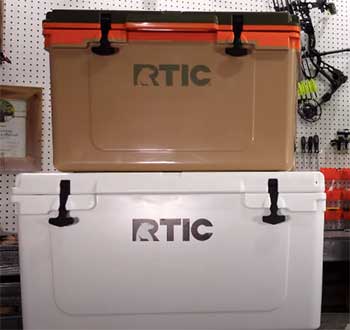
RTIC is the most famous “direct” competitor to Yeti, often offering nearly identical specs for a fraction of the price.
I have found that the RTIC 45 actually has a slightly larger internal capacity than the Yeti 45.
Analytically, RTIC models are often truer to their quart-size names, which is a major point of contention for Yeti owners.
However, I have noticed that the fit and finish on the Yeti latches and hinges feel more refined and durable over years of abuse.
If you are on a budget, the RTIC is a fantastic value, but the Yeti holds a better resale value and offers a more robust warranty.
- Yeti Tundra 65 Vs. Orca 58
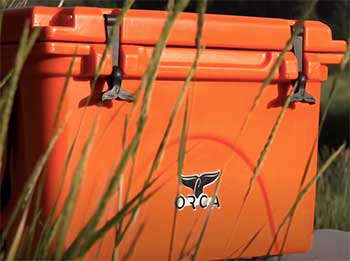
Orca is an American-made brand that many claim actually outperforms Yeti in pure ice retention tests.
I have found that the Orca 58 has a very similar footprint to the Yeti 65 but feels a bit more “industrial” in its build.
Analytically, Orca coolers often include a cargo net on the back for extra storage, which is a feature I wish Yeti would adopt.
The Orca 58 is a heavy-duty beast, but the Yeti 65’s aesthetics and widespread accessory ecosystem make it the more “livable” choice for most.
You will find that Orca is for the person who wants the absolute max ice time, while Yeti is for the person who wants the best overall user experience.
- Yeti Tundra 45 Vs. Pelican Elite 45
Pelican is known for their “over-the-top” hardware, including massive push-button latches that are much easier to use than Yeti’s rubber T-latches.
I have noticed that the Pelican 45 is significantly bulkier and heavier than the Yeti 45 due to its aggressive “tacticool” design.
Analytically, the Pelican offers better “ease of use” for those with arthritis or cold hands, but it takes up way more room in a truck bed.
The Yeti 45’s sleek, smooth sides make it much easier to pack gear around it.
If you want the most secure latches in the world, go Pelican; if you want a cooler that actually fits in your car, stay with the Yeti.
- Yeti Tundra 65 Vs. Engel DeepRay
Engel is the “OG” of the high-end cooler world and is often the choice for professional offshore fishermen.
I have found that Engel coolers are designed to be a bit slimmer, which allows them to fit better under leaning posts on boats.
Analytically, the Engel 65 doesn’t have the same “lifestyle” appeal as the Yeti, but it is a focused, high-performance tool.
Yeti has done a better job of creating a cooler that looks as good at a backyard BBQ as it does in the wilderness.
Engel is the “no-nonsense” alternative, but Yeti’s customer support and community are much larger.
- Yeti Tundra 45 Vs. Grizzly G40
Grizzly coolers are famous for their IGBC bear-resistant certification and unique “claw” latches.
I have found that the Grizzly G40 offers very similar performance to the Yeti 45 but with a bit more “flare” in the color options.
Analytically, Grizzly has a great drainage system that is slightly more efficient than the Yeti’s.
However, the Yeti 45 feels more “solid” when you sit on it, and the lid hinges have less “play” in them.
Grizzly is a fantastic American-made alternative, but Yeti’s insulation remains the benchmark that everyone else is trying to hit.
Frequently Asked Questions (FAQs)
Empty, yes, but when it is fully loaded with ice and food, it usually requires two people due to its 30-inch width and 80+ pound weight.
Reddit users generally agree that the 45 is best for solo/pair use and portability, while the 65 is the preferred “standard” for families despite being much harder to move alone.
For most 3-5 day trips for 2-4 people, the 65 is the perfect size, provided you follow the 2:1 ice ratio; it is rarely considered “too small” for a standard weekend.
It can hold 28 cans of beer or soda with a 2:1 ice ratio, or about 34 pounds of ice only; its actual internal volume is approximately 32.9 quarts.
Final Thoughts
When you are choosing between the two most popular hard coolers on the market, you should buy the size that you can actually see yourself using every weekend rather than the one that just looks best in a catalog.
I have found that the Yeti 45 is the analytical winner for the person who values independence and trunk space, while the 65 is the king of the long-haul campsite.
You should choose the 45 if you are often a solo traveler or a couple who does overnight trips, but the 65 is the only way to go if you are feeding a crew for several days.
I believe that both coolers are generational investments that will outlast almost any other piece of gear you own.
You deserve to have cold drinks and fresh food at the end of a long day in the sun, and either of these Tundras will get the job done with style.