
I still remember the first time I priced a short length of Vespel rod for a prototype bushing. I thought the quote was a typo. I checked the diameter again, checked the grade again, and then I checked whether someone had accidentally billed me for titanium.
They had not. I was looking at a polymer. That sticker shock is the reason I started asking a simple question and refused to accept the usual one-line answer.
Vespel is expensive because it is not competing in the same market as nylon, acetal, or even PEEK. It is competing with the cost of a failed jet-engine seal, a contaminated semiconductor chamber, or a metal part that galls, seizes, or weighs too much.
Once I framed the price that way, the number on the invoice started to make sense. The rest of this article is the explanation I wish I had on that first day.
Why Is The Price of Vespel So High?
Now, let’s talk about why you must pay so much for Vespel material. Also, is it worth it?
Well, there are several reasons for Vespel material to be so expensive. I will list some of the factors responsible for making Vespel so expensive. Let’s get through the factors one by one.
- The Properties That Justify The Pain

If Vespel were only “heat resistant plastic,” I would tell most people to buy PEEK and walk away. The reason engineers keep writing the check is a stack of properties that show up together.
It keeps useful strength and dimensional stability at temperatures where many engineering plastics have already gone soft. Continuous ratings around 550 °F / 288 °C in air are the usual planning numbers, with higher short-term spikes. PEEK is a workhorse to about 480 °F / 250 °C.
That gap looks small on a slide. In a turbocharger wastegate, a jet accessory gearbox, or a hot seal face, that gap is the entire design.
Creep resistance is excellent. Parts that must hold a clamp load or a sealing geometry for thousands of hours at temperature do not relax the way lesser polymers do. SP-22 in particular is chosen when low thermal expansion and high creep resistance matter more than peak tensile strength.
Its coefficient of thermal expansion can sit closer to aluminum than most plastics ever get. If I am pressing a bushing into an aluminum housing that sees wide temperature swings, that match is worth money.
Wear and dry-running behavior are the other half of the story. Graphite-filled grades can run against metal with little or no external lubrication. PV limits for the better bearing grades are far above nylon or acetal.
In vacuum, where oils vanish or contaminate, that self-lubricating character is not a convenience. It is the only practical option.
Add low outgassing, decent chemical resistance to many oils and solvents, plasma-facing usefulness in semiconductor tools, and the ability to machine to tight tolerances, and you get a material that replaces bronze, steel, and more fragile ceramics in oddly specific places.
I have seen designers try to “value engineer” Vespel out of a system and then spend the supposed savings on heavier actuators, extra lubrication systems, more frequent maintenance, or a metal seal that leaks after thermal cycling.
The polymer looks expensive on a bill of materials. The system cost can go the other way.
- Scrap You Cannot Throw Back In The Hopper

This is the part that surprised me even after I understood sintering. Shops can machine away a huge fraction of a Vespel shape to reach final geometry. In some documented production discussions, that figure has been described as high as half the starting material.
With PEEK or nylon, sprues and many chips can be reprocessed. With Vespel, the scrap does not melt back into useful stock in any practical, certified way. It is expensive dust and expensive offcuts. In some process descriptions, that waste is incinerated rather than recycled into new certified shapes.
So the price of the finished bushing is not just the price of the polymer that remains. It is also the price of the polymer that became chips on the shop floor. If I design a part with a tiny finished volume cut from a large diameter rod, I am buying a lot of material I will never ship.
That is why early design conversations matter. A slightly thicker wall, a near-net direct-formed blank, or an over-molded assembly that uses Vespel only on the wear surface can change the economics more than haggling over a few dollars per kilogram.
- Usable In Extreme Heat Conditions
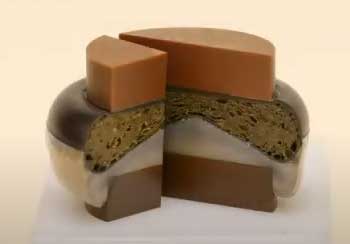
One of the main reasons Vespel is so expensive is its tolerance for extreme heat conditions.
Anything you make out of Vespel will easily get through extremely high or extremely low heat conditions.
Yes, it’s not just about the high heat conditions only with this material.
You can even take these materials to the lowest temperatures, which should work fine. There aren’t too many materials to get to this level of extremities.
- Great Durability Yet Lightweight
Vespel is an excellent option as a core material because of its durability and sturdiness. I mean, you can use the material for aeronautical engineering, so there is no way to compromise on the heavy-duty factor of the material.
Adding to that durability factor comes the lightweight nature as well. Usually, you don’t get durability and lightweight in the same material.
But with this one, you have both of them in the same. Because of this perfect combination, the material works great for aerospace engineering and similar applications.
That’s why it’s pretty expensive because you can’t find lightweight materials with this kind of durability.
- High Purity Percentage
What makes a material expensive is its purity of it. Suppose a material contains the core material solely. As a result, you get all the benefits from the material. Vespel doesn’t contain any mixture or doesn’t have any contamination in them.
So, when you use the material, you don’t need to worry about any impurities.
You can find a variety of materials in Vespel, but none impact the core value of the material. The originality and authenticity of Vespel are intact all the way through, so you will never have trouble with that.
- It Comes With Good Resistance
You can rely on this material to work under conditions that involve chemicals, electronics, thermal applications, and wear. Vespel is resistant to these adversities, and you can use them in all scenarios.
Whether you are working with chemicals or your work involves a lot of electricity, the material is safe to use. You won’t have to worry about damaging the material in some way.
Typically, these features or advantages differentiate Vespel from other materials. Because of this uniqueness, the material costs much more than other materials you use in general.
A More Honest Way To Think About Cost
I stopped asking “Why is this plastic so expensive?” and started asking “What failure am I buying insurance against?”
If the answer is “a seal that must not leak after thermal cycling in a flight valve,” the polymer is cheap. If the answer is “I liked the datasheet,” the polymer is a vanity purchase.
Over-molded assemblies are one of the smarter cost moves I have seen. Put Vespel only where the contact stress and heat live. Mold the rest of the body in a cheaper thermoplastic. You keep the performance surface without making the entire chunk out of sintered polyimide.
Direct forming is the other lever, once volume supports tooling. Machined prototypes teach you the geometry. Direct-formed production stops you from paying for a mountain of chips.
About Vespel
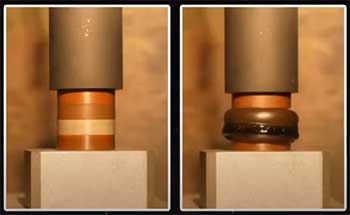
You can consider Vespel as a type of plastic. To be very specific, it’s a polyimide plastic. It’s usable in high heat conditions for various projects.
Mostly, people use this material in their engineering projects. So, if you are an engineer, you will surely come across the material at some point.
One of the best applications of the material is when you have to work around high heat. Projects in NASA and other thermodynamic purposes involving engineering provide good material use.
The material can serve continuously without stopping quickly. It makes the material great for use on machines that need to run for a more extended period.
That’s the essential information you should know about Vespel. But when it comes to getting the actual value, you will need to understand what Vespel offers.
Negatives With Vespel?
To know whether the expense with Vespel is worth it or not, you will need to know about its negatives of it. Learning about the negatives will give you a view of what is wrong with Vespel.
So, you can decide if it’s truly something you will work with or not.
- Processing of Vespel is quite expensive. You will have a difficult time processing the material. You can’t make injection mold the material, so it’s something you have to work around a lot to get the processing right.
- You can’t find the material everywhere. You must look for the material to get your hands on them.
Typically, these are the issues you may come with the Vespel material when you try to use it. Whether they make the cost worthwhile for you or not is entirely up to your preferences.
Frequently Asked Question (FAQ)
No, Vespel is very different from Teflon. However, Vespel does contain a bit of Teflon in them.
Most of the time, people use Vespel for aerospace, semiconductor, and various transportation technologies.
Vespel is a type of thermoplastic material that you can replace with metal. It’s lightweight and durable at the same time.
Vespel is a Polyimide type of plastic that has good rigidity. At the same time, they are pretty lightweight.
Conclusion
In summary, you now know why Vespel is so expensive. Are these reasons enough? Well, you won’t realize it until you use it. Given the material’s purpose, they are worth the high price.
Because the application of Vespel goes into making aerospace items, along with semiconductors, these are items that are very crucial for the machines to work, and they need reliability above everything else.
So, the reliability factor of Vespel is something that makes them worth the price.

micknukie@gmail.com
I have spoken to 4 different billing agents that I was required to call to get my refund for a week of rental that was paid for but not needed. I signed a screen that only had space for a finger signature. If I had known Fox was going to steal my money, why would I use this car rental company…? My personal car was in a shop and repaired ahead of time so why would I want to pay for an extra week? The agents that I spoke to in India, read the same script saying that was their policy to keep your money if you return early. That is NOT what Nawal at the counter said to me. I was assured that to return the car early was fine. If I had known she meant that Fox is a scam and will steal your money and rerent your car to someone else for time already paid for by me…Fox could KMFA. I cannot wait to blog this to followers and on the podcasts the recording of my phone call to their agents in billing who are the only ones that can deal with refunds…what a joke. Then the agent told me that that I will not have to pay an extra fee for turning the rental in early as if this was a good deal. Then I wanted to wait on the phone because I was told there would be a survey…needless to say the survey kept saying invalid and hanging up on me. I tried 3 times to do their survey. I guess I just need to blog and cut/paste this rant on every survey I can to the public. Fox Rental is a scam!