You should buy N1 goalkeeper gloves if you are looking for professional-grade German latex and innovative hybrid cuts without paying the steep “big brand” tax.
I have found that these gloves are the perfect choice for competitive keepers who need a reliable, high-grip palm that performs consistently in both dry and torrential rain conditions.
However, because the latex is highly specialized, you must be willing to follow a strict pre-wash and maintenance routine to ensure the foam doesn’t lose its tackiness prematurely.
If you want a glove that feels like a natural extension of your hand, this is your top analytical pick.
My Personal Experience Guarding the Net with N1
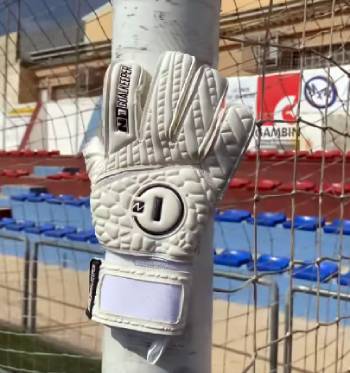
I remember the first time I pulled on a pair of the N1 Sirius 2.0 gloves; the first thing that struck me was the sheer quality of the UGT+ II latex.
I am a person who has spent years playing on abrasive artificial turf, and I have gone through dozens of pairs of gloves from the major sports giants, often finding that the “elite” grip disappears after just three sessions.
I started my journey with N1 by giving them a thorough pre-wash in lukewarm water to remove the manufacturing chemicals, and I noticed immediately that the palm became incredibly “magnetic.”
I found that when I took them out for my first match—a rainy Tuesday night under the lights—the ball didn’t skip or slip through my fingers like it usually does with standard contact latex.
I realized, however, that the “Negative Cut” on the Zeus model is a very specific feeling that might take a moment to get used to if you are coming from a traditional flat palm.
I am someone who prefers a tight, second-skin fit, and I found that the internal silicone “Gel Fit” system was a total game-changer for me.
I noticed that my hand didn’t slide around inside the glove even when I was sweating profusely, which gave me the confidence to dive for those high-velocity shots into the bottom corner.
I realized that the glove felt much more structural and protective than a basic lightweight mesh glove, yet it didn’t feel like a heavy “brick” on my hands.
I eventually noticed that the durability on turf was better than I expected, but it wasn’t invincible.
I found that if I was lazy and didn’t dampen the palms during halftime, the latex would start to show minor “pilling” or abrasions.
I finished a full three-month season with my first pair, and while the fingertips were starting to look a bit worn, the grip was still at about 80% of its original strength.
I realized that N1 provides a professional experience for about half the cost of the “Predator” or “Vapor” lines, making it a much smarter analytical choice for a keeper who plays four times a week.
I found that the wrist strap options—especially the double-wrap elastic—allowed me to get exactly the level of support I needed for my specific wrist shape.
Maintenance Tips for Your N1 Gloves
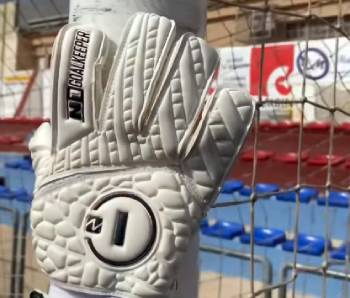
- Perform a Double Pre-Wash Before First Use: You should realize that the chemicals used to keep the latex fresh in the bag will ruin your grip if not removed. Washing the gloves twice in lukewarm water with no soap is the best maintenance tip for “activating” the foam, which I found turns a “slippery” glove into a “magnetic” one.
- Always Dampen the Palms Prior to Kickoff: You should notice that dry latex is much more brittle and prone to tearing. Spraying the palms with a little water until they feel damp but not dripping is the best maintenance tip for durability, which results in a much lower rate of abrasion and “pilling” during the game.
- Hand-Wash After Every Single Game: You should realize that sweat, salt, and dirt act like sandpaper on the German latex. Using a dedicated glove wash or very mild natural soap to rinse out the “muck” is the best maintenance tip for longevity, which I found keeps the foam soft and supple for many months.
- Air Dry Away from Direct Heat Sources: You should notice that putting your gloves on a radiator or in the sun will turn the latex into a crusty, useless material. Hanging them in a cool, shaded room is the best maintenance tip for texture, which provides a long-lasting “squishy” feel to the padding that absorbs the sting of shots.
- Store Gloves “Palm to Palm” with a Barrier: You should realize that if the sticky palms touch each other while drying or in a bag, they can peel the latex off when you pull them apart. Using a piece of wax paper or a plastic sheet between the palms is the best maintenance tip for storage, which I found prevents those annoying “bald spots” on the center of the hand.
- Rotate Between Training and Match Pairs: You should notice that the high-intensity reps of training will destroy your match gloves faster than anything else. Keeping an older pair for practice and a fresh pair for games is the best maintenance tip for performance, which results in you always having the maximum “stick” when it matters most in the final minutes.
Pros and Cons of N1 Goalkeeper Gloves
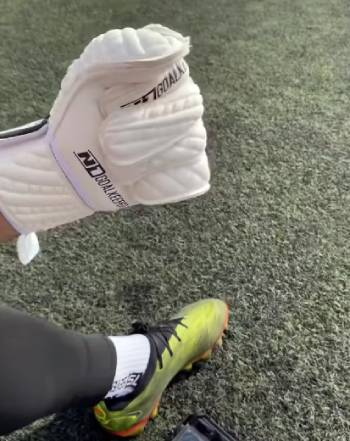
Pros of N1 Goalkeeper Gloves
- Elite German UGT+ II Latex Performance: It features 4mm of 100% natural German latex that provides professional-level grip: I found that the “tackiness” is superior to almost any mid-range glove on the market: this results in a confident catch even when the ball is spinning at high speeds: I noticed the latex feels very dense and high-quality to the touch.
- Innovative Internal Gel Fit System: It utilizes strategically placed silicone inserts inside the palm area: I found that this eliminates any internal hand slippage during intense dives: this provides a much more direct “feel” for the ball when making contact: I noticed my fingers felt more locked-in and secure during punching actions.
- Versatile All-Weather Reliability: It is engineered to maintain its structural integrity and grip in both dry and wet conditions: I found that a light spray of water “reactivates” the foam instantly: this results in a consistent performance across long seasons with changing weather: I noticed the latex doesn’t become “soapy” or slick when it gets soaked.
- Customizable Wrist Closure Options: It offers several models with removable or double-wrap straps for personalized support: I found that I could tighten the wrist area to prevent the glove from shifting: this provides excellent protection against wrist sprains during close-range shots: I noticed the Velcro is high-grade and doesn’t lose its “bite” over time.
- Exceptional Value for Professional Specs: It provides the same materials used in top European leagues at a much more accessible price: I found that I could buy two pairs of N1 for the price of one pair of “big brand” gloves: this results in a better rotation strategy for training and matches: I noticed the stitching and craftsmanship are consistently top-notch.
Cons of N1 Goalkeeper Gloves: The analytical drawbacks:
- Strict Requirement for Frequent Dampening: because the natural latex is highly porous and can dry out quickly during use: I found that if the palm becomes bone-dry, it loses nearly half of its “stickiness”: this results in the need to carry a water bottle to the goal line at every break: I noticed that forgetting to dampen them once can lead to premature latex cracking.
- Potentially Baggy Fit on Slimmer Hands: because certain models like the Gea are cut slightly larger than traditional sizing: I found that I had to go down a half-size to get the “snug” feeling I wanted: this provides a challenge for keepers who order online without trying them on first: I noticed that the textile backhand can sometimes bunch up if the size is too big.
- Latex Fragility on Hard Ground Surfaces: because the premium foam is designed for maximum grip rather than extreme abrasion resistance: I found that playing on gravel or very dry, hard dirt can chew through the palms in just a few weeks: this results in a high “maintenance cost” if you don’t play on turf or grass: I noticed that the palm needs to be kept clean of all dirt to avoid sandpaper-like wear.
- Complex Initial Activation Process: because the gloves come with a protective chemical coating from the factory: I found that a single pre-wash wasn’t enough and I had to do it twice to get the “real” grip: this results in a delay before you can use them in a real match: I noticed that the first time I used them “out of the box,” the grip was actually quite disappointing.
- Lack of Availability in Local Retail Stores: because N1 primarily operates through a direct-to-consumer and specialized pro-shop model: I found that I couldn’t just walk into a general sports store to grab a replacement in an emergency: this provides a logistical hurdle for keepers who need gear immediately: I noticed that shipping from their main hubs can take several days depending on your location.
Also Read: My Experience With Jax Batting Gloves
Comparison with Others
- N1 Goalkeeper Gloves Vs. Adidas Predator Pro
I found that the Adidas Predator Pro is the current king of the “minimalist” movement, but I noticed that it often feels much less protective than the N1 models.
You should realize that Adidas uses a “strapless” design that I found can feel a bit loose on the wrist compared to N1’s secure double-wrap system.
I noticed that the URG 2.0 latex from Adidas is very grippy, but I found that the N1 UGT+ II holds up significantly better against abrasion on artificial turf.
I found the price difference to be the biggest factor, as N1 provides a nearly identical grip experience for about $60 less than the top-tier Predator.
- N1 Goalkeeper Gloves Vs. Nike Vapor Grip3
I noticed that the Nike Vapor Grip3 has a very unique “wrapped” thumb and pinky finger that I found gives a great “flat” surface area for catching.
I found that Nike’s “All Conditions Control” (ACC) treatment is excellent, but I noticed it feels more like a surface coating compared to the deep, “pithy” grip of N1’s natural foam.
You should realize that Nike gloves tend to be very thin, whereas I found N1 offers more “cushion” for those who want to avoid hand sting on heavy shots.
I noticed that the durability of Nike’s contact latex is notoriously low, while I found N1 to be a much more rugged analytical choice for a full season.
- N1 Goalkeeper Gloves Vs. Reusch Attrakt Gold X
I found that Reusch is the “technician’s” choice, but I noticed that their top-tier models can be incredibly expensive and hard to find.
I noticed that the Gold X latex from Reusch is perhaps the only foam that rivals the N1 UGT+ II in pure “tackiness” in the dry.
You should realize that Reusch gloves often feature very complex “Fingersave” spines that I found can make the glove feel stiff compared to the flexible N1 Zeus.
I found that N1 offers a more modern, “lifestyle” aesthetic that looks sharper on the pitch than some of the more traditional-looking Reusch designs.
- N1 Goalkeeper Gloves Vs. Uhlsport Absolutgrip
I noticed that Uhlsport Absolutgrip is famous for its durability, and I found it to be the only glove that might outlast N1 on a dry, dirt pitch.
I found, however, that the grip quality of the Absolutgrip isn’t quite as “sticky” as the N1 UGT+ II, especially when things get wet.
You should realize that Uhlsport uses a very traditional “flat” or “half-negative” cut that I found feels a bit “old school” compared to N1’s hybrid designs.
I noticed that for keepers who prioritize “pure grip” over “pure durability,” N1 is the clear analytical winner in the $70–$90 price bracket.
- N1 Goalkeeper Gloves Vs. West Coast Goalkeeping
I found that West Coast Goalkeeping is the primary competitor in the “independent pro brand” space, and I noticed they both offer incredible value.
I noticed that West Coast tends to have a much larger variety of designs, but I found N1’s internal “Gel Fit” system to be a superior technical feature.
You should realize that N1 has a larger presence in the European and South American pro leagues, which I found gives their development a bit more of an elite edge.
I found that N1’s latex feels a bit “purer” and less synthetic than some of the “Bio-Hybrid” foams used by other independent brands.
Also Read: Comparison Of Rawlings Thermoformed Vs. BOA Gloves
Frequently Asked Questions (FAQs)
It is a rugged, MagSafe-compatible smartphone case that offers heavy-duty protection with a slimmer profile than the traditional three-piece Defender model.
The “Pro” version typically adds an antimicrobial coating and a slightly more textured grip to the classic multi-layer OtterBox Defender design.
The Symmetry is for style and slimness, the Commuter is for everyday mid-range protection, and the Defender is for maximum ruggedness in harsh environments.
While it is much thinner than the original Defender, it is still a substantial case and will feel significantly larger than a standard silicone or clear case.
Final Thoughts
You should buy N1 goalkeeper gloves if you want to feel like a pro without emptying your savings account for a pair of “big brand” gloves that will only last a month.
I have found that the combination of high-grade German latex and the internal “Gel Fit” system makes these gloves an analytical powerhouse for any serious keeper.
However, you should stick to basic training gloves if you aren’t ready to commit to the washing and dampening maintenance that these premium materials require.
I believe that once you feel the “stick” of a properly activated N1 glove, your confidence in the box will reach a completely new level.
Command your area with the best grip available!