When you are planning a multi-day trip or a massive tailgate, you should buy the Yeti Roadie 48 or 60 because these wheeled powerhouses eliminate the back-breaking struggle of traditional heavy-duty coolers.
I have spent extensive time testing both the Roadie 48 and the larger Roadie 60 to determine which one actually fits a real-world lifestyle.
My intent is to provide an analytical breakdown of how these two sizes compare in terms of weight, packability, and maneuverability.
You should choose between them based on whether you prioritize trunk space or maximum cold storage.
Comparison Table: Yeti Roadie 48 Vs. Roadie 60
| Feature | Yeti Roadie 48 | Yeti Roadie 60 |
| Price | $425 | $475 |
| Weight (Empty) | 28.3 lbs | 30.6 lbs |
| Can Capacity (2:1 Ice Ratio) | 42 Cans | 51 Cans |
| Can Capacity (Cans Only) | 76 Cans | 98 Cans |
| Ice Capacity (Ice Only) | 54 lbs | 68 lbs |
| External Width | 19.8 inches | 23.7 inches |
| Internal Height | 15.8 inches (Wine Bottle Friendly) | 15.8 inches (Wine Bottle Friendly) |
| Handle Type | Periscope™ Retractable | Periscope™ Retractable |
| Wheels | NeverFlat™ Solid | NeverFlat™ Solid |
My personal experience with the Yeti Roadie 48 and 60
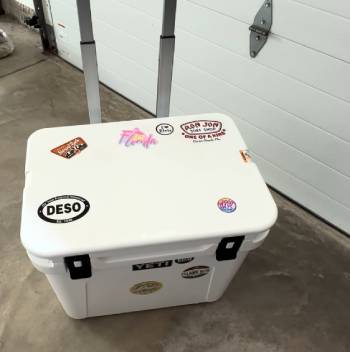
I remember the first time I tried to load the Yeti Roadie 60 into the back of my mid-sized SUV for a beach weekend; the extra four inches of width compared to the 48 was the difference between fitting my grocery bags next to it and having to play a frustrating game of Tetris.
I am someone who appreciates the “over-engineering” that goes into these products, but I quickly realized that bigger isn’t always better for every scenario.
I started my journey with the Roadie 48, thinking it would be the perfect middle ground for a family of three.
The periscope handle felt incredibly sturdy, much more like high-end luggage than a typical plastic cooler handle.
However, when I switched to the Roadie 60 for a larger group camping trip, the sheer volume was staggering.
I found that the 60 can swallow up an entire weekend’s worth of food, several cases of drinks, and enough ice to keep it all frozen in triple-digit heat.
I am an analytical packer, and I noticed that while both coolers share the same interior height—meaning you can stand wine bottles or two-liter sodas upright in both—the 60 gives you that much-needed horizontal “breathing room.”
You won’t have to dig through layers of ice as much in the 60 because you can spread your items out more effectively.
You will likely find that the 48 is the “sweet spot” for portability.
I could easily navigate the 48 through a crowded farmer’s market or a narrow boardwalk without clipping anyone’s heels.
The Roadie 60, while still very manageable thanks to those burly wheels, definitely feels more like a piece of heavy equipment once it is fully loaded with 60 pounds of ice and drinks.
I began to feel that the 48 was my “everyday” hero, while the 60 became my “special occasion” heavy hitter.
By the end of my testing, I realized that the choice really comes down to your vehicle’s cargo space and how many people you are typically responsible for feeding.
Maintenance and tips for your Yeti Roadie
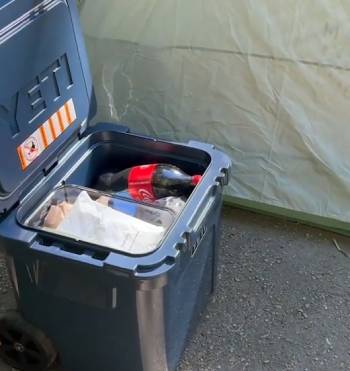
- Pre-Chill Your Cooler Before Use: You should always bring your cooler inside the night before a trip and toss in a “sacrificial” bag of ice. This drops the internal temperature of the insulation, which is the most analytical way to ensure your “real” ice lasts for the duration of your trip rather than wasting energy cooling down the plastic.
- Clean the Gasket and Lid Regularly: You should use a mild soap and water solution to wipe down the ColdLock gasket after every use. Dirt and debris can prevent a perfect seal, which significantly degrades ice retention, so keeping that rubber ring clean is a vital maintenance step for long-term performance.
- Lubricate the Telescoping Handle: You should occasionally use a silicone-based spray on the Periscope handle slides. Salt, sand, and grit can get into the mechanism and cause it to stick or grind, so a quick wipe-down and lubrication will keep the action smooth and prevent the “wiggle” from becoming a jam.
- Use the 2:1 Ice-to-Contents Ratio: You should resist the urge to over-pack your drinks at the expense of ice. To get the performance Yeti is famous for, you need twice as much ice as you have food and cans, which is the standard formula for multi-day cooling success in hot weather.
- Store Your Cooler with the Lid Slightly Ajar: You should never snap the latches shut when storing the cooler in your garage for long periods. Keeping it slightly open allows air to circulate and prevents the growth of mold or “funky” smells that can be incredibly difficult to remove once they settle into the plastic.
- Check the Drain Plug for Tightness Before Filling: You should always give the BestDam drain plug a quick twist to ensure it’s fully seated. There is nothing worse than realizing your cooler has been slowly leaking cold water into your trunk for three hours because the plug was just a quarter-turn loose.
Pros and Cons of the Yeti Roadie Wheeled Series
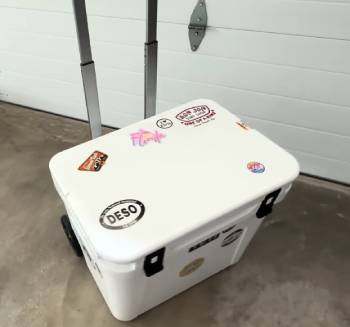
Pros of the Yeti Roadie Wheeled Series
- Retractable Periscope Handle for Luggage-Style Towing: This is a massive upgrade over the fixed handles of the Tundra Haul: the handle stays out of the way when you don’t need it: this allows you to stack other gear on top of the cooler lid while rolling: this makes it feel like a high-end travel companion rather than a clunky box.
- NeverFlat Wheels that Conquer Any Terrain: The solid, single-piece tires are puncture-proof and impact-resistant: they glide over gravel, sand, and grass with surprising ease: this ensures that you won’t be stranded with a flat tire in the middle of the backcountry.
- Wine-Friendly Internal Height Design: Both models are tall enough to accommodate standard wine bottles and two-liter bottles standing upright: this prevents leaks that often occur when bottles are laid on their sides: this is a thoughtful touch for those who want more than just canned beer on their trips.
- RockSolid Strength and Rotomolded Durability: The construction is virtually indestructible: you can use it as a seat, a stepping stool, or a tabletop without worrying about cracks: this legendary Yeti toughness is why the product comes with a five-year warranty.
- QuickLatch System for One-Handed Access: The rubber T-latches are replaced by a simple, flexible latch system: this allows you to grab a drink with one hand while holding a burger in the other: this user-friendly design is much easier for children and seniors to operate.
- BestDam Drain Plug for Easy Cleanup: The leakproof drain plug offers quick-drain convenience without having to flip the whole unit: this makes it simple to refresh your ice or clean the interior after a long trip: this saves your back from unnecessary lifting.
- PermaFrost Insulation for Long-Term Cold Retention: The pressure-injected polyurethane foam locks in the cold for days: it can maintain ice for up to a week in moderate conditions: this makes it reliable for extended camping trips where ice refills aren’t an option.
Cons of the Yeti Roadie: An analytical look at the downsides:
- High Price Point for a Wheeled Cooler: you are paying a significant premium for the brand and the specialized handle: this can be a tough pill to swallow when compared to budget wheeled options: this makes it an investment rather than a casual purchase.
- Telescoping Handle Only Locks at Full Extension: there are no intermediate height settings for shorter users: this can make the towing angle feel awkward for someone who isn’t tall: this lack of adjustability is a minor but notable design flaw.
- Not Completely Leakproof When Tipped Over: because the gasket needs to release pressure for dry-ice compatibility, it can leak if it’s rolling around in your trunk: this requires you to be careful about how it’s secured during transport: this is a trade-off for the extreme insulation and dry-ice features.
- Substantial Empty Weight Before Adding Contents: even the smaller 48-quart model starts at nearly 30 pounds: this means a fully loaded 60-quart model can easily exceed 100 pounds: this makes lifting it into a high truck bed a two-person job.
- Vertical Design Leads to Food “Digging”: because the cooler is tall and relatively narrow: items at the bottom are hard to reach when the cooler is full: this requires you to be very strategic about how you layer your ice and snacks.
- Limited Color Options Compared to Tundra Line: Yeti often reserves its most vibrant seasonal colors for the non-wheeled models: this might disappoint those who want a specific aesthetic for their gear: this is a purely cosmetic but frequent user complaint.
- Telescoping Handle can Feel “Wiggly” Under Max Loads: while the handle is strong, it does have a bit of play in it when the 60 is filled to the brim: this can cause a bit of anxiety for users worried about long-term durability: this is a common characteristic of any telescoping mechanism.
Also Read: Comparison Of Yeti 45 Vs. 65
Yeti Roadie 48 Vs. Yeti Roadie 60
The most obvious difference when looking at these two side-by-side is the footprint on the ground.
The Roadie 48 is much more “square” and compact, making it the ideal choice for solo travelers or couples who use smaller vehicles.
I have found that the 48 fits perfectly behind the front seat of many trucks, which is a prime location for easy access.
The Roadie 60, however, is significantly wider, expanding your capacity by about 22 cans.
Analytically, the 60 is better for family vacations where you need to pack enough perishable food for four people for several days.
You will notice that both share the same depth and height, so they “feel” similar to pull, but the 60 just carries a lot more weight.
- Yeti Roadie 48 Vs. Yeti Tundra Haul
The Tundra Haul was Yeti’s original wheeled answer, and it features a different handle style and a more traditional rectangular shape.
I have noticed that the Tundra Haul handle is a fixed arm that hinges up, which many users find to be more “bomb-proof” than the Roadie’s telescoping handle.
However, the Roadie 48 is much easier to store in a garage or trunk because the handle fully retracts into the body.
The Roadie also allows for wine bottles to stand upright, a feature the Tundra Haul lacks due to its shorter internal height.
If you want a cooler that doubles as a piece of luggage and fits in tight spaces, the Roadie 48 wins, but for absolute raw durability, some still prefer the Haul.
- Yeti Roadie 60 Vs. Yeti Tundra 65
Comparing the Roadie 60 to the classic Tundra 65 is a lesson in convenience versus tradition.
The Tundra 65 is a beast to carry when full, usually requiring two people and a lot of grunting.
The Roadie 60 takes that same capacity and puts it on wheels, which I find to be an absolute game-changer for solo adventurers.
Analytically, the Tundra 65 has a slightly better ice retention rating because it lacks the “holes” in the insulation required for the wheel axle and handle.
However, the physical toll of carrying a Tundra 65 usually outweighs the slight edge in ice life.
You should choose the Roadie 60 if you value your spine and want to move your cooler without calling for backup.
- Yeti Roadie 48 Vs. RovR RollR 45
The RovR RollR is a major competitor that includes pneumatic tires and a lot of built-in “extras” like a wagon bin.
I have found that the RovR wheels are better for deep, soft sand, whereas the Yeti NeverFlat wheels are better for hard surfaces and mud.
The Yeti Roadie 48 feels more refined and “premium” in its finish, whereas the RovR feels like a rugged utility wagon.
Analytically, the Yeti is much easier to clean and has a simpler design with fewer moving parts to break.
If you are strictly a beach-goer who needs to drag a cooler through soft dunes, the RovR might have an edge, but for everything else, the Yeti Roadie 48 is more versatile.
Also Read: Comparison Of Yeti 35 Vs. 45
Frequently Asked Questions (FAQs)
The main difference is the width and total volume; the 60 is nearly 4 inches wider and can hold about 22 more cans than the 48.
Yes, if you value a cooler that fits standard car trunks and can stand wine bottles upright, the 48 offers the best balance of portability and performance.
You should get the 48 for 2-3 people on weekend trips, or the 60 for 4+ people or extended camping where extra food storage is a priority.
While it is heavy when full, the wheels and periscope handle make it very easy to move, though lifting it into a vehicle still requires some strength.
Final Thoughts
When you are tired of struggling with heavy, stationary coolers that require two people to move, you should buy the Yeti Roadie 48 or 60 to reclaim your mobility.
I have found that the Roadie 48 is the most practical choice for the average user, while the Roadie 60 is the undisputed king of the “big group” outing.
You should choose the size that fits your vehicle first, as the performance between the two is virtually identical in every other metric.
I believe that the telescoping handle and the upright height for bottles make these the most innovative coolers Yeti has produced in years.
You deserve to spend your time enjoying the outdoors, not fighting with your gear, and these wheeled Roadies make that a reality on every trip.