When you are deciding between a compact day-trip companion and a more versatile personal cooler, you should buy the Yeti Flip 8 or 12 because these soft coolers redefine what it means to keep your provisions frosty without the bulk of a hard-sided box.
I have spent countless weekends testing the limits of these two models in everything from humidity-soaked boat decks to dry desert hikes.
My intent is to provide an analytical comparison so you can determine if the ultra-portable Flip 8 or the high-capacity Flip 12 better aligns with your specific outdoor lifestyle.
You should choose the model that matches your typical “ice-to-can” ratio requirements while fitting comfortably in your vehicle or on your shoulder.
Comparison Table: Yeti Hopper Flip 8 Vs. Flip 12
| Feature | Yeti Hopper Flip 8 | Yeti Hopper Flip 12 |
| Price | $200 | $250 |
| Weight (Empty) | 2.8 lbs | 3.1 lbs |
| Can Capacity (2:1 Ice Ratio) | 6 Cans | 13 Cans |
| Can Capacity (Cans Only) | 11 Cans | 24 Cans |
| Ice Capacity (Ice Only) | 10 lbs | 16 lbs |
| External Width | 11.5 inches | 12.6 inches |
| External Height | 10.5 inches | 11.5 inches |
| Warranty | 3 Years | 3 Years |
| Best Use Case | Solo day trips, lunch box | Couples, beach days, golf |
My personal experience with the Yeti Flip 8 and 12
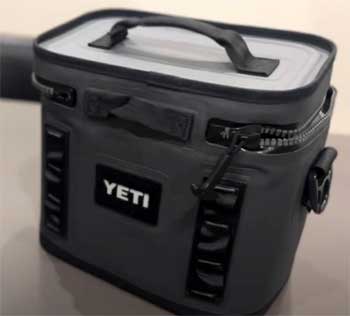
I remember the first time I took the Yeti Flip 8 out on a solo fishing trip; I was skeptical about whether such a small footprint could actually hold enough ice to last through a Texas afternoon.
I am someone who hates lugging around unnecessary weight, so the sub-three-pound empty weight of the Flip 8 was an immediate win for me.
I started by packing it with a small Yeti Ice block and six cans, and I was genuinely impressed by how much room was left for a sandwich.
The wide-mouth opening made it incredibly easy to see exactly what I had left without having to dig around in the dark.
However, when I decided to take my partner out for a full day at the beach, I quickly realized the Flip 8 had reached its limit.
I found that the Flip 12 was necessary when we needed to pack enough water, snacks, and “adult beverages” to last more than four hours.
I am an analytical observer of gear performance, and I noticed that the Flip 12’s extra height allowed me to stand up a standard bottle of Gatorade, which just wasn’t possible in the 8.
You won’t believe the difference those extra few inches of width make when you’re trying to fit a Tupperware container alongside your drinks.
You will likely find that the Flip 8 is the superior “daily driver” if you use it primarily as a high-end lunch box for work.
I found that it fits perfectly on the passenger seat of my truck, and the shoulder strap is comfortable enough that I don’t feel like I’m carrying a piece of luggage.
The Flip 12, while still very portable, starts to feel a bit more substantial once you load it with 16 pounds of ice.
I began to feel that the 12 was the most versatile size in the entire Hopper lineup, providing enough space for a duo without becoming a burden.
By the end of my testing, I realized that if I could only own one, it would be the 12, but the 8 has a specialized charm for the solo adventurer.
Maintenance and tips for your Yeti Flip
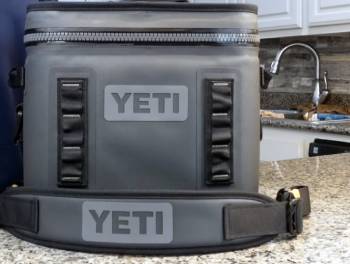
- Lubricate the Zipper Every Few Months: You should use the included U-Tube of lubricant to keep the HydroLok zipper moving freely. If you feel it catching or getting harder to pull, a small amount of silicone will prevent the teeth from wearing down and ensure the seal remains 100% airtight, which is the most analytical way to prevent mechanical failure.
- Always Pre-Chill the Interior: You should never put ice into a warm cooler and expect it to last. I find that placing a “sacrificial” ice pack inside for 30 minutes before packing makes a massive difference in how long your real ice stays frozen, as it cools down the dense insulation walls first.
- Dry the Interior Completely Before Closing: You should never store your Flip zipped up while it’s still damp inside. This creates a perfect environment for mildew and smells to grow, so I always leave mine propped open upside down in the dish rack until it is bone-dry before I store it in the closet.
- Avoid Using Sharp Objects Inside: You should be careful with metal forks or knives when reaching into the cooler. While the DryHide shell is tough, the inner liner can be cut if you aren’t careful, so I always keep my utensils in a separate pouch or the Sidekick attachment.
- Use Yeti Ice to Save Space: You should consider using the custom-sized Yeti Ice blocks instead of just loose cubes. The 1lb or 2lb Yeti Ice fits perfectly in the bottom of the Flip 8 and 12, allowing you to use less loose ice and leave more room for your actual food and drinks.
- Hand Wash with Mild Soap Only: You should never put your Yeti Flip in a washing machine or use harsh chemicals like bleach. A simple mixture of dish soap and warm water with a soft cloth is all you need to keep the exterior and interior looking brand new for years.
Pros and Cons of the Yeti Hopper Flip Series
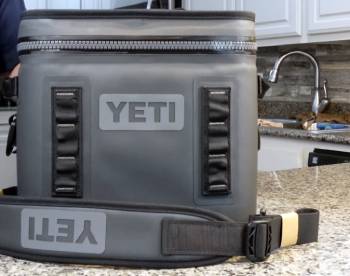
Pros of the Yeti Hopper Flip Series
- 100% Leakproof HydroLok Zipper Technology: This is the standout feature of the Flip series: the zipper creates a completely airtight seal: this means you can flip the cooler upside down in your car and not a single drop of melted ice will escape: this provides incredible peace of mind during long drives.
- DryHide Shell for Extreme Durability: The high-density fabric is similar to what is used in whitewater rafts: it is puncture-resistant and UV-resistant: this ensures the exterior won’t fade or tear even after years of exposure to sun and salt: this makes it a “buy it once” kind of product.
- ColdCell Insulation for Superior Thermal Retention: It uses closed-cell rubber foam that is far thicker than typical soft coolers: this allows the Flip 12 to hold ice for up to 48 hours in ideal conditions: this level of performance is usually reserved for hard-sided coolers: this makes it viable for weekend trips.
- HitchPoint Grid for Modular Customization: The daisy-chain webbing on the front is a genius addition: you can easily clip on a Bottle Key opener, a Molle Zinger, or the Sidekick Dry bag: this allows you to expand your storage for keys and phones: this makes the cooler a functional gear hub.
- FDA-Approved Food-Grade Liner: The interior material is safe for direct food contact and easy to sanitize: it is resistant to mildew and odors: this means you can pack loose fruit or veggies without worrying about chemical leaching: this is a huge plus for health-conscious users.
- Comfortable Padded Shoulder Strap: The strap is heavily reinforced and ergonomically designed: it distributes the weight across your shoulder to prevent digging: this is essential when the Flip 12 is fully loaded with heavy beverages: this makes it easy to carry from the parking lot to the campsite.
- Compact Footprint for Easy Storage: Unlike the bulky Tundra series: the Flip models tuck away easily in a closet or under a seat: this is perfect for apartment dwellers or those with limited trunk space: this convenience factor is why I reach for my Flip more than any other cooler.
Cons of the Yeti Hopper Flip: An analytical look at the downsides:
- Stiff Zipper Requires Regular Maintenance: Because the HydroLok zipper is so airtight: it is notoriously difficult to pull: this can be frustrating for children or those with hand strength issues: this requires you to use the included lubricant frequently.
- High Initial Investment Compared to Competitors: You are paying a “Yeti Tax” for the brand and the over-engineered build: many other soft coolers cost half as much: this makes it a luxury item that might not fit every budget: this is the most common complaint from potential buyers.
- Reduced Internal Space Due to Thick Insulation: The walls of the cooler are so thick: the internal dimensions are significantly smaller than the external footprint: this can be deceptive when you first see it in the store: this requires you to pack very strategically to maximize the space.
- Non-Breathable Exterior can get Sweaty: While the inside doesn’t leak: the exterior fabric can sometimes feel “clammy” in high humidity: this isn’t a leak, but rather condensation on the tough shell: this can make your clothes slightly damp if you carry it against your body for long periods.
- Lack of External Pockets for Dry Storage: Unless you buy the separate Sidekick Dry bag: there is nowhere to put a napkin or a bottle opener: this forces you to carry a second bag for small essentials: this feels like a missed opportunity for a $200+ product.
- Limited Capacity for Group Events: Even the Flip 12 is strictly a personal or couple’s cooler: it cannot handle a full day of drinks for a group of four: this means you might still need a larger hard cooler for social gatherings: this limits its utility for bigger families.
- Lid Must Be Fully Unzipped to Access Contents: You cannot just “peek” inside like you can with a Velcro-top cooler: you have to run that heavy-duty zipper all the way around: this lets a lot of cold air out every time you want a drink: this can reduce ice life if you are a frequent “snacker.”
Also Read: Comparison Of Yeti 35 Vs. 45
Yeti Flip 8 Vs. Yeti Flip 12
The primary battle between these two comes down to “one meal” versus “one day.”
The Flip 8 is the ultimate personal lunch box, designed to hold enough for a solo worker or a quick morning on the water.
I have found that the Flip 8 is much easier to fit into a backpack or a bicycle basket, which is a major factor for hikers.
The Flip 12, on the other hand, is the “goldilocks” size that bridges the gap between a snack bag and a real cooler.
Analytically, the 12 offers nearly double the drink capacity for only a 0.3-pound weight increase.
You will notice that the 12 feels more like a traditional cooler on your shoulder, while the 8 feels like a small accessory.
- Yeti Flip 12 Vs. Yeti Flip 18
If you are considering the Flip 12, you might wonder if you should just go all the way to the 18.
I have noticed that the Flip 18 is substantially larger and begins to lose that “easy-to-carry” feel that makes the Flip series so great.
Analytically, the 18 is great for a small family picnic, but it is much more cumbersome to store in the footwell of a car.
The Flip 12 remains the sweet spot for portability while still offering enough volume for a full day’s worth of supplies.
You should choose the 18 only if you consistently find yourself running out of room in the 12, but for most couples, the 12 is plenty.
- Yeti Flip 8 Vs. Yeti Daytrip Lunch Box
The Daytrip Lunch Box is a foldable, lighter alternative to the Flip 8, but it lacks the serious insulation.
I have found that the Daytrip is perfect for a climate-controlled office, but it fails miserably in the back of a hot truck.
Analytically, the Flip 8 uses real ColdCell insulation, whereas the Daytrip uses a thinner, more flexible foam.
The Flip 8 is 100% leakproof, while the Daytrip uses a magnetic closure that can leak if tipped.
You should go with the Flip 8 if your lunch needs to survive high temperatures and rough handling throughout the day.
- Yeti Flip 12 Vs. Hydro Flask 12L Soft Cooler
Hydro Flask is a major competitor, and their 12L soft cooler is often praised for its lighter weight and softer shell.
I have found that the Hydro Flask is more comfortable to carry against your side because it isn’t as rigid as the Yeti.
Analytically, the Yeti Flip 12 crushes the Hydro Flask in terms of durability and long-term ice retention.
The Yeti’s HydroLok zipper is a tier above the Hydro Flask’s zipper in terms of water-tightness.
If you want a “soft” feel, go Hydro Flask, but if you want a “bomb-proof” cooler, stick with the Yeti Flip 12.
- Yeti Flip 8 Vs. Pelican Dayventure
Pelican is known for their rugged cases, and the Dayventure is their attempt at a portable soft cooler.
I have noticed that the Pelican has a very different vertical shape that is designed to be carried like a backpack or a tall sling.
Analytically, the Yeti Flip 8 is much easier to load because of its wide “cube” shape, whereas the Pelican can feel like a deep dark hole.
The Yeti’s warranty and brand ecosystem are also much easier to navigate for the average user.
You might like the Pelican for its unique look, but the Yeti Flip 8 is the more functional design for most daily tasks.
Also Read: Comparison Of Yeti Roadie 48 Vs. 60
Frequently Asked Questions (FAQs)
For soft coolers, the Flip 12 is widely considered the most useful size because it balances high-end ice retention with a capacity that fits the needs of 1-2 people for a full day.
Yeti discontinued the Backflip 24 to make room for the new M-Series backpack coolers, which utilize a magnetic “MagShield” closure rather than the traditional HydroLok zipper for easier access.
Yes, the Yeti Flip 8 is 100% leakproof thanks to the HydroLok zipper; as long as the zipper is fully closed and “docked” in the U-section, no water can get in or out.
The Flip 8 is excellent for solo fishing trips, especially on a kayak or small boat where space is limited and you only need a few cold drinks and a lunch to get through the morning.
Final Thoughts
When you are ready to upgrade your outdoor gear to something that actually survives the elements, you should buy the Yeti Flip 8 or 12 as a reliable partner for your adventures.
I have found that the Flip 8 is the ultimate “selfish” cooler for the solo trekker, while the Flip 12 is the workhorse that every couple should have in their arsenal.
You should choose based on your car’s available space and how much you value standing your bottles upright versus having the smallest footprint possible.
I believe that once you experience the convenience of a 100% leakproof soft cooler, you will never want to go back to cheap, leaky alternatives.
You deserve a cooler that keeps up with your pace, and the Yeti Hopper Flip series delivers that “over-engineered” confidence every single time you head out.