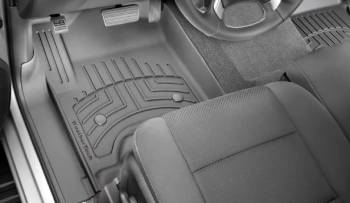
You should buy the WeatherTech FloorLiner or FloorLiner HP if you want to keep your car’s interior looking brand new while shielding your resale value from the inevitable chaos of mud, coffee spills, and winter slush.
In this guide, I will help you decide between the classic, rigid FloorLiner and the newer, rubberized FloorLiner HP so you can choose the right armor for your specific driving environment.
I find that choosing the wrong mat can lead to annoying slips or curling edges, so let’s get into the details to ensure you get the perfect fit.
Quick Comparison: FloorLiner Vs. FloorLiner HP
| Feature | Standard FloorLiner | FloorLiner HP |
| Material | Rigid High-Density Tri-Extrude | Flexible Thermoplastic Elastomer |
| Texture | Hard, Plastic-like Feel | Soft, Rubber-like Feel |
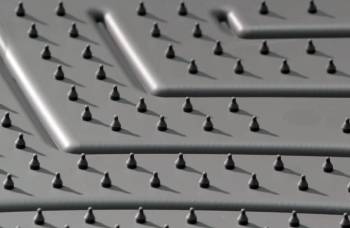
| Grip | Smooth Underside | Anti-Skid Nibs (Better Grip) |
| Sidewalls | Very Rigid (Best for Trays) | Flexible (Contour-Hugging) |
| Best For | Daily Urban Commuting | Heavy Snow, Mud, and Off-Roading |
My Firsthand Experience with WeatherTech Liners
I remember the first time I installed a set of original WeatherTech FloorLiners in my truck; I was someone who thought a floor mat was just a floor mat until a spilled venti latte disappeared into my carpet.
The standard FloorLiner arrived, and I noticed right away that the material was much harder than I expected; it felt almost like a durable plastic tray rather than a traditional rubber mat.
I started by sliding them into my front footwells, and I found that the laser-measured fit was incredibly precise, snapping into the factory retention hooks with a satisfying click.
I eventually decided to try the FloorLiner HP in my second vehicle because I am someone who lives in a climate where snow and road salt are a constant winter headache.
I noticed immediately that the “HP” version felt completely different under my hand; it was softer, more pliable, and didn’t have that stiff “snap” of the original.
I found that the HP model stayed much flatter against the floor during the first few days, whereas my original liners had a slight gap near the door sill that took some time to settle.
I noticed that when my boots were wet, the FloorLiner HP gave me significantly more traction.
I am a person who hates that feeling of my heel sliding when I’m trying to hit the brakes, and I found the rubberized texture of the HP provided a much more secure “planted” feeling.
I also realized that the anti-skid nibs on the bottom of the HP mats are a massive improvement; I noticed that they didn’t shift a single millimeter, even when my dog was jumping into the passenger seat.
I finished my comparison realizing that while the original FloorLiner is a “tank” that holds its shape forever, the FloorLiner HP is the more refined, modern sibling.
I found that cleaning the HP was slightly more work because the deeper channels trapped more fine grit, but I noticed that the flexibility made it much easier to pull them out of the car without dumping all the dirt back onto the carpet.
I eventually decided that for my daily driver, the HP is the winner, but the original still has its place for those who want a rigid barrier that feels indestructible.
Maintenance Tips for Your WeatherTech Liners
- Use the Specialized WeatherTech Cleaner: You should realize that harsh household chemicals can strip the finish and make the mats look grey. Using the official cleaner or a mild soap is the best maintenance tip for preserving the “new” look, which I found keeps the material supple and prevents it from becoming brittle over years of use.
- Avoid Silicone-Based Tire Shines: You should notice that while these make the mats look shiny, they turn them into an ice rink. Sticking to a matte finish protectant is the best maintenance tip for safety, which results in a grippy surface that won’t cause your feet to slip while you are trying to drive.
- Rinse the Underside Thoroughly After Winter: You should realize that salt and grime can get trapped between the mat and the carpet. Cleaning the bottom of the liner is the best maintenance tip for preventing carpet mold, which I found is the most common cause of that “old car smell” in vehicles with all-weather mats.
- Let Them Dry Completely Before Reinstalling: You should notice that trapped moisture can lead to a humid cabin and fogged windows. Air-drying the mats in the sun for twenty minutes is the best maintenance tip for interior health, which provides a fresh-smelling environment every time you get behind the wheel.
- Heat Them Up if They Develop a Gap: You should realize that if your liners get bent during shipping or storage, they need to “relax.” Laying them flat in a warm garage or using a hair dryer on low heat is the best maintenance tip for a perfect fit, which I found helps the edges “flow” back into the contours of your floor.
- Re-Snap the Retention Clips Monthly: You should notice that kicking the mats can occasionally pop them off the factory floor hooks. Giving the clips a firm press is the best maintenance tip for preventing the mat from sliding toward the pedals, which results in a much safer driving experience for you and your passengers.
Also Read: Comparison Of BMW Floor Liners Vs. WeatherTech
Pros and Cons of WeatherTech FloorLiner
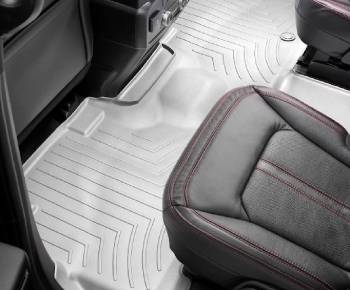
Pros of WeatherTech FloorLiner
- Rigid High-Density Construction: It uses a patented High-Density Tri-Extruded material: I found this makes the mat act like a permanent tray: this results in excellent containment for large liquid spills: I noticed it never sags under the weight of heavy work boots.
- Easy Debris Removal: The surface is relatively smooth compared to rubber mats: I found that dirt and sand slide right off with a quick shake: this provides a very fast cleaning process at the car wash: I noticed that a simple hose-down is usually enough to make them look new.
- Stands Up to Vertical Wear: The high sidewalls are incredibly stiff: I found they protect the sides of the footwell better than softer mats: this results in zero salt stains on the vertical carpet areas: I noticed the rigid edges prevent mud from collapsing over the side.
Cons of WeatherTech FloorLiner: The trade-offs of a rigid design:
- Slippery Surface When Wet: because the material is more plastic than rubber: I found that my shoes can slide around if they are covered in rain or snow: this results in a less secure feeling while driving: I noticed it can be particularly annoying if you wear leather-soled dress shoes.
- Potential for Edge Curling Over Time: because the hard material can develop a “memory” from heat and cold: I found that the edges near the door can sometimes start to pull away from the sill: this results in an unsightly gap: I noticed that once they start to curl: it is very difficult to get them back to their original shape.
- Less Grip on the Carpet: because the underside is mostly smooth: I found the mats rely entirely on the factory clips: this results in potential shifting if your clips are broken or missing: I noticed they don’t “bite” into the carpet like nibbed mats do.
Pros and Cons of WeatherTech FloorLiner HP
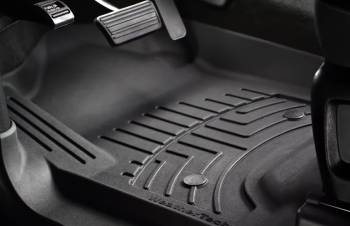
Pros of WeatherTech FloorLiner HP
- Advanced Flexible Material: It is made from a soft Thermoplastic Elastomer: I found it feels much more premium and “factory” than the original: this results in a mat that hugs every curve of your floorboard: I noticed it doesn’t have that “hollow” plastic sound when you step on it.
- Superior Anti-Skid Nibs: The bottom is covered in small rubber teeth: I found these grip the carpet like a thousand tiny hands: this provides a mat that stays perfectly still even under aggressive foot movement: I noticed it feels much safer for the driver.
- Enhanced Traction and Safety: The rubberized surface is naturally grippy: I found it holds your heel in place even when your shoes are soaked: this results in better pedal control during bad weather: I noticed the “HP” stands for High Performance for a reason.
Cons of WeatherTech FloorLiner HP: The minor drawbacks of the upgrade:
- Heavier and Bulkier to Handle: because the material is denser and more rubber-like: I found they are a bit more cumbersome to lift out of the car: this results in a higher chance of spilling debris if you aren’t careful: I noticed they are slightly heavier than the standard version.
- Traps Fine Dirt in Deeper Channels: because the texture is more aggressive: I found that fine dust and dried mud can get stuck in the corners: this results in needing a stiff brush to get them perfectly clean: I noticed a simple hose-up isn’t always enough to remove “ghost” stains.
- Higher Price Point: because it uses a more advanced chemical compound: I found they typically cost about twenty to thirty dollars more per set: this results in a higher upfront investment: I noticed that for many users: the standard version might be “good enough” for the price.
Also Read: Comparison Of WeatherTech HP Vs. Regular Floor Liners
Frequently Asked Questions (FAQs)
The original FloorLiner is a rigid, plastic-like tray, while the FloorLiner HP is made of a softer, flexible, rubber-like material with better grip and anti-skid nibs.
Brands like Husky Liners and TuxMat are often cited as high-quality alternatives, but WeatherTech remains the industry leader for precise laser-measured fit and long-term durability.
“HP” stands for High Performance; it is a premium line of WeatherTech mats that uses a more flexible, rubberized compound designed for better traction and a more luxury feel.
Yes, the FloorLiner HP offers significantly better grip than the original FloorLiner due to its rubber-like surface and the anti-skid nibs on the underside that lock into the carpet.
Final Thoughts
You should buy the WeatherTech FloorLiner HP if you want the ultimate combination of flexible protection and a secure, non-slip feel that actually stays in place.
I have found that while the original FloorLiner is great for heavy-duty spill containment, the HP is the more “human-friendly” option for daily driving.
However, you should stick to the original FloorLiner if you are on a strict budget and just need a solid “bucket” for your mess.
I believe your car’s carpet deserves this level of defense.
Your interior will thank you for years to come.