When you hit the open highway, your radar detector is more than just a gadget; it is your early warning system against costly surprises.
I have spent years testing speed countermeasures to find out which units truly provide the best balance of range and intelligence.
In this comparison, I will show you how the Uniden R7 and R8 stack up against each other in real-world conditions.
My goal is to help you decide if the R8’s premium features justify the jump from the already legendary R7.
We will look at directional awareness, sensitivity, and filtering to find your perfect driving companion.
Uniden R7 Vs. R8 Comparison Table
| Feature | Uniden R7 | Uniden R8 |
| Antenna Architecture | Dual-Antenna (Front/Rear) | Dual-Antenna + Dual LNA |
| Sensitivity Range | Extreme Long Range | Extreme Range+ (Class Leading) |
| Directional Arrows | Yes (360° Awareness) | Yes (Refined Display) |
| Bluetooth | No | Yes (Built-in) |
| Auto-Lockouts | Manual (Auto via firmware) | Automatic (Built-in) |
| Gatso/Photo Radar | Limited Support | Advanced Detection (Gatso/MRCD) |
| Platform | R-Series Gen 1 | Next-Gen Platform |
| Mute Button | Side-mounted | Front-mounted (Easier access) |
| Update Method | USB to Computer | USB or Wi-Fi (R8w variant) |
Why the Uniden R7 Still Commands Respect
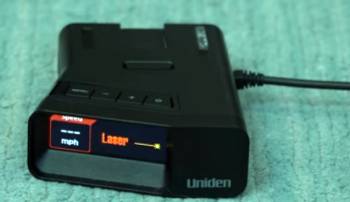
I remember the day the Uniden R7 was released; it felt like a total shift in the market because it finally gave us arrows that rivaled the Valentine One.
Even in 2025, the R7 remains one of the most capable detectors I have ever mounted on my dash.
The dual-antenna system is the heart of the experience, telling me instantly if the radar source is ahead or behind.
For a lot of drivers, the R7 is the “sweet spot” because it provides flagship performance without the flagship price tag.
I have found that on long, flat stretches of road, the R7 gives me miles of warning, which is often more than enough time to check my speedometer.
The display is large and easy to read, and while it lacks some of the modern bells and whistles, its raw detection capability is still top-tier.
I especially appreciate the community support for this unit; if you are willing to tweak the settings, you can make this thing incredibly quiet in the city.
It might be an older platform, but it doesn’t feel outdated when you are cruising at 80 mph.
Pros and Cons of the Uniden R7
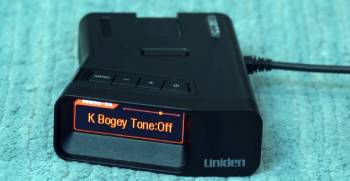
Pros of the Uniden R7
- Directional Arrows: Still the most important feature for situational awareness on the road.
- Proven Range: It consistently outperforms many newer detectors from competing brands.
- Huge Display: The OLED screen is bright and provides a wealth of information at a glance.2
- Price-to-Performance: You get a dual-antenna system for hundreds less than most flagship models.
Cons of the Uniden R7
- Manual Updates: You still have to bring the unit inside to your computer to update the firmware.
- Side Mute Button: I find the placement on the side of the unit a bit awkward to reach in a hurry.
- Older Filtering: It can be a bit more prone to “falsing” from modern blind-spot monitors compared to the R8.
The Uniden R8: Stepping into the Future of Detection
When I first upgraded to the Uniden R8, the difference wasn’t just in the look; it was in the “brain” of the device.
The R8 is built on a brand-new platform that uses dual Low Noise Amplifiers (LNAs), which effectively increases the “volume” of distant radar signals.
In my testing, the R8 consistently picks up weak Ka-band signals before the R7 even chirps.
But the biggest life-changer for me was the move to a front-facing mute button.
It sounds like a small detail, but when you are driving, being able to tap the front of the unit instead of fumbling with the side is a massive ergonomics win.
The R8 also brings Bluetooth to the table, allowing me to connect to apps like Highway Radar on my phone for even better protection.
The automatic lockouts are much more refined here as well, learning your route and silencing the local drug store doors without you having to lift a finger.
If you live in an area with new photo-radar technology like Gatso cameras, the R8 is almost a requirement because it can detect those low-power signals that the R7 often misses.
Pros and Cons of the Uniden R8
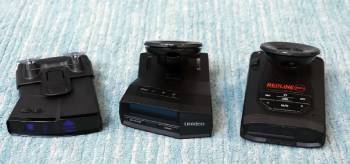
Pros of the Uniden R8
- Unmatched Sensitivity: The dual LNAs make this one of the longest-ranging detectors ever made.
- Front Mute Button: A much-needed ergonomic upgrade that makes daily use more enjoyable.
- Bluetooth Integration: Connects to third-party apps for crowd-sourced alerts and advanced filtering.
- Photo Radar Support: Excellent at detecting Gatso and MRCD/MRCT threats used in many modern speed traps.
Cons of the Uniden R8
- Higher Cost: It is a significant investment compared to the R7.
- Physical Size: It is a bit bulkier and more “blocky” than the sleek R7 design.
- Complexity: With so many features, it takes a bit longer to set up and dial in perfectly.
Real-World Performance: Range and Sensitivity
I have run these two detectors side-by-side on many road trips, and the results are fascinating.
On a clear day on the interstate, both will give you so much warning that you might forget the cop is even there.
However, where I really saw the R8 pull away was in “difficult” terrain—like around curves or over steep hills.
The R8’s amplifiers allow it to catch the tiny fragments of radar bouncing off trees or other cars much earlier than the R7.
In one specific instance, the R8 gave me a full 10-second head start over the R7 when a state trooper was hiding behind a bridge.
That extra time is what prevents “panic braking,” which can be dangerous and is a dead giveaway to police.
The R8 also reacts faster to “Instant-On” (I/O) radar, where the cop only triggers the gun for a split second.
The R7 is no slouch, but the R8 feels like it has a faster processor that “understands” the environment more quickly.
Also Read: Comparison Of Uniden R3 Vs R4
Filtering and False Alerts: Keeping the Cabin Quiet
Nobody wants a radar detector that beeps at every Mazda or Honda in the next lane.
Both the R7 and R8 have Blind Spot Monitoring (BSM) filters, but the R8 is noticeably more sophisticated.
I found that the R8’s “K-Block” feature is more effective at identifying the specific frequencies used by car safety systems and ignoring them.
The R7 can be a bit “chattier” in heavy traffic, requiring you to turn down the sensitivity or use manual lockouts to stay sane.
The R8 also has an “Auto” mode that looks at your GPS speed to decide how sensitive it should be.8
When I’m crawling through a parking lot, the R8 stays quiet; when I hit 70 mph on the freeway, it automatically ramps up to full power.
The R7 requires you to manually switch modes or set a “Quiet Ride” speed, which just isn’t as seamless.
If you value a quiet cabin, the R8’s smarter filtering is a major selling point.
Maintenance Tips for Your Radar Detector
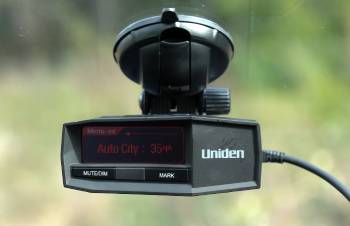
To ensure your Uniden stays reliable for years, I recommend a few simple maintenance habits.
First, keep the “lens” (the front and rear glass) clean with a soft microfiber cloth; oil and dust can hinder laser detection.
Second, always check for firmware updates every few months, especially for the R8, as Uniden frequently improves the BSM filters.
Third, avoid leaving your detector in direct, baking sunlight during the peak of summer if you can help it.
Extreme heat can eventually damage the OLED screen or cause the suction cups to fail, potentially dropping the unit.
Fourth, if you use a hardwire kit, ensure the connections are tight and the fuse is the correct rating for your device.
I also suggest resetting your GPS lockouts once a year to clear out any “ghost” lockouts from locations where radar sources may have changed.
Finally, store your detector in its carrying case if you are parking in a high-theft area or leaving the car for an extended period.
Also Read: Comparison Of Uniden R4 Vs R7
Frequently Asked Questions (FAQs)
The R8 offers about 10-15% better range in difficult terrain, automatic lockouts, Bluetooth, and much better detection of newer photo-radar like Gatso.
As of 2025, the R8 is widely considered the best overall value for an “enthusiast” detector, though its sibling, the R9, is the top custom-installed option.
The R8 is “stealth” to many older Radar Detector Detectors (RDDs), but it is not 100% invisible to the latest Spectre Elite systems used in some regions.
Yes, the R7 remains the best “bang for your buck” if you want directional arrows and high-end range without spending $700 or more.
Final Thoughts
Deciding between the Uniden R7 and R8 really comes down to how much you prioritize the “latest and greatest” technology.
I have found that while the R7 is still a heavy hitter that will protect you in almost any situation, the R8 is the smoother, more refined version of that experience.
If you hate fumbling with buttons and want the absolute longest range possible, the R8 is your winner.
However, if you are looking for incredible value and don’t mind a little manual work to keep things quiet, you will be very happy with the R7.
Both of these units provide the directional arrows that make driving with a detector so much more intuitive.
Whichever you choose, you are making a smart investment in your own peace of mind and your driving record.