In the world of speed countermeasures, choosing between the Uniden R3 and R4 is a classic debate of value versus performance.
I have spent years testing these units on open highways and congested city streets to see if the newer R4 truly justifies its price tag over the legendary R3.
In this comparison, I will help you decide which of these high-performance detectors belongs on your windshield by breaking down their range, filtering, and real-world usability.
Uniden R3 Vs. R4 Comparison Table
| Feature | Uniden R3 | Uniden R4 |
| Platform | R-Series Gen 1 | Next-Gen Platform (R4/R8) |
| Range Performance | Extreme Long Range | Extreme Range+ (Dual LNAs) |
| GPS Lockouts | Manual Only | Automatic & Manual |
| Bluetooth | No | Yes (App Support) |
| Filtering | Good BSM Filtering | Advanced K-Block / TSF |
| Auto Sensitivity | No | Yes (Speed-dependent) |
| Detection Types | X, K, Ka, Laser | X, K, Ka, Laser, Gatso |
| Display | Multi-color OLED | Ultra-bright Multi-color OLED |
| Price Point | Budget-Friendly | Mid-Range Value |
Why the Uniden R3 is Still a Legend in 2025
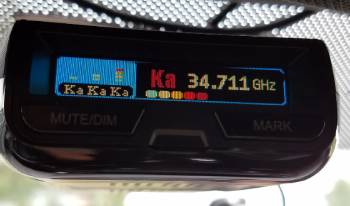
I remember when the Uniden R3 first hit the market.
It completely disrupted the industry by offering range that rivaled detectors twice its price.
Even today, I find the R3 to be a formidable companion for any driver who spends most of their time on rural highways.
The core of its appeal is simplicity.
You plug it in, set your sensitivity, and it sniffs out Ka-band radar from miles away.
It doesn’t have the “brain” of the R4, but its “ears” are still incredibly sharp.
In my testing, I have consistently seen the R3 provide over two miles of warning on flat terrain.
For many of us, that is more than enough time to check our speed and adjust.
I often tell people that the R3 is like a classic muscle car; it might lack the modern driver-assist features, but its raw power is undeniable.
The build quality remains impressive after all these years, showing that Uniden really put effort into the longevity of the hardware.
Many drivers still swear by the R3 because it provides a raw, unfiltered connection to what the local police are doing.
It is also one of the few older units that continues to receive occasional firmware updates, which is a testament to its popularity.
When I look at the current market, the R3 stands out as the benchmark that every other budget-friendly detector is measured against.
Pros and Cons of the Uniden R3
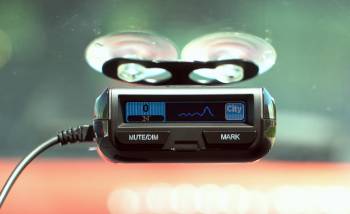
Pros of the Uniden R3
- Insane Value: You can often find this unit at a price that makes it the best entry-level “real” detector on the market.
- Simple Interface: If you aren’t a tech geek, you will appreciate how easy it is to navigate the menus.
- Compact Design: It takes up very little real estate on your windshield.
- Proven Reliability: Since it has been out for years, the firmware is stable and the community support is massive.
Cons of the Uniden R3
- Manual Lockouts: If you pass the same false alert every day, you have to manually press the button to mute it.
- No Bluetooth: You cannot connect it to your phone for easy settings management or third-party app integration.
- Older Display: While functional, it isn’t as bright or crisp as the newer R4 screen.
The Uniden R4: The New Standard for Performance
When I first switched to the Uniden R4, I immediately noticed the difference in the hardware.
The R4 isn’t just a “refreshed” R3; it is built on an entirely new platform that shares DNA with the flagship R8.
The biggest addition I noticed was the inclusion of dual Low Noise Amplifiers (LNAs).
In plain English, this means the R4 can hear much quieter signals than the R3.
This translates to even more range, but more importantly, it helps with “off-axis” detection.
If a cop is hiding around a curve or over a hill, the R4 has a better chance of catching those reflected signals earlier.
The real game-changer for me, however, was the Auto Mute Memory.
I no longer have to reach up and double-tap the mute button every time I drive past the local pharmacy.
The R4 also features a much faster processor, which reduces the lag between signal detection and the actual alert sound.
I feel much more confident entering unfamiliar territory with the R4 because it feels like a proactive shield rather than a reactive one.
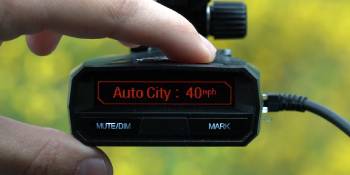
The inclusion of an “Auto” mode that adjusts sensitivity based on my actual speed is something I now consider a necessity.
Furthermore, the R4 has a wider frequency sweep, which means it can catch the very latest radar guns being deployed by state troopers.
Pros and Cons of the Uniden R4
Pros of the Uniden R4
- Automatic Lockouts: The R4 learns where false alerts are (like grocery store doors) and mutes them automatically after you pass them a few times.
- Bluetooth Connectivity: You can pair it with apps like Highway Radar on Android or V1Driver on iOS to get a much more powerful experience.
- Superior Filtering: It handles modern Blind Spot Monitoring (BSM) systems much better than the R3, meaning fewer “ghost” alerts from the car next to you.
- Gatso Detection: If you live in an area with new photo-radar technology, the R4 can detect signals that the R3 simply can’t see.
Cons of the Uniden R4
- Higher Price: It usually costs about $50 to $100 more than the R3.
- Steeper Learning Curve: With more features comes more menu options to tweak.
- Chattier Out of the Box: Because it is so sensitive, you really need to dial in the settings to keep it quiet in the city.
Performance in the Real World: Range and Sensitivity
I have spent hundreds of hours with both of these units mounted side-by-side.
If you are driving in a straight line on a desert road, you might not notice a massive difference.
Both will give you so much warning that you’ll be bored by the time you actually see the patrol car.
However, the R4 shines in difficult terrain.
In the rolling hills where I live, the R4 consistently alerted 5 to 10 seconds earlier than the R3.
That might not sound like much, but at 80 mph, every second counts.
The R4 also introduces an “Auto” sensitivity mode.
This feature allows the detector to look at your GPS speed and automatically switch between City and Highway modes.
I love this because it keeps the detector quiet when I’m pulling out of my driveway but ramps up the power the moment I hit the on-ramp.
The R3, by comparison, requires you to manually switch modes or just leave it on Highway and deal with the extra noise.
In my long-distance road trips, the R4 has picked up weak Ka signals that the R3 didn’t even acknowledge until I was a half-mile closer.
This extra buffer zone is what prevents that “panic braking” moment that we all try to avoid.
I also noticed that the R4 handles “Instant-On” radar much more effectively because its reaction time is near-instantaneous.
If you are a serious driver who pushes the limits on curvy backroads, the sensitivity of the R4 is non-negotiable.
Also Read: My Thoughts On Prepared Hero Camera Detector
Filtering Out the Noise: BSM and K-Band
One of the biggest frustrations I hear from users is the “falsing” caused by modern cars.
Many cars now use K-band radar for their blind-spot sensors.
The R3 does a decent job with its K-filter, but it can still be tricked.
The R4 uses a more advanced Digital Signal Processor (DSP) to analyze the “DNA” of the signal.
It can distinguish between a Mazda’s blind-spot sensor and a police officer’s radar gun with much higher accuracy.
I found that the R4 stayed much quieter in heavy highway traffic than my old R3.
If you hate unnecessary beeping, the R4 is worth the extra money for the peace of mind alone.
Modern Honda and Acura vehicles are notorious for setting off older detectors, but the R4 manages them with surprising grace.
The R3 often requires you to turn down the K-band sensitivity so much that you might miss a real cop, but the R4 doesn’t have that compromise.
I have found that the “K-Block” feature on the R4 is one of the most effective tools for urban driving.
It specifically targets the frequencies used by car manufacturers and mutes them while keeping the door open for legitimate threats.
This makes the R4 a much more “livable” device for daily commuting through metropolitan areas.
When you are surrounded by thousands of cars, the last thing you want is a detector that cries wolf every thirty seconds.
Maintenance Tips for Your Uniden Detector
To keep your detector running at peak performance, I recommend a few simple habits.
First, always check for firmware updates every few months.
Uniden frequently releases updates that improve filtering and add new features.
Second, keep your windshield clean.
Dirt and grime can actually interfere with the laser sensor on the front of the unit.
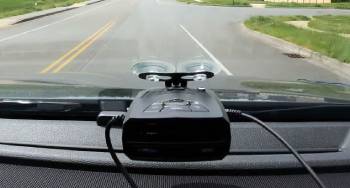
Third, if you use the suction cup mount, take it down during extreme heat.
The sun can bake the suction cups, causing them to lose their grip and potentially drop your expensive device.
Lastly, try to mount the detector as high as possible on your windshield.
A higher mounting point gives the antenna a better “view” over the cars in front of you, which maximizes your warning distance.
I also suggest using a hardwire kit to keep your dashboard clutter-free and ensure a stable power connection.
It is a good idea to reset your GPS lockouts once a year to clear out any old data that might no longer be relevant.
Always store your detector in its carrying case if you are leaving the car in an area where theft might be a concern.
Checking the power cord for fraying is another small step that can prevent a sudden failure in the middle of a trip.
Finally, familiarize yourself with the regional radar bands used in your area so you can disable unnecessary bands and speed up the scanning process.
Also Read: My Thoughts On VEVOR Metal Detector
Frequently Asked Questions (FAQs)
The R4 is built on a newer platform with dual LNAs for more range, features automatic GPS lockouts, and includes Bluetooth for smartphone app integration, whereas the R3 is a simpler, manual-entry device.
Yes, the R4 is technically superior in every category, including range, filtering, and ease of use, thanks to its auto-sensitivity and auto-lockout features.
Absolutely. If you are on a budget and mainly drive on highways, the R3 still offers top-tier range that beats almost anything else in its price bracket.
The Uniden R8 is currently considered the best overall for its 360-degree directional arrows, but the R4 is widely regarded as the best “value-per-dollar” high-end detector.
Final Thoughts
Choosing between the Uniden R3 and R4 really comes down to how much you value your own convenience.
I have found that while the R3 is a “beast” of a performer, the R4 is a “smarter” companion that makes your drive much less stressful by handling the filtering and lockouts for you. If you can swing the extra cost, you should go for the R4 to get the most future-proof protection possible.
However, if you just want a reliable shield against tickets without spending a fortune, you will still be incredibly happy with the R3.
Whichever you choose, you are getting some of the best technology available on the road today.
Would you like me to provide a step-by-step setup guide for the R4 to help you get the best settings right away?