When you find yourself squinting through your windshield on a dark, rainy highway, the quality of your headlight bulbs suddenly becomes the most important detail of your vehicle.
I have spent years testing automotive lighting to help drivers like you understand which upgrades actually make a difference and which are just marketing fluff.
My intent is to compare the Sylvania XtraVision and Sylvania SilverStar Ultra to help you decide if you should prioritize long-lasting reliability or maximum brightness for your night drives.
You should choose the bulb that fits your specific driving environment—whether that is well-lit city streets or pitch-black rural backroads.
Comparison Table: Sylvania XtraVision Vs. SilverStar Ultra
| Feature | Sylvania XtraVision | Sylvania SilverStar Ultra |
| Main Goal | Increased downroad visibility | Maximum brightness and whiteness |
| Light Color | Warm white (approx. 3200K) | Crisp white (approx. 4100K) |
| Lumens | Standard (approx. 1000) | High (approx. 1000-1100) |
| Brightness Increase | Approx. 3% over Basic | Approx. 27% over Basic |
| Lifespan | Long (150+ hours) | Short (approx. 85-100 hours) |
| Coating | Minimal/Clear | Patented Tri-Band Blue Coating |
| Best For | Value and longevity | Performance and night vision |
My experience with Sylvania automotive lighting
I remember the first time I swapped out a pair of dim, yellowing factory bulbs for a set of high-performance halogens.
The difference in my confidence behind the wheel was almost immediate.
I have spent weeks driving with both XtraVision and SilverStar Ultra bulbs in various conditions—from the heavy fog of coastal mornings to the absolute darkness of mountain passes.
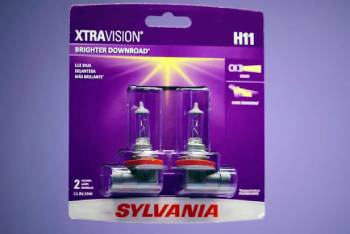
During my time with the XtraVision bulbs, I appreciated the “no-nonsense” approach to lighting.
They felt like a more robust version of what came with my car originally.
The light was slightly more reaching than a basic bulb, and I didn’t feel like I was sacrificing the life of the bulb for a bit of extra sight.
However, when I switched to the SilverStar Ultra, the change was striking.
The light wasn’t just “more,” it was “different.”
The white color of the Ultra bulbs made the white lines on the road and the reflective signs pop with a clarity that the warmer XtraVision bulbs couldn’t match.
I noticed that I could see further down the road, giving me those extra few seconds to react to a deer standing on the shoulder.
But there was a trade-off I had to face.
While the Ultras were amazing for clarity, they burned out much faster.
I found myself replacing them about once a year, whereas the XtraVisions seemed like they could go on forever.
The installation for both was identical, but the psychological impact was different.
With the SilverStar Ultra, I felt like I was driving a newer vehicle with premium lighting.
With the XtraVision, I felt like I had a reliable workhorse that wouldn’t leave me in the dark unexpectedly.
Analytically, the choice between them really came down to how much I valued that “white” light versus the frequency of me having to get under the hood and swap out a dead bulb.
Why color temperature matters for your night vision
I have found that the color of light hitting the asphalt significantly impacts how your brain processes the road ahead.
While the Sylvania XtraVision leans toward a warmer, yellow-toned light, the SilverStar Ultra pushes into the cooler, white-to-blue spectrum.
Analytically, whiter light is excellent for reflecting off road signs and markers, making them easier for you to read at a distance.
However, warmer light actually provides better depth perception and reduces eye strain during long, monotonous drives on the highway.
You should consider how your eyes react to different light types, as some people find that the crispness of the Ultra helps them stay alert, while others prefer the soft, natural feel of the XtraVision.
Key features and analytical comparison
When we look at these two bulbs from a technical perspective, it is a battle of thermal management and light filtration.
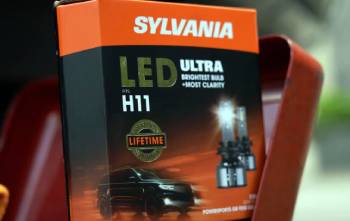
The SilverStar Ultra uses a blue coating on the glass.
While this coating makes the light look whiter and “cooler,” it is actually a filter.
Filters work by blocking certain wavelengths of light.
To compensate for the light lost through the filter, Sylvania has to run the filament much hotter and use a more aggressive gas mixture inside the bulb.
The XtraVision, however, uses a mostly clear glass.
This allows all the produced light to reach the road.
Because it isn’t fighting a filter, the filament doesn’t need to be pushed to its absolute thermal limit.
This is why the XtraVision manages to be brighter than a basic bulb while still maintaining a long life.
If you live in a city where streetlights are everywhere, the SilverStar Ultra is mostly a cosmetic upgrade.
You won’t truly utilize the extra “downroad” reach because the environment is already lit.
However, if you live in a rural area with no streetlights and frequent wildlife crossings, the SilverStar Ultra is a safety tool that justifies its high maintenance and cost.
You are essentially paying a “safety tax” for better vision.
Sylvania XtraVision: The reliable value choice

The XtraVision is often the unsung hero of the Sylvania lineup.
It is designed for the driver who wants more than the bare minimum but isn’t ready to deal with the short lifespan of high-output bulbs.
Pros of Sylvania XtraVision
- Exceptional Lifespan: Because it lacks the heavy blue coatings that trap heat, the XtraVision can last hundreds of hours longer than its more “premium” siblings.
- Minimal Glare for Oncoming Traffic: The beam pattern is focused and doesn’t produce the scattered “blue” glare that can sometimes annoy other drivers.
- Superior Performance in Rain and Fog: The warmer color temperature (yellowish-white) actually cuts through moisture better than cool white or blue light, which tends to reflect off water droplets.
- Cost-Effectiveness: You get a noticeable upgrade over basic bulbs for just a few dollars more, making it the best “bang for your buck” in the catalog.
- Reliable Filament Design: It is built to withstand more road vibration than the thinner, higher-intensity filaments found in ultra-performance bulbs.
Cons of Sylvania XtraVision
- Yellowish Tint: If you are looking for that modern “HID” or “LED” look, you will be disappointed: the light still looks very traditional and warm.
- Modest Brightness Gains: While it is an improvement over basic bulbs, the 3% increase in brightness is subtle: you won’t feel like you’ve turned night into day.
- Standard Sideroad Visibility: It doesn’t widen the beam significantly, so your peripheral vision of the ditches remains largely the same as stock bulbs.
Also Read: My Thoughts On depo headlight
Sylvania SilverStar Ultra: Maximum night vision performance
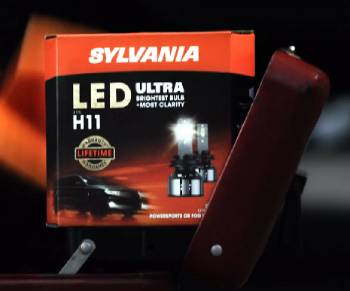
The SilverStar Ultra is Sylvania’s top-of-the-line halogen bulb.
It is engineered for those who do a lot of nighttime driving and need every possible advantage in terms of clarity and distance.
Pros of Sylvania SilverStar Ultra
- Significant Downroad Visibility: These bulbs are engineered to throw light much further than standard halogens, reaching into the darkness where basic bulbs fail.1
- Crisp White Light: The Tri-Band coating filters out yellow light, resulting in a color that mimics daylight more closely, which can reduce eye fatigue during long night hauls.
- Enhanced Contrast: Objects like road debris, animals, and signs become much easier to distinguish against the dark pavement.
- Legal “HID-Like” Appearance: You get a whiter, more premium look for your vehicle without the legal or technical headaches of trying to retrofit LED or HID kits into halogen housings.
- Improved Sideroad Coverage: The Ultra is designed to cast a wider beam, helping you spot hazards coming from the sides of the road earlier.
Cons of Sylvania SilverStar Ultra
- Short Lifespan: This is the most significant drawback: the higher operating temperature and more delicate filament mean these bulbs often only last 6 to 12 months with regular use.
- Higher Price Point: You will pay a premium for this performance, often double the price of the XtraVision line.
- Reduced Visibility in Heavy Rain: The whiter light can reflect more off of rain and snow compared to the warmer XtraVision: this can create a “wall of white” in severe weather.
- Heat Generation: These bulbs run hotter than standard versions, which is why touching the glass with your bare fingers during installation is a guaranteed way to make them pop even sooner.
Also Read: My Thoughts On Philips Vs. Sylvania Headlight Bulbs
Frequently Asked Questions (FAQs)
The Sylvania SilverStar Ultra is the brightest halogen bulb in their lineup, offering the most downroad visibility and the whitest light color.
Yes, the differences lie in the gas mixture, filament design, and glass coatings, which prioritize either lifespan (Basic/XtraVision) or performance (Ultra/zXe).
Yes, XtraVision provides more downroad light than the Basic model without significantly sacrificing the lifespan of the bulb.
It is worth it for drivers who prioritize safety and visibility on dark roads, provided they are willing to replace the bulbs more frequently.
Final Thoughts
Deciding between Sylvania XtraVision and SilverStar Ultra is a matter of knowing your driving habits and your tolerance for maintenance.
I have found that the XtraVision is the perfect “middle ground” for most people who want a reliable upgrade that they can install and forget about for years.
However, if you frequently find yourself on dangerous, unlit roads at night, you should choose the SilverStar Ultra for the life-saving clarity it provides.
You should assess your typical driving environment and decide if you want the long-term value of the XtraVision or the high-performance “ultra vision” of the SilverStar Ultra.