When you are staring at a shed full of lawn equipment that has been sitting all winter or a classic car that only hits the road once a month, the health of your fuel is everything.
I have spent the last few weeks analyzing the chemical differences and real-world performance of the two biggest names in the industry to bring you this Star Tron vs Sta-Bil comparison.
My intent is to help you decide whether you need an enzyme-based rejuvenator or a traditional petroleum-distillate protector.
You should buy these products to avoid expensive carburetor rebuilds and ensure a first-pull start every single time.
Comparison Table: Star Tron Vs. Sta-Bil
| Feature | Star Tron Enzyme Treatment | Sta-Bil Storage (Red) |
| Primary Technology | Biological Enzymes | Purified Petroleum Distillates |
| Stabilization Duration | Up to 2 Years | Up to 2 Years |
| Water Management | Disperses water into sub-micron droplets | Removes/Suspends water |
| Cleaning Power | High (Breaks down gum/varnish) | Moderate (Prevents new gum) |
| Safe for All Engines | Yes (2-cycle, 4-cycle, Diesel) | Yes (All gasoline engines) |
| Best Use Case | Ethanol-blended fuel & rejuvenation | Long-term seasonal storage |
| Overdose Risk | None (Safe to over-treat) | Low (But follow directions) |
My experience with Star Tron and Sta-Bil
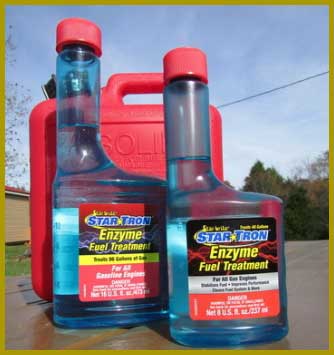
I remember the first time I had to deal with a “gummed up” carburetor on my pressure washer; it was a hot July afternoon, and the machine wouldn’t even cough, let alone start.
I am someone who used to be quite lazy about winterizing my gear, assuming that “gas is gas.”
That afternoon changed my perspective when a neighbor handed me a bottle of the blue Star Tron and told me to let it sit in the tank overnight.
To my absolute shock, the next morning the machine fired up on the third pull, emitting a bit of white smoke before settling into a perfect idle.
I started using Star Tron for my “rescue missions” because its enzyme technology seems to physically eat through the sticky varnish that modern ethanol leaves behind.
However, when it comes to my vintage motorcycle that sits in a climate-controlled garage for six months at a time, I have always leaned toward the classic red Sta-Bil.
The experience with Sta-Bil is much more about “peace of mind.”
I’ve found that when I treat a fresh tank of 93-octane with Sta-Bil, the fuel smells just as crisp and fresh in the spring as it did in October.
It feels like a protective blanket for the fuel system.
While Star Tron feels like a “curative” medicine that fixes problems, Sta-Bil feels like a “preventative” vitamin that keeps the system from getting sick in the first place.
I’ve used both across everything from my weed whacker to my daily driver during the winter, and I can honestly say that having both on your shelf is the mark of a smart equipment owner.
Maintenance and tips for fuel stability
To keep your machines running at peak performance, you need a strategy that goes beyond just pouring in a bottle.
- Treat the gas at the pump: Don’t wait until you get home to add your stabilizer. Pour the Star Tron or Sta-Bil into your gas can at the station before you fill it up. The force of the gas hitting the bottom of the can will naturally mix the additive, ensuring a perfect blend.
- Run the engine after treating: This is the most common mistake people make. If you add stabilizer to the tank but don’t run the engine for five minutes, the “old” untreated gas is still sitting in the carburetor or fuel lines. Always give it enough time to circulate through the entire system.
- Keep the tank 95% full: If you are storing a machine for the winter, leave about an inch of headspace but keep the tank mostly full. This reduces the amount of “air” in the tank, which in turn reduces the chance of moisture condensing and causing rust or phase separation.
- Store fuel cans in a cool place: Heat is the enemy of fuel stability. If you keep your gas cans in a scorching hot shed, the volatiles in the gas will evaporate faster, making the stabilizer work much harder than it should have to.
- Use a fresh spark plug: If you have used a heavy dose of stabilizer to “clean” a system, your spark plug might have caught some of the loosened carbon. Starting the new season with a fresh plug ensures that the stabilized fuel has the best chance to ignite.
Pros and Cons of using Star Tron
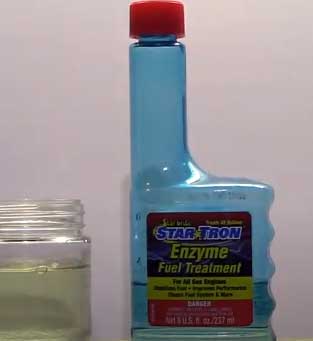
Pros of using Star Tron
- Exceptional for Ethanol Protection: Since most pump gas contains 10% ethanol, Star Tron is a lifesaver because it prevents phase separation, which is where water and gas split and ruin your engine.
- Rejuvenates Stale Fuel: One of the few products on the market that can actually help bring “old” gas back to life by breaking down the molecular clusters of gum and varnish that have already formed.
- Impossible to Overdose: You can be a bit heavy-handed with the pour and it won’t hurt your seals or gaskets, which is great for those of us who don’t always have a measuring cup handy.
- Improves Combustion Efficiency: The enzymes help the fuel burn more completely, which can lead to a slight increase in throttle response and a decrease in smokey exhaust.
- Cost-Effective Concentration: Because it is highly concentrated, a small 8-ounce bottle can treat up to 48 gallons of fuel, making it very affordable for large-scale users.
Cons of Star Tron
- Slightly Higher Initial Price: While the concentration makes it a good value, the price per bottle can be a bit higher than basic stabilizers.
- Specific Scents: It has a very distinct chemical odor that can linger on your hands if you spill it while treating your small engines.
- Requires “Soak Time”: For rejuvenation to work, you often have to wait 24 to 48 hours for the enzymes to do their job, which isn’t ideal for someone in an immediate rush.
Also Read: Comparison Of Quaker State Full Synthetic Vs. Mobil 1
Pros and Cons of using Sta-Bil
Pros of using Sta-Bil
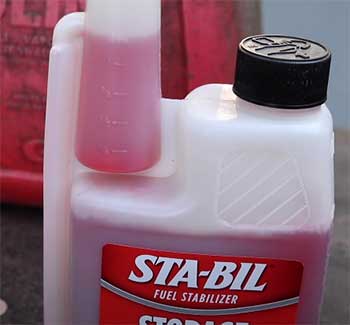
- The Industry Standard for Storage: There is a reason almost every OEM manufacturer recommends the red bottle; it has a decades-long track record of keeping fuel stable for up to 24 months.
- Superior Corrosion Inhibitors: Sta-Bil is world-class at coating the internal metal parts of your fuel system with a protective layer, preventing rust in steel tanks.
- Widely Available: You can find Sta-Bil at almost any gas station, hardware store, or big-box retailer, making it the most convenient “last minute” storage solution.
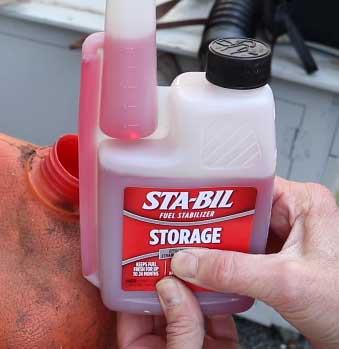
- Precision Measuring Bottle: The “squeeze-to-fill” neck on the bottle is a design masterpiece, allowing you to get the exact ounce you need without any messy spills or funnels.
- Vapor Technology: Newer versions like Sta-Bil 360 provide protection not just for the liquid fuel, but for the empty space in the tank where condensation usually forms.
Cons of Sta-Bil
- Can Be Over-Treated: While generally safe, using way too much Sta-Bil over a long period can occasionally lead to a slight “filming” on spark plugs in very small 2-cycle engines.
- Limited Rejuvenation: Unlike Star Tron, if your gas is already “rotten” and smells like old varnish, the standard red Sta-Bil is unlikely to fix the problem; it’s meant to keep good gas good.
- Petroleum-Based: It relies on traditional distillates, which some eco-conscious users might find less appealing than the enzyme-based alternatives.
Star Tron Vs. Other Brands
- Star Tron Vs. Sta-Bil 360 Marine
When we look at the marine environment, the stakes are much higher because of the constant exposure to humidity.
Star Tron has traditionally been the king of the boat dock because its enzyme formula is specifically designed to handle the massive amounts of water that can get into a marine fuel vent.
However, the Sta-Bil 360 Marine (the blue/green version) has closed that gap significantly by offering a vapor-phase inhibitor.
This means it protects the metal parts of the fuel system that aren’t even touched by the fuel itself.
I have found that for open-vented boat tanks, Star Tron is still slightly better at handling water dispersion, but Sta-Bil 360 is superior at preventing the actual corrosion of the tank walls.
Also Read: Comparison Of STA-BIL Vs. Ethanol Shield
Frequently Asked Questions (FAQs)
Yes, it is excellent, particularly for ethanol-blended fuels and for cleaning out systems that have started to develop gum and varnish.8
For long-term storage of fresh gas, Sta-Bil Red is the gold standard; for day-to-day ethanol protection and cleaning, Star Tron is often considered the best choice.
Yes, it is 100% safe for all 2-cycle and 4-cycle gasoline engines, as well as diesel engines, and it will not harm oxygen sensors or catalytic converters.9
Star Tron will keep gasoline and diesel fuel stable and fresh for up to two full years.10
Final Thoughts
Whether you are a weekend warrior with a lawnmower or a collector with a garage full of cars, you should buy either Star Tron or Sta-Bil to protect your investments.
I have found that the small cost of a bottle is nothing compared to the hundreds of dollars a mechanic will charge to clean out a ruined fuel system.
You should buy Star Tron if you frequently use ethanol gas and want the added benefit of a cleaner; you should buy Sta-Bil if you want the most trusted name for seasonal storage.
I believe that the best approach is to use them both—one for the daily grind and one for the long winter nap.
You deserve to have equipment that starts when you need it, and these two brands are the key to making that happen.