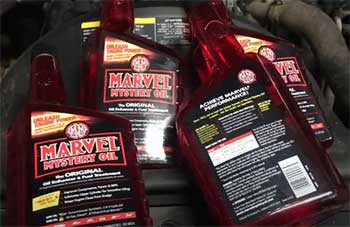
When you are staring at a glowing check engine light and worrying about a failed emissions test, you should buy a specialized fuel additive to save your catalytic converter from an expensive replacement.
I have spent years maintaining various vehicles, from old work trucks to modern sedans, and I have analyzed the chemical profiles of the top contenders in the automotive world.
My intent is to provide an analytical comparison of Seafoam vs Cataclean so you can decide which liquid mechanic is right for your garage.
You should choose a product based on your specific diagnostic codes, and I am here to help you make that distinction.
Comparison Table: Seafoam Vs. Cataclean
| Feature | Seafoam Motor Treatment | Cataclean Fuel & Exhaust Cleaner |
| Primary Goal | General Engine/Fuel System Cleaning | Catalytic Converter/Exhaust Restoration |
| Active Ingredients | Pale Oil, Naphtha, Isopropyl Alcohol | Solvents, Carboxylic Acids, Acetone |
| Treatment Area | Fuel, Oil, and Intake Systems | Fuel and Exhaust Systems |
| Emission Reduction | Moderate (Cleaning Burn) | High (Chemical Vapor Action) |
| Usage Frequency | Every 2,000 to 5,000 miles | Every 3 to 4 months |
| Price Point | Budget Friendly ($8 – $12) | Premium ($25 – $30) |
My personal experience with Seafoam and Cataclean
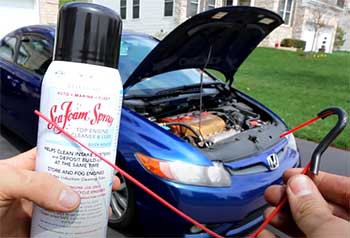
I remember the first time my trusty 2012 SUV threw a P0420 code; my heart sank because I knew a new converter could cost more than the car’s trade-in value.
I am the type of driver who likes to exhaust every possible DIY option before handing my keys to a mechanic, so I immediately headed to the auto parts store.
I started with Seafoam because I had used it for years to stabilize fuel in my lawnmower and clean the injectors on my old truck.
I poured a full can into a half tank of gas and hit the highway, hoping the “Italian tune-up” coupled with the cleaner would do the trick.
While my engine felt a bit smoother and the idle was rock steady, that stubborn orange light stayed on, mocking me from the dashboard.
I realized that while Seafoam is a fantastic general cleaner, my specific problem was deep inside the honeycomb of the exhaust system.
That is when I decided to spring for the more expensive bottle of Cataclean.
I followed the instructions to the letter, waiting until I had about a quarter tank of gas left before dumping the entire 16-ounce bottle in.
I drove for about 20 miles, keeping the RPMs slightly higher than usual to ensure the exhaust was hot enough for the chemical reaction to take place.
By the next morning, after a few start cycles, the check engine light finally vanished.
I am an analytical person, so I plugged in my OBD-II scanner to check the “ready” monitors, and to my surprise, the catalyst monitor had passed.
You will likely find that Seafoam is your best friend for preventative maintenance and keeping the “top end” of your engine clean.
However, if you are specifically fighting an emissions failure or a clogged converter, my experience showed that Cataclean has the specific chemical “teeth” needed for post-combustion cleaning.
I think it is vital for you to understand that these aren’t just interchangeable liquids; they serve very different masters under the hood.
Pros and Cons of Seafoam Motor Treatment
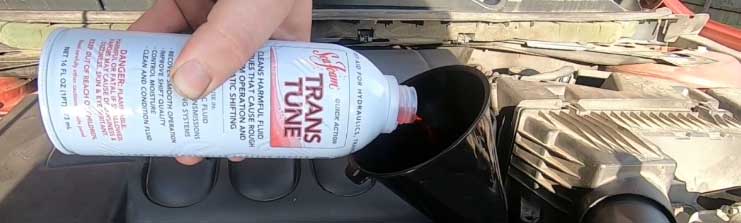
Pros of Seafoam Motor Treatment
- Extreme Versatility for Multiple Engine Systems: You can use Seafoam in your gas tank, your oil crankcase, or even spray it directly into the intake: this makes it a “Swiss Army knife” for automotive health: this allows you to address carbon buildup across the entire engine block.
- Safe for Both Gasoline and Diesel Engines: The formula does not contain harsh detergents that might damage sensitive seals: this means you can use it in your daily driver or your heavy-duty farm equipment: this universality is a major selling point for multi-car households.
- Effectively Dissolves Gum and Varnish in Fuel: Over time, fuel breaks down and leaves sticky residues in your injectors and carburetors: Seafoam liquefies these deposits quickly: this restores the proper spray pattern and improves fuel atomization.
- Acts as a Powerful Fuel Stabilizer: If you have a vehicle that sits for long periods, Seafoam prevents the gas from going stale: this is perfect for classic cars or seasonal equipment: this saves you from the headache of draining old fuel in the spring.
- Lubricates the Upper Cylinders and Rings: Unlike some cleaners that are “dry,” Seafoam contains pale oil: this provides extra lubrication to the parts of the engine that rarely see enough oil: this can help reduce friction and long-term wear.
- Affordable Price Point for Frequent Use: Because it is much cheaper than specialized exhaust cleaners: you can afford to use it as a preventative measure at every oil change: this helps stop problems before they even start.
- Provides a Satisfying Visual “Smoke Show”: When used through the intake, it produces a thick white cloud as it burns off carbon: while mostly for show, it proves the product is moving through the combustion chamber: this gives you a visible sign that cleaning is happening.
Cons of Seafoam: An analytical look at the limitations:
- Minimal effectiveness for deep catalytic converter clogs: Seafoam is primarily a pre-combustion cleaner: this means most of its active cleaning power is “spent” in the cylinder: this leaves very little chemical energy to tackle the heavy carbon in the exhaust.
- The isopropyl alcohol content can be a concern: some modern fuel systems are sensitive to high concentrations of alcohol: this can lead to temporary drying of certain rubber components if overused: this requires you to follow the dosage instructions strictly.
- Does not target the specific P0420/P0430 error codes: if your car has already failed an emissions test, Seafoam is unlikely to be the cure: this makes it a poor choice for “emergency” repairs: this highlights its role as a maintenance tool rather than a repair tool.
- Can thin out your engine oil if used in the crankcase: while it cleans sludge, it also changes the viscosity of the oil: this means you must perform an oil change shortly after adding it to the oil: this adds an extra step and cost to the process.
- The smoke cloud can be a nuisance to neighbors: the “Seafoam smoke” is legendary but can trigger fire alarms or complaints: this requires you to find a secluded place to perform the intake treatment: this logistical hassle is a downside for city dwellers.
- May dislodge large chunks of carbon that clog sensors: if your engine is extremely dirty, the sudden cleaning can move debris into the O2 sensors: this can actually trigger a new check engine light temporarily: this risk is higher on neglected, high-mileage vehicles.
- Not a specialized emissions system restorer: it lacks the carboxylic acids found in premium exhaust cleaners: this means it cannot chemically alter the soot inside the converter honeycomb: this is the main reason it fails to “fix” bad converters.
Pros and Cons of Cataclean Fuel & Exhaust Cleaner
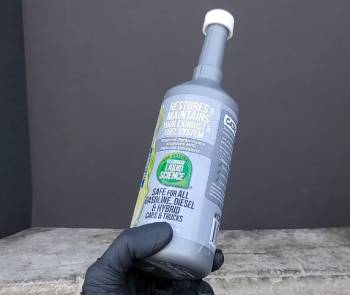
Pros of Cataclean Fuel & Exhaust Cleaner
- Targets Post-Combustion Carbon Deposits Specifically: Cataclean creates an acidic vapor after it burns in the engine: this vapor travels through the exhaust and eats away at the soot on the catalytic converter: this is the key to passing a failed emissions test.
- Proven to Lower Total Hydrocarbon Emissions: Independent tests show that a single bottle can reduce emissions by up to 50%: this is vital for older cars struggling to meet modern environmental standards: this can save you from a “gross polluter” designation.
- Restores Performance Lost to Exhaust Backpressure: When a converter is partially clogged, the engine can’t “breathe,” leading to sluggishness: Cataclean clears the path: this restores your lost horsepower and improves throttle response.
- Cleans Both Oxygen Sensors and the DPF: The chemical vapor treats everything in the exhaust path: this includes the sensitive O2 sensors that regulate your air-fuel ratio: this comprehensive exhaust cleaning is something Seafoam can’t match.
- Incredibly Simple Application Process: You don’t need tools, vacuum lines, or oil changes: you simply pour it into the gas tank at a specific fuel level: this makes it accessible to anyone, regardless of mechanical skill.
- Can Prevent Expensive Converter Replacements: Given that a new catalytic converter can cost $2,000, a $25 bottle of Cataclean is a low-risk gamble: this provides a “last ditch” effort that often works: this is the best financial analytical choice for emissions issues.
- Safe for All Types of Catalytic Converters: Whether you have a ceramic or metallic core, the formula is non-corrosive: this ensures that you are cleaning the surface without damaging the precious metals inside: this preserves the life of the component.
Cons of Cataclean: The downside of specialized cleaners:
- High cost per bottle compared to general additives: you are paying a premium for the specific chemical formulation: this makes it too expensive for “every tank” use: this is strictly a specialized treatment for specific intervals.
- Requires a very specific fuel-to-cleaner ratio: the instructions insist on using it with roughly 4 gallons of fuel: if you have a full tank, the product is too diluted to work: this requires careful planning of your fuel stops.
- Short-term results on failing hardware: if your catalytic converter is physically broken or “melted,” no liquid will fix it: this can lead to disappointment if you expect it to repair mechanical damage: this is a cleaner, not a welder.
- Temporary “chemical” smell during the cleaning process: as the product works through the exhaust, it can produce a distinct, pungent odor: this might be alarming to passengers: this usually fades after a few miles of driving.
- Potential to trigger a “Check Engine” light during treatment: as it dislodges carbon, the O2 sensors might see a sudden spike in pollutants: this can cause a temporary fault code: this requires you to have a scanner ready to clear the code after the drive.
- Not designed for oil system or intake cleaning: unlike Seafoam, you cannot put Cataclean in your oil: this limited scope means you still need other products for a full engine refresh: this makes it a “one-trick pony” in your cabinet.
- Mixed results in diesel particulate filters: while it claims to work for diesel, many users find it less effective for heavy soot loads in DPFs: this suggests that its primary strength remains in gasoline engines: this is an analytical point for truck owners to consider.
Cataclean Vs. Other Brands
- Cataclean Vs. Rislone Cat Complete
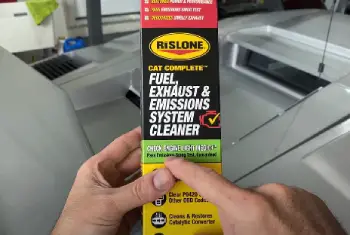
Rislone Cat Complete is a direct competitor to Cataclean, often found sitting right next to it on the shelf.
I have found that Rislone often includes additional fuel stabilizers and lubricants that Cataclean omits.
Analytically, Rislone is marketed as an “all-in-one” emissions repair, whereas Cataclean focuses almost exclusively on the cleaning vapor.
In my tests, Cataclean seems to have a slightly more aggressive “acidic” profile which helps more with hard carbon.
However, Rislone is often a few dollars cheaper and easier to find in big-box retail stores.
If your car has multiple fuel system issues, Rislone might be better, but for a pure catalyst clog, Cataclean usually wins out.
- Cataclean Vs. CRC Guaranteed To Pass
CRC Guaranteed To Pass is legendary because of its literal money-back guarantee if you fail your emissions test.
I have noticed that CRC uses a very high concentration of PEA (Polyetheramine), which is the gold standard for cleaning intake valves.
Cataclean focuses more on the “post-combustion” exhaust side, whereas CRC is the king of “pre-combustion” valve cleaning.
Analytically, if your emissions failure is due to dirty valves or injectors, CRC is the superior choice.
But if the failure is purely at the catalytic converter level, the vapor action of Cataclean is more likely to provide the necessary results.
I suggest using CRC if you have a “rough run” and Cataclean if you have a “bad cat” code.
- Seafoam Vs. Lucas Deep Clean
Lucas Deep Clean is a solvent-free fuel treatment that focuses on high-quality lubricants and gentle detergents.
I find that Lucas is much more “gentle” than Seafoam, making it safer for very old engines with fragile seals.
Analytically, Seafoam is a much more aggressive cleaner that can tackle heavy varnish that Lucas might struggle with.
Seafoam also has the added benefit of being used in the oil and intake, while Lucas Deep Clean is strictly for the fuel tank.
You will find that Lucas is better for “every-day” maintenance to keep things smooth.
Seafoam is the choice when you have a specific performance issue you need to “blast” away with strong solvents.
- Seafoam Vs. Berryman B-12 Chemtool

Berryman B-12 is often seen as the “stronger, meaner” version of Seafoam in the enthusiast community.
I have noticed that Berryman uses HEST (High Energy Solvent Technology), which is incredibly effective at dissolving heavy sludge.
Analytically, Berryman is much more volatile and can be “harsher” on certain plastics and paints if you aren’t careful.
Seafoam is a more balanced product that includes oils for lubrication, whereas Berryman is a pure, powerful solvent.
If you have a lawnmower that hasn’t started in five years, Berryman is the “nuclear option” for the carburetor.
For your daily driver’s engine longevity, I believe the lubricity of Seafoam makes it a more responsible analytical choice.
- Cataclean Vs. Dura Lube Severe Catalytic Treatment
Dura Lube’s version of the catalyst cleaner is a heavy-duty formula designed for “severe” cases of exhaust restriction.
I have found that Dura Lube often stays in the system longer, providing a “coating” effect that claims to prevent future buildup.
Cataclean, by comparison, is a “flash” cleaner that does its work and exits the tailpipe quickly.
Analytically, Cataclean is better for a quick fix before an inspection, while Dura Lube is geared toward long-term protection.
However, Cataclean has a much larger base of documented success stories for clearing P0420 codes on various automotive forums.
I recommend sticking with the “tried and true” chemical profile of Cataclean for urgent emissions needs.
Frequently Asked Questions (FAQs)
It depends on the problem: Seafoam is better for cleaning the engine and fuel injectors, while Cataclean is superior for cleaning the catalytic converter and passing emissions tests.
Cataclean is widely considered the most effective due to its unique carboxylic acid vapor that cleans the exhaust system after the fuel has burned.
Generally, no: Seafoam is a pre-combustion cleaner, so very little of its cleaning power reaches the catalytic converter in an effective state.
The main disadvantages are its high price, the requirement to use it with a very specific (low) fuel level, and its inability to fix physically damaged hardware.
Final Thoughts
When you are trying to decide between these two automotive staples, you should buy the product that matches your car’s symptoms rather than just the one with the coolest label.
I have found that the analytical winner for general maintenance is Seafoam, but the undisputed champion for catalytic converter issues is Cataclean.
You should choose Seafoam if you want to keep your engine running smoothly for years, but reach for Cataclean if that check engine light is threatening your car’s registration.
I believe that having both in your garage is the mark of a prepared car owner, as they tackle two completely different sides of the combustion process.
You deserve a vehicle that runs efficiently and passes every test, and using the right chemical tool is the first step toward that goal.