When you are dealing with a noisy engine or a vehicle that has seen better days, you should buy Rislone Engine Treatment from your local auto parts store or online retailers like Amazon to ensure your motor stays clean and lubricated.
I have spent years maintaining high-mileage vehicles and testing various additives to see which ones actually deliver on their promises.
My intent is to provide an analytical review of why this specific treatment is a staple for mechanics who want to quiet lifters and remove sludge without damaging sensitive seals.
You should choose this product if you want a time-tested formula that works gradually to restore engine performance while being fully compatible with both synthetic and conventional oils.
My personal journey with Rislone engine treatment
I remember the first time I heard the unmistakable “ticking” of a sticking lifter in my old work truck. I am someone who prides myself on regular oil changes, but high-mileage engines eventually develop varnish and sludge regardless of how careful you are.
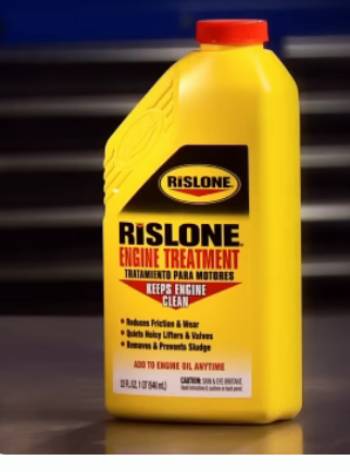
The Rislone Engine Treatment stood out to me because it is a penetrating oil and cleaner, not a solvent-based flush, meaning I could leave it in for the duration of my oil change.
I started my trial by replacing one quart of my regular synthetic oil with a bottle of Rislone during my next service. I noticed within the first few days that the engine idling seemed smoother, though the lifter tick didn’t vanish instantly.
I am an analytical driver, so I kept a close eye on my oil pressure gauge and listened for changes every morning during cold starts.
By the time I hit about 200 miles, the persistent clicking sound had completely subsided, and the engine felt significantly less labored under heavy acceleration.
I found that the product didn’t cause any leaks, which was a major concern for me given the age of the gaskets on that specific vehicle.
I am particularly impressed by the sheer cleanliness of the internal components; when I later had to replace a valve cover gasket, I saw that the metal was “clean as a whistle” with no signs of the golden varnish that usually coats older engines.
The convenience of the product is also a high point for me, especially since it is available in various sizes, including a 19-litre pail for those of us with a fleet of vehicles to maintain.
You will likely find that this treatment isn’t a “mechanic in a can” for a broken engine, but as a maintenance tool, it is one of the most reliable options I have ever poured into a crankcase.
I felt a genuine sense of relief knowing that my engine was being cleaned while I drove, rather than sitting in a driveway for 15 minutes with a high-detergent flush eating away at my seals.
Maintenance and tips for engine longevity with Rislone
- Use Rislone at Every Oil Change for Prevention: You should replace one quart of your motor oil with Rislone Engine Treatment every time you service your vehicle. This ensures that sludge never has the chance to accumulate in the first place, keeping your lifters quiet and your oil passages wide open for the life of the vehicle.
- Monitor Your Oil Filter in the First 500 Miles: You should check your oil color and filter condition shortly after your first treatment if your engine was neglected. The sudden release of old sludge can saturate a filter, so being proactive about a mid-interval filter swap can prevent the bypass valve from opening and circulating dirty oil.
- Time Your Application for a Long Road Trip: You should try to add the treatment right before a long drive rather than just for short trips to the grocery store. The cleaning agents work best when the oil is at full operating temperature for an extended period, allowing the penetrating oil to reach the deepest parts of the engine.
- Check Your Oil Level Weekly During Treatment: You should be diligent about using your dipstick because the cleaning process can sometimes cause the oil level to drop as it fills areas previously occupied by sludge. Keeping the crankcase at the proper level ensures that the pump never sucks in air, which is critical for engine health.
- Don’t Overfill Your Crankcase: You should always ensure you have removed a quart of oil before adding the 32 oz bottle of Rislone. Overfilling an engine can lead to “foaming” of the oil as the crankshaft hits the surface, which significantly reduces the lubrication effectiveness and can lead to engine damage.
- Combine with Regular High-Quality Filters: You should always pair this treatment with a premium oil filter that has high capacity. Since Rislone is designed to hold dissolved deposits in suspension until they hit the filter, having a high-quality media is essential to actually removing those contaminants from circulation.
Pros and Cons of Rislone Engine Treatment
Pros of Rislone Engine Treatment
- Gentle and Gradual Cleaning Process: The formula dissolves sludge and varnish over time rather than all at once: this prevents large chunks of debris from breaking off and potentially plugging up your oil pump screen or narrow oil passages.
- Universal Compatibility with Modern Oils: You can use this with all petroleum-based oils including conventional, high-mileage, and full synthetic formulas: this means you don’t have to worry about chemical reactions or voiding your manufacturer’s warranty on newer vehicles.
- Effectively Quiets Noisy Lifters and Valves: The penetrating oil reaches tight tolerances where standard oil might struggle: this helps free up stuck hydraulic lifters and reduces the annoying “ticking” sound that plagues older engines.
- Acts as a High-Quality Lubricant: Unlike solvent flushes that thin out your oil, this treatment is an actual lubricant: this ensures that your engine is protected from friction and wear even while the cleaning agents are working their magic.
- Simplifies Maintenance with Top-Off Capability: You can add it anytime your oil level is low or at the time of an oil change: this flexibility allows you to treat your engine as needed without waiting for a specific service interval.
- Helps Restore Lost Compression and Power: By cleaning out the ring grooves and freeing stuck piston rings: this allows for a better seal in the combustion chamber which can lead to better throttle response and fuel economy.
- Safe for Turbocharged and Diesel Engines: The high-temperature stability of the formula makes it suitable for high-performance applications: this provides peace of mind for truck owners and those driving modern turbocharged four-cylinder engines.
Cons of Rislone Engine Treatment: What you must consider:
- Not an instant fix for mechanical damage: if your engine has a broken part or a completely blown seal, no amount of treatment will repair it: this means you should not expect it to fix a rod knock or a snapped timing belt: this requires a realistic understanding that this is a cleaner and conditioner, not a replacement for a professional mechanic.
- Requirement to replace a full quart of oil: the treatment is designed to replace about 20% of your oil capacity: this can be tricky if you are just topping off and your engine isn’t actually a full quart low: this necessitates either waiting for your next oil change or carefully draining a bit of oil to make room for the additive.
- Gradual results may test your patience: unlike some products that claim results in ten minutes, Rislone usually takes 100 to 200 miles to show its full effect: this might be frustrating if you are looking for an immediate solution to a noisy engine: this slow process is the trade-off for the safety of your engine’s internals.
- May increase oil consumption in extremely dirty engines: as the treatment dissolves the sludge that might actually be “sealing” old, worn gaskets: this can lead to new oil leaks appearing after the engine is cleaned: this is a common risk with any high-detergent cleaner in a neglected vehicle.
- The 19-litre pail is difficult for individual users to handle: while great for shops, the large bulk size is heavy and requires a pump to use effectively: this makes it less convenient for the average DIYer who only has one or two cars to maintain: this necessitates buying the smaller individual bottles for most home users.
- Cannot fix deep internal scoring on bearings: if your engine has already suffered from metal-on-metal wear due to low oil pressure: this product won’t be able to “grow” new metal back: this highlights the fact that it is a preventative and restorative cleaner rather than a magical repair fluid.
- Possible need for an early oil change in very dirty engines: if your motor is filled with years of gunk, the Rislone will fill your oil filter with debris quite quickly: this might require you to change your filter and oil much sooner than your regular interval: this adds an extra step and cost to the cleaning process.
Rislone Engine Treatment Vs. Other Brands
- Rislone Engine Treatment Vs. Sea Foam Motor Treatment
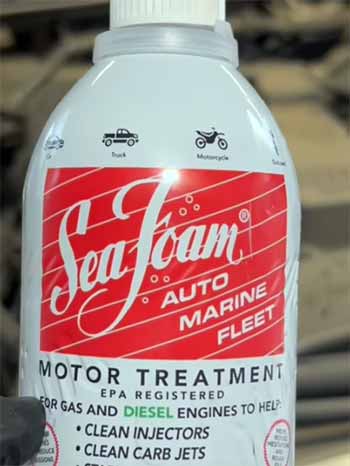
Sea Foam is a versatile cleaner that can be used in the fuel, oil, and vacuum system.
I have found that while Sea Foam is excellent for quick carbon cleaning in the upper cylinders, it is much thinner than Rislone.
Analytically, Rislone is a superior choice for long-term oil-based cleaning because it is a multi-grade penetrating oil that doesn’t significantly alter the viscosity of your lubricant.
Sea Foam is often used as a “quick fix” or a flush right before an oil change, whereas Rislone is designed to stay in the engine for thousands of miles.
If your primary goal is to quiet a noisy lifter over a few hundred miles of driving, Rislone is generally the safer and more effective bet.
- Rislone Engine Treatment Vs. Lucas Oil Stabilizer
Lucas Oil Stabilizer is primarily designed to increase the viscosity and “stickiness” of your oil to stop leaks and reduce noise.
In my experience, Lucas is great for worn-out engines with low oil pressure, but it doesn’t actually clean the engine.
Rislone is an analytical opposite because it focuses on removing the deposits that cause the noise, rather than just masking them with a thicker fluid.
If your engine is ticking because of sludge, Lucas might quiet it temporarily, but Rislone will actually fix the underlying issue by dissolving the gunk.
You should choose Rislone for cleaning and Lucas if you have an engine that is simply “tired” and needs a thicker oil film to stay quiet.
- Rislone Engine Treatment Vs. Marvel Mystery Oil
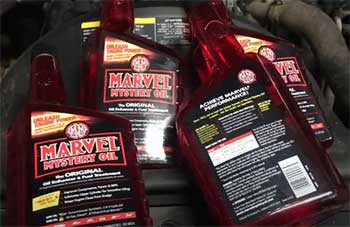
Marvel Mystery Oil is perhaps the closest competitor to Rislone as both are thin, penetrating oils with a long history.
I have noticed that Marvel has a very distinct peppermint-like smell and is often used in both fuel and oil systems alike.
Analytically, Rislone feels a bit more modern in its formulation, specifically regarding compatibility with the newest synthetic oil standards and SJ specifications.
While both do a great job of freeing stuck lifters, Rislone’s “Engine Treatment” branding is more focused on the sludge removal aspect.
I tend to prefer Rislone for modern daily drivers, while Marvel Mystery Oil is a classic choice for vintage cars and smaller engines.
- Rislone Engine Treatment Vs. Liqui Moly MoS2 Anti-Friction
Liqui Moly MoS2 is a specialized additive that uses molybdenum disulfide to create a protective film on metal surfaces.
I find that Liqui Moly is exceptional for reducing friction and wear in high-stress environments, but it is not a dedicated cleaner.
Rislone is better suited for an engine that is already “dirty” or noisy due to poor maintenance in the past.
Analytically, you could actually use a cleaner like Rislone first and then switch to an anti-friction additive like Liqui Moly once the engine is pristine.
For a dirty engine, the cleaning power of Rislone is more important than the friction-reducing properties of the molybdenum.
- Rislone Engine Treatment Vs. STP Oil Treatment
STP is a classic, thick additive that comes in the familiar blue bottle and is designed to boost the zinc levels and viscosity of the oil.
In my view, STP is a very basic “old school” approach to protecting an engine, whereas Rislone is a more sophisticated cleaning treatment.
STP is great for older flat-tappet engines that need extra ZDDP, but it doesn’t have the penetrating properties required to clean out a stuck lifter.
Rislone’s ability to flow freely over a broad temperature range makes it much better for year-round use in varying climates.
If you want to keep your engine clean and running like new, Rislone is the more advanced analytical choice.
Frequently Asked Questions (FAQs)
Yes, it is highly beneficial for engines that suffer from sludge buildup or noisy lifters because it cleans and lubricates without the harshness of a solvent-based flush.
You will usually notice a difference in engine noise and smoothness after about 100 to 200 miles of normal driving as the formula gradually dissolves deposits.
Yes, the standard 32 oz bottle is designed to replace one quart of motor oil during a change, or it can be used to top off a system that is low.
Rislone Engine Treatment is primarily a cleaner; however, the company makes a separate “Engine Stop Leak” concentrate that specifically targets and revitalizes dried-out seals.
Final Thoughts
When you want to extend the life of your vehicle and ensure your engine runs as quietly as possible, you should buy Rislone Engine Treatment to handle the heavy lifting of internal cleaning.
I have found that this product is one of the few additives that genuinely lives up to its decades-old reputation for being safe, effective, and easy to use.
You should choose this treatment as a proactive measure at every oil change to prevent the mechanical headaches that come with sludge and varnish.
I believe that for the price of a single bottle, you are getting an analytical insurance policy that keeps your oil passages clear and your lifters silent.
You deserve a vehicle that starts up smoothly every morning, and Rislone is the most trusted name in the industry to help you achieve that goal.