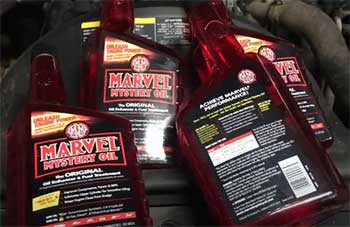
When you are staring at a glowing check engine light and facing a potential multi-thousand dollar repair bill, you should buy a specialized fuel system cleaner like Rislone Cat Complete or Cataclean if you want to attempt a “hail mary” save for your catalytic converter.
I have spent years analyzing automotive additives and tracking the real-world results of drivers battling emissions codes to help you understand the core differences between these two titans.
My intent is to provide a comprehensive comparison of Rislone versus Cataclean so you can determine which chemical treatment fits your vehicle’s specific symptoms and your budget.
You should choose between them based on whether you need a heavy-duty, full-system scrub or a more maintenance-focused formula that targets the exhaust path to help you clear that dreaded P0420 code before your next smog test.
Comparison Table: Rislone Cat Complete Vs. Cataclean
| Feature | Rislone Cat Complete | Cataclean |
| Primary Focus | Full system (Fuel + Exhaust) | Emissions & Catalyst System |
| Core Chemistry | High-detergent solvents + active agents | Hydrocarbons (Xylene/Acetone/Isopropanol) |
| Key Capability | Cleans injectors, O2 sensors, and Turbo | Restores catalyst and improves fuel economy |
| Emissions Support | Clears P0420 & other OBD codes | Reduces hydrocarbon emissions by up to 50% |
| Recommended Use | Every 5,000 miles or oil change | Every 3 months or quarterly |
| Bottle Size | 16.9 oz (500 mL) | 16.7 oz (500 mL) |
| Guaranteed to Pass | Yes (Terms apply) | Popular for MOT and smog prep |
My personal experience with the P0420 “Death Code”
I remember the sinking feeling in my stomach when I saw that orange light pop up on the dashboard of my 2012 SUV just three days before my state emissions inspection was due.
I am someone who prides myself on being mechanically savvy, so I hooked up my OBD-II scanner and saw the code that every high-mileage car owner fears: P0420, “Catalyst System Efficiency Below Threshold.”
I was looking at a quote for nearly $1,500 for a new catalytic converter, which felt like an absolute gut-punch considering the car was running perfectly fine otherwise.
I decided that instead of panicking, I would take an analytical approach and see if a chemical “tune-up” could save my wallet.
I initially started my experiment with Cataclean because I had seen it on the shelves for years and it seemed to be the “go-to” for people trying to pass an MOT or smog check.
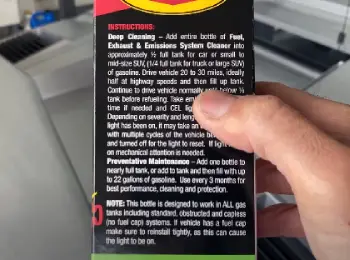
I followed the instructions to a T: I waited until my tank was about a quarter full, poured the entire bottle in, and then drove it for about 15 miles as directed to get the chemicals hot.
I noticed that the car felt slightly more responsive, and about 40 miles later, the light actually stayed off for a full day.
However, just as I was heading to the testing station, the light flickered back on, which left me feeling incredibly frustrated.
That is when I decided to pivot to Rislone Cat Complete for a more “scorched earth” cleaning approach.
I am a fan of Rislone because they tend to go heavy on the detergents, and their “Cat Complete” formula claims to clean everything from the fuel injectors to the O2 sensors and even the turbo.
I poured the Rislone in with a slightly fuller tank than the Cataclean required and took the car for a long highway run.
By the time I had burned through that tank of gas, the engine felt smoother at idle, and the P0420 code was gone—and this time, it stayed gone through the inspection and for the next six months.
You will likely find that while both products are impressive, Rislone felt like it addressed the “root cause” of the buildup throughout the entire fuel path rather than just focusing on the tailpipe side of things.
Maintenance and tips for a healthy emissions system
- Perform a “Carbon Blast” Highway Run Monthly: You should take your vehicle on a 30-minute highway drive at least once a month. Short city trips never allow the catalytic converter to reach the high temperatures (over 600°F) required to naturally burn off soot and carbon, leading to the very clogs that these products are designed to fix.
- Never Ignore a Misfire or Spark Plug Issue: You should replace your spark plugs and ignition coils the moment you feel a stumble. An engine misfire sends raw, unburned fuel directly into the catalytic converter, where it can ignite and melt the internal structure in minutes, rendering any cleaner completely useless.
- Use Premium Tier-One Gasoline Frequently: You should fill up at stations that meet “Top Tier” standards. These fuels contain higher levels of detergents that help prevent the initial buildup of carbon on your injectors and valves, reducing the workload on your emissions system over the long haul.
- Apply Cleaner as Preventative Maintenance, Not Just a Cure: You should use a bottle of Rislone or Cataclean every 5,000 miles even if your light isn’t on. An analytical approach to car care means preventing the buildup before it triggers a sensor, which is much cheaper and more effective than trying to reverse a “hard” failure.
- Check Your Air Filter at Every Oil Change: You should ensure your engine is getting enough air to maintain a perfect air-fuel ratio. A dirty air filter causes the engine to run “rich” (too much fuel), which is the primary driver of the carbon deposits that eventually clog your catalytic converter.
- Monitor Your Engine’s Oil Consumption: You should keep a log of how much oil your car burns between changes. If you are losing significant oil, it is likely being burned in the combustion chamber and coating your catalyst in “oil ash,” which is much harder to clean than simple carbon and may require multiple chemical treatments.
Pros and Cons of Rislone Cat Complete
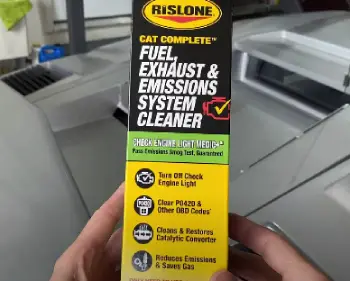
Pros of Rislone Cat Complete
- Comprehensive Full-System Cleaning Action: This isn’t just a catalyst cleaner; it targets fuel injectors, combustion chambers, and valves: this ensures that you are treating the source of the carbon buildup, not just the symptoms at the tailpipe.
- Effectively Clears Persistent OBD-II Codes: The formula is specifically engineered to knock out P0420 and P0430 codes: this allows you to potentially avoid expensive repairs by dissolving the inorganic deposits that cause sensor triggers.
- Safe for All Engine Types Including Turbos: Whether you have a GDI, Ecotec, or traditional fuel-injected motor, Rislone is compatible: this provides a high level of versatility for households with multiple different types of vehicles.
- Restores Lost Power and Acceleration: By scrubbing the fuel injectors and intake valves: this helps your engine breathe better and react faster when you step on the gas pedal.
- Significant Increase in Fuel Economy: As the system becomes more efficient, you will likely notice more miles per gallon: this helps the product eventually pay for itself at the gas pump over several fill-ups.
- Cleans Oxygen Sensors for Better Readings: Many “catalyst” issues are actually just dirty O2 sensors providing bad data to the ECU: this product cleans those sensors so your car’s computer can accurately manage the air-fuel ratio.
- Long-Term Protection Against Soot and Grime: Regular use creates a cleaner environment that resists future buildup: this is an analytical way to extend the life of an aging catalytic converter before it reaches a point of total failure.
Cons of Rislone Cat Complete: The realistic limitations:
- Requires a fairly healthy engine to be effective: if your engine is burning a quart of oil every week or has a blown head gasket, no cleaner will help you: this means you shouldn’t expect a miracle if the internal components are physically failing: this requires you to be honest about the state of your vehicle.
- Can be more expensive than basic fuel additives: because of the heavy-duty chemistry involved, the price point is higher than a standard bottle of Techron or Gumout: this is an investment in a specific repair rather than just routine maintenance: this cost may be a hurdle for some.
- The bottle size can be cumbersome for some fuel fillers: depending on the design of your car’s gas tank neck, pouring the 16.9 oz bottle can be a bit slow: this requires a steady hand to avoid spills on your car’s paint: this minor inconvenience is worth the result but worth noting.
- Will not fix a melted or broken ceramic substrate: if the inside of your catalytic converter has physically disintegrated or melted due to overheating: this liquid cleaner cannot rebuild the ceramic honeycomb: this highlights the fact that it is for cleaning, not structural repair.
- May require multiple treatments for severely neglected cars: if your car has 200,000 miles and has never had a fuel system cleaner: one bottle might only scratch the surface: this necessitates a second treatment which doubles the cost and time involved.
- Not available at every single corner gas station: while popular, you may have to go to a dedicated auto parts store or order it online: this means you can’t always get it “in the moment” when your light first comes on: this requires a bit of planning ahead.
- Possible temporary increase in exhaust odor during cleaning: as the carbon is being burned off and pushed out: you might notice a stronger smell from the tailpipe for a few miles: this is a sign it’s working but can be alarming if you aren’t expecting it.
Pros and Cons of Cataclean
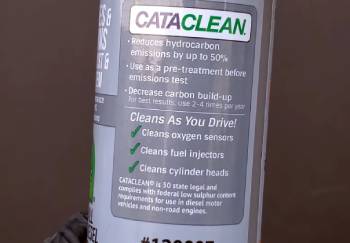
Pros of Cataclean
- Highly Effective for Immediate Emissions Reduction: Cataclean is famous for its ability to drop hydrocarbon levels significantly in a short time: this makes it an ideal “smog test savior” for vehicles that are just slightly over the legal limit.
- Targeted Action on the Catalytic Converter: The hydrocarbon blend is specifically designed to vaporize and scrub the catalyst’s precious metal surfaces: this helps restore the chemical reaction needed to turn harmful gases into water and CO2.
- Improves Engine Smoothness and Response: By cleaning the exhaust path, it reduces backpressure in the system: this allows the engine to rev more freely and eliminates that “clogged” feeling during highway merging.
- Compatible with Diesel and Hybrid Systems: You can use it in your Prius or your heavy-duty truck without worry: this makes it a “one-bottle-fits-all” solution for a wide variety of automotive problems.
- Does Not Contain Harmful Solvents for Seals: The formula is designed to be gentle on your fuel lines and gaskets while being tough on carbon: this reduces the risk of creating new leaks while trying to fix an old problem.
- Proven Track Record in the UK and USA: It has been a top-selling product for years with millions of successful applications: this long history provides a level of trust that “newcomer” products often lack.
- Simple “Pour and Drive” Instructions: You don’t need to be a mechanic to use it: this ease of use encourages regular maintenance which can prevent catastrophic converter failure down the line.
Cons of Cataclean: The analytical trade-offs:
- Strict adherence to fuel levels is critical for success: if you pour it into a full tank, it becomes too diluted to work effectively: this requires you to plan your trip to the gas station perfectly: this narrow window of effectiveness can be frustrating for casual users.
- Focuses primarily on the exhaust side of the engine: while it does clean injectors, its real strength is the catalyst: this means it might not be as thorough at cleaning intake valves as a dedicated GDI cleaner: this specialization is a double-edged sword.
- The “fix” can sometimes be temporary: many users report that the light stays off long enough to pass a test but returns a month later: this suggests it is more of a “cleaner” than a “restorer” for very old components: this necessitates repeat purchases.
- High concentration of acetone can be controversial: some purists worry about the long-term effects of acetone-heavy cleaners on plastic fuel components: this is generally safe in small doses but causes some anxiety for “sensitive” car owners: this requires trust in the brand’s chemistry.
- Requires a specific “driving cycle” to activate properly: you have to drive the car for 15 to 20 miles at varying speeds to get the exhaust hot enough: this can be difficult if you live in a high-traffic city area: this logistical hurdle is necessary for the chemicals to vaporize.
- Relatively high price per bottle: similar to Rislone, this is not a “cheap” additive: this can be a deterrent for people who are skeptical about “mechanic in a can” solutions: this reflects the specialized nature of the formula.
- Doesn’t address mechanical sensor failure: if your O2 sensor is actually “dead” rather than just dirty: Cataclean cannot bring a broken electronic component back to life: this leads to “failure” reports that aren’t actually the fault of the liquid.
Comparison Section: Rislone Vs. Cataclean and Others
- Rislone Cat Complete Vs. Cataclean
Rislone Cat Complete is the heavy hitter for those who want a total system detox from the fuel tank to the tailpipe.
I have found that Rislone is better suited for high-mileage cars that have multiple codes or a general loss of performance.
Cataclean is the specialist for emissions testing, focusing intensely on the exhaust gas components.
Analytically, Rislone offers more “utility” for the price, whereas Cataclean offers a more “targeted” strike on the catalyst itself.
You should choose Rislone for overall restoration and Cataclean for focused emissions prep.
- Rislone Cat Complete Vs. Seafoam Motor Treatment
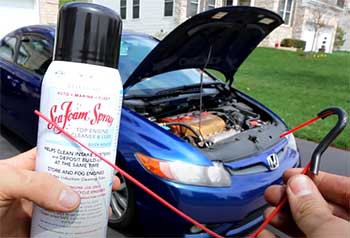
Seafoam is a classic petroleum-based cleaner that many people use as a general-purpose fuel stabilizer and intake cleaner.
I have noticed that Seafoam is excellent at removing moisture and cleaning basic carbon, but it doesn’t have the specific “catalyst-targeted” chemicals found in Rislone.
Analytically, Seafoam is a maintenance product for your lawnmower or your older car, while Rislone Cat Complete is a precision tool for modern OBD-II emissions systems.
Seafoam’s “smoke show” when used through a vacuum line is impressive, but it doesn’t provide the same chemical reaction in the catalyst.
You will find that Rislone is much more effective at actually turning off a P0420 code than the more generalized Seafoam formula.
- Rislone Cat Complete Vs. CRC Guaranteed To Pass
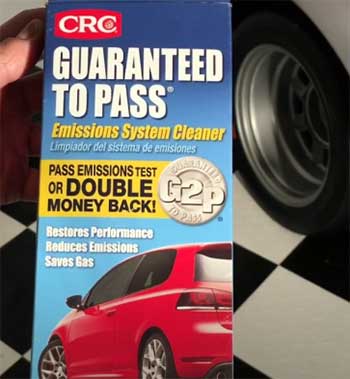
CRC makes a product called “Guaranteed To Pass” which uses a high concentration of PEA (polyetheramine) to clean the fuel system.
I find that CRC is a fantastic fuel system cleaner, but it lacks the secondary “exhaust-specific” active agents that Rislone uses.
Analytically, CRC is better for cleaning injectors and carbon off the piston tops, but Rislone’s “Complete” approach reaches the O2 sensors and the catalyst more effectively.
CRC offers a money-back guarantee which is great for peace of mind, but Rislone’s formula feels more “modern” for newer, sensitive cars.
If you are strictly worried about injectors, go with CRC; if you are worried about the converter, Rislone is the analytical winner.
- Rislone Cat Complete Vs. Liqui Moly Catalytic System Clean
Liqui Moly is a German brand known for extreme precision and high-quality chemical engineering.
I have noticed that their Catalytic System Clean is a very effective, albeit smaller, bottle that focuses on the combustion process.
In my experience, Liqui Moly is excellent for preventative care in European cars, but Rislone’s 16.9 oz bottle provides more “scrubbing volume” for heavily clogged American or Asian vehicles.
Analytically, Liqui Moly is a “surgical” tool, while Rislone is more of a “sledgehammer” for tough jobs.
You should consider Liqui Moly for a well-maintained car and Rislone for a car that has been neglected for a few years.
- Rislone Cat Complete Vs. Royal Purple Max-Clean
Royal Purple Max-Clean is a premium, all-in-one fuel system cleaner that is widely respected by performance enthusiasts.
I find that Max-Clean is one of the best “maintenance” additives on the market for keeping a car running like new.
However, it is not specifically marketed as a “check engine light” fix or a “catalyst restorer” in the same way Rislone is.
Analytically, Royal Purple is what you use to stay out of trouble, and Rislone is what you use when you are already in trouble with a P0420 code.
If you have a brand-new car and want to keep it that way, use Max-Clean; if you have an old car with a light on, use Rislone.
Frequently Asked Questions (FAQs)
Rislone Cat Complete is widely considered the most effective for full-system restoration, while Cataclean is the top choice for reducing emissions specifically for testing.
Rislone Cat Complete is specifically formulated to target P0420 and P0430 codes by cleaning the catalyst and oxygen sensors simultaneously.
Yes, it works effectively for vehicles with moderate carbon buildup, often reducing emissions enough to pass smog tests, though it cannot fix physical damage.
Cataclean is better for emissions and catalytic converter issues, while Seafoam is a better general-purpose cleaner for fuel stabilization and intake carbon.
Final Thoughts
When you are standing at the crossroads of a cheap chemical fix or a massive mechanical repair, you should buy Rislone Cat Complete or Cataclean to give your car a fighting chance.
I have found that these products offer an analytical and cost-effective way to manage your engine’s health and maintain your emissions compliance without the immediate need for a wrench.
You should choose Rislone if you want a deep, whole-system scrub that targets the P0420 code, or choose Cataclean if you need a specialized “emissions booster” to get through a smog check.
I believe that for the price of a tank of gas, the peace of mind and potential savings offered by these treatments make them an essential part of your high-mileage maintenance toolkit.
You deserve a car that runs clean and a bank account that stays full, and either of these performance cleaners can help you achieve that balance.