When you are preparing for a long winter or securing your emergency power supply, the liquid sitting in your gas tanks is either your greatest asset or your biggest liability.
I have spent months analyzing fuel degradation patterns and chemical restoration to bring you this comprehensive PRI-G vs. Sta-Bil comparison.
My intent is to show you why one is the king of the local hardware store while the other is the secret weapon of industrial refineries and survivalists.
You should choose based on whether you are storing a lawnmower for six months or gasoline for several years.
Comparison Table: PRI-G Vs. Sta-Bil Storage
| Feature | PRI-G (Power Research Inc.) | Sta-Bil Storage (Red) |
| Primary Function | Fuel Restoration & Long-term Stability | Fuel Preservation & Seasonal Storage |
| Chemistry Type | Industrial-grade thermal stability | Purified petroleum distillates |
| Shelf Life of Liquid | Indefinite (Bottle never expires) | ~2 Years after opening |
| Treatment Ratio | 1 oz treats 16 Gallons | 1 oz treats 2.5 Gallons |
| Old Fuel Recovery | Excellent (Chemical restoration) | Limited (Preventative only) |
| Ease of Access | Online / Specialty shops | Everywhere (Walmart, Gas Stations) |
| Price per Gallon | Extremely Low (Highly concentrated) | Moderate |
| Target User | Preppers, Marinas, Heavy Equipment | Homeowners, DIYers, Classic Car owners |
My experience with PRI-G and Sta-Bil
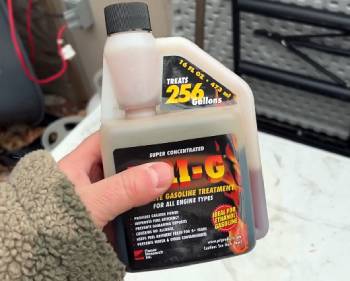
I remember the first time I heard about PRI-G; it was from a commercial fisherman who swore it was the only thing that kept his diesel and gas engines from clogging in the salt air.
I am someone who used to rely exclusively on the red bottle of Sta-Bil because that is what my father used in our lawnmower every October.
The Sta-Bil experience is very straightforward and comforting.
You pour it in, the gas turns a pretty shade of red, and usually, the mower starts up in the spring without much fuss.
But I ran into a problem a few years ago when I forgot to treat a 20-gallon drum of fuel for my backup generator, and by the time I remembered, the gas smelled like old paint thinner.
I reached out to a local mechanic who told me that Sta-Bil wouldn’t help me at that point because it is a preservative, not a “resurrection” fluid.
He handed me a bottle of PRI-G and told me it was the industrial standard for fuel “re-refining” on the fly.
I followed the instructions—which are incredibly precise because the stuff is so concentrated—and I let it sit.
The experience was night and day.
Within 24 hours, the dark, murky fuel had cleared up significantly, and the generator, which had been surging and coughing, began to run with a steady, clean exhaust.
Analytically, the difference is in the molecular approach.
Sta-Bil works by creating a protective layer that slows down the oxidation of the fuel.
PRI-G, however, actually breaks down the “sludge” and carbon deposits that have already formed, while also improving the thermal stability of the fuel so it burns hotter and cleaner.1
Now, I use Sta-Bil for my “easy” jobs, like the snowblower or the weed whacker.
But for my “mission-critical” fuel—the stuff that my family relies on during a power outage or a long-distance boat trip—I strictly use PRI-G.
It feels less like a consumer product and more like a professional chemical tool that gives me a margin of safety I can’t get from a standard retail brand.
Maintenance and tips for professional fuel storage
To ensure your fuel is ready when your life or your business depends on it, you must treat the process with precision.
- Practice the “Fresh First” rule: Whenever possible, treat your fuel the moment you buy it at the pump. Adding PRI-G or Sta-Bil to fuel that has already been sitting for three months is an uphill battle compared to “locking in” the freshness of a new batch.
- Mix thoroughly: When adding a stabilizer to a large tank, pour the additive in first, then pump the fuel. The turbulence of the incoming fuel will ensure the stabilizer is mixed from the bottom up.
- Don’t forget the fuel lines: After you add your treatment, you must run the engine for at least ten to fifteen minutes. This ensures the treated fuel has moved through the fuel pump, the filter, and into the injectors or carburetor.
- Use opaque containers: If you are storing fuel in cans, use high-quality, opaque plastic or metal. Sunlight and UV rays can break down the chemical structure of gasoline much faster than you realize, regardless of what stabilizer you use.
- Seal the tank: Ensure your fuel caps are tight and the vents are closed during storage. Exposure to fresh air allows the light “ends” of the gasoline to evaporate, leaving behind the heavy, sticky parts that turn into varnish.
Pros and Cons of using PRI-G
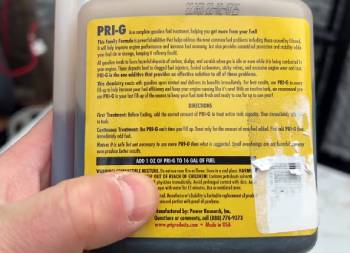
Pros of using PRI-G
- Industrial Strength Restoration: It is one of the very few products on the market that can take degraded, “bad” gasoline and chemically restore it to a combustible state, saving you from expensive fuel disposal fees.
- Extreme Concentration: Because one ounce treats 16 gallons of fuel, a single small bottle goes significantly further than almost any other brand, making it the most cost-effective choice for large storage tanks.
- Indefinite Product Shelf Life: Unlike most stabilizers that lose their potency after a year or two on your shelf, a bottle of PRI-G stays effective for years, which is vital for long-term emergency kits.
- Carbon Deposit Reduction: It doesn’t just stabilize; it actively cleans your fuel system and combustion chamber while the engine runs, leading to less maintenance on injectors and valves.
- Enhanced Engine Performance: Users often report a smoother idle and better throttle response because the product improves the “burn quality” of even lower-grade gasoline.
- Total Fuel Stability: It is designed to keep fuel fresh for years, not just months, making it the top choice for the “prepping” and survivalist community.
Cons of using PRI-G
- Difficulty of Purchase: You generally cannot find this at your local corner store; it usually requires an online order or a trip to a specialized marine or industrial supply shop.
- Measurement Sensitivity: Because it is so concentrated, it is very easy to “over-treat” or “under-treat” if you are not using a precision dropper or a small measuring tool.
- Odor and Chemical Strength: The liquid has a very strong, distinct industrial chemical smell that can be quite pervasive if you spill even a drop in your garage or car.
Also Read: Comparison Of STA-BIL Vs. Ethanol Shield
Pros and Cons of using Sta-Bil
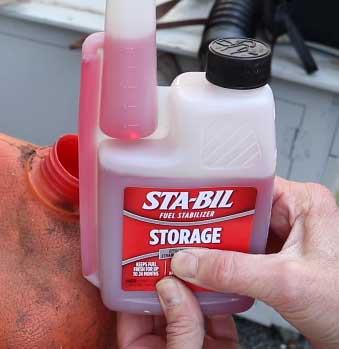
Pros of using Sta-Bil
- Unmatched Availability: You can walk into almost any hardware store, supermarket, or gas station in the country and find a bottle, making it the easiest solution for a last-minute winterization.
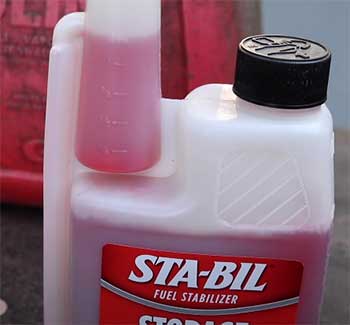
- User-Friendly Packaging: The iconic “twin-neck” bottle design allows you to measure out exactly the amount you need without a funnel or a separate measuring cup.
- Safe for All Engines: It is a gentle formula that has been tested on everything from tiny 2-stroke trimmers to massive V8 car engines without any risk of damaging sensitive sensors.
- Moisture Management: The red formula is excellent at keeping small amounts of moisture from causing rust inside metal fuel tanks during seasonal temperature shifts.
- Trusted Brand Heritage: With decades of market dominance, the red bottle is a known quantity with a massive support network and proven results for standard seasonal storage.
Cons of using Sta-Bil
- Petroleum Distillate Limitations: It is primarily a preventative measure; if your fuel has already gone bad, Sta-Bil will not be able to “fix” it or make the engine run smoothly.
- Limited Life of the Additive: Once you open a bottle of Sta-Bil, it is generally recommended to use it within two years, meaning you can’t buy a bulk supply and expect it to last for a decade.
- Higher Cost per Treated Gallon: When you do the math on the treatment ratios, you end up spending more money per gallon of fuel treated with Sta-Bil compared to the industrial concentration of PRI-G.
Also Read: My Thoughts On Mechanic In A Bottle
Frequently Asked Questions (FAQs)
The “best” depends on your goal: Sta-Bil is best for easy, seasonal storage of garden tools, while PRI-G is analytically superior for long-term fuel storage and restoring degraded gasoline.
Yes, PRI-G is an industrial-grade treatment that has been proven in commercial shipping and power generation to stabilize fuel for years and rejuvenate stale fuel.
The standard treatment ratio for PRI-G is 1 ounce for every 16 gallons of gasoline, making it one of the most concentrated additives on the market.
PRI-G is a professional-grade fuel treatment that improves engine performance, reduces emissions, and provides long-term thermal stability to prevent gasoline from degrading into gum and varnish.3
Final Thoughts
Choosing between PRI-G and Sta-Bil is a choice between a household convenience and an industrial-strength solution.
I have found that for the average person who just wants their lawnmower to start in April, the ease and availability of Sta-Bil make it a perfectly fine choice.
However, you should buy PRI-G if you are managing a large amount of fuel or if you cannot afford for your generator or boat to fail during an emergency.
I believe that the ability of PRI-G to “undo” some of the damage of old fuel gives it a significant analytical edge for anyone who takes their preparedness seriously.
You should evaluate how long you truly intend to store your fuel; if the answer is measured in years rather than months, the gold bottle of PRI-G is the only one you should have on your shelf.