When it comes to automotive restoration or home maintenance, the choice between POR-15 and Rust-Oleum is a decision that can save or sink your project.
I have spent years under chassis and on ladders testing these two industry giants to find out which one truly stops the oxidation process and which one just hides it.
In this comprehensive review, I will explain why your preparation style and budget should dictate your final choice in 2026.
You should realize that while one is a high-tech armor, the other is a versatile classic, and picking the wrong one leads to double the work.
Comparison Overview: POR-15 Vs. Rust-Oleum
| Feature | POR-15 Rust Preventive | Rust-Oleum Rust Reformer |
| Coating Type | Moisture-Cured Urethane | Water or Oil-Based Converter/Enamel |
| Surface Prep | High (Degrease, Etch, Dry) | Low (Wire brush loose flakes) |
| Application | Brush, Roll, or Spray | Spray or Brush |
| UV Resistance | Poor (Requires Topcoat) | Good (Self-sealing) |
| Durability | Industrial/Rock-Hard | Medium/Flexible |
| Price Point | High (Professional Grade) | Low (Budget Friendly) |
| Drying Time | 2-5 Hours (Tacky) | 15-30 Minutes (Touch) |
My First-Hand Experience with These Rust Solutions
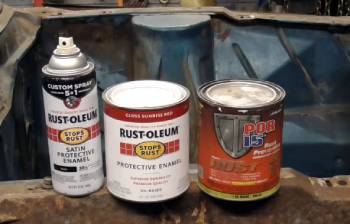
I remember the first time I decided to tackle the frame of a 20-year-old pickup truck that looked like it had been living at the bottom of the ocean.
I am a person who hates doing the same job twice, so I initially reached for POR-15 because of its reputation as an “indestructible” shield.
I noticed immediately that POR-15 is not a “lazy man’s” paint; it is a chemical system.
I found that if you don’t use their specific cleaner and metal prep, you are essentially throwing money at a wall and hoping it sticks.
I realized, however, that when I was working on a quick garden gate project later that summer, my needs were different.
I eventually tried Rust-Oleum Rust Reformer, and I noticed that the speed of application was a breath of fresh air.
I found that the Rust-Oleum took the light surface rust and turned it into a paintable black surface in minutes.
I am someone who appreciates efficiency, and I noticed that for non-structural items that aren’t getting pelted by road salt and rocks, the Rust-Oleum was more than enough.
I eventually found myself back under a vehicle in the middle of winter.
I noticed that POR-15 thrives on moisture—it literally uses the humidity in the air to cure.
On the other hand, I realized that Rust-Oleum can struggle if the environment is too damp or cold.
I found that the biggest difference for me personally was the “armor” factor.
I noticed that once POR-15 cures, it feels like a ceramic coating; you can hit it with a hammer and it won’t chip.
When I tried the same thing with a Rust-Oleum treated surface, it was much more prone to scratching and showing the metal underneath.
I realized that if I wanted to “set it and forget it” for a decade, I had to put in the grueling prep work for POR-15.
If I just wanted to make my patio furniture look decent for the next two seasons, Rust-Oleum was the clear winner.
I finished my various projects realizing that you really can’t say one is objectively “better” without looking at the specific metal you are trying to save.
I have learned that the best rust converter is actually the one you have the patience to apply correctly.
Maintenance Tips for a Rust-Free Future
- Wash Your Undercarriage Every Spring: You should realize that salt is the primary fuel for the rust fire. Using a high-pressure hose to clear the nooks and crannies is a vital maintenance tip for chassis health, which I found prevents the “salt-trap” that eventually eats through any coating.
- Touch Up Chips Immediately: You should notice that even the best coatings can be compromised by a flying rock. Keeping a small bottle of touch-up paint in the garage is a key maintenance tip for prevention, which results in sealing the breach before moisture can start a new colony of rust.
- Apply a Topcoat Over POR-15: You should realize that UV rays are the kryptonite for moisture-cured urethanes. Using a dedicated UV-stable black spray is a smart maintenance tip for long-term protection, which I found keeps the base layer from becoming brittle and chalky over time.
- Avoid “Sandwiching” Rust Between Layers: You should notice that painting over loose, flaky scale is a recipe for disaster. Scraping down to a “tight” rusted surface is an essential maintenance tip for adhesion, which provides the product a solid foundation to bond with.
- Use a Plastic Seal Between the Lid and Can: You should realize that POR-15 will weld a lid shut permanently if it touches the rim. Placing a piece of heavy plastic wrap before hammering the lid back on is a great maintenance tip for product storage, which I found saves the rest of your can for future use.
- Ventilate Your Workspace Thoroughly: You should notice that the fumes from industrial rust coatings can be quite potent. Using a box fan and a proper respirator is a crucial maintenance tip for your health, which results in a safer DIY experience without the dizziness caused by chemical vapors.
Pros and Cons of POR-15: The industrial strength shield
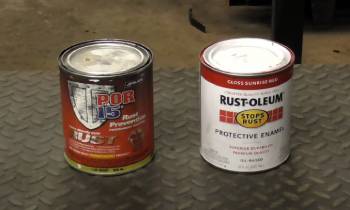
Pros of POR-15: The industrial strength shield
- Rock-Hard Moisture-Cured Barrier: It features a unique chemical structure that strengthens when exposed to moisture: I found that this makes it nearly impossible for oxygen to reach the metal: this results in a permanent seal that stops rust in its tracks: I noticed that once it’s on, it feels more like a part of the metal than a layer of paint.
- Incredible Chemical Resistance: It utilizes a formula that is impervious to battery acid, gasoline, and road salt: I found this to be the most critical feature for vehicle undercoatings: this provides a level of protection that standard hardware store paints cannot match: I noticed that even after a winter of heavy salting, the coating remained intact.
- High Solid Content for Smooth Coverage: It features a high percentage of solids that fill in the pits and craters of rusted metal: I found it leaves a very smooth, glass-like finish despite the rough surface underneath: this results in a professional look even if the metal was in bad shape: I noticed it flows out beautifully with a brush, leaving almost no stroke marks.
- Flexibility Without Cracking: It utilizes a resin that stays slightly flexible even after it has fully hardened: I found that it expands and contracts with the metal during temperature changes: this provides a barrier against the micro-fractures that often let moisture in: I noticed it didn’t peel even on parts that vibrate significantly.
- Superior Longevity for Chassis Work: It features a legacy of lasting ten years or more on properly prepped frames: I found that I never had to go back and touch up areas once the system was fully cured: this results in a massive time saving over the life of the vehicle: I noticed the cost-per-year is actually quite low when you consider the durability.
Cons of POR-15: The price of perfection
- Extreme Sensitivity to Surface Preparation: because the coating relies on a mechanical bond to the metal’s pores: I found that if there is even a trace of oil or a lack of etching, the paint will peel off in large sheets: this results in a very high failure rate for beginners who skip the “Metal Prep” step: I noticed that “painting over rust” actually requires more cleaning than painting over clean steel.
- Poor UV Resistance Without Topcoating: because the aromatic urethanes in the formula break down when exposed to direct sunlight: I found that it turns ashy, grey, and eventually chalks off if left in the sun: this provides an extra step of buying and applying a UV-stable topcoat: I noticed it is strictly for under-car or shaded areas if used alone.
- Difficult Cleanup and Skin Staining: because it is designed to be permanent and reacts with the moisture in your skin: I found that if you get a drop on your hand, it stays there for a week: this results in a “tattoo-like” stain that no solvent can remove once it starts to dry: I noticed that wearing long sleeves and double gloves is a non-negotiable requirement.
- Pot Life and Storage Issues: because the moisture in the air will cure the paint inside the can: I found that if I didn’t seal the lid with plastic wrap, the can was a solid block of plastic by the next month: this results in a lot of wasted product if you only have small touch-ups to do: I noticed that “poking holes in the lid” is the only way to save it.
- High Upfront Cost for the System: because you have to buy the cleaner, the prep solution, and the paint itself: I found that a small project can easily cost over $100 just to get started: this provides a barrier for budget-conscious DIYers: I noticed that it is significantly more expensive than the Rust-Oleum alternative.
Pros and Cons of Rust-Oleum: The accessible all-rounder
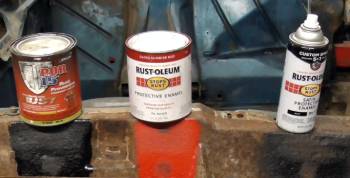
Pros of Rust-Oleum: The accessible all-rounder
- Ease of Use and Speed: It features a simple application process that requires very little prep beyond a quick wire brushing: I found this perfect for weekend projects and quick fixes: this results in getting the job done in a fraction of the time: I noticed the spray versions are particularly consistent and easy to aim.
- Excellent UV Stability and Finish Options: It utilizes a formula that is naturally resistant to fading and sun damage: I found that I didn’t need to apply any secondary topcoat to my outdoor projects: this provides a wide variety of colors and textures from gloss to matte: I noticed the black “satin” finish is very forgiving on uneven surfaces.
- Wide Availability and Low Cost: It features a price point that is accessible at almost every hardware store: I found it easy to pick up another can if I ran out mid-project: this results in a low-risk investment for people new to rust repair: I noticed that I could do an entire set of patio furniture for the price of one pint of POR-15.
- Great Adhesion to Non-Rusted Surfaces: It utilizes a resin that sticks well to existing paint and clean metal: I found it much more versatile for multi-surface projects: this provides a one-can solution for items that are only partially rusted: I noticed it didn’t require the aggressive “etching” that specialized coatings need.
- Safe and User-Friendly Chemistry: It features lower VOCs and a less aggressive chemical profile: I found that I didn’t need a full-face respirator for outdoor use: this results in a safer environment for home DIYers: I noticed that if I got some on my skin, a bit of soap and water (or mineral spirits) took it right off.
Cons of Rust-Oleum: The trade-offs for convenience
- Lower Resistance to Harsh Chemicals: because the oil-based enamel is not a catalyzed or moisture-cured system: I found that gasoline and brake fluid will eat right through the paint: this results in a shorter lifespan for engine bay or fuel tank projects: I noticed that salt also degrades the finish much faster than a urethane coating.
- Requires Frequent Maintenance and Recoating: because the layer is thinner and more prone to chipping: I found that my truck hitch started showing rust again after just one winter: this provides a “temporary” feel to the repair: I noticed that I had to touch up my outdoor railings every spring to keep them looking fresh.
- Potential for Moisture Trapping: because it acts as a topical cover rather than a deep penetrator: I found that sometimes rust would continue to grow underneath the paint bubble: this results in the paint eventually flaking off to reveal even more damage: I noticed it works best on “light” rust rather than “heavy” scale.
- Slower Cure Time for Heavy Coats: because it relies on solvent evaporation to harden: I found that if I sprayed it too thick, the surface would remain tacky for days: this results in a higher chance of dust and bugs getting stuck in the finish: I noticed that humidity really slows down the drying process of the oil-based versions.
- Less Effective as a Structural Sealant: because it doesn’t dry with the same “ceramic” hardness as industrial coatings: I found that it didn’t offer any additional strength to the metal: this provides a cosmetic solution rather than a structural reinforcement: I noticed it doesn’t bridge small holes or pits as effectively as a high-solids product.
Comparison with Others
- POR-15 Vs. Rust Bullet
I found that while POR-15 requires a three-step system, Rust Bullet is often marketed as a one-step solution.
You should realize that Rust Bullet is also a moisture-cured urethane, but I noticed it has better UV resistance out of the can.
I noticed that POR-15 still seems to have a slight edge in “sheet strength” for heavy-duty frames.
I believe that Rust Bullet is the better analytical choice for you if you want a faster application, but POR-15 is the winner for those who follow the “professional” book.
- Rust-Oleum Vs. Corroseal
I found that Corroseal is a water-based converter that turns white and then dries black when it reacts with rust.
You should realize that Corroseal is much easier to apply to very large areas like metal roofs or fences.
I noticed that Rust-Oleum provides a much better “final look” if you don’t plan on painting over it.
I believe that Corroseal is the superior choice for industrial-scale rust conversion, while Rust-Oleum is the king of the backyard.
- POR-15 Vs. KBS RustSeal
I noticed that KBS RustSeal is often called the “new” POR-15 and has a very similar application process.
I found that KBS has a slightly thinner consistency, which I noticed allows it to flow into tight welds a bit better.
You should realize that both brands are extremely durable and require the same “system” approach to work correctly.
I believe that choosing between these two often comes down to which one is on sale at your local auto body supply shop.
Also Read: My Thoughts On OSPHO Rust Remover
Frequently Asked Questions (FAQs)
Yes, it stops rust by creating a non-porous, moisture-cured barrier that starves the metal of oxygen and humidity.
For sheer simplicity and UV resistance, products like Rust Bullet or Mastercoat are often cited as being more “user-friendly” alternatives.
It is “better” in terms of ease of use because it requires less prep and is UV stable, but POR-15 still has a higher reputation for frame strength.
The “best” converter is subjective, but Rust-Oleum Rust Reformer is the top choice for DIYers, while Corroseal is favored for professional and marine use.
Final Thoughts
You should buy POR-15 if you are performing a full-frame restoration and have the patience to follow a rigorous cleaning and etching process.
I have found that for most of you, Rust-Oleum is the better analytical choice for daily household items and projects that aren’t exposed to extreme chemical environments.
I believe that as long as you understand the “prep versus performance” trade-off, you will be able to stop the rust on your own terms.