Choosing between POR-15 and Eastwood for your automotive restoration is like choosing between a high-tech armor suit and a reliable, versatile tactical vest.
I have spent countless hours in my garage, covered in more paint than the car frames I was working on, just to see which of these heavy hitters holds up against the elements.
In this article, I will analyze the performance of POR-15 and Eastwood Rust Encapsulator to help you decide which one should be your go-to defense against the “tin worm.”
You should realize that while both products aim to stop rust, their chemical personalities and application demands are worlds apart.
Comparison Overview: POR-15 Vs. Eastwood Rust Encapsulator
| Feature | POR-15 Rust Preventive | Eastwood Rust Encapsulator |
| Chemistry | Moisture-Cured Urethane | Alkyd-based / Proprietary |
| Surface Prep | High (Degrease, Etch, Dry) | Low to Medium (Wire brush only) |
| UV Resistance | Poor (Must Topcoat) | Good (UV Resistant) |
| Application | Brush/Spray (Thin coats) | Aerosol/Brush/Spray |
| Curing Speed | 2-5 hours (Dependent on Humidity) | 15-20 minutes (To touch) |
| Durability | Rock-hard, Ceramic-like | Flexible, Impact resistant |
| Topcoat Requirement | Essential for sunlight exposure | Optional (Self-sealing) |
My First-Hand Experience with These Rust Rivals
I remember the first project where I really pitted these two against each other: a 1970s truck frame that was more orange than black.
I am a person who values long-term durability, so I initially committed to the POR-15 system.
I noticed immediately that POR-15 is a commitment; it is not a “slap it on and go” type of product.
I found that the three-step process—Cleaner Degreaser, Metal Prep, and finally the paint—takes a full weekend of dedicated labor.
I realized, however, that the results were unlike anything else I had seen.
I eventually finished the frame and found it felt like it was encased in a layer of black glass.
I eventually moved on to a smaller project, a set of floor pans on a budget daily driver, where I decided to try Eastwood Rust Encapsulator.
I noticed that the experience was much more user-friendly for a quick turnaround.
I found that I could wire brush the loose scale, wipe it down with a bit of prep solvent, and start spraying within thirty minutes.
I am someone who appreciates a good aerosol delivery, and I noticed that Eastwood’s nozzle provided a much more professional finish than the typical hardware store rattle can.
I eventually found myself checking on both projects about a year later.
I noticed that the POR-15 frame was still pristine, but I realized that in one spot where I had cheated on the prep, the paint had peeled off in a single, large wafer.
On the other hand, I realized that the Eastwood-treated floor pans had held up surprisingly well, even without a topcoat.
I found that the Eastwood coating was more “forgiving.”
I noticed that it stayed slightly more flexible, whereas the POR-15 was so hard it was almost brittle in areas with high vibration.
I realized that if I am doing a frame-off restoration where every bolt is being replaced, I will always pick POR-15 for that “forever” protection.
I found, however, that for general maintenance, wheel wells, or parts that might see the sun, Eastwood is the pragmatic winner.
I finished my comparison realizing that the “better” product is actually whichever one matches your willingness to spend time cleaning the metal.
I eventually learned that rust doesn’t sleep, but with these two, I finally could.
Maintenance Tips for Your Restored Frame
- Wire Brush the “Crunchy” Stuff: You should realize that no paint can fix structural rot. Getting rid of the loose, flaking layers is a vital maintenance tip for any coating, which I found ensures the chemical has something solid to hold onto.
- Degrease Like Your Life Depends on It: You should notice that even a tiny fingerprint of grease will stop these paints from bonding. Using a specialized prep solvent or “PRE” wash is a key maintenance tip for adhesion, which results in a finish that won’t peel in six months.
- Always Wear Nitrile Gloves: You should realize that these products are designed to stay on for a decade, and that includes your skin. Doubling up on gloves is a smart maintenance tip for your health, which I found prevents the “black hand” look that lasts for weeks.
- Seal the Cans with a Plastic Barrier: You should notice that the lids will stick to the can like they were welded. Placing a piece of heavy-duty plastic wrap over the opening before closing is an essential maintenance tip for storage, which provides a way to reopen the can for future touch-ups.
- Apply Multiple Thin Coats Instead of One Thick One: You should realize that thick layers can trap solvents and lead to bubbles. Waiting for the proper “flash time” between coats is a great maintenance tip for a professional finish, which I found prevents the “orange peel” texture.
- Rinse Off Road Salt Frequently: You should notice that even the best coatings eventually give way to concentrated brine. A quick spray-down at the car wash after a snowstorm is a crucial maintenance tip for longevity, which results in the coating lasting twice as long as an unmaintained one.
Pros and Cons of POR-15: The ultimate chemical barrier
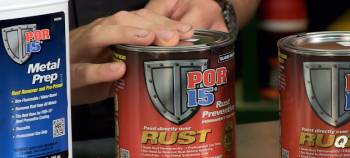
Pros of POR-15: The ultimate chemical barrier
- Unrivaled Hardness and Strength: It features a moisture-cured urethane formula that dries to a ceramic-like finish: I found that this makes it nearly impossible to scratch or chip once fully cured: this results in a barrier that can withstand heavy road debris: I noticed that it effectively seals the metal away from all oxygen.
- Superior Chemical Resistance: It utilizes a resin that is completely unaffected by battery acid, road salt, and fuel: I found this to be the gold standard for battery trays and fuel tank exteriors: this provides peace of mind in harsh winter climates: I noticed that even after soaking in salt spray, the metal underneath remained shiny and new.
- Self-Leveling Properties: It features a thin consistency that flows into every microscopic pit and weld: I found that when applied with a brush, the brush marks simply disappear: this results in a smooth, factory-like finish without the need for a spray gun: I noticed it looks better than many professional spray jobs.
- Moisture-Friendly Curing: It utilizes humidity in the air to trigger the hardening process: I found that it actually cures faster and stronger in damp environments: this provides a unique advantage for those working in humid garages: I noticed that it bonds to the metal’s pores with a mechanical grip that is incredibly difficult to break.
- High Solid Content: It features a formula that doesn’t “shrink” as it dries: I found that one or two thin coats provide more protection than five coats of traditional paint: this results in using less product to achieve the same level of coverage: I noticed that a small pint goes a surprisingly long way.
Cons of POR-15: The demands of a diva
- Onerous Preparation Requirements: because the paint relies on a mechanical bond to an etched surface: I found that if the metal isn’t perfectly degreased and “toothed” with phosphoric acid, it will fail: this results in frustrating peeling for users who try to skip the prep steps: I noticed that it won’t stick to smooth, clean metal at all without etching.
- Zero UV Tolerance: because the chemical bonds break down when exposed to sunlight: I found that it will turn a chalky grey and eventually flake off if left in the sun: this provides the extra cost and labor of having to buy a secondary topcoat: I noticed that it is strictly a “hidden area” or “undercoat” product.
- Permanent Skin Staining: because it bonds to the moisture in your skin just like it bonds to metal: I found that if you get it on your hands, you are wearing it for two weeks: this results in a “tattoo” effect that no solvent can remove once it starts to dry: I noticed that wearing a “suit of armor” (PPE) is mandatory.
- Storage Challenges: because the moisture in the air will turn the remaining paint in the can into a solid rock: I found that I had to use plastic wrap between the lid and the can to prevent it from welding shut: this provides a high risk of wasting expensive product: I noticed that even a tiny bit of humidity in the can can ruin the whole batch.
- Isocyanate Content Risks: because it contains powerful chemicals that can be harmful if inhaled: I found that you absolutely must use a high-quality respirator if you choose to spray it: this results in a higher barrier for the casual home DIYer: I noticed that brushing it is much safer but limits application speed.
Pros and Cons of Eastwood: The versatile restorer’s choice
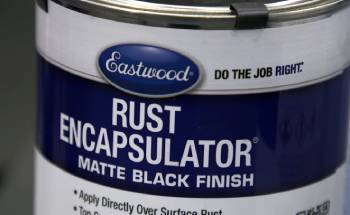
Pros of Eastwood: The versatile restorer’s choice
- Fast-Drying Convenience: It features a formula that is dry to the touch in under twenty minutes: I found this perfect for “rolling” projects that need to be back on the ground quickly: this results in a much faster workflow for multi-step repairs: I noticed I could apply a second coat almost immediately.
- Built-in UV Resistance: It utilizes a formula that can stand up to direct sunlight without a topcoat: I found this to be a massive advantage for wheel wells and suspension parts: this provides a one-step solution that saves time and money: I noticed the finish stayed black and satin-smooth for months.
- Exceptional Adhesion to Varied Surfaces: It features a resin that sticks to bare metal, old paint, and light rust: I found it much more “forgiving” than POR-15 if your prep work isn’t 100% perfect: this results in a reliable bond on complicated assemblies: I noticed it didn’t peel even on smooth areas.
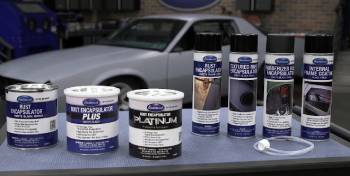
- Available in Convenient Aerosols: It utilizes high-quality spray cans with specialized nozzles: I found that the spray pattern was wide and consistent: this provides a way to get into tight crevices that a brush can’t reach: I noticed the “Internal Frame Coating” version with the long hose is a game-changer for box frames.
- High Heat Resistance: It features the ability to withstand temperatures up to 250-350 degrees Fahrenheit: I found this useful for parts near the engine or exhaust: this results in a coating that won’t bubble or smoke when things get warm: I noticed it held its color even on brake dust shields.
Cons of Eastwood: The limits of convenience
- Lower Hardness Compared to Urethanes: because it is not a moisture-cured ceramic-style coating: I found that it is easier to scratch with a wrench or a flying rock: this results in a need for thicker coats to achieve the same “feel”: I noticed that it is a “softer” protective layer than its rival.
- Requires More Product for High Build: because it has a lower solid content in the aerosol version: I found that I went through three cans just to cover a small axle housing: this provides a deceptive cost where the “cheap” can adds up quickly: I noticed that it takes more layers to hide the texture of heavy rust.
- Solvent Sensitivity: because it is not a fully cross-linked chemical barrier like a urethane: I found that a heavy spill of gasoline or brake cleaner can soften the paint: this results in a less durable finish in the engine bay: I noticed that I had to be careful when bleeding my brakes near the painted areas.
- Finish Consistency Issues: because the aerosol can lose pressure toward the end: I found that the last 10% of the can sometimes “spatters” rather than sprays: this provides a slightly textured finish if you aren’t careful: I noticed that the quart version for brushing is much more consistent.
- Less Penetrating Power: because it is designed to encapsulate the surface rather than soak into the pores: I found that on very heavy, “crunchy” rust, it might not reach the bottom of the pits: this results in the possibility of rust continuing underneath if not wire-brushed thoroughly: I noticed it works best on “surface” rust rather than “structural” scale.
Also Read: My Thoughts On OSPHO Rust Remover
Comparison with Others
- POR-15 Vs. KBS RustSeal
I found that KBS is almost identical in chemistry to POR-15, but I noticed it has a few more color options.
You should realize that KBS claims to have a slightly higher solid content, which I found made it a bit thicker during application.
I noticed that the prep steps for KBS are equally demanding, meaning you aren’t saving any time by switching.
I believe that if you want a silver or grey finish without topcoating, KBS is the better choice for you, but POR-15 remains the heritage brand for black chassis work.
- Eastwood Vs. Rust-Oleum
I noticed that Rust-Oleum is much cheaper and easier to find at any local store.
I found, however, that Rust-Oleum does not have the same level of “encapsulation” technology that I noticed in the Eastwood formula.
You should realize that Rust-Oleum is more of a topical paint, whereas Eastwood actually works into the rust to seal it.
I believe that for a lawnmower or a fence, Rust-Oleum is fine, but for a vehicle you care about, Eastwood is the analytical winner.
- POR-15 Vs. Corroseal
I found that Corroseal is a water-based rust converter that turns the metal black by changing its chemical state.
You should realize that Corroseal is much safer to use and doesn’t require a respirator for basic application.
I noticed, however, that Corroseal is not a “final” coating and I found it must be painted over to survive the outdoors.
I believe that Corroseal is great for large industrial projects, but for an automotive frame, the “hard shell” of POR-15 is superior.
Also Read: Comparison Of Por 15 Vs. Rustoleum
Frequently Asked Questions (FAQs)
For users who want less prep, Eastwood Rust Encapsulator or Rust Bullet often “work better” because they have a lower failure rate for beginners, though they aren’t as hard.
Yes, Eastwood’s OEM Select line is highly accurate and designed to match factory color codes within half a gram of weight for professional-level touch-ups.
POR-15 is not a rust remover; it is a rust preventative and encapsulator. For actually removing rust, products like Evapo-Rust or Eastwood Rust Dissolver are better.
The “best” converter depends on scale; Eastwood Rust Converter is excellent for automotive parts, while Corroseal is favored for marine and large-scale metal structures.
Final Thoughts
You should buy POR-15 if you are a “perfectionist” restorer who is willing to do the grueling prep work required for an industrial-strength, ceramic-hard finish.
I have found that for most of you, Eastwood Rust Encapsulator is the more practical and forgiving choice for daily drivers and parts that need UV protection without the extra steps.
I believe that as long as you respect the rust and clean your metal thoroughly, both of these brands will serve as a fortress for your vehicle’s future.