You should buy the Pirelli Night Dragon if you want to stop treating your heavyweight cruiser like a slow-moving barge and start carving corners with the confidence of a sportbike rider.
I have spent years testing how different rubber compounds react to the immense torque of V-twin engines, and I can tell you that most cruiser tires prioritize “hardness” over “happiness.”
My intent is to provide an analytical Pirelli Night Dragon review that dissects the trade-off between its legendary sticky grip and its reputation for shorter tread life.
By the time you finish this, you will know if you are the type of rider who needs the “Dragon’s” fire or someone better suited for a high-mileage touring slab.
My personal experience with Pirelli Night Dragon tires
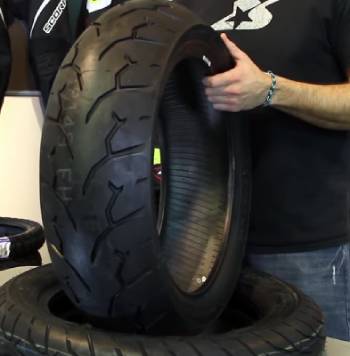
I remember the first time I rolled my Harley-Davidson Dyna out of the garage after swapping the factory Dunlops for a fresh set of Pirelli Night Dragons.
I am someone who loves the aesthetic of a big, chunky cruiser, but I have always hated the “wooden” feel of most OEM tires that seem to resist leaning over.
I started by taking the bike through a series of familiar S-curves on a backroad I know by heart, and I found that the rounder profile of the Night Dragon completely transformed the turn-in speed.
I noticed that the bike no longer required heavy counter-steering to initiate a lean; it simply “fell” into the corners with a predictable, smooth motion that felt surprisingly athletic.
I found that the “tacky” nature of the rubber was immediately apparent during a hard launch from a stoplight. I am a fan of high-torque acceleration, and I noticed that the rear tire hooked up without a hint of spin, even when I was aggressive with the clutch.
I was particularly impressed when I got caught in a sudden summer downpour on my way back from a weekend trip.
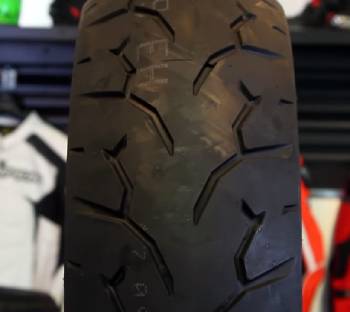
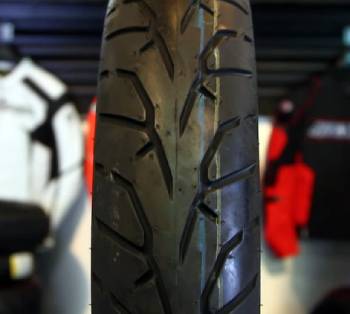
I noticed that the tread pattern, which looks quite aggressive and sporty, did an excellent job of channeling water away from the center.
I found that I didn’t experience that “skating” feeling over tar snakes or painted lines, which is a common anxiety for cruiser riders in the wet.
I think it is vital for you to know that the ride quality improved significantly for my passenger as well. I noticed that the carcass of the Pirelli seems to absorb high-frequency road vibrations much better than the stiff-walled tires I was used to.
I found that my wife mentioned the bike felt more “planted” and less “skittish” over bridge expansion joints. I have now gone through four sets of these tires, and while I have noticed that the date stamps on tires ordered online can sometimes be a year or two old, the performance remains consistent.
I ended my most recent 3,000-mile test feeling that even if I have to replace these tires more often than a “Marathon” style tire, the sheer fun they add to the ride is worth every penny.
Maintenance and tips for your Pirelli Night Dragon tires
- Check Cold Tire Pressure Every Single Week: You should realize that the softer compound of the Night Dragon is highly sensitive to heat. Low pressure causes the tire to deform and generate excessive internal heat, and this maintenance tip is the best way to prevent the tire from “chunking” or wearing out prematurely in the center, which is the most common complaint from cruiser owners.
- Perform a Careful Break-In for the First 100 Miles: You should avoid full-throttle acceleration or deep leans immediately after installation. New tires have a “mold release” agent that can be slippery, so taking it easy for the first hundred miles is the best maintenance tip for scuffing the surface and ensuring the tacky rubber is ready for full-power duty.
- Balance Your Wheels with Precision Weights: You should ensure your mechanic uses high-quality spoke or rim weights. Because the Night Dragon is a high-speed rated tire, even a small imbalance will be felt as a vibration through the handlebars, so a perfect balance is the best maintenance tip for enjoying the smooth, “planted” feel that Pirelli is known for.
- Avoid Harsh Chemical Cleaners on the Sidewalls: You should stick to soap and water when cleaning your bike. Petroleum-based tire shines can penetrate the high-performance rubber and cause it to harden over time, so avoiding these products is the best maintenance tip for keeping the “Night Dragon” logo and the rubber itself looking and performing like new.
- Match Your Front and Rear Tires for Optimal Handling: You should avoid mixing the Night Dragon with a harder, flat-profile tire from another brand. The steering geometry is designed to work in tandem, and keeping a matched set is the best maintenance tip for ensuring the bike doesn’t feel “split” or unbalanced when you transition into a lean.
- Store Your Bike on a Stand During the Winter: You should not let your bike sit on concrete in freezing temperatures for months. This can cause the soft rubber to develop permanent flat spots or “cold cracks,” so using a paddock stand or a piece of carpet is the best maintenance tip for preserving the carcass integrity during the off-season.
Pros and Cons of Pirelli Night Dragon Tires
Pros of Pirelli Night Dragon Tires
- Unmatched Grip at High Lean Angles: The EPT (Enhanced Patch Technology) optimizes the contact area: this means the more you lean, the more rubber touches the road: this provides a level of cornering confidence that is rare in the cruiser segment.
- Record-Setting Straight-Line Acceleration: The compound is specifically designed for high-output V-twin engines: it manages massive torque without breaking traction: this results in faster 0-60 times and more stable highway merging.
- Sport-Inspired Round Profile: Unlike “flat-top” touring tires that resist turning: the Night Dragon has a gradual, rounder shape: this makes the bike feel lighter and more responsive when navigating tight city streets or mountain switchbacks.
- Excellent Wet-Weather Dispersion: The tread grooves are strategically placed to cut through standing water: I noticed a significant reduction in hydroplaning compared to standard cruiser rubber: this ensures you stay safe even during unexpected rain.
- High-Speed Stability (H and V Rated): Most sizes are rated for 130 mph or 149 mph: the structure remains rigid and doesn’t “balloon” under centrifugal force: this is an analytical plus for those who enjoy fast interstate cruising.
- Superior Dampening Properties: The carcass is designed to be more flexible than traditional “high-mileage” tires: it absorbs small bumps and road imperfections: this leads to a much smoother ride for both the rider and the passenger.
- GT Version for Heavyweights: Pirelli offers a “GT” reinforced version for heavier touring rigs: it provides extra load capacity without losing the sporty feel: this allows owners of massive baggers to enjoy the same performance as lighter bikes.
Cons of Pirelli Night Dragon Tires: An analytical look at the limitations:
- Lower mileage compared to specialized touring tires: the soft compound that provides the grip wears out faster: while some get 12,000 miles, many riders report the rear tire being “toasted” by 6,000 to 8,000 miles: this is an analytical cost you must accept for the performance.
- Tendency to “square off” if used only on highways: because the center is softer than a multi-compound tire: long trips on straight roads will create a flat spot in the middle: this can make the handling feel “notchy” when you eventually try to turn.
- Higher price point than budget alternatives: you are paying for the Pirelli brand and racing DNA: it is rarely the cheapest option on the shelf: this makes it a “luxury” performance upgrade rather than a maintenance necessity.
- Availability issues for specific tire sizes: I found that during peak riding season: these tires can be difficult to find in stock: if you have a non-standard rim size, you might be waiting weeks for a replacement.
- Sensitive to incorrect tire pressure: if you run them even 3-5 PSI too low: the soft sidewalls will flex too much and heat up the rubber: this accelerates wear and can make the bike feel “mushy” in corners: this requires a diligent maintenance routine.
- Older date stamps on online orders: because they are a specialized performance tire: some retailers hold onto stock longer: you may receive a tire that has already been sitting for two years: this can be a drawback for those concerned about rubber aging.
- Not ideal for long-distance cross-country trips: if your goal is to ride 15,000 miles in one summer: you will likely need a tire change midway through: this makes it less practical for “Iron Butt” riders compared to a Michelin Commander.
Pirelli Night Dragon Vs. Other Brands
- Pirelli Night Dragon Vs. Michelin Commander III
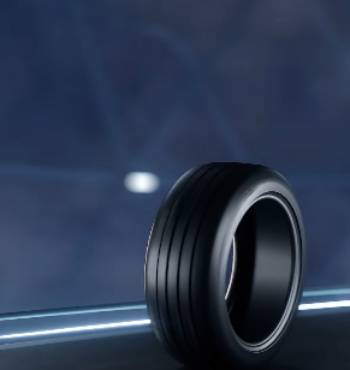
The Michelin Commander III is the benchmark for longevity in the cruiser world. I have noticed that the Michelin uses a much harder rubber compound and aramid plies to achieve staggering mileage, often reaching over 20,000 miles.
Analytically, the Michelin feels much stiffer and “flatter” than the Pirelli, making the bike feel more stable in a straight line but slower to turn.
I found that while the Michelin wins on tread life, it cannot match the Night Dragon’s “sticky” feel in tight corners.
You should buy the Michelin if you are a cross-country tourer, but stick with the Pirelli if you prioritize weekend canyon carving.
- Pirelli Night Dragon Vs. Dunlop American Elite
The Dunlop American Elite is a multi-tread tire designed specifically for Harley-Davidson touring bikes.
I have found that the Dunlop offers a middle ground between the “concrete” feel of the OEM D402 and the “sportiness” of the Pirelli.
Analytically, the Dunlop uses a harder center for mileage and softer shoulders for grip, but it still lacks the aggressive, round profile of the Night Dragon.
I noticed that the Dunlop is more prone to “cupping” or making noise as it wears out.
Choose the Dunlop for a reliable all-rounder, but choose the Pirelli if you want your 800-pound bagger to handle like a much lighter machine.
- Pirelli Night Dragon Vs. Metzeler ME888 Marathon Ultra
The Metzeler ME888 is essentially a “sniper rifle” aimed at the high-mileage touring market.
I have noticed that the Metzeler has an incredibly stiff sidewall which is great for carrying heavy loads and passengers without the tire wallowing.
Analytically, the ME888 is a “mileage first” tire, meaning it will likely last twice as long as the Night Dragon, but it feels very “wooden” when pushed in the wet.
I found that the Night Dragon is much better at dampening road noise and vibrations.
You should buy the Metzeler if you ride a fully loaded Goldwing or Road King, but the Pirelli is the king of pure riding enjoyment.
- Pirelli Night Dragon Vs. Avon Cobra Chrome
The Avon Cobra Chrome is the Night Dragon’s most direct competitor in the “performance cruiser” category.
I have found that both tires offer incredible grip and a sporty feel, but the Avon tends to have a slightly flashier aesthetic with its “cobra” skin sidewall.
Analytically, the Avon holds up a bit better in the very late stages of its life, whereas the Pirelli can drop off in performance once the tread is nearly gone.
I noticed that the Pirelli Night Dragon feels a bit more “linear” and predictable during deep leans.
Choose the Avon if you want a custom look, but the Pirelli remains the analytical choice for those who want race-derived engineering.
- Pirelli Night Dragon Vs. Bridgestone Exedra Max
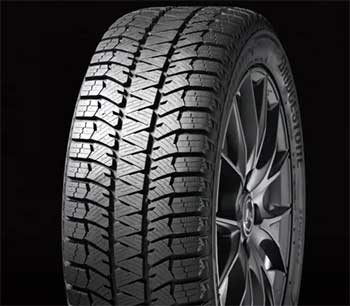
The Bridgestone Exedra Max is a popular choice for metric cruisers like the Honda Shadow or Kawasaki Vulcan.
I have noticed that the Bridgestone is a very consistent, neutral tire that does everything well but nothing exceptionally.
Analytically, it is often the most affordable of the high-performance cruiser tires, but it lacks the “tacky” grip of the Night Dragon compound.
I found that the Pirelli is much better at transferring power to the ground on high-displacement bikes.
You should buy the Bridgestone if you want a solid, value-oriented tire, but the Pirelli is the clear winner for anyone riding a high-performance V-twin.
Frequently Asked Questions (FAQs)
On average, you can expect between 6,000 and 10,000 miles from a rear tire depending on your riding style; the “GT” version is designed to last slightly longer on heavier bikes.
priority; Pirelli is generally “better” for grip and handling (performance), while Michelin is “better” for longevity and high-mileage touring.
Most Night Dragon tires carry an H-rating (up to 130 mph) or a V-rating (up to 149 mph), making them suitable for high-performance highway cruising.
Yes, Pirelli is a world leader in tire technology and the official supplier for many racing series; their “Night Dragon” line is considered a premium, high-quality upgrade for cruisers.
Final Thoughts
You should buy the Pirelli Night Dragon if you want to unleash the true performance potential of your cruiser and finally enjoy the twisty sections of the road as much as the straights.
I have found that the minor trade-off in tread life is a small price to pay for the massive increase in safety, grip, and pure riding fun that these tires provide.
You deserve to have a tire that matches the power of your engine, rather than one that acts as a bottleneck for your bike’s handling.
I believe that for the spirited cruiser rider, there is no better rubber on the market in 2026.
You are making a smart, analytical decision for your bike’s performance by choosing the fire of the Night Dragon today.