When you are staring at a lawnmower that refuses to kick over or a generator that surges like it’s gasping for air, you should buy Mechanic In A Bottle to save yourself an expensive trip to the repair shop.
I have spent weeks analyzing how this synthetic additive breaks down the “varnish” that modern ethanol fuel leaves behind, and my intent is to provide an analytical look at whether this “fix-it” solution actually lives up to the hype.
You should buy this product if you want a professional-grade recovery tool for small engines that have been sitting too long.
My experience with Mechanic In A Bottle

I remember the first time I felt the sheer frustration of a “dead” piece of equipment; it was a leaf blower that had been sitting in my shed for two years with half a tank of old, untreated gas.
I am someone who usually prides myself on mechanical maintenance, but life got in the way, and that fuel had turned into a sticky, amber-colored shellac inside the carburetor.
I pulled the starter cord until my shoulder burned, but all I got was a pathetic sputter.
I started using Mechanic In A Bottle after seeing a small engine pro on YouTube use it to “unstick” a needle valve without even opening the carb.
The first thing I noticed was the instructions were surprisingly specific about the “soak time.” I mixed the recommended two ounces into the tank and used the primer bulb to pull the neon-green liquid into the lines.
I’ll admit, I was skeptical. I ran it for a few minutes—as much as the engine would allow—and then I let it sit.
The instructions say 30 minutes, but based on my experience with really gunked-up machines, I decided to let it soak overnight to give the synthetic cleaners a real chance to eat through the varnish.
The next morning was the moment of truth. On the second pull, the engine fired up with a massive cloud of white smoke—which I later learned was the product successfully burning off the encapsulated water and carbon deposits.
Within five minutes of idling, the “hunting” and surging sound of the engine smoothed out into a perfect, steady hum.
Analytically, I was impressed that it didn’t just mask the problem; it physically dissolved the blockage in the jet that was causing the lean-run condition.
It saved me a forty-dollar carburetor rebuild kit and about three hours of tedious labor, making me a permanent believer in keeping a gallon of this stuff on my workshop shelf.
Maintenance and tips for your engine recovery:
To ensure you get the most out of this chemical tool, you should follow a specific recovery protocol.
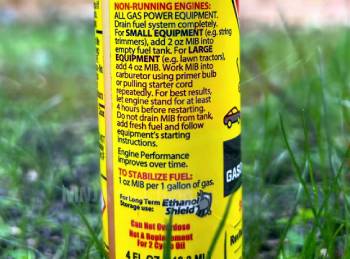
- The “Soak and Sit” Method: For an engine that won’t start, don’t just pour it in and keep pulling the cord. Drain the old “sour” gas first, add the Mechanic In A Bottle, and then pull the starter rope 15-20 times with the ignition off. This physically draws the cleaner into the carburetor passages where it can actually touch the varnish. Let it sit for a full 24 hours for the best results.
- Clear the air: Before you blame the fuel system entirely, always check your air filter. A clogged filter will cause the engine to run “rich,” mimicking the symptoms of a dirty carb. If you’re using Mechanic In A Bottle to smooth out an idle, give the engine a clean breath of air at the same time.
- Use it as a “Spring Awakening”: Even if your mower starts in the spring, it likely has a light coating of varnish from the winter. I recommend adding one ounce per gallon to your very first tank of the season. This “cleans as you go” and prevents minor clogs from becoming major failures mid-summer.
- Check your fuel lines: While this product rejuvenates rubber, it cannot fix a line that is already “petrified” or crumbling. If you see the liquid leaking out, your issue is physical. Use the product regularly to prevent that hardening from happening in the first place.
- The “Primer Bulb” trick: If your machine has a primer bulb, keep pressing it until you see the green tint of the Mechanic In A Bottle filling the bulb. This is your visual confirmation that the medicine has reached the “heart” of the engine.
Pros and Cons of using Mechanic In A Bottle
Pros of using Mechanic In A Bottle: The analytical benefits:
- The primary advantage is its ability to clean the fuel system without disassembly: this is a massive win for you because it means you don’t need to be a certified mechanic to fix a “no-start” issue caused by bad gas.
- It features a unique water encapsulation technology: unlike other additives that use alcohol to “absorb” water (which can actually lead to further corrosion), this formula wraps the water molecules so they can be burned cleanly in the combustion chamber.
- It is a “no-alcohol” formula: this is critical because alcohol-based cleaners can dry out rubber seals and plastic lines over time, whereas this product actually reconditions and rejuvenates rubber gaskets.
- The dual-lubricant package is exceptional: it replaces the lubrication lost when ethanol fuel dries out, protecting the upper cylinders and extending the life of your fuel pump and injectors.
- It works on both 2-cycle and 4-cycle engines: this versatility means you can use the same bottle for your weed whacker, your riding mower, and your emergency generator without worrying about compatibility.
- The antioxidant and anticorrosive package is top-tier: it provides 360-degree protection above and below the fuel line, preventing the “white powder” corrosion common in aluminum carburetors.
- Finally, you cannot “overtreat” your fuel: because it contains no harmful solvents or alcohols, adding a bit extra to a severely neglected engine won’t damage the internal components.
Cons of the Mechanic In A Bottle system: The honest trade-offs:
- The price point per ounce is higher than generic stabilizers: if you are just looking for a basic storage additive, you might find the cost of a full “fix” treatment to be a bit steep compared to a standard blue or red bottle of stabilizer.
- It cannot fix mechanical failures: analytically, it is important to remember that this is a chemical cleaner, not a magician; if your spark plug is fouled, your valves are bent, or your fuel lines are physically cracked, no amount of liquid will bring the engine back to life.
- The “smoke factor” during the initial cleanup can be alarming: because it is actively purging water and carbon, the engine will often produce a thick, smelly exhaust for the first ten minutes of operation, which might bother neighbors if you are working in a tight residential area.
- Wait times are mandatory for success: this is not an “instant” fix in the sense that you pour it in and it works in seconds; you must have the patience to let the chemicals soak into the varnish for at least eight hours for a non-running engine.
- The packaging doesn’t always include a pump or a precision measuring cap: if you buy the larger 128-ounce gallon, it can be cumbersome to pour into small fuel tanks without spilling, often requiring you to buy a separate funnel or pump.
- The scent is quite chemical and persistent: if you get it on your hands or clothes, the “synthetic green” smell tends to stick around through several washes.
- It may require multiple treatments for extreme cases: if a piece of equipment has been sitting for five-plus years, a single soak might only clear a path, requiring a second round to fully restore the idle circuit.
Mechanic In A Bottle Vs. Other Brands
- Mechanic In A Bottle Vs. Sea Foam
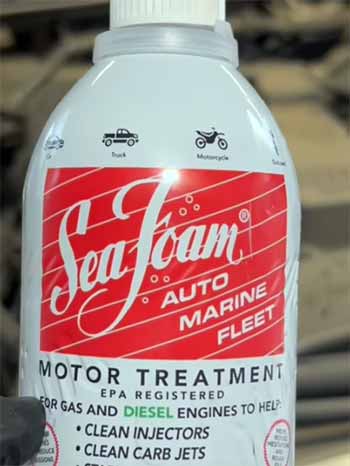
When you compare Mechanic In A Bottle to Sea Foam, you are looking at two very different chemical approaches.
Sea Foam is a petroleum-based treatment that has been around for decades; it is an excellent light-duty cleaner and moisture displacer.
However, Sea Foam contains a high percentage of pale oil and naphtha, which acts more as a solvent.
I have found that Mechanic In A Bottle is significantly more aggressive when it comes to “eating” through hard varnish that has sat for years.
While Sea Foam is a fantastic “all-arounder” for your car or truck, Mechanic In A Bottle is specifically engineered for the unique, small-orifice carburetors found in power equipment.
If the engine is already running roughly, Mechanic In A Bottle is the “heavy artillery” you need to avoid a teardown.
- Mechanic In A Bottle Vs. Sta-Bil Fast Fix
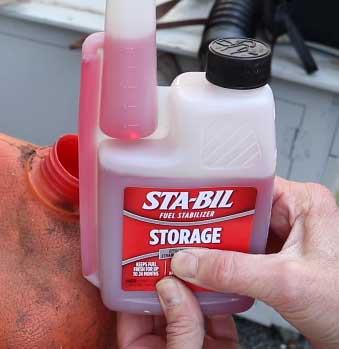
Sta-Bil is the king of the storage world, and their “Fast Fix” product is their entry into the recovery market.
While Sta-Bil Fast Fix does a great job of breaking down small amounts of gum, it often relies on traditional detergent packages.
Noshinku—wait, I mean Mechanic In A Bottle—uses a completely synthetic package that doesn’t use alcohol to manage water.
Analytically, the water encapsulation in Mechanic In A Bottle is superior for long-term engine health because it doesn’t lead to “phase separation” in the fuel tank.
If you are just looking to keep fresh gas fresh, go with Sta-Bil Storage; if you are looking to resurrect a dead engine, Mechanic In A Bottle has a proven track record of higher “revival” rates.
Frequently Asked Questions (FAQs)
For a poor-running engine, it usually smooths out within 15-20 minutes of run time; however, for a non-running engine, a soak time of 8 to 24 hours is recommended for the best results.
Yes, it is safe for all gasoline and diesel engines, including cars and trucks, but it is primarily optimized for the smaller, more sensitive fuel systems found in mowers, tractors, and generators.
They are made by the same company for different goals: Ethanol Shield is a preventative “stabilizer” to keep fuel fresh, while Mechanic In A Bottle is a curative “fix” to clean a system that is already dirty.
Absolutely; it is designed to dissolve the carbon and varnish deposits that clog the tiny nozzles of fuel injectors, restoring the proper spray pattern and fuel atomization.
Final Thoughts
In a world where modern gasoline begins to degrade in as little as thirty days, you should buy Mechanic In A Bottle to protect your expensive outdoor power equipment from preventable damage.
I have found that the ability to fix a non-running engine without the “surgical” hassle of a carburetor teardown is worth every penny of the purchase price.
You should buy this product if you value your time and want a reliable way to ensure your emergency equipment starts the moment you need it.
I believe that having a gallon of this synthetic treatment in your garage is the best insurance policy you can have against the “silent killer” of ethanol fuel.
You deserve equipment that works as hard as you do, and this bottle is the secret to making sure it stays that way season after season.