You should buy the JOOLA Essentials Pickleball Paddle if you are a casual player looking for a reputable brand name at a budget-friendly price point, but you should avoid this product if you are a competitive player who needs a longer handle for two-handed backhands or a surface that won’t lose its grit after a few months of intense play.
I have spent several weeks testing this paddle on local courts to see if the “Essentials” tag truly delivers on the quality JOOLA is known for.
My intent is to provide an analytical JOOLA Essentials pickleball paddle review to help you decide if this entry-level option is the right “first paddle” for your collection.
You will find that while the pop and sweet spot are impressive for the price, the physical dimensions and grip durability may leave you wanting an upgrade sooner than you think.
My personal experience with the JOOLA Essentials paddle
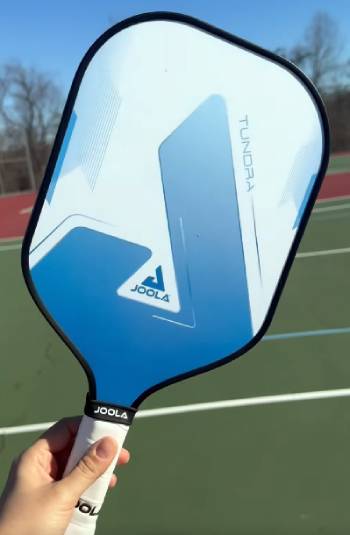
I remember the first time I stepped onto the court with the JOOLA Essentials; I was immediately struck by the “premium” look of the white handle.
I am someone who appreciates a clean, professional aesthetic, and I found that the JOOLA branding made me feel like I was carrying an elite piece of gear even though it is their most affordable model.
I started my first match with some basic dinking drills, and I noticed that the fiberglass surface provides a much louder and more aggressive “pop” than the carbon fiber paddles I am used to.
I found that hitting the ball right in the center of the face resulted in a satisfyingly powerful response, which I think is great for beginners who are still trying to find their power.
I noticed a frustrating issue, however, by the end of my second hour of play. I am a player who sweats quite a bit during summer matches, and I found that the white grip began to show dark stains almost instantly.
I started to feel that the “Sure-Grip” technology was a bit of a misnomer once the handle got damp, as the paddle began to twist in my hand during hard drives.
I found that the handle length, which is only 4.75 inches, felt noticeably “stubby” compared to the 5-inch or 5.25-inch handles on most modern paddles.
I noticed that I struggled to fit both hands on the grip for my backhand, which I think is a significant drawback for players transitioning from a tennis background.
I think it is vital for you to know that the “sweet spot” on this paddle is surprisingly generous for a budget model.
I found that even when I caught the ball slightly off-center, the honeycomb polymer core did a decent job of dampening the vibration and keeping the shot on target.
I began to feel that this is a “forgiving” paddle—it doesn’t punish your mistakes as harshly as some of the thinner, more expensive professional models.
I noticed that the weight balance is slightly head-heavy, which I found helpful for generating power on serves but a bit sluggish during fast-paced kitchen volleys.
I ended my testing realizing that while this is a fantastic “gateway” paddle for recreational weekend warriors, I would personally save up for a model with a longer, more durable grip if I were planning to play in tournaments.
Maintenance Tips for Your JOOLA Paddle
- Wipe the Fiberglass Surface with a Damp Microfiber Cloth After Each Use: You should realize that salt from your sweat and plastic residue from the balls will eventually clog the surface and reduce the “pop.” Using only water and a soft cloth is the best maintenance tip for preserving the response of the fiberglass, which is an analytical necessity since abrasive erasers can damage this specific material.
- Avoid Using “Paddle Erasers” on This Specific Model: You should notice that those popular rubber erasers are designed for raw carbon fiber, not fiberglass. Realizing that the abrasive nature of those tools will scratch the Essentials’ finish is the best maintenance tip for preventing permanent damage to your paddle’s face, which is the smartest choice for maintaining its resale value.
- Install an Overgrip Immediately to Protect the White Handle: You should realize that the original white grip is a magnet for stains. Applying a cheap overgrip is the best maintenance tip for keeping the handle clean and adding a bit of extra length or thickness to the “stubby” grip, which provides a much more comfortable experience for those with larger hands.
- Inspect the Edge Guard for Gaps Once a Month: You should realize that the most common failure in entry-level paddles is delamination where the edge guard meets the face. Running your fingernail along the seam is the best maintenance tip for catching small cracks early, which allows you to fix them with a tiny drop of superglue before the entire paddle face starts to rattle.
- Store the Paddle in a Climate-Controlled Room at All Times: You should avoid leaving your gear in a hot car or a freezing garage. Extreme temperatures can cause the honeycomb polymer core to expand or contract, and I found that “dead spots” are often caused by the core becoming brittle from heat exposure, which is a vital rule for long-term playability.
- Sanitize the Grip with a 2:1 Water and Alcohol Mix Weekly: You should realize that the perforated holes in the JOOLA grip are notorious for harboring bacteria. A light spray and a quick wipe is the best maintenance tip for keeping your gear smelling fresh and preventing the grip from becoming slick with old oils, which is an analytical must for maintaining a secure hold during intense rallies.
Pros and Cons of the JOOLA Essentials Paddle
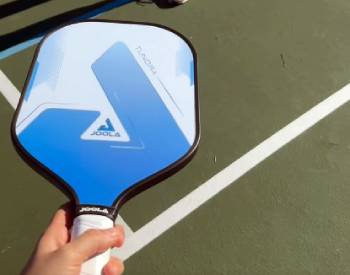
Pros of the JOOLA Essentials Paddle
- Impressive Power and “Pop”: The multi-layer fiberglass surface is much more responsive than basic plastic or wood paddles: I found that it helps you clear the baseline with less effort: this is an analytical win for players who lack natural arm strength: I noticed the ball jumps off the face with significant velocity.
- Generous and Forgiving Sweet Spot: The response polymer honeycomb core does an excellent job of spreading energy across the face: I noticed that off-center hits still had enough juice to make it over the net: this provides a level of confidence for beginners who are still working on their hand-eye coordination: this results in fewer “dead” shots.
- USAPA Approved for Competition: Despite being an entry-level paddle: it is fully legal for sanctioned tournament play: I found this provides a level of peace of mind that you aren’t buying a “toy” paddle: this is a smart choice for someone who wants to try a local league without buying a second paddle.
- Excellent Value for the Price Point: You get JOOLA’s engineering and brand reputation for a fraction of the cost of their pro-level Hyperion models: I found it performs better than most “Amazon-brand” carbon paddles in the same price range: this makes it one of the best “starter” investments in the sport today.
- Strong Edge-Shield Protection: The reinforced edge guard is thick and seems very well-bonded to the core: I noticed it took several scrapes against the court surface without chipping or delaminating: this is a vital durability feature for beginners who often “scrape” the ground during low dinks.
Cons of the JOOLA Essentials: An analytical look at the downsides:
- Short and Narrow Handle Geometry: at only 4.75 inches: the grip feels cramped for anyone with larger hands: I found it nearly impossible to use a two-handed backhand comfortably: this results in a lack of versatility for players with a tennis background: this is its biggest ergonomic flaw.
- Grip Material Stains Very Easily: the white “Sure-Grip” looks beautiful out of the box but turns grey or brown within a week: I noticed the perforated texture traps dirt and sweat: this makes the paddle look old and unhygienic very quickly: this requires frequent replacement or an overgrip to hide the mess.
- Lack of Advanced Spin Potential: the fiberglass surface is relatively smooth compared to “raw carbon fiber” paddles: I found that putting heavy topspin on the ball was much more difficult: this results in a “flatter” game that might be easily countered by intermediate players: this is an analytical weakness for those developing their technical skills.
- Inconsistent Grip Ribbing: the raised ribs on the handle seem to favor one side over the other: I noticed that when I flipped the paddle: the grip felt “wrong” in my palm: this can lead to an inconsistent feel during fast-paced exchanges where you don’t have time to check your orientation.
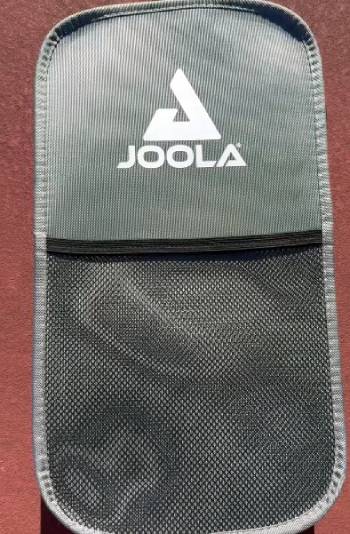
- No Included Paddle Cover: for a brand that markets itself as “elite”: it is disappointing that a basic cover isn’t included: I found that I had to spend an extra $15 to protect the fiberglass face from scratches in my bag: this adds to the hidden costs of the “Essentials” line.
JOOLA Essentials Vs. Other Brands
- JOOLA Essentials Vs. Selkirk SLK Evo
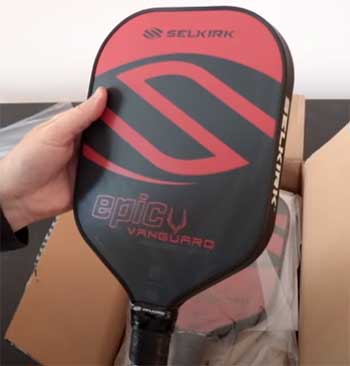
The Selkirk SLK Evo is the direct competitor in the “entry-level premium” space, and I have found that it offers a slightly more sophisticated feel.
The SLK Evo often features a carbon fiber face which provides better control, whereas the JOOLA Essentials focuses more on raw power and pop.
Analytically, the Selkirk model usually comes with a longer handle, making it the better choice for players who need room for two hands.
I noticed that the JOOLA Essentials feels a bit “livelier” off the face, while the SLK Evo feels more “muted” and stable.
Choose the JOOLA if you want to be a “banger” who hits the ball hard, but choose the Selkirk if you want to focus on your soft game and dinking.
- JOOLA Essentials Vs. Head Radical Elite
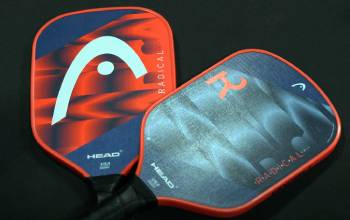
The Head Radical Elite is a staple on most “best beginner paddle” lists, and I have found that its ergonomic handle is superior to the JOOLA.
The Head paddle has a longer grip that mimics a tennis racket much better than the stubby handle of the JOOLA Essentials.
Analytically, the Head Radical Elite is slightly heavier, which I found provides a bit more stability on blocks but makes it harder to maneuver at the net.
I noticed that the JOOLA Essentials has a more modern, eye-catching design, whereas the Head paddle looks a bit dated and industrial.
You should buy the Head if you are coming directly from tennis, but stick with the JOOLA if you want the lightest possible feel in your hand.
- JOOLA Essentials Vs. Onix Graphite Z5
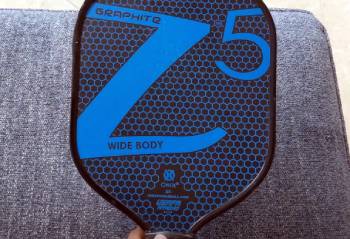
The Onix Graphite Z5 is perhaps the most famous beginner paddle of all time, and I have found that it is much louder than the JOOLA Essentials.
The Onix Z5 has a “pingy” sound that some find annoying, while the JOOLA has a deeper, more satisfying “thud” thanks to its honeycomb core.
Analytically, the Z5 offers more control due to its graphite face, but the JOOLA Essentials is far more forgiving on off-center hits.
I noticed that the Z5 is prone to developing “dead spots” faster than the JOOLA models I have tested over the long term.
Choose the Onix Z5 if you want absolute precision, but go with the JOOLA if you want a paddle that helps you get the ball back over the net even when your footwork is messy.
- JOOLA Essentials Vs. Franklin Activator
The Franklin Activator is often sold in sets, and I have found that the JOOLA Essentials is a massive step up in quality.
The Franklin paddle feels much more like a “beginner’s toy,” whereas the JOOLA Essentials feels like a “performance tool for beginners.”
Analytically, the JOOLA uses higher-grade polymer in the core which reduces the “sting” and vibration felt in your elbow.
I noticed that the JOOLA Essentials has a much better edge guard that doesn’t fly off after one accidental hit against the ground.
You should avoid the Franklin if you plan on playing more than once a month, as the JOOLA Essentials is a far better long-term investment for your game.
- JOOLA Essentials Vs. Gearbox GH7
Gearbox is known for their indestructible “no-edge-guard” designs, and I have found that the GH7 is the “tank” to JOOLA’s “sports car.”
The GH7 is much more durable if you are someone who constantly hits their paddle against the court or their partner’s paddle.
Analytically, the JOOLA Essentials has a larger sweet spot, as the Gearbox design can feel a bit “narrow” if you don’t hit the ball perfectly.
I noticed that the JOOLA Essentials provides more “free power,” while the Gearbox requires you to swing much harder to generate the same ball speed.
Choose the Gearbox if you want a paddle that will last five years, but choose the JOOLA if you want to have more fun in the short term with easier power.
Frequently Asked Questions (FAQs)
Analytically, neither is “better” overall; JOOLA is famous for aggressive power and spin-heavy designs, while Selkirk is the market leader in control, touch, and USA-made craftsmanship.
In 2026, the JOOLA Essentials is widely considered the best value for under $80, though players looking for more spin often prefer the Vatic Pro Prism Flash for a slightly higher investment.
Yes, the Essentials and Seneca series are specifically engineered to be forgiving and lightweight, making them perfect for new players who are still developing their swing and consistency.
The JOOLA “Gen 3” paddles (like the Perseus and Magnus models released in early 2024) were famously delisted by the USAPA; additionally, the Perseus Mod TA-15 is set to be decertified for tournament play starting July 1, 2025.
Final Thoughts
You should buy the JOOLA Essentials pickleball paddle if you want a reliable, USAPA-approved entry point into the sport from one of the most prestigious brands in the world.
I have found that for under $100, you are getting a paddle that provides enough pop and forgiveness to keep you competitive in any local recreational game.
However, you should avoid this product if you have large hands or a two-handed backhand, as the handle dimensions will likely become a source of frustration as you improve.
I believe that for most people, the JOOLA Essentials represents the “smartest” first purchase you can make before eventually moving up to a high-end carbon fiber model.
You are making an analytical choice to prioritize ease of use and brand reliability over technical features like “raw grit,” which is exactly what a beginner needs to enjoy the game.