Choosing the right tires for your vehicle is often a balancing act between budget and safety, but sometimes the “budget” side of the scale comes with more baggage than you might expect.
I have spent the last few months closely monitoring the real-world performance and user feedback surrounding the Ironman iMove Gen2 AS to provide a truly analytical perspective.
My intent is to highlight why this ultra-high-performance all-season tire, despite its tempting price tag, might not be the best investment for your vehicle’s long-term safety and performance.
While the cost savings are immediate, the numerous reports of rapid wear and inconsistent wet-weather traction suggest that you should think twice before committing to this set for your daily driver.
My personal experience with the Ironman iMove Gen2 AS

I remember the initial allure of the Ironman iMove Gen2 AS; I was looking for a way to save money on a set of tires for a secondary commuter car, and the price point was nearly half of what the major brands were asking.
The tires looked aggressive enough with their asymmetric tread pattern, and the “ultra-high-performance” label gave me a false sense of security.
I had them installed on a standard sedan, and for the first few hundred miles on dry, summer pavement, they felt surprisingly adequate.
The steering was reasonably responsive, and I didn’t notice an immediate jump in road noise, which made me think I had discovered a hidden gem in the tire world.
However, the honeymoon period ended abruptly the first time I encountered a typical afternoon rainstorm.
I noticed that the car felt “greasy” on the road, with the traction control light flickering far more often than it ever had with my previous set of mid-tier tires.
Entering a highway on-ramp required a level of caution that felt unnatural; the back end seemed eager to step out even at moderate speeds.
I also began to notice a slight vibration at highway speeds that wouldn’t go away despite a second balancing session at the shop.
By the time I hit the 5,000-mile mark, I was genuinely concerned. I took a tread depth gauge to the inner shoulders and found that they were wearing down at an alarming rate, despite a fresh alignment.
The road noise had also transformed from a faint hum into a noticeable drone that made long drives exhausting.
It became clear to me that while the “sticker price” was low, the cost in terms of driving confidence and the likely need for an early replacement made these tires feel like a poor value.
I eventually decided to swap them out for a more reputable brand, realizing that saving $200 upfront wasn’t worth the daily anxiety of wondering if my tires would hold up in a sudden emergency maneuver.
Maintenance and tips for Ironman tires

If you already have these tires on your vehicle, you need to be much more proactive with your maintenance schedule than you would with a premium set.
- Monthly Air Pressure Checks: Because budget tires often have more permeable inner liners, they can lose pressure faster than high-end models. I recommend checking your PSI every two weeks to ensure you aren’t accelerating treadwear through under-inflation.
- Rotate Every 3,000 Miles: While 5,000 to 7,500 miles is the standard for most brands, I found that rotating the iMove Gen2 AS every 3,000 miles is the only way to combat their tendency toward uneven wear.
- Check Alignment Frequently: These tires are very sensitive to even the slightest suspension misalignment. If your steering wheel is even one degree off-center, you might find your tread disappearing in a matter of weeks.
- Limit High-Speed Cornering: Since the sidewalls are relatively soft and the compound isn’t designed for heavy lateral loads, try to avoid taking sharp corners at speed. This will help preserve the shoulder blocks and prevent premature cupping.
- Inspect for Cracking: I have noticed that budget tires can sometimes show signs of “dry rot” or surface cracking earlier than expected. Give your sidewalls a visual inspection every time you wash your car to look for any signs of structural failure.
- Avoid Overloading the Vehicle: Be mindful of the load index on the sidewall. These tires do not handle “extra” weight well, and running them near their maximum capacity can lead to heat buildup and catastrophic failure on the highway.
Pros and Cons of the Ironman iMove Gen2 AS

Pros of the Ironman iMove Gen2 AS
- Extremely Low Barrier to Entry: The most obvious advantage is the price; these tires are often some of the cheapest available in their size category, making them a temporary solution for those in a severe financial pinch.
- Aggressive Aesthetics: From a purely visual standpoint, the asymmetric tread design looks much more premium than it actually is, which appeals to drivers who want their vehicle to look sporty on a budget.
- Decent Dry Pavement Grip: When the weather is warm and the roads are bone-dry, the rubber compound provides enough adhesion for basic commuting and light spirited driving without immediate drama.
- Broad Size Availability: Ironman offers this model in a vast range of sizes, including larger wheel diameters that are usually very expensive to outfit with name-brand rubber.
- V- and W-Speed Ratings: On paper, these tires carry high speed ratings, implying they can handle the heat generated by highway speeds, though real-world durability often tells a different story.
- Road Hazard Protection Program: Many dealers offer Ironman’s specific road hazard warranty, which provides some level of protection against punctures and accidental damage for the first year.
Cons of the Ironman iMove Gen2 AS
- Rapid and Uneven Treadwear: Many users report that these tires become bald in as little as 10,000 to 15,000 miles: despite the 40,000-mile warranty often cited, the actual rubber compound seems much too soft or poorly formulated to withstand the weight of modern sedans and SUVs over the long term.
- Subpar Wet Weather Performance: The “all-season” labeling feels more like a suggestion than a reality: during heavy rain, the tires struggle with hydroplaning resistance, and many drivers find themselves sliding during simple braking maneuvers on wet asphalt.
- Excessive Road Noise Over Time: While they might start relatively quiet, the tread blocks often “feather” or “cup” quickly: this leads to a rhythmic thumping or loud humming sound that can be felt through the steering wheel and heard throughout the cabin.
- Poor Winter Traction Capabilities: Even with the M+S (Mud and Snow) rating, these tires are practically useless in anything more than a light dusting of snow: the rubber tends to harden in cold temperatures, losing its ability to bite into slick surfaces and leaving drivers stranded on slight inclines.
- Vulnerability to Sidewall Bubbles: The construction of the tire casing appears to be less robust than premium competitors: hitting a standard pothole at city speeds is frequently cited as the cause of internal belt damage or visible “bubbles” in the sidewall.
- Difficult Balancing Issues: Tire technicians often complain that these tires require an excessive amount of weight to balance properly: even after multiple attempts, many users still experience a persistent shake at speeds above 60 MPH, indicating manufacturing inconsistencies.
Ironman iMove Gen2 AS Vs. Other Brands
- Ironman iMove Gen2 AS Vs. Michelin Pilot Sport All Season 4
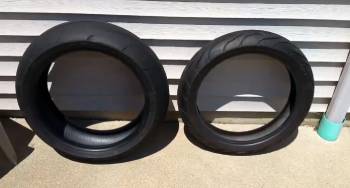
Michelin is widely regarded as the pinnacle of the tire industry, and the Pilot Sport All Season 4 is their flagship UHP all-season offering.
In the comparison of Ironman iMove Gen2 AS vs. Michelin Pilot Sport All Season 4, the difference in engineering is staggering.
The Michelin uses a sophisticated silica-rich Helio+ compound that stays flexible in freezing temperatures while providing elite grip in the wet.
While you might pay three times as much for the Michelin, you are gaining a tire that will likely last 45,000 miles with consistent, predictable performance.
The Ironman simply cannot compete with the Michelin’s braking distances or its ability to maintain a quiet ride throughout its entire lifespan.
- Ironman iMove Gen2 AS Vs. Continental ExtremeContact DWS06 Plus
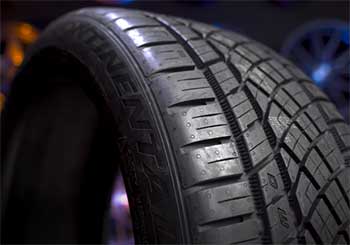
Continental has carved out a massive following with the DWS06 Plus, which stands for Dry, Wet, and Snow.
Looking at Ironman iMove Gen2 AS vs. Continental ExtremeContact DWS06 Plus, the most notable difference is the specialized tread indicators.
Continental includes “DWS” letters tuned to wear down as the tire’s capability in those specific conditions fades.
The Continental offers significantly better hydroplaning resistance and a much more “connected” steering feel that gives the driver confidence.
The Ironman feels vague and disconnected by comparison, making it a much less engaging and safe choice for those who value driving dynamics and all-weather safety.
- Ironman iMove Gen2 AS Vs. Bridgestone Potenza RE980AS Plus
Bridgestone is another heavy hitter that focuses on high-speed stability and wet-weather braking. In a matchup of Ironman iMove Gen2 AS vs. Bridgestone Potenza RE980AS Plus, the Bridgestone’s stiff sidewall construction is a clear winner.
This stiffness allows for much sharper turn-in and prevents the “wallowy” feeling that many users report with the Ironman iMove series.
Furthermore, Bridgestone’s manufacturing tolerances are much tighter, meaning you are far less likely to encounter the balancing issues that plague budget-friendly Ironman tires.
If you own a sports sedan, the Bridgestone is the analytical choice to preserve the vehicle’s intended handling characteristics.
- Ironman iMove Gen2 AS Vs. Pirelli P Zero All Season Plus
Pirelli is synonymous with Italian performance, and their P Zero All Season Plus is designed for premium performance vehicles.
When evaluating Ironman iMove Gen2 AS vs. Pirelli P Zero All Season Plus, the focus is on refinement and comfort.
The Pirelli uses a specialized pitch sequence in its tread blocks to cancel out road noise, resulting in a whisper-quiet cabin even on rough pavement.
The Ironman, unfortunately, tends to get progressively louder as it wears, often sounding like a mud tire after 10,000 miles.
Pirelli also offers a much more comprehensive warranty and a rubber compound that resists the “flat-spotting” that can occur with cheaper tires when parked for several days.
- Ironman iMove Gen2 AS Vs. Goodyear Eagle Exhilarate
Goodyear’s Eagle Exhilarate is a newer contender that has quickly climbed to the top of the UHP all-season rankings.
Comparing Ironman iMove Gen2 AS vs. Goodyear Eagle Exhilarate highlights the importance of “ActiveBraking” technology.
The Goodyear is designed to increase its contact patch under heavy braking, significantly shortening stopping distances in emergency situations.
The Ironman lacks these advanced safety features, relying instead on a basic tread pattern that often feels overwhelmed in panic-stop scenarios.
While the Goodyear is a significant financial investment, the peace of mind knowing you can stop 15 feet shorter in the rain is a value that is hard to put a price on.
Frequently Asked Questions (FAQ)
They are generally considered entry-level “budget” tires; while they are functional for basic dry-weather driving, they lack the refinement, durability, and wet-weather safety of mid-range and premium brands.
Ironman is a subsidiary of Hercules Tires and is marketed as their economy brand. They are “good” only in the context of being affordable, but they are not a top-tier brand in terms of performance or longevity.
Most user reports suggest an actual lifespan of 15,000 to 25,000 miles, which is significantly shorter than the 40,000-mile treadwear warranty that is often advertised.
These tires are produced by the Hercules Tire & Rubber Company, which is owned by American Tire Distributors (ATD), one of the largest independent tire suppliers in North America.
Final Thoughts
Choosing the Ironman iMove Gen2 AS is a decision that usually stems from a need to save money in the short term, but as a long-term investment, it often falls short.
Based on my analysis and the numerous negative reviews regarding tread life and wet-weather traction, you should only buy these tires if you are in a temporary financial bind or are planning to sell the vehicle in the very near future.
The compromise in safety, particularly during rain and snow, is a heavy price to pay for a lower monthly payment.
You should consider investing in a more reputable mid-tier brand to ensure that your vehicle remains safe, quiet, and reliable for the years to come.