You should buy the Grayl GeoPress if you are a high-volume water consumer who needs a rugged, large-capacity purifier for backcountry expeditions, but you should choose the Grayl UltraPress if you prioritize a slim, lightweight profile that fits perfectly in your backpack side pocket or car cup holder.
I have spent several months testing both models in varied environments—from sketchy hostel taps to silty mountain streams—to see which one truly reigns supreme.
My intent is to provide an analytical Grayl GeoPress vs UltraPress comparison to help you determine which of these “OnePress” purifiers belongs in your travel kit.
You will find that while both use the same top-tier technology, the difference in size and weight significantly impacts your daily carry experience.
Grayl GeoPress Vs. UltraPress Comparison Table
| Feature | Grayl GeoPress | Grayl UltraPress |
| Capacity | 24 fl oz (710 ml) | 16.9 fl oz (500 ml) |
| Weight (Empty) | 15.9 oz (450 g) | 12.5 oz (354 g) |
| Press Time | ~8 Seconds | ~10 Seconds |
| Filter Lifespan | 350 Cycles (250L) | 300 Cycles (150L) |
| Cartridge Price | ~$29.95 | ~$24.95 |
| Diameter | 3.4″ (8.6 cm) | 2.95″ (7.5 cm) |
| Protection | Virus, Bacteria, Protozoa | Virus, Bacteria, Protozoa |
My personal experience with the GeoPress and UltraPress
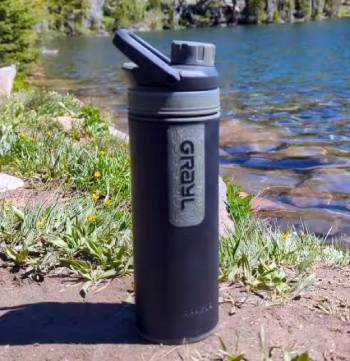
I remember the first time I stood beside a murky river in the Andes with the GeoPress in my hand; I was initially intimidated by its bulk.
I am someone who usually carries a slim Nalgene, so the wide diameter of the GeoPress felt a bit massive at first.
I started the purification process by pulling the inner press out, and I found that the effort required to push the filter down was quite manageable because of the large surface area of the lid.
I noticed that I could get almost three-quarters of a liter of clean water in less than ten seconds, which I think is an incredible feat of engineering.
I found that during long hiking days where water sources were miles apart, that extra capacity was an absolute lifesaver.
I noticed a shift in my preference when I switched to the UltraPress for a three-week trip through Southeast Asia.
I am a frequent traveler who relies on public transport, and I found that the GeoPress was simply too fat for the cup holders on trains and buses.
I started using the UltraPress because it slides effortlessly into the side pocket of my daypack, and I noticed that the lighter weight made a huge difference during long city walks.
I found that although I had to press it more often because of the smaller 500ml capacity, the convenience of the form factor outweighed the need for more volume.
I noticed the “FlipCarry” handle on the UltraPress is much more ergonomic for carrying with two fingers compared to the fixed handle on the older GeoPress models.
I think it is vital for you to know that the “press” gets significantly harder as the filter ages.
I found that toward the end of a filter’s life, I had to put my entire body weight onto the bottle to get the water through.
I noticed that if the water is particularly silty, the UltraPress filter seems to clog a bit faster than the larger GeoPress cartridge.
I began to feel that the GeoPress is the “truck” of the water world—powerful and high-capacity—while the UltraPress is the “sports car”—sleek, fast, and highly portable.
I ended my testing realizing that I now reach for the UltraPress for 90% of my trips, leaving the GeoPress for those rare occasions when I am heading deep into the woods with a group.
Maintenance Tips for Grayl Purifiers
- Air Dry the Cartridge Thoroughly After Every Trip: You should realize that leaving a wet filter inside the bottle for weeks will lead to mold growth and a nasty smell. Removing the cartridge and letting it sit in a well-ventilated area for 48 hours is the best maintenance tip for ensuring your filter doesn’t become a science experiment, which is an analytical must for long-term hygiene.
- Never Use Boiling Water with the Filter Attached: You should notice that the extreme heat can warp the internal seals and damage the electro-adsorptive media. Using only lukewarm or cold water is the best maintenance tip for preserving the integrity of the purification technology, ensuring that viruses are still being effectively removed from your water.
- Gently Clean the Outer Cup with Mild Soap Only: You should avoid using abrasive cleaners or putting the inner press (with the filter) in the dishwasher. Hand-washing the plastic components is the best maintenance tip for preventing micro-scratches that can harbor bacteria, which is the smartest choice for maintaining a clean drinking vessel.
- Log Your Press Cycles on Your Phone: You should realize that it is nearly impossible to remember if you are on press 100 or 250. Using a simple tally app is the best maintenance tip for knowing exactly when your filter is nearing the end of its life, which prevents you from being stuck with a clogged bottle in a remote area.
- Replace the Cartridge if Press Time Reaches 25 Seconds: You should not try to “force” a dead filter to work by pushing harder. Noticing the increased resistance is the best maintenance tip for identifying a clogged cartridge, which is an analytical signal that the pores are full of contaminants and it is time for a fresh one.
- Prevent the Filter from Freezing at All Costs: You should realize that if water inside the filter fibers turns to ice, it will expand and crack the internal structure. Keeping the bottle inside your sleeping bag on cold nights is the best maintenance tip for preventing invisible damage that would allow pathogens to bypass the filter entirely.
Pros and Cons of the Grayl GeoPress
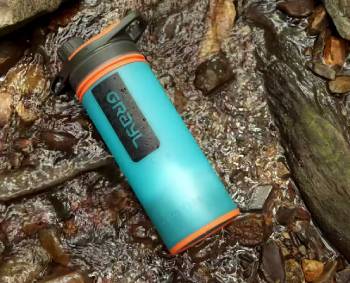
Pros of the Grayl GeoPress
- Massive 24oz Capacity: The primary benefit is the volume of water you get per press: it reduces the number of times you have to fill up at a sketchy source: this is an analytical win for those who drink a lot of water: I found this especially helpful for cooking at camp.
- Fastest Flow Rate in the Lineup: Because the filter has a larger surface area: it can move more water in less time: I noticed it consistently hits the 8-second mark when the filter is fresh: this makes it the most efficient option for group travel.
- Extremely Rugged Construction: It is built to withstand 10-foot drops onto concrete: I found that the thick walls feel nearly indestructible: this provides a level of security that lighter: thinner bottles lack when you are in the middle of nowhere.
- Better Leverage for Pressing: The wider lid provides more space for your hands: I found it much easier to use my body weight to force the water through: this results in less hand fatigue over a long trip: which is a major ergonomics advantage.
- Longer Filter Lifespan: With a rating of 350 cycles: you get more total liters out of a single cartridge: this makes the cost-per-liter slightly lower over the long term: this is a smart choice for long-term travelers.
Cons of the Grayl GeoPress: An analytical look at the downsides:
- Bulky and Hard to Pack: its 3.4-inch diameter makes it too wide for most standard cup holders: I found it often didn’t fit in the side mesh of my smaller bags: this results in it taking up valuable internal pack space: this is its biggest portability flaw.
- Heaviest Option Available: at nearly a pound when empty: it adds significant weight to your kit: I noticed the extra bulk was annoying on steep climbs where every ounce counts: this makes it a harder sell for ultralight hikers.
- Higher Replacement Cartridge Cost: the filters are more expensive than the UltraPress versions: I found that the $30 price tag adds up if you are traveling in areas with very dirty water: this results in a higher maintenance budget over time.
Pros and Cons of the Grayl UltraPress
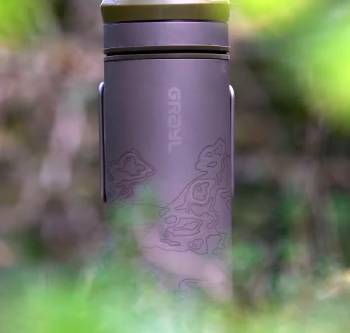
Pros of the Grayl UltraPress
- Sleek and Portable Design: The narrower diameter is the standout feature: it fits in every cup holder and backpack pocket I tried: this is an analytical win for urban travelers and commuters: I found it much more “discreet” than the GeoPress.
- Lighter Carry Weight: Saving nearly 100 grams might not sound like much: but it is noticeable over a 10-mile day: I noticed my shoulder felt less strained when I clipped it to the outside of my pack: this makes it the superior choice for day hikes.
- Ergonomic FlipCarry Handle: The handle rotates 90 degrees: making it much easier to pull the inner press out: I found this small design tweak made the “refill” process much smoother: this is a major improvement over the older fixed designs.
- RiverFlow Spout Design: The spout is designed for fast chugging: I found it allows for a much higher volume of water to reach your mouth compared to older “sip” styles: this provides a much more natural drinking experience.
- Lower Entry Price Point: The bottle and the replacement filters are generally cheaper: I found this makes it more accessible for budget-conscious travelers: this results in a lower total cost of ownership for casual users.
Cons of the Grayl UltraPress: Why you might want to reconsider:
- Reduced Water Capacity: at only 16.9oz: you find yourself finishing the bottle in just a few gulps: I found I had to press water twice as often to stay hydrated: this results in more time spent at the water source rather than on the trail.
- Smaller Filter Clogs Faster: because the filter has less surface area: it handles silt and sediment less effectively: I noticed the press time increased to 20 seconds much faster than it did with the GeoPress: this is an analytical weakness in turbid water.
- Slower Flow Rate per Press: despite having less water: it actually takes a couple of seconds longer to finish a press: I found that the 10-second wait can feel long when you are in a rush: this makes it less efficient for group use.
Also Read: My Thoughts On Echo Go Hydrogen Water Bottle
Comparison Of Grayl Geopress Vs. Ultrapress
- Grayl GeoPress Vs. Sawyer Squeeze
The Sawyer Squeeze is the darling of the ultralight backpacking community because it weighs next to nothing.
I have found that while the Sawyer is much lighter, it only filters out bacteria and protozoa, leaving you vulnerable to viruses.
Analytically, the Grayl is a “purifier” while the Sawyer is just a “filter.”
I noticed that the Grayl’s press method is much more user-friendly than the “squeeze a bag” method of the Sawyer.
You should buy the Sawyer for domestic trails where viruses aren’t a concern, but stick with Grayl for international travel where the water is truly sketchy.
- Grayl UltraPress Vs. LifeStraw Go
The LifeStraw Go is a popular filter bottle that uses a straw-based system.
I have found that the LifeStraw Go is very difficult to drink from because you have to use a lot of suction to pull water through the straw.
Analytically, the Grayl is superior because it purifies the water before you drink it, allowing you to pour clean water into other containers.
I noticed that the LifeStraw doesn’t handle viruses as effectively as the Grayl’s electro-adsorption technology.
Choose the Grayl for total protection and ease of use, as the LifeStraw Go can feel like a workout just to get a sip of water.
- Grayl GeoPress Vs. Katadyn BeFree
The Katadyn BeFree is a collapsible bottle that is incredibly popular for trail running.
I have found that the BeFree has a much faster flow rate than the Grayl, but it is much more prone to clogging and leaking.
Analytically, the Grayl is a much more robust “survival” tool, whereas the BeFree is a “convenience” tool for fast-and-light adventures.
I noticed that the BeFree offers zero protection against viruses or chemicals, which the Grayl handles with ease.
You should buy the BeFree for local runs where you know the water is relatively clean, but go with the Grayl for any serious travel.
Also Read: My Thoughts On Hydro Health Water Bottle
Frequently Asked Questions (FAQs)
Yes, it is widely considered one of the best portable purifiers on the market because it removes viruses, bacteria, and protozoa in seconds without the need for pumps or batteries.
A single GeoPress cartridge is rated for 350 cycles, which equates to roughly 65 gallons or 250 liters of purified water before it needs to be replaced.
Common alternatives include the Sawyer Squeeze, the Katadyn BeFree, and the LifeStraw Go, though most of these are filters rather than full purifiers.
Analytically, Grayl is “better” for international travel and virus-heavy environments because it provides a higher level of protection than standard hollow-fiber filters.
Final Thoughts
You should buy the Grayl GeoPress if you are a solo traveler who wants to maximize your water intake with minimal refills and you don’t mind a bit of extra weight.
I have found that the sheer power and capacity of the GeoPress make it the ultimate tool for “off-grid” living where clean water is a luxury.
However, you should buy the Grayl UltraPress if you value packability and want a bottle that integrates seamlessly into your daily life and travel routine.
I believe that for most people, the UltraPress is the “Goldilocks” choice because it provides the same world-class protection in a much more manageable size.
You are making a smart analytical investment in your health with either model, ensuring that you can drink from any tap or stream on the planet without fear.