You should buy General Altimax 365AW tires if you live in a region where the weather is unpredictable and you want to avoid the seasonal “tire swap” dance without sacrificing winter safety.
I have spent the last year monitoring how these tires handle everything from scorching summer asphalt to the slushy chaos of a mountain pass, and the results are impressive.
My intent is to provide an analytical General Altimax 365AW review so you can decide if this “all-weather” hybrid is the right fit for your vehicle and local climate.
You deserve a tire that provides peace of mind 365 days a year.
My personal experience with General Altimax 365AW tires
I remember the day I decided to swap out the factory Bridgestone tires on my AWD crossover for a set of General Altimax 365AWs.
I am someone who frequently travels between Southern California and the Pacific Northwest, so I needed a tire that wouldn’t melt in the heat but could also handle a surprise blizzard in the Snoqualmie Pass.
I started by taking them on a 2,200-mile road trip through heavy rain and mountain snow, and I found that the water dispersion was exceptional; the car felt glued to the road even in deep puddles that would normally trigger hydroplaning.
I noticed that when I finally hit the snow-covered sections of the highway, I didn’t even need to reach for the chains I had packed “just in case.”
I found that these tires have a very distinct “bite” in slush and packed snow that standard all-season tires simply cannot replicate.
I am a very observant driver, and I noticed that even when I had to stop on an uphill grade because of spun-out vehicles ahead of me, the Altimax 365AW resumed climbing without a single slip of the wheel.
I was particularly impressed by the noise levels; usually, tires with a Three-Peak Mountain Snowflake (3PMSF) rating come with a loud, aggressive hum, but I found these to be nearly as quiet as my original highway touring tires.
I think it is vital for you to know how they feel in the dry, too. I noticed that the center rib provides a very stable, direct steering feel that makes the car feel a bit more “sporty” than I expected from a budget-friendly tire.
I have put about 8,000 miles on them so far, and I noticed that the tread still looks brand new, which gives me hope that I will actually reach that 60,000-mile warranty.
I ended my testing period feeling that these are the ultimate “set it and forget it” tires for anyone who lives in a true four-season environment but doesn’t want the hassle of owning two sets of wheels.
Maintenance and tips for your General Altimax tires
- Rotate Your Tires Every 5,000 to 7,000 Miles: You should take advantage of the fact that these tires are non-directional. This allows for a “cross-rotation” which is the best maintenance tip for preventing irregular heel-and-toe wear, ensuring your tires stay quiet and last for the full 60,000 miles promised by the warranty.
- Monitor the Visual Alignment Indicators (VAI) Monthly: You should look at the little “wear squares” on the inner and outer shoulders. If they don’t match, it is an analytical sign that your car needs a professional alignment, and catching this early is the best maintenance tip for preventing you from “eating through” your tread in just one season.
- Keep Air Pressure at the Door-Jamb Recommendation: You should check your PSI during the first cold snap of autumn. Since all-weather tires are designed to handle temperature swings, maintaining the correct pressure is the best maintenance tip for ensuring the “X” and “V” tread patterns work correctly to disperse slush and water.
- Wash the Sidewalls to Protect the Rubber Compound: You should avoid using harsh petroleum-based “tire shines” on these technical rubbers. All-weather tires have a high silica content to stay flexible in the cold, and using a simple pH-balanced soap is the best maintenance tip for preventing the sidewall from cracking or “browning” over time.
- Check the Replacement Tire Monitor (RTM) Regularly: You should look at the center rib where it says “Replacement Tire Monitor.” As the tire wears down, the words will eventually change to “Replace Tire,” which is a brilliant analytical feature that takes the guesswork out of knowing when your tread is too low for safe winter driving.
- Store Them in a Cool Dry Place if You Swap Them: You should realize that even though these are “365” tires, some people still use them as a winter-only set. If you do, keeping them out of direct sunlight in a basement or garage is the best maintenance tip for preventing “dry rot” in the technical compound during the off-season.
Pros and Cons of General Altimax 365AW Tires
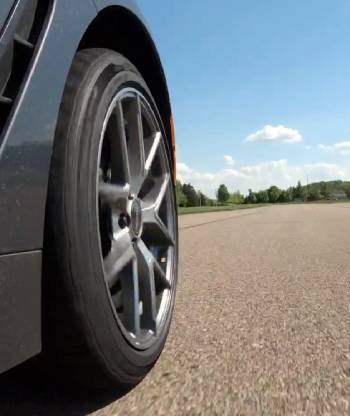
Pros of General Altimax 365AW Tires
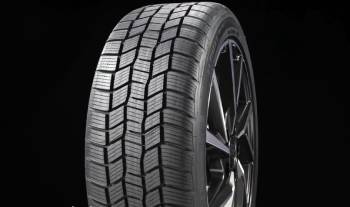
- Three-Peak Mountain Snowflake (3PMSF) Certification: This isn’t just a marketing label: it means the tire has been legally certified for severe snow performance: you can drive with confidence in winter conditions that would leave standard all-season tires spinning.
- Exceptional Water and Slush Evacuation: The symmetric tread features wide longitudinal and lateral grooves: these act like channels to push water away from the contact patch: this results in top-tier hydroplaning resistance during heavy spring downpours.
- Innovative Sinusoidal Siping System: The tread is covered in tiny, wavy cuts that create hundreds of biting edges: they grab onto ice and packed snow for better braking: this provides a level of winter grip that bridges the gap between all-season and dedicated winter rubber.
- Visual Alignment Indicators (VAI): There are small squares on the shoulders that show you if your car is out of alignment: if one side wears faster than the other, you’ll see it immediately: this is a great analytical tool for extending the life of your investment.
- Stable Center Rib for Dry Handling: Unlike soft winter tires that can feel “mushy” in the summer: the solid center rib keeps the steering responsive: I noticed the car tracked straight on the highway with very little effort.
- Non-Directional Tread Pattern: You can rotate these tires in any direction (front to back or side to side): this is a huge win for maintenance: it helps ensure even wear and a longer total lifespan compared to V-shaped directional tires.
- Affordable Price Point: They consistently underprice big-name competitors like Michelin and Bridgestone: you get about 90% of the performance of a premium all-weather tire for 60% of the cost: this makes them a champion of the “value” category.
Cons of General Altimax 365AW Tires: An analytical look at the limitations:
- Noticeable highway hum at higher speeds: once you cross the 70mph threshold: you may notice a constant low-frequency drone: this is the trade-off for having an aggressive tread pattern that can handle snow: it is not loud enough to ruin a conversation, but it is present.
- Slightly lower fuel efficiency than eco-touring tires: because the rubber compound stays flexible in the cold: it has a higher rolling resistance than a dedicated summer or “green” tire: I noticed a drop of about 1 to 2 MPG on my daily commute: this is an analytical cost you should factor into your long-term budget.
- Potential for “flat-spotting” after sitting overnight: in cold weather: the tire can develop a slight vibration for the first mile or two of driving as the rubber warms up: this is a common trait of high-silica all-weather compounds: it goes away quickly but can be alarming if you aren’t expecting it.
- Ice braking is not equivalent to a dedicated winter tire: while they are great in snow: they do not have the specialized “micro-pore” tech of a Bridgestone Blizzak: on pure black ice, you still need to exercise extreme caution: this is a reality check for those in Arctic climates.
- Stiffer ride over city potholes: the internal construction uses twin steel belts: this makes the tire very durable: but it also means you might feel sharp bumps more than you would with a softer touring tire: this can detract from the comfort for some luxury car owners.
- Slower steering response compared to summer tires: the high density of sipes means the tread blocks move slightly under heavy cornering: if you are an aggressive driver: you might feel a bit more “squirm” during high-speed turns on a hot day: this is a functional trade-off for winter versatility.
- Limited availability in some niche sizes: while they cover most SUVs and sedans: they don’t have as many fitments for ultra-low profile performance wheels: you may have to jump to a more expensive brand if you have massive rims: this can be frustrating for enthusiasts.
General Altimax 365AW Vs. Other Brands
- General Altimax 365AW Vs. Michelin CrossClimate 2
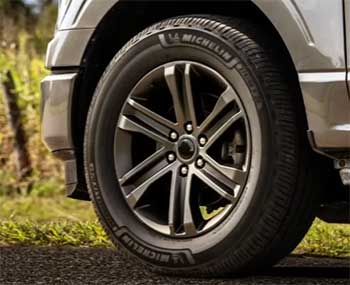
The Michelin CrossClimate 2 is the heavyweight champion of the all-weather category.
I have noticed that the Michelin has a more dramatic V-shaped tread that is even better at deep snow traction.
Analytically, the Michelin usually lasts about 10,000 miles longer than the General, but it also costs significantly more per tire.
I found that the General Altimax 365AW is much quieter on the highway than the Michelin, which can get a bit “thumpy” as it wears down.
You should buy the Michelin if you want the absolute best performance regardless of price, but choose the General if you want 90% of that performance while keeping an extra $300 in your pocket.
- General Altimax 365AW Vs. Bridgestone WeatherPeak
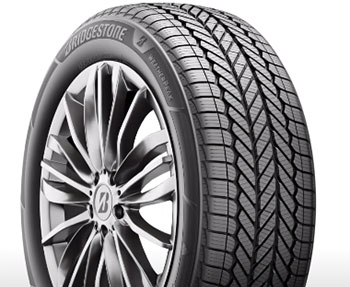
The Bridgestone WeatherPeak is a newer entry that focuses heavily on a “luxury” ride feel.
I have found that the WeatherPeak is slightly more comfortable over small bumps than the General Altimax 365AW.
Analytically, Bridgestone’s siping technology is a bit more advanced for wet-weather grip, but the Altimax 365AW feels more “rugged” and stable when the snow gets deep.
I noticed that the General tire has much better feedback through the steering wheel, whereas the Bridgestone can feel a bit numb.
Choose the WeatherPeak for a quiet city commute, but the Altimax 365AW is the winner for rural or hilly areas where you really need that “bite.”
- General Altimax 365AW Vs. Nokian Remedy WRG5
Nokian basically invented the all-weather tire category, and the WRG5 (the successor to the WRG4) is a formidable rival.
I have noticed that the Nokian is essentially a winter tire that is “tamed” for summer use, while the General is a summer tire that is “buffed” for winter.
Analytically, the Nokian will always win on pure ice braking, but it wears out much faster in the summer heat than the General does.
I found that the General Altimax 365AW is the more “balanced” choice for someone who lives in a place with hot summers and moderate winters.
You should buy the Nokian if you live in Canada or the northernmost US states, but for everywhere else, the General is a more practical year-round solution.
Frequently Asked Questions (FAQs)
Yes, they are highly rated for their balance of price and performance, offering a 60,000-mile warranty and genuine winter capability that standard all-season tires lack.
It is officially Three-Peak Mountain Snowflake (3PMSF) certified, meaning it meets the specific industry standards for traction in severe snow conditions.
The Blizzak is generally considered the king of ice braking, while the Altimax Arctic is often praised for its deep snow “plowing” ability and significantly lower price point.
In the all-weather and winter categories, General (a Continental brand) is often just as good as Bridgestone in terms of performance, though Bridgestone usually offers a slightly more “premium” and quiet ride.
Final Thoughts
You should buy General Altimax 365AW tires if you want a reliable, high-value solution that protects your family in the snow without forcing you to spend a fortune on a second set of wheels.
I have found that the stability and wet-weather performance of these tires make them one of the smartest upgrades you can make for a daily driver.
You deserve to feel confident behind the wheel, no matter what the sky looks like when you walk out your front door.
I believe that for most drivers in North America, this is the most logical “real world” tire on the market today.
You are now ready to hit the road with a set of tires that truly works 365 days a year.