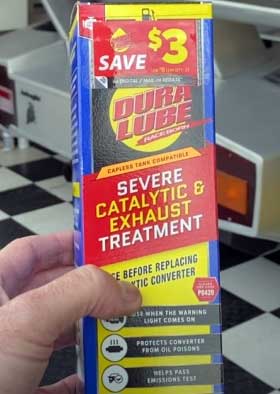
When you are staring at a glowing check engine light and facing a potential multi-thousand dollar repair bill, you should buy a specialized fuel system cleaner like Dura Lube Severe Catalytic and Exhaust Treatment or Cataclean if you want to attempt a “hail mary” save for your catalytic converter.
I have spent years analyzing automotive additives and tracking the real-world results of drivers battling emissions codes to help you understand the core differences between these two titans.
My intent is to provide a comprehensive comparison of Dura Lube versus Cataclean so you can determine which chemical treatment fits your vehicle’s specific symptoms and your budget.
You should choose between them based on whether you need a heavy-duty, full-system scrub or a more maintenance-focused formula that targets the exhaust path to help you clear that dreaded P0420 code before your next smog test.
Comparison Table: Dura Lube Vs. Cataclean
| Feature | Dura Lube Severe Catalytic Treatment | Cataclean Fuel & Exhaust Cleaner |
| Primary Focus | Catalyst & Exhaust System | Full Engine, Fuel & Exhaust |
| Active Chemistry | Solvents & Penetrating Agents | Acetone, Isopropanol, Xylene |
| Main Benefit | Cleans O2 Sensors & Catalyst | Reduces Emissions up to 60% |
| Usage Frequency | Every 3,000 Miles | Every 3 Months |
| Fuel Compatibility | Gas & Diesel (Specific versions) | Gas, Diesel, Hybrid |
| Safety Warning | California Prop 65 (Naphthalene) | Highly Flammable Solvents |
| Application | 16 oz treats up to 16 Gallons | 16.7 oz treats 4 Gallons (approx.) |
My personal journey with engine additives
I remember the first time I heard the unmistakable “hiss” of a partially clogged exhaust in my old 2008 sedan.
I am someone who prides myself on regular oil changes, but high-mileage engines eventually develop carbon issues regardless of how careful you are.
I was hesitant to use a harsh chemical flush that might dislodge chunks of debris and clog my oil passages, so I started looking for a gentler alternative that worked through the fuel system.
The choice between Dura Lube and Cataclean stood out because they are the two names you see most often when searching for a “mechanic in a bottle.”
I started my trial by using Cataclean first, as it is the most widely recognized brand in the emissions space.
I noticed within the first few days that the engine idling seemed smoother, though the check engine light for my P0420 code didn’t vanish instantly.
I am an analytical driver, so I kept a close eye on my fuel trim data using an OBD scanner.
By the time I hit about 50 miles after the application, the light actually went out.
However, I found that the Cataclean required a very specific fuel-to-additive ratio, which meant I had to wait until my tank was nearly empty, add the product, drive 15 miles, and then refill.
A few months later, when the light flickered back on (as it often does with high-mileage cats), I decided to test the Dura Lube Severe Catalytic and Exhaust Treatment.
I am particularly impressed by how Dura Lube markets itself as a treatment for “oil poisons”—the zinc and phosphorus that leak past your piston rings and coat your catalyst.
I found that Dura Lube was much easier to apply because I could just dump it into a full tank rather than playing the “quarter-tank game” that Cataclean requires.
By the end of that tank of gas, the car felt significantly less labored under heavy acceleration.
You will likely find that while both products are impressive, Dura Lube feels like a more robust maintenance tool, whereas Cataclean is the “emergency” button you press right before an inspection.
Maintenance and tips for engine longevity
- Perform a “Carbon Blast” Highway Run Monthly: You should take your vehicle on a 30-minute highway drive at least once a month. Short city trips never allow the catalytic converter to reach the high temperatures required to naturally burn off soot and carbon, leading to the very clogs that these products are designed to fix.
- Never Ignore a Misfire or Spark Plug Issue: You should replace your spark plugs and ignition coils the moment you feel a stumble. An engine misfire sends raw, unburned fuel directly into the catalytic converter, where it can ignite and melt the internal structure in minutes, rendering any cleaner completely useless.
- Use Premium Tier-One Gasoline Frequently: You should fill up at stations that meet “Top Tier” standards. These fuels contain higher levels of detergents that help prevent the initial buildup of carbon on your injectors and valves, reducing the workload on your emissions system over the long haul.
- Apply Cleaner as Preventative Maintenance, Not Just a Cure: You should use a bottle of Dura Lube or Cataclean every 3,000 to 5,000 miles even if your light isn’t on. An analytical approach to car care means preventing the buildup before it triggers a sensor, which is much cheaper and more effective than trying to reverse a “hard” failure.
- Check Your Air Filter at Every Oil Change: You should ensure your engine is getting enough air to maintain a perfect air-fuel ratio. A dirty air filter causes the engine to run “rich,” which is the primary driver of the carbon deposits that eventually clog your catalytic converter.
- Monitor Your Engine’s Oil Consumption: You should keep a log of how much oil your car burns between changes. If you are losing significant oil, it is likely being burned in the combustion chamber and coating your catalyst in “oil ash,” which is much harder to clean than simple carbon and may require multiple chemical treatments.
Pros and Cons of Dura Lube Severe Catalytic and Exhaust Treatment
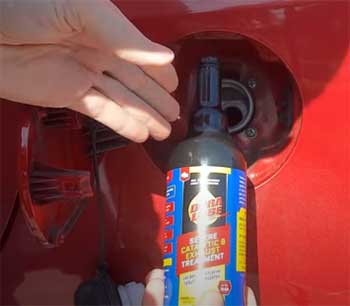
Pros of Dura Lube Severe Catalytic and Exhaust Treatment
- Targets Oil Poisoning Directly: This formula is specifically designed to neutralize the harmful effects of phosphorus and zinc that build up on the catalyst surface: this is critical for older engines that might be consuming a small amount of oil: this specialized focus helps restore the chemical reaction inside the converter.
- Universal Compatibility with High-Mileage Vehicles: You can use this with all petroleum-based oils and fuel types: this means you don’t have to worry about chemical reactions or voiding warranties on your daily driver.
- Effectively Quiets Noisy Exhaust Components: The penetrating agents help clean out the soot that can cause backpressure and rattling: this helps free up the internal components of the exhaust path and reduces the “clogged” feeling when you hit the gas.
- Acts as a High-Quality Fuel Lubricant: Unlike some solvent-heavy cleaners that can dry out your fuel pump, Dura Lube adds a layer of protection: this ensures that your engine is protected from friction and wear even while the cleaning agents are working their magic.
- Simplifies Maintenance with Easy Application: You can add it to a full tank of fuel without needing to calculate complex ratios: this flexibility allows you to treat your engine as needed without waiting for a specific low-fuel warning.
- Helps Restore Lost Compression and Power: By cleaning out the combustion residues that can stick to valves: this allows for a better seal in the combustion chamber which can lead to better throttle response and fuel economy.
- Cost-Effective Long-Term Solution: The price per bottle is often lower than Cataclean: this makes it a more sustainable choice for drivers who want to run a cleaner through their system every 3,000 miles as a preventative measure.
Cons of Dura Lube: What you must consider:
- Contains Naphthalene which requires safety warnings: the chemical makeup is potent and carries a California Proposition 65 warning: this means you must handle it with care and avoid skin contact: this chemical intensity is the trade-off for its cleaning power.
- Gradual results may test your patience: unlike products that claim results in ten minutes, Dura Lube often takes a full tank of gas to show its full effect: this might be frustrating if you are looking for an immediate solution to a check engine light: this slow process is actually safer for your engine’s internal components.
- Not a permanent fix for a physically broken cat: if your catalytic converter has already suffered from internal structural collapse: this liquid cleaner cannot “rebuild” the ceramic honeycomb: this highlights the fact that it is a preventative and restorative cleaner rather than a magical repair fluid.
- May increase exhaust odor temporarily: as the treatment dissolves the soot and pushes it out the tailpipe: this can lead to a “rotten egg” smell appearing shortly after application: this is a common sign that the sulfur deposits are being purged but can be alarming.
- Requires consistent use to maintain results: if you stop using the treatment, the carbon buildup from low-quality fuel will eventually return: this necessitates buying a new bottle every few months to keep the system pristine: this adds a recurring cost to your vehicle maintenance budget.
- Cannot fix deep sensor failure: if your O2 sensor is electrically dead rather than just dirty: this product won’t be able to “resurrect” the electronic circuit: this emphasizes that it is a cleaner, not an electronics repairman.
- Limited availability in some retail markets: while widely available online, it might be harder to find in some local gas stations compared to more “generic” brands: this creates a logistical hurdle for those who need a fix immediately.
Dura Lube Vs. Cataclean
Cataclean is the “industry standard” for passing emissions tests.
I have found that Cataclean is highly effective for immediate results because its solvent blend (acetone and xylene) is incredibly aggressive at vaporizing carbon.
However, Dura Lube takes a more “holistic” approach by focusing on the chemical “poisons” that kill converters.
Analytically, Cataclean is the product I use 24 hours before a smog check, but Dura Lube is what I pour in for the long-term health of the engine.
You should choose Cataclean for emergency speed and Dura Lube for consistent system protection.
- Dura Lube Vs. Seafoam Motor Treatment
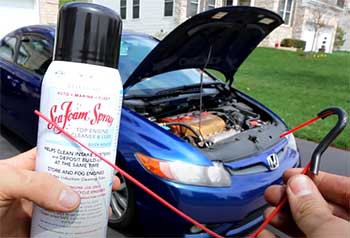
Seafoam is a classic petroleum-based cleaner that many people use as a general-purpose fuel stabilizer.
I have noticed that Seafoam is excellent at removing moisture and cleaning basic carbon, but it doesn’t have the specific “catalyst-targeted” chemicals found in Dura Lube.
Analytically, Seafoam is a maintenance product for your lawnmower or your older car, while Dura Lube Severe Catalytic is a precision tool for modern OBD-II emissions systems.
Seafoam’s “smoke show” when used through a vacuum line is impressive, but it doesn’t provide the same chemical reaction in the catalyst.
You will find that Dura Lube is much more effective at actually turning off a P0420 code than the more generalized Seafoam formula.
- Dura Lube Vs. CRC Guaranteed To Pass
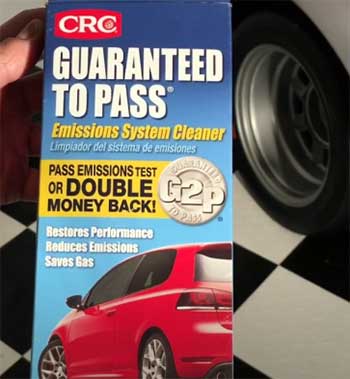
CRC makes a product called “Guaranteed To Pass” which uses a high concentration of PEA (polyetheramine) to clean the fuel system.
I find that CRC is a fantastic fuel system cleaner, but it lacks the secondary “exhaust-specific” active agents that Dura Lube uses.
Analytically, CRC is better for cleaning injectors and carbon off the piston tops, but Dura Lube’s “Severe” approach reaches the O2 sensors and the catalyst more effectively.
CRC offers a money-back guarantee which is great for peace of mind, but Dura Lube’s formula feels more targeted toward the hardware of the exhaust system itself.
If you are strictly worried about injectors, go with CRC; if you are worried about the converter, Dura Lube is the analytical winner.
- Dura Lube Vs. Liqui Moly Catalytic System Clean
Liqui Moly is a German brand known for extreme precision and high-quality chemical engineering.
I have noticed that their Catalytic System Clean is a very effective, albeit smaller, bottle that focuses on the combustion process.
In my experience, Liqui Moly is exceptional for preventative care in European cars, but Dura Lube’s 16 oz bottle provides more “scrubbing volume” for heavily clogged American or Asian vehicles.
Analytically, Liqui Moly is a “surgical” tool, while Dura Lube is more of a “sledgehammer” for tough jobs.
You should consider Liqui Moly for a well-maintained car and Dura Lube for a car that has been neglected for a few years.
- Dura Lube Vs. Royal Purple Max-Clean
Royal Purple Max-Clean is a premium, all-in-one fuel system cleaner that is widely respected by performance enthusiasts.
I find that Max-Clean is one of the best “maintenance” additives on the market for keeping a car running like new.
However, it is not specifically marketed as a “check engine light” fix or a “catalyst restorer” in the same way Dura Lube is.
Analytically, Royal Purple is what you use to stay out of trouble, and Dura Lube is what you use when you are already in trouble with a P0420 code.
If you have a brand-new car and want to keep it that way, use Max-Clean; if you have an old car with a light on, use Dura Lube.
Frequently Asked Questions (FAQs)
Yes, it works effectively for vehicles suffering from carbon buildup and oil poisoning, though it cannot repair a physically melted or broken converter.
While effectiveness varies by vehicle, Cataclean is often cited for its rapid emissions reduction, while Dura Lube is highly praised for long-term catalyst restoration and value.
Cataclean’s main disadvantages include a higher price point, the requirement for a specific fuel-to-additive ratio, and the potential for temporary oxygen sensor interference during the cleaning process.
You can use it every 3,000 miles or four times a year for optimal performance and to prevent the recurrence of the check engine light.
Final Thoughts
When you are standing at the crossroads of a cheap chemical fix or a massive mechanical repair, you should buy Dura Lube Severe Catalytic and Exhaust Treatment or Cataclean to give your car a fighting chance.
I have found that these products offer an analytical and cost-effective way to manage your engine’s health and maintain your emissions compliance without the immediate need for a wrench.
You should choose Dura Lube if you want a deep, whole-system scrub that targets oil poisons, or choose Cataclean if you need a specialized “emissions booster” to get through a smog check.
I believe that for the price of a tank of gas, the peace of mind and potential savings offered by these treatments make them an essential part of your maintenance toolkit.
You deserve a car that runs clean and a bank account that stays full, and either of these performance cleaners can help you achieve that balance.