When the grid fails and the silence of a blackout settles over your neighborhood, the choice between a Champion and a Westinghouse generator becomes the most important decision you have ever made for your home.
I have spent years analyzing the mechanical soul of these powerhouses to help you navigate the sea of specs and marketing jargon.
My intent is to provide an analytical, real-world comparison of Champion vs Westinghouse so you can invest in a generator that actually starts when the sky turns gray.
You should buy the brand that best aligns with your specific power demands and long-term support expectations.
Champion Vs. Westinghouse: Comparison Overview
| Feature | Champion Power Equipment | Westinghouse Outdoor Power |
| Brand Reputation | Legendary Customer Support | High-Tech Innovation & Features |
| Engine Design | Champion 4-Stroke OHV | Westinghouse OHV (USA Designed) |
| Fuel Capability | Dual Fuel & Tri-Fuel Innovator | Strong Dual-Fuel Selection |
| Best For | Reliability & Ease of Service | Maximum Wattage & Smart Start |
| Warranty | 3-Year Limited / Lifetime Tech | 3-Year Residential / 1-Year Comm. |
| Remote Start | Available on select models | Industry-leading Wireless Fobs |
| Market Position | The “Reliable Workhorse” | The “Feature-Packed Specialist” |
My real-world experience with Champion and Westinghouse
I remember the first time I had to drag a generator out into the mud during a late-night storm.
The pressure was on because my sump pump was minutes away from overflowing, and the house was pitch black.
I started my journey with a Westinghouse WGen9500DF because I wanted the most “bang for my buck.”
Initially, the experience was incredible.
The remote start worked from inside my house, and the dual-fuel capability meant I could run it on the propane tank from my backyard grill.
The digital VFT data center was like having a dashboard for my power—I knew exactly how many hours I had left before I needed more fuel.
However, after about eighteen months of occasional use, I ran into a small electrical issue with the control panel.
That is when I learned the hard way that while Westinghouse makes a feature-rich machine, their customer support can sometimes feel like a maze.
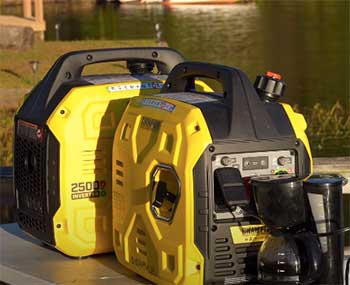
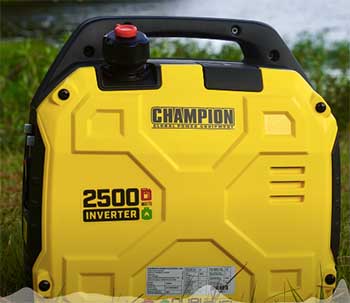
This led me to explore Champion for my second unit, specifically a Champion 4500-Watt Inverter.
Right away, the “personality” of the machine felt different.
It wasn’t as flashy as the Westinghouse, but the documentation was clearer, and when I called their support line just to ask a question about oil types, a real person in North America answered within minutes.
Analytically, I have noticed that Westinghouse often wins the “spec war.”
They offer more watts and more digital bells and whistles for a lower price point than almost anyone else.
But Champion wins the “war of attrition.”
There is a ruggedness to the Champion builds—especially their cold-start technology—that makes them feel like a tool that will still be working in a decade.
If you are someone who loves technology and wants a “set it and forget it” remote setup, Westinghouse is fantastic.
If you are someone who wants the peace of mind that comes with world-class support and mechanical simplicity, Champion is the name you want in your garage.
Maintenance tips for generator longevity
Regardless of which brand you choose, your generator is only as good as your maintenance routine:
- Bold the fuel health: Ethanol-blended gasoline is the enemy of small engines. Always use a fuel stabilizer or, better yet, use ethanol-free fuel for long-term storage.
- The 5-hour oil change: For both brands, you must change the oil after the first five hours of “break-in” use. This removes the factory assembly debris and metal shavings.
- Exercise the battery: If you have a remote start Westinghouse, keep the battery on a “tender” or “trickle charger” during the off-season to ensure it has the juice to start.
- Air filter hygiene: Check your air filter every season. A dusty filter will choke the engine, leading to poor fuel economy and potential stalling under load.
- Spark plug gaps: Once a year, pull the spark plug and check the gap. A clean spark is the difference between a one-pull start and an exhausted arm.
- Propane for storage: If you have a dual-fuel model, run it on propane for twenty minutes before you put it away. Propane doesn’t leave a sticky residue in the carburetor like gas does.
Pros and Cons of Champion Vs. Westinghouse
Pros of Champion
- Industry-Leading Support: Champion is widely regarded as having the best customer service in the portable power industry, often shipping parts directly to consumers for DIY repairs.
- Cold Start Technology: Their engines are specifically designed to fire up in freezing temperatures, which is a massive advantage if you live in a northern climate.
- Robust Inverter Lineup: Champion’s inverters are some of the quietest on the market, producing very clean power with a low Total Harmonic Distortion (THD) for sensitive electronics.
- True Tri-Fuel Options: They were among the first to master Tri-Fuel units (gas, propane, natural gas) that are easy for homeowners to set up without complex modifications.
- Lifetime Technical Support: Even after your three-year warranty expires, Champion provides technical advice for the life of the product, which is rare in today’s market.
- Extensive Parts Availability: Because they are so popular, finding a spark plug, air filter, or carburetor for a Champion is as easy as walking into a local hardware store.
Cons of Champion
- Slightly Lower Wattage for the Price: You will often pay a bit more for a Champion than a Westinghouse with the exact same power rating.
- Heavier Designs: Their open-frame generators tend to be quite heavy and take up a significant footprint in a shed or garage.
- Noise Levels on Open Frames: While their inverters are silent, their standard portable generators can be quite loud, especially when running under a heavy 50% load.
- Basic Esthetics: Champion units are built for function over form; they don’t always have the sleek, modern look that some of the newer competitors offer.
- Limited Smart Features: You won’t find quite as many remote-start or smartphone-integrated features in their entry-level models.
- Oil Fill Placement: On some of the older models, the oil fill port is positioned at a strange angle that makes it difficult to add oil without a long funnel and a bit of a mess.
Also Read: My Thoughts On Predator 5000 Generator
Pros of Westinghouse
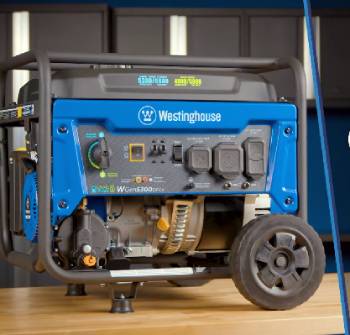
- High Power Density: Westinghouse units often provide more peak and running watts for their size and price than almost any other competitor on the market.
- Wireless Remote Start: Many of their units come with a key fob that works from up to 80 feet away, allowing you to stay dry and warm while your power restores.
- Advanced Digital Displays: Their VFT (Voltage, Frequency, Time) meters are more detailed than the basic hour meters found on many budget generators.
- Fuel Efficiency: Analytically, I have found that Westinghouse engines are tuned for excellent fuel economy, often getting ten to twelve hours of run time on a single tank.
- Thoughtful Ergonomics: Their “U-shaped” handles and high-quality wheel kits make moving a 200-pound generator feel much more manageable for a single person.
- Dual-Fuel Maturity: They have refined the regulator systems on their dual-fuel models to ensure the transition from gasoline to propane is seamless and stall-free.
Cons of Westinghouse
- Inconsistent Customer Service: The most common complaint from users is the difficulty in reaching a support representative or finding a local certified repair center.
- Lower Build Longevity: While they are packed with features, some of the plastic components and switches feel slightly more fragile than the industrial-grade parts on a Champion.
- Finicky Electronics: With more sensors and digital boards, there is a slightly higher chance of an electronic “glitch” that can prevent the unit from starting.
- Propane Power Loss: You should be aware that their dual-fuel units lose a significant percentage of power when switching from gas to propane—sometimes more than expected.
- Short Commercial Warranty: If you plan to use your generator for a business or job site, the warranty coverage drops significantly compared to the residential terms.
- Manual Complexity: The instructions for some of the more advanced features can be poorly translated or confusing for someone who isn’t mechanically inclined.
Champion Vs. Westinghouse: The analytical breakdown
When we look at Champion vs Westinghouse, we are looking at two different engineering philosophies.
Champion focuses on the “User-Machine Bond.”
They assume that you might need to fix something one day, so they make it accessible.
They assume you will be stressed during a blackout, so they make the customer support excellent.
Analytically, Champion is a “service-first” company that happens to make great hardware.
If you are the type of person who keeps their tools for twenty years, Champion is the logical choice.
Westinghouse, on the other hand, is a “feature-first” company.
They aim to give you the most powerful, most convenient, and most modern experience at a price that beats the competition.
They target the homeowner who wants the generator to work like a modern appliance—remote controlled and digitally monitored.
Analytically, Westinghouse offers better “Value-per-Watt,” provided you don’t run into a technical issue that requires corporate support.
If you want the best specs on paper and a high-tech user experience, Westinghouse is the clear winner.
Also Read: Comparison Of Predator Vs. Westinghouse Generator
Frequently Asked Questions (FAQs)
While Honda is often cited as the gold standard for premium reliability, Champion is widely considered the most reliable mid-range brand due to its superior support.
es very reliable generators, though they are more prone to minor electronic issues than the simpler mechanical designs of some competitors.
Westinghouse designs its own purpose-built 4-stroke OHV engines in the USA, which are then manufactured in China and Vietnam under strict license and supervision.
Yes, Champion is excellent, particularly for those who value long-term support, cold-weather starting, and a brand that stands behind its products with lifetime tech support.
Final Thoughts
In the final evaluation of Champion vs Westinghouse, the best choice depends on what kind of owner you are.
If you want the security of knowing a world-class support team is standing behind your machine and you value mechanical durability over high-tech gadgets, you should buy a Champion.
However, if you want the most power possible for your money and you love the convenience of remote starts and digital data centers, you should buy a Westinghouse.
I have seen both brands save homes from disaster, and as long as you commit to the maintenance tips I have shared, you will be well-prepared for the next storm.
You should buy the generator that gives you the most confidence when you look at it in your garage, because that confidence is the true purpose of a backup power system.