When you are ready to stop looking at grainy photos on your phone and start witnessing the rings of Saturn with your own eyes, you should buy the Celestron AstroMaster 130EQ because it provides the large 130mm aperture and stable equatorial tracking needed to truly explore the deep cosmos.
I have spent many cold nights analyzing the celestial performance of this Newtonian reflector to help you understand why it is a staple for aspiring astronomers.
My intent is to provide an analytical review of the Celestron AstroMaster 130EQ so you can master the night sky.
You should choose Celestron for a breathtaking, professional-grade introduction to the stars.
My personal experience with the Celestron AstroMaster 130EQ
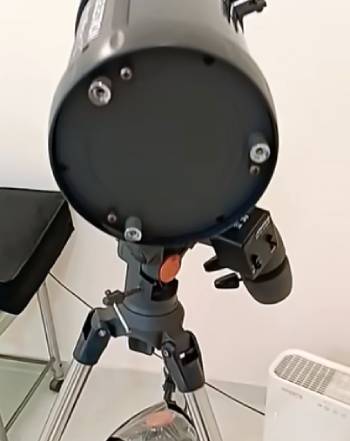
I remember the first night I hauled the Celestron AstroMaster 130EQ into my backyard; the sheer size of the 130mm optical tube made me feel like I was finally moving past the “toy” telescope phase.
I am someone who values optical clarity over fancy digital gimmicks, and the first time I pointed this reflector at the Moon, I was absolutely spellbound.
I started my journey by aligning the StarPointer red dot finder, which was surprisingly intuitive once I calibrated it against a distant streetlamp during the day.
However, the real test came when I targeted Jupiter. I found that even with the included 20mm eyepiece, the four Galilean moons appeared as distinct, tiny pearls of light orbiting the gas giant.
I am an analytical observer, so I spent a good hour toggling the slow-motion control knobs on the German Equatorial Mount (EQ).
I noticed that once I had the mount roughly polar-aligned, tracking the planets as they drifted due to Earth’s rotation became a simple matter of turning one knob.
I think it is vital for you to know that the 130mm primary mirror gathers a massive amount of light compared to the smaller 70mm or 80mm refractors most beginners start with.
You will likely find that the views of deep-sky objects like the Orion Nebula or the Andromeda Galaxy are much more rewarding with this aperture.
I found that the “ghostly glow” of Orion’s stellar nursery had structural detail that I simply couldn’t see with smaller lenses.
I began to feel more confident navigating the RA and Dec axes, though I did find the tripod could be a bit shaky if I extended the legs to their maximum height.
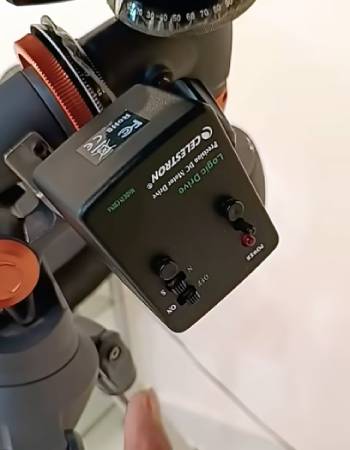
I also appreciated the included motor drive on the MD model, which allowed me to step away from the eyepiece to grab a coffee and return to find the target still perfectly centered.
By the end of my first month, I realized that while the telescope is heavy and requires some muscle to move, the visual payoff is more than worth the physical effort.
Maintenance and tips for Celestron AstroMaster 130EQ
- Perform a Star Test to Check Collimation Regularly: You should point your telescope at a bright star like Polaris and slightly de-focus the image. If the “donut” shape you see is perfectly symmetrical, your mirrors are aligned; if not, you should use the adjustment screws on the back of the tube, which is the most analytical way to ensure your views of Jupiter remain sharp and clear.
- Balance the Telescope Carefully Before Every Session: You should always ensure the RA and Dec axes move freely without falling to one side when the clutches are released. A properly balanced scope puts less strain on the motor drive and the manual gears, which is the best maintenance tip for extending the life of your mount’s mechanical parts.
- Keep the Primary Mirror Covered When Not in Use: You should always replace the large dust cap as soon as you are finished observing. Dust on the mirror can scatter light and reduce contrast over time, and keeping the optics sealed is the smartest way to avoid having to perform a risky manual mirror cleaning.
- Use a Padded Bag or Case for Transport: You should never let the optical tube roll around in your trunk. Newtonian reflectors are sensitive to vibration; using a dedicated bag is the analytical choice for protecting the SiO₂ coatings and keeping the mirrors from knocking out of alignment during trips to dark-sky sites.
- Avoid Touching the Mirrors with Your Fingers: You should realize that the oils from your skin can permanently damage the delicate aluminum coatings. If the mirror eventually needs cleaning, you should only use distilled water and specialized lens tissues, which is a critical tip for maintaining the light-gathering efficiency of your 130mm optics.
- Let the Telescope Cool Down to Outdoor Temperatures: You should set your telescope outside at least 30 minutes before you plan to observe. If the air inside the tube is warmer than the outside air, it will create “tube currents” that blur the image; letting the glass reach thermal equilibrium is the best way to get high-resolution views of planetary details.
Pros and Cons of the Celestron AstroMaster 130EQ
Pros of the Celestron AstroMaster 130EQ
- Large 130mm Newtonian reflector aperture: The five-inch primary mirror is a light-gathering powerhouse: this allows you to see faint deep-sky objects and fine planetary details that smaller scopes miss: this ensures your hobby won’t outgrow the equipment in just a few months.
- German Equatorial Mount with slow-motion controls: The EQ mount is designed to mimic the rotation of the Earth: this makes tracking celestial bodies much smoother than a standard up-and-down mount: this is an analytical necessity for anyone wanting to observe at high magnifications.
- High-quality SiO₂ and aluminum coatings: The mirrors are treated with professional-grade reflective coatings: this increases brightness and contrast across the entire field of view: this results in crisp, high-definition images of lunar craters and mountain ranges.
- Tool-free assembly for quick setup: You can go from the box to the backyard in about fifteen minutes: the primary components click together without needing a screwdriver: this encourages more frequent spontaneous stargazing sessions.
- Included RA motor drive for automatic tracking: On the MD version, the motor does the work of following the stars for you: this keeps objects in the center of the eyepiece for extended periods: this is a major benefit when showing the stars to friends or children.
- Robust 1.25-inch steel tripod legs: The tripod provides a much more stable base than the aluminum versions found on cheaper models: it helps dampen vibrations quickly after you touch the focuser: this ensures a steady viewing experience even in light winds.
- Versatile performance for planets and galaxies: The f/5 focal ratio is a “sweet spot” for astronomy: it provides wide enough views for star clusters but can handle the magnification needed for the Great Red Spot on Jupiter: this makes it a true all-purpose instrument.
Cons of the Celestron AstroMaster 130EQ: An analytical look at the downsides:
- Heavy and bulky assembled weight: at approximately 35 pounds, this is not a grab-and-go toy: it can be difficult to move through narrow doorways or transport in a small car: this requires a bit of planning and physical strength for every session.
- The tripod can be shaky when fully extended: if you have the legs at their maximum height: you will notice more image vibration when focusing: this is an analytical trade-off for having a portable, height-adjustable stand.
- Periodic collimation is required: because it is a Newtonian reflector: the mirrors can drift out of alignment during transport: this means you must occasionally adjust the mirror screws to keep images sharp: this is a standard maintenance task for this design.
- The red dot finderscope can be difficult to align: the plastic adjustment knobs on the StarPointer feel a bit flimsy: it can sometimes lose its zero if bumped: this requires a patient hand to keep your targeting accurate.
- Included eyepieces are basic entry-level quality: while they get you started: you will eventually want to invest in higher-quality Plössl lenses to unlock the full potential of the mirror: this is an added cost for the serious enthusiast.
- Equatorial mount has a steep initial understanding: if you have never used an EQ mount: the counterweights and axis locks can feel confusing at first: you will need to spend some time with the manual to understand polar alignment.
- The slow-motion cables can sometimes tangle: depending on the angle of the telescope: the long control cables can get caught on the mount legs: this requires you to occasionally reset the telescope’s position to clear the cables.
Also Read: Comparison Of Leica Vs. Zeiss Binoculars
Celestron AstroMaster 130EQ Vs. Other Brands
- Celestron AstroMaster 130EQ Vs. Orion SpaceProbe 130ST
The Orion SpaceProbe 130ST is a very close rival with the same 130mm aperture. I have found that the Orion version features a “Short Tube” (ST) design, which makes it slightly more portable and provides a wider field of view.
Analytically, the Celestron AstroMaster 130EQ often comes as a more complete kit with the motor drive included in the MD package.
The Celestron also features a more modern, rugged tripod design compared to the older style of the Orion.
Choose Orion if you want the most compact reflector possible, but choose Celestron for a more stable tripod and better motorized tracking options.
- Celestron AstroMaster 130EQ Vs. Sky-Watcher Heritage 130p
Sky-Watcher offers the Heritage 130p, which is a tabletop Dobsonian telescope. I have noticed that the Sky-Watcher is incredibly easy to set up because it doesn’t have a complex tripod or equatorial mount.
Analytically, the Celestron AstroMaster 130EQ is much better for high-power planetary viewing because the EQ mount allows you to track objects much more precisely than a manual tabletop base.
The Celestron also gets the telescope up to eye level, whereas the Heritage requires a very sturdy table to be usable. If you want a “bookshelf” telescope for quick looks, get the Sky-Watcher; if you want a serious astronomical tool for tracking planets, go with the Celestron.
- Celestron AstroMaster 130EQ Vs. Celestron StarSense Explorer LT 80AZ
The StarSense Explorer line uses your smartphone to help you find objects in the sky. I have found that the StarSense technology is much easier for total beginners to navigate.
Analytically, the AstroMaster 130EQ is the more powerful optical instrument because it has a much larger mirror compared to the 80mm lens of the LT 80AZ.
The 130mm mirror will show you galaxies and nebulae that the 80mm refractor simply cannot detect.
Choose StarSense if you are tech-focused and want the easiest finding experience, but choose the AstroMaster 130EQ if you want the best possible image quality and light-gathering power.
Also Read: My Thoughts On Celestron Vs. Vortex Binoculars
Frequently Asked Questions (FAQs)
The 130EQ is widely considered the best in the AstroMaster series because it offers the largest aperture (130mm) for deep-sky viewing and a stable EQ mount.
It is excellent for basic planetary and lunar photography with a smartphone or webcam, but it is not intended for long-exposure deep-space photography.
Yes, the 10mm eyepiece provides 65x magnification on this telescope, which is enough to clearly see Saturn’s rings and its largest moon, Titan.
A 130mm telescope is very capable; it can reveal hundreds of craters on the Moon, the cloud belts of Jupiter, and bright deep-sky objects like the Great Orion Nebula.
Final Thoughts
When you are ready to witness the grandeur of the rings of Saturn and the moons of Jupiter from your own backyard, you should buy the Celestron AstroMaster 130EQ to begin your journey into the stars.
I have found that the combination of the 130mm light-gathering mirror and the motorized tracking mount provides the most analytical path to becoming a true amateur astronomer.
You should choose this telescope if you want a high-quality instrument that offers room to grow as your knowledge of the cosmos expands.
I believe that looking through a telescope changes your perspective on the world, and Celestron provides the clarity and stability to make that experience truly unforgettable.
You deserve a view that is as vast as your curiosity, and the AstroMaster 130EQ is the perfect vehicle to take you there.