When you are out on the open road, the last thing you want is a giant smartphone screen or a bulky dashboard tablet distracting you from the curve ahead.
I have spent years testing various navigation methods for motorcyclists, and I can tell you that the balance between staying informed and staying safe is a delicate one.
My intent is to provide a comprehensive Beeline Moto 2 review from an analytical, first-person perspective so you can decide if this minimalist GPS is right for your handlebars.
You should buy the Beeline Moto 2 if you want a sleek, distraction-free navigation tool that puts your focus back on the ride while keeping you on the right path.
My personal experience with the Beeline Moto 2
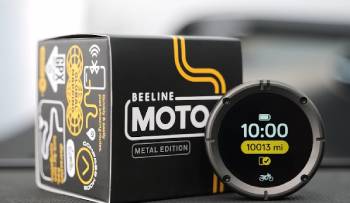
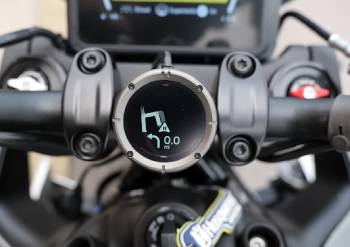
I remember the first time I mounted the Beeline Moto 2 to my bike; it felt like a tiny, high-tech compass rather than a computer.
I had grown tired of my phone getting hot in the sun and the constant notifications breaking my concentration during long-distance touring.
The Beeline Moto 2 changed that dynamic immediately because it is designed to give you just enough information without being overwhelming.
Setting it up was a breeze; I just downloaded the app on my smartphone, connected via Bluetooth, and I was ready to go.
On my first 400-mile journey, which spanned from bright urban environments to remote mountain passes, the visibility of the new TFT screen was the standout feature.
Unlike the original model, this version is incredibly sharp, and even in the most intense direct sunlight, the turn indications were crystal clear.
The most interesting part of the experience was how it handled the “middle of nowhere” sections.
Once I had planned my route using the app, the device didn’t need a constant cell signal to keep me on track, which is a massive win for those of us who love desert or mountain rides.
I noticed that my phone battery drain was minimal because I could keep my screen off and tucked away in my pocket while the Beeline did the heavy lifting.
I did have one moment where I missed a turn in a busy city, and while the rerouting wasn’t instant, it eventually caught up and guided me back without a fuss.
The device feels incredibly solid in the hand, and after leaving it out in a driving rainstorm overnight during a camping trip, it powered right up the next morning without a hint of moisture damage.
It really is a device for serious riders who want to keep their eyes on the road and stay alive while exploring new territories.
Maintenance and tips for your GPS device
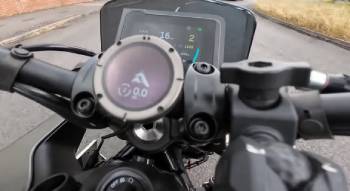
Keeping your Beeline Moto 2 in top shape is easy, but a few habits will ensure it lasts as long as your motorcycle does.
- Keep the USB-C port clean: Even though it has a protective cover, dust and road grime can accumulate. I recommend using a bit of compressed air to blow out the port every few weeks to ensure a solid charging connection.
- Update firmware via the app: The software is constantly improving. Whenever you sync your phone, check for automatic updates. These often improve rerouting speed and Bluetooth stability, which keeps the experience smooth.
- Clean the screen with a microfiber cloth: Road salt and bug splatter can dull the visibility over time. Avoid using harsh chemicals; a simple damp microfiber cloth will keep that TFT display looking brand new.
- Check the mount tension regularly: Vibrations from the engine can slowly loosen mounting screws or wear down rubber bands. Give your mount a quick wiggle before every ride to make sure your GPS doesn’t end up on the highway.
- Charge to 80 percent for storage: If you are putting your bike away for the winter, don’t leave the Beeline at zero or 100 percent battery. Keeping it around 80 percent helps preserve the long-term health of the lithium-ion cells.
- Use the Compass Mode for exploration: If you aren’t in a rush, try the “Direction Finder” mode. It just points toward your destination and lets you choose your own streets, which is a great way to discover new favorite roads.
Pros and Cons of the Beeline Moto 2
Pros of the Beeline Moto 2
- Exceptional Battery Longevity: One of the biggest wins for me is the 14 to 30-hour battery life, which allows you to go on multiple day-long trips without even thinking about a USB-C cable.
- Minimalist Distraction-Free Design: The mini-map and arrow system provide just the essential data like speed, distance, and ETA, ensuring you are focused on the asphalt rather than a cluttered screen.
- High-Resolution TFT Display: The screen upgrade is a game-changer for visibility, offering a bright, sharp image that actually gets easier to read as the sun gets stronger.
- Robust Weather Resistance: With an IP67 rating, this unit is fully waterproof and shockproof, making it a reliable companion for adventure riders who don’t stop when the weather turns sour.
- Offline Navigation Capability: Since the route is cached from your phone, you can navigate through dead zones where traditional phone-based GPS might fail you entirely.
- Versatile Route Planning: The app allows you to choose between “Fast” routes for commutes or “Fun” routes that prioritize twisty roads and scenic views, tailoring the ride to your mood.
Cons of the Beeline Moto 2
- Rerouting Latency Issues: When you stray from the planned path, the device can sometimes take a few seconds longer than a flagship smartphone to calculate your new route: this can be slightly frustrating in complex city grids where turns come up in rapid succession.
- Lack of Voice Guidance: There is no audio output for turn-by-turn directions, which means you have to rely entirely on visual cues from the display: while the “Turn Dot” and countdown distance are clear, riders who are used to hearing instructions in their helmet might find this a significant adjustment.
- Limited On-Device Menu Control: Most of the heavy lifting, such as searching for destinations or changing route preferences, must be done on the smartphone app rather than the device itself: if your phone dies or you lose it, you cannot set a new destination directly on the Moto 2.
- Smaller Reservoir of Information: Because it is a “mini-map,” you don’t get a full overview of the surrounding streets or landmarks: if you like to see what is five miles ahead or look for nearby gas stations on the fly, you will have to stop and pull out your phone.
- Mounting Band Limitations: While the mounting hardware is generally excellent, the kit only includes a limited number of rubber bands: depending on the thickness of your handlebars, you might find yourself needing extra supplies to get a perfectly secure fit.
- Price to Feature Ratio: For riders who are used to free smartphone apps, the initial investment for a dedicated device might seem high: you are paying for the specialized hardware and the distraction-free philosophy rather than a massive list of digital features.
Beeline Moto 2 Vs. Other Brands
- Beeline Moto 2 Vs. Garmin Zumo XT
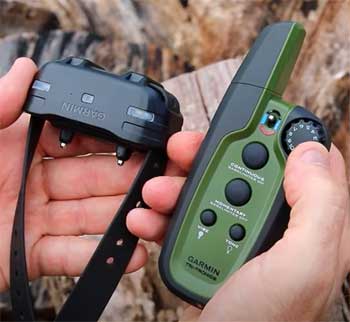
Garmin is the giant in the room when it comes to dedicated motorcycle GPS.
In the comparison of Beeline Moto 2 vs. Garmin Zumo XT, you are choosing between minimalism and total information.
The Garmin has a massive 5.5-inch screen, topographical maps, and weather alerts, but it is also much more expensive and bulky.
I have found that the Garmin can be a distraction in itself because there is so much to look at.
The Beeline Moto 2 is for the rider who wants the tech to disappear, whereas the Garmin is for the heavy tourer who wants every possible data point at their fingertips.
For urban riding and weekend trips, the Beeline’s simplicity often wins out.
- Beeline Moto 2 Vs. TomTom Rider 550
TomTom has been a staple for years, especially known for its “Winding Roads” feature.
Looking at Beeline Moto 2 vs. TomTom Rider 550, the TomTom feels like a traditional car GPS adapted for a bike.
It is heavy and requires a dedicated power cradle to be wired into your bike’s battery. The Beeline Moto 2 is significantly more modern because it relies on your phone’s processor for the heavy lifting.
You don’t need to mess with wires or complex mounting systems with the Beeline. If you want a “set it and forget it” device that you can swap between multiple bikes in seconds, the Beeline is the clear analytical winner.
- Beeline Moto 2 Vs. Quad Lock Phone Mount
Many riders prefer to just mount their phone using a Quad Lock system. Comparing Beeline Moto 2 vs. Quad Lock reveals a major difference in safety and device health.
Using a phone as a primary GPS exposes it to high-frequency vibrations that can destroy your camera’s image stabilization.
Also, phones often overheat or dim their screens in direct sunlight to protect the battery.
The Beeline Moto 2 acts as a protective layer, keeping your expensive smartphone safe in your pocket while providing a screen that actually likes the sun.
I have found that the peace of mind knowing my phone is safe and charged is worth the extra device.
- Beeline Moto 2 Vs. Chigee AIO-5
The Chigee is a newer category of device that brings Apple CarPlay and Android Auto to a motorcycle.
In a matchup of Beeline Moto 2 vs. Chigee AIO-5, you are looking at two very different philosophies.
The Chigee is an all-in-one entertainment hub that shows messages, music, and full maps.
However, it requires a much more permanent installation and draws more power.
The Beeline Moto 2 stays true to the spirit of motorcycling by removing the “smart” clutter. If you want to escape your digital life while you ride, the Beeline is the tool for you.
- Beeline Moto 2 Vs. Peak Design Mobile Mount
Peak Design offers a beautiful mounting system for phones, much like Quad Lock.
In the debate of Beeline Moto 2 vs. Peak Design Mobile Mount, the argument remains focused on distraction.
A phone on your bars is a constant temptation to check messages or social media at stoplights.
The Beeline Moto 2 doesn’t show you who is texting you; it only shows you where to turn. I appreciate how the Beeline simplifies the mental load of a ride.
For serious riders who want to improve their road craft and focus, the Beeline is a much better analytical choice than a phone mount.
Also Read: My Thoughts On Kryptonite Bicycle Locks
Frequently Asked Questions (FAQs)
Yes, the Moto 2 has been updated to include speed limit indicators and can even provide alerts when you are exceeding the local limit on your current road.
The device requires a Bluetooth connection to your phone to plan a route and receive GPS data, but once the journey is started, it can continue to navigate even if you lose cellular internet signal.
Under standard conditions, the battery lasts up to 14 hours with the screen active, and up to 30 hours depending on backlight usage and brightness settings.
Yes, the accompanying app automatically records your journey history, including distance, duration, and the specific path you took, allowing you to share or revisit your favorite routes.
Final Thoughts
In the final analysis, the way you choose to navigate defines the quality of your time on two wheels.
If you want to stop fighting with your phone and start enjoying the scenery again, you should buy the Beeline Moto 2 for its unmatched simplicity and rugged reliability.
I have found that removing the digital noise from my handlebars has made me a more observant and relaxed rider, which is the ultimate goal of any piece of motorcycle gear.
You should buy this device today to streamline your adventures and focus on what really matters: the road ahead and the wind in your face.