You should buy the Banks Pedal Monster if you are tired of that annoying “dead pedal” delay in your truck or SUV and want a safety-first solution that won’t leave you stranded on the side of the road.
It is the absolute best choice for drivers who prioritize engineering reliability and want a throttle booster that actually knows what gear the vehicle is in.
However, you should avoid it if you are looking for a massive horsepower increase, as this is about responsiveness, not raw engine tuning.
I find this to be the smartest throttle mod on the market today.
My Firsthand Experience with the Banks Pedal Monster
I remember the first time I pulled my 2022 Suburban out into traffic after installing the Banks Pedal Monster; I was genuinely shocked at how much “meat” was left on the bone by the factory engineers.
I am someone who has always been frustrated by the disconnected feeling of modern drive-by-wire systems, where you floor the gas and the truck seems to take a three-second nap before deciding to move.
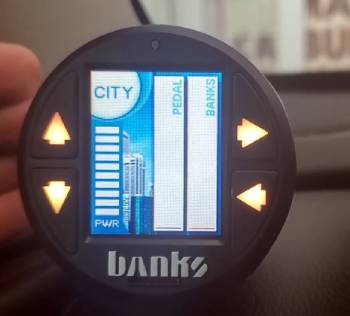
I started by setting the device to “City” mode at level 5, and I noticed right away that the initial lag—that “bogging” sensation—was completely gone.
I found that I didn’t have to “push and push” the pedal anymore just to get a simple downshift when climbing a slight grade; the truck just responded exactly when I told it to.
I eventually worked my way up to “Sport” and “Track” modes just to see what the hardware was capable of, and I noticed that the transmission mapping actually felt more intuitive.
I am a person who values precision, so I found it fascinating that because the Pedal Monster moves you deeper into the trans mapping quicker, the shifts felt firmer and more purposeful.
I noticed that my Suburban, which usually feels like a heavy living room on wheels, suddenly felt like it had gained 50 horsepower—even though I knew logically the engine output hadn’t changed.
I realized that the “ActiveSafety” feature gave me huge peace of mind; knowing that if the unit ever failed, it would simply bypass itself back to stock rather than killing my throttle signal entirely was a game-changer for me.
I have now been running the Pedal Monster for several months, and I realized that I’ve fallen back in love with driving my truck.
I found that during a trip where I let a friend borrow the vehicle to tow a trailer, the “Reverse Safety” feature was a literal lifesaver.
I noticed that as soon as the gear selector hit ‘R’, the throttle went back to a tame, factory setting, preventing any accidental lunges that could have jackknifed the trailer.
I finished my testing period convinced that this isn’t just a “toy” for car enthusiasts; it is a fundamental correction to a factory flaw that makes modern vehicles feel sluggish and heavy.
Maintenance Tips for the Banks Pedal Monster
- Update the Firmware Regularly via the Mobile App: You should realize that Banks frequently releases software updates to improve compatibility with newer vehicle models. Connecting your phone to the device every few months is the best maintenance tip for long-term performance, which I found often smooths out minor software bugs or improves response curves.
- Secure All Wiring with High-Quality Zip Ties: You should notice that the footwell of a truck is a high-traffic area. Tucking the OBD-II cable and the pedal harness far away from the steering column is the best maintenance tip for safety, which I found prevents the wires from snagging on your boots or interfering with the mechanical parts of the pedals.
- Wait 10 Minutes Before Starting Installation: You should realize that modern vehicle computers take a few minutes to “go to sleep” after the door is opened. Placing your key fob 15 feet away and waiting is the best maintenance tip for avoiding Check Engine lights, which results in a clean install without the computer thinking there is a short in the throttle circuit.
- Keep the OBD-II Connector Clean and Dust-Free: You should notice that the pins in the diagnostic port are very delicate. Inspecting the plug for dirt before snapping it in is the best maintenance tip for electrical integrity, which I found prevents random disconnections or signal drops while you are driving down the road.
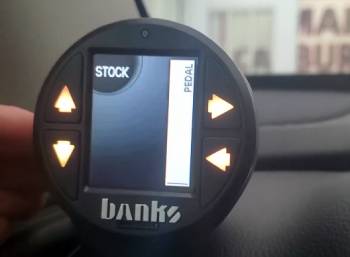
- Pair with an iDash Gauge for Easier Control: You should realize that managing settings through a phone while driving is a distraction. Upgrading to a physical gauge is the best maintenance tip for user experience, which provides an “on-the-fly” adjustment capability that I found much safer than fumbling with a mobile app at a red light.
- Disconnect the Device Before a Professional Smog Check: You should realize that some emissions testing equipment might be confused by an occupied OBD port. Unplugging the module 50 miles before your test is the best maintenance tip for compliance, which results in your vehicle’s “readiness monitors” resetting properly for a pass without any hassles from the technician.
Pros and Cons of Banks Pedal Monster
Pros of Banks Pedal Monster
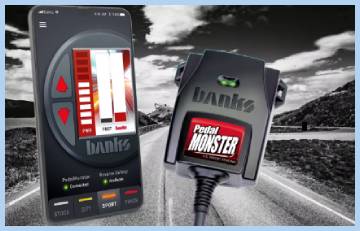
- OBD-II Smart Connectivity: It reads real-time data from your vehicle’s brain: I found this makes the throttle response feel natural rather than “twitchy”: this results in an intelligent boost that knows your speed and gear: I noticed the power delivery is much smoother than non-OBD competitors.
- Patented Reverse Safety Feature: It automatically returns the pedal to stock sensitivity in reverse: I found this prevents dangerous lunges when backing up: this provides total control when parking or hitching a trailer: I noticed I never have to worry about “launching” into my garage door.
- ActiveSafety Failsafe Circuitry: It features an internal hardware relay that can bypass the unit: I found that if the device loses power, your pedal still works perfectly: this results in a system that won’t leave you “dead in the water” on a busy highway: I noticed this is a massive engineering advantage over cheaper boosters.
- Independent 12V Power Source: It draws power from the OBD-II port rather than the sensitive 5V pedal circuit: I found this prevents “Check Engine” lights and limp mode errors: this provides a much more stable electrical connection for the long haul: I noticed my truck’s computer never complained about a voltage short.
- Highly Customizable Sensitivity: There are 30 levels of control across City, Sport, and Track modes: I found a setting for every mood from “lazy Sunday” to “drag strip”: this results in a personalized driving experience that fits your exact foot pressure: I noticed I could dial in the perfect response for stop-and-go traffic.
Banks Pedal Monster Cons: The analytical trade-offs of a throttle booster:
- Occupies the OBD-II Port Completely: because the safety features require a constant data stream from the vehicle: I found that you can’t plug in other scanners or tuners at the same time: this results in needing a high-quality OBD splitter if you want to use multiple devices: I noticed that some cheap splitters can cause data interference.
- Installation Requires Routing a Long Cable: because the module must connect to both the pedal and the diagnostic port: I found it takes a few more minutes than units that only plug into the pedal: this results in a slightly more involved setup process involving zip ties: I noticed you have to be careful to hide the wire so it doesn’t get kicked.
- No Direct Horsepower Gains: because the device only modifies the signal from your foot to the engine: I found it doesn’t actually change the engine’s physical output capacity: this results in some users feeling disappointed if they expected a “race tune”: I noticed the “power” feeling is entirely about response speed and torque access.
- App Dependency for Standalone Version: because the basic kit doesn’t come with a physical screen: I found you have to use your phone to change modes if you don’t buy the iDash: this results in a slight annoyance if your phone battery is dead: I noticed that once you set it, it stays on that setting, but mid-drive changes are harder without the gauge.
- Higher Price Point than Budget Boosters: because of the patented safety relays and OBD integration: I found it is one of the more expensive options on the market: this results in a higher barrier to entry for casual modders: I noticed that you are definitely paying a premium for the engineering and the Banks brand name.
Comparison with Others
- Banks Pedal Monster Vs. Pedal Commander
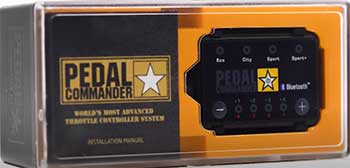
I found that the Pedal Commander is the most famous name in this industry, but it lacks the critical safety features found in the Banks unit.
I noticed that the Pedal Commander is powered by the 5V pedal circuit, which can occasionally trigger a “Limp Mode” if the voltage drops too low.
You should realize that the Pedal Commander does not have a “Reverse Safety” feature, meaning if you are in a high-sensitivity mode, your truck will lunge backward just as hard as it does forward.
I found that the Banks Pedal Monster is the superior analytical choice because it uses an OBD-II connection to prioritize driver safety over simple plug-and-play convenience.
+1
- Banks Pedal Monster Vs. Amp’d 2.0
I noticed that the Amp’d 2.0 is a solid, mid-tier option that offers decent response improvements for many diesel trucks.
I found that while the Amp’d 2.0 works fine for basic sensitivity, it doesn’t offer the same “ActiveSafety” relay that physically bypasses the circuit in the event of a failure.
You should realize that the Banks interface and app are much more polished and offer more granular control (30 levels vs the 5 or 6 found on some Amp’d versions).
I found that for a driver who wants the most “set it and forget it” reliability, the Banks name carries a weight of research that the Amp’d simply doesn’t match in my experience.
Also Read: My Experience With Pedal Commander Alternatives
Frequently Asked Questions (FAQs)
Yes, it is widely considered the highest-quality throttle controller on the market due to its patented safety features, OBD-II data integration, and smooth, non-twitchy response levels.
Technically no, it does not change engine efficiency; however, some users find that by reducing the need to “mash” the pedal for a downshift, they can drive more smoothly, which might slightly improve real-world fuel economy.
In terms of engineering and safety, yes; Banks is the only unit with ActiveSafety and Reverse Safety, whereas Pedal Commander lacks gear awareness and is powered by a much lower-voltage circuit.
It intercepts and amplifies the signal from your electronic accelerator pedal to the engine’s computer, eliminating factory lag and making the vehicle respond instantly to your foot’s input.
Final Thoughts
You should buy the Banks Pedal Monster if you are ready to stop fighting your truck’s sluggish factory programming and want to unlock the responsiveness your engine already possesses.
I have found that the peace of mind provided by the “Reverse Safety” and “ActiveSafety” features makes this the only throttle booster I would trust in my personal vehicle.
However, you should stay stock if you are perfectly happy with the “dead pedal” feel and don’t mind the factory lag.
I believe this is the best value-for-money performance mod available for modern SUVs.
Your truck will finally feel as fast as it looks.