You should buy the Shure SM7B if you are tired of your voice sounding thin, brittle, or plagued by background hum, and you finally want to capture that elusive, chocolatey broadcast tone that defines professional media.
I have spent years testing audio gear, and I can tell you that while many microphones claim to be “studio quality,” very few actually change the way you feel about your own voice.
My intent is to provide an analytical Shure SM7B microphone review that balances the immense hype with the practical realities of owning this power-hungry beast.
By the end of this, you will understand exactly why this heavy piece of metal is the industry standard for everyone from rock legends to global podcast icons.
My personal experience with the Shure SM7B
I remember the first time I unboxed the Shure SM7B; the sheer weight of the microphone was the first thing that caught me off guard.
I am someone who had spent most of my early career using sensitive condenser microphones that picked up every single car driving by and every hum of my refrigerator.
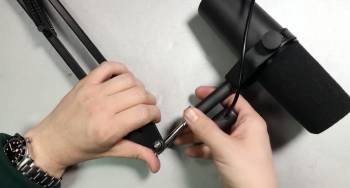
I started by mounting the SM7B on a heavy-duty boom arm, and I noticed immediately that the built-in yoke system is incredibly robust, allowing for precise positioning without the sagging you see on cheaper models.
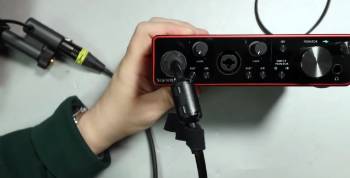
I found that when I first plugged it into my interface, I actually thought the microphone was broken because the signal was so quiet.
I noticed that I had to crank my gain to nearly 100%, which introduced a lot of hiss from my entry-level preamp.
I found that the real magic happened once I added a dedicated inline preamp to the chain. I am a fan of clean, warm audio, and the moment I gave the SM7B the 25dB of extra clean boost it craved, the sound transformed into something legendary.
I noticed that my voice took on a “radio” quality that I had never been able to achieve with EQ alone; the lows were creamy and controlled, and the highs were smooth rather than piercing.
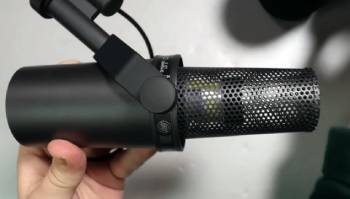
I was particularly impressed by the internal air suspension shock isolation. I found that even when I accidentally bumped my desk during a heated recording session, the mechanical noise was virtually non-existent in the final audio track.
I think it is vital for you to know that this microphone is incredibly forgiving of bad rooms. I noticed that even though I was recording in a space with bare walls and no acoustic treatment, the cardioid pattern did an amazing job of rejecting the echoes and room reflections.
I found that the built-in pop filter, especially when using the larger detachable windscreen, allowed me to get right up against the capsule for that intimate “proximity effect” without ruined recordings from plosives.
I began to feel that this wasn’t just a purchase, but a long-term investment in my brand’s identity.
I ended my first month with the SM7B realizing that while it requires extra gear to shine, the resulting audio is so professional that it essentially removes “bad sound” from your list of worries.
Maintenance and tips for your Shure SM7B
- Clean the Foam Windscreen Regularly with Warm Water: You should realize that the large foam windscreen acts like a giant sponge for moisture and bacteria from your breath. Over time, this can lead to odors or even degradation of the foam, so a gentle hand wash with a tiny bit of mild soap is the best maintenance tip for keeping your recording environment hygienic and smelling fresh, which is an analytical necessity for close-mic work.
- Store the Microphone in a Dust-Free Environment: You should avoid leaving the mic exposed on its stand for weeks without use. Small dust particles can eventually settle through the grille and onto the dynamic element, so using a simple silk or plastic cover when not in session is the best maintenance tip for preserving the frequency response and ensuring the “presence boost” stays crisp for years to year.
- Check the Yoke Mounting Screws for Tension: You should notice that frequent movement of the boom arm can slowly loosen the side screws that hold the mic’s tilt. A quick turn with a flathead screwdriver or even a coin is the best maintenance tip for preventing the mic from suddenly drooping during a live broadcast, which is the smartest choice for maintaining a consistent “sweet spot” in your vocal capture.
- Avoid Touching the Rear Tone Switches Frequently: You should set your bass rolloff and presence boost once and then leave them alone. These switches are delicate and not designed for daily toggling, so using the included cover plate is the best maintenance tip for preventing accidental changes or mechanical wear on the internal circuit board.
- Inspect the XLR Pins for Oxidation: You should look inside the connector at the bottom of the mic every few months. If you live in a humid environment, the metal pins can develop a film that causes “crackling” audio, so using a specialized contact cleaner or simply unplugging and replugging the cable a few times is the best maintenance tip for ensuring a crystal-clear signal path.
- Rotate the Large Windscreen Carefully: You should be very gentle when sliding the A7WS windscreen over the internal pop filter. The plastic ring at the base of the foam is thin and can crack if forced, so a slow, twisting motion is the best maintenance tip for ensuring you don’t have to spend $30 on a replacement piece of foam because of a careless 10-second mistake.
Pros and Cons of the Shure SM7B
Pros of the Shure SM7B
- Exceptional Off-Axis Noise Rejection: The cardioid polar pattern is incredibly tight: it focuses purely on what is directly in front of the capsule: this makes it the best choice for home studios that aren’t perfectly soundproofed.
- Classic Warm and Smooth Frequency Response: It provides a flat, wide-range reproduction of both music and speech: the audio feels natural and “expensive”: this results in a professional sound right out of the box with minimal editing required.
- Advanced Electromagnetic Shielding: It is designed to defeat hum from computer monitors and studio lights: I noticed that even with my PC sitting right next to the mic, there was zero interference: this is an analytical plus for streamers with heavy electronic setups.
- Internal Air Suspension Shock Isolation: The capsule is essentially floating inside the housing: it eliminates the need for an external, bulky shock mount: this provides a cleaner look on camera while maintaining silent operation.
- Onboard Tone Shaping Switches: The back of the mic features a bass rolloff and a mid-range presence boost: you can hardware-adjust your sound profile before it even hits your computer: this allows you to compensate for naturally muddy or overly bright voices.
- Unrivaled Durability and Build Quality: The entire chassis is made of heavy metal: it feels like it could survive a drop that would shatter a condenser mic: this ensures that your investment will last for decades rather than years.
- Included Professional Accessories: It comes with the A7WS windscreen for close-talk applications and a switch cover plate: you don’t have to go out and buy a separate pop filter immediately: this adds significant value to the initial purchase price.
Cons of the Shure SM7B: An analytical look at the limitations:
- Extremely low sensitivity requiring high-gain preamps: the mic is notorious for being “quiet”: standard entry-level interfaces often lack the power to drive it cleanly: this results in the hidden cost of needing a $100 to $150 inline booster or a high-end mixer.
- Physical weight and mounting requirements: this is a heavy microphone: cheap, spring-loaded boom arms will often collapse under its weight: this forces you to invest in a premium stand or boom arm to keep it positioned correctly.
- Fixed cardioid pattern lacks versatility: unlike some multi-pattern microphones: you cannot switch to omnidirectional or figure-eight modes: this makes it a specialized tool for solo vocals rather than for recording group conversations around one mic.
- XLR-only connection requires an audio interface: you cannot simply plug this into a USB port on your laptop: users coming from a USB mic setup will face an additional expense of buying an interface and high-quality XLR cables: this increases the barrier to entry.
- Large physical footprint can block your face: if you are a streamer or YouTuber: the size of the mic and its foam windscreen can be intrusive on camera: this requires careful placement to avoid obscuring your facial expressions during a broadcast.
- Bass-heavy profile can be too muddy for some: if you have a very deep, resonant voice: the “proximity effect” can be overwhelming: this results in audio that sounds muffled if you don’t know how to use the bass rolloff switch properly.
- High price point for hobbyists and beginners: at roughly $400 for the mic alone: it is a significant financial jump from standard enthusiast gear: this makes it an analytical risk for those who aren’t sure if they are sticking with content creation long-term.
Shure SM7B Vs. Other Brands
Shure SM7B Vs. Shure SM7dB
The Shure SM7dB is the newer, evolved version of the classic SM7B that addresses the gain issue. I have found that the SM7dB includes a built-in, phantom-powered preamp that provides up to +28dB of clean gain.
Analytically, the sound signature is identical to the original, but you no longer need an external Cloudlifter to make it work with basic interfaces.
I noticed that while the SM7dB is more expensive upfront, the total cost of ownership is often lower because you don’t have to buy a separate booster.
Choose the SM7dB if you want a cleaner, more modern one-plug solution, but stick with the SM7B if you already own high-end preamps.
- Shure SM7B Vs. Electro-Voice RE20
The RE20 is the other “titan” of the broadcast world and the primary rival to the SM7B. I have noticed that the RE20 features “Variable-D” technology, which almost entirely eliminates the proximity effect.
Analytically, this means the RE20 sounds more consistent even if the speaker moves around, whereas the SM7B requires you to stay “locked in” to the front of the mic.
I found that the RE20 has a flatter, more clinical sound, while the SM7B offers more of that “warm, radio” coloration.
You should choose the RE20 for voiceover work where consistency is key, but the SM7B is the winner for modern, punchy podcasting.
- Shure SM7B Vs. Rode PodMic
The Rode PodMic is the budget-friendly alternative that aims for a similar broadcast aesthetic.
I have found that while the PodMic is built like a tank, its sound is much more “harsh” in the upper frequencies than the smooth SM7B.
Analytically, the PodMic costs about a quarter of the price of the Shure, making it an incredible value for beginners.
I noticed that the PodMic lacks the sophisticated internal shock mounting of the SM7B, meaning you’ll hear more table bumps.
Choose the PodMic if you are starting your first podcast on a tight budget, but the SM7B is what you buy when you are ready to sound like a professional.
- Shure SM7B Vs. Shure MV7+
The MV7+ is the “hybrid” younger brother that offers both USB and XLR connectivity.
I have noticed that the MV7+ is much smaller and easier to use for beginners who don’t want to learn about gain stages and interfaces.
Analytically, the MV7+ includes built-in DSP processing and a touch strip, but it uses a smaller capsule that can’t quite match the depth of the SM7B.
I found that the SM7B has a much more “pro” look and a more natural high-end roll-off.
Choose the MV7+ for the convenience of USB streaming, but the SM7B remains the king for serious studio vocal production.
- Shure SM7B Vs. Heil PR40
The Heil PR40 is often called a “condenser-killer” dynamic mic because of its extended frequency response.
I have found that the PR40 is much “brighter” than the SM7B, which can be great for voices that naturally sound too deep or muffled.
Analytically, the PR40 has a much wider frequency range on the top end, but it lacks the built-in pop filtering and smoothness of the Shure.
I noticed that the PR40 is much more sensitive to “P” and “B” sounds, requiring a very good external pop filter.
You should buy the PR40 if you want a dynamic mic with the “crispness” of a condenser, but stay with the SM7B for that classic, warm broadcast vibe.
Also Read: My Thoughts On Blue Microphones Yeti USB Microphone
Frequently Asked Questions (FAQs)
Yes, it is widely considered the best long-term investment for vocalists and podcasters because of its professional sound quality, rugged build, and ability to make almost any voice sound better.
he main disadvantages are its extreme thirst for gain (requiring an expensive interface or booster) and its heavy weight which requires a high-quality boom arm to support.
Joe Rogan has famously used the Shure SM7B for years on his podcast, which is a major reason why the microphone has become the “standard” look and sound for the industry.
It is popular because of its “forgiving” nature in untreated rooms, its iconic warm sound, and its history of being used on legendary albums like Michael Jackson’s Thriller.
Final Thoughts
You should buy the Shure SM7B if you want a microphone that stops being a “piece of gear” and starts being a trusted partner in your creative process.
I have found that the learning curve regarding gain and accessories is a small price to pay for the level of authority and clarity this mic brings to a vocal track.
You deserve to have your message heard without the distraction of poor audio quality or annoying background noise.
I believe that for the serious content creator, there is simply no substitute for the reliability and “vibe” of this legendary Shure equipment.
You are making a smart, analytical decision for your studio’s future by choosing the mic that has already proven itself on the world’s biggest stages.