Choosing between a ShotKam and a Tactacam is one of the most debated topics at the range and in the hunting camp.
I have spent a significant amount of time behind the trigger with both devices to understand their true strengths and weaknesses.
In this article, I will analyze the key features, performance metrics, and real-world utility of both cameras to help you decide which one deserves a spot on your barrel.
You should realize that while both capture great video, their primary intents are completely different, and picking the wrong one could leave you frustrated.
Comparison Overview: ShotKam Gen 4 Vs. Tactacam 6.0
| Feature | ShotKam Gen 4 | Tactacam 6.0 |
| Primary Use | Training & Form Correction | POV Hunting Highlights |
| Recording Logic | Recoil-Activated (Smart) | Manual One-Touch |
| Video Resolution | 4K at 60 fps | 4K at 60 fps |
| Zoom Capabilities | 2x to 8x (Adjustable) | 8x Fixed/Adjustable |
| Reticle/Crosshair | Yes (Adjustable to Point of Aim) | No (Optional Red Dot Feature) |
| Shock Absorption | Internal Patented System | Image Stabilization Tech |
| Storage | 128 GB Internal | Micro SD Card (External) |
| Construction | Military-Grade Aluminum | Reinforced Plastic/Polymer |
My First-Hand Experience with These Barrel Cameras
I remember the first time I mounted a camera to my shotgun; I was convinced I was missing targets because of a “bad lead.”
I am a person who thrives on data, so I started with the ShotKam Gen 4 because I wanted to see exactly where my beads were in relation to the clay.
I noticed immediately that the ShotKam isn’t just a camera; it is a diagnostic tool.
I found that the way it automatically records only when it senses the action closing and the recoil saved me from hours of sorting through empty footage.
I realized, however, that when I transitioned to the turkey woods, my needs shifted.
I eventually tried the Tactacam 6.0, and I noticed that the user experience was centered much more on the “story” of the hunt.
I found that the Tactacam’s form factor felt more like a traditional action camera adapted for a gun.
I am someone who likes to capture the environment, and I noticed that the Tactacam did a better job of picking up the ambient sounds of the woods, whereas the ShotKam focused almost exclusively on the shot.
I eventually found myself in a situation where I was shooting high-volume doves in Argentina.
I noticed that the ShotKam’s battery life was a champion, lasting through nearly 15 hours of standby time and capturing every single pull of the trigger without me touching a button.
On the other hand, I realized that the Tactacam 6.0 required more manual interaction.
I had to remember to push the button before the birds were in range, which sometimes led to me missing the “moment” because I was fumbling with my gloves.
I found that the biggest difference for me personally was the replay.
I noticed that ShotKam’s internal slow-motion playback replicates exactly how my brain perceives a moving target.
When I watched the Tactacam footage, it looked like a standard GoPro video—fast and chaotic.
I realized that if I wanted to get better at shooting, the ShotKam was my coach.
If I wanted to show my friends a cool video of a buck, the Tactacam was my filmmaker.
I finished my testing season realizing that you really can’t say one is “better” without defining what you are trying to achieve on the water or in the field.
Maintenance Tips for Your Gun Cameras
- Keep the Lens Clean and Clear: You should realize that a single fingerprint can ruin your 4K footage. Using a microfiber cloth after every session is a vital maintenance tip for clarity, which I found prevents the “haze” that often appears in bright sunlight.
- Check Mounting Screws Regularly: You should notice that the vibrations from shooting can loosen the hex screws over time. Tightening your mounts every 50 shots is a key maintenance tip for safety, which results in preventing your expensive camera from flying off the barrel.
- Update Your Firmware via the App: You should realize that manufacturers release software fixes that improve battery life and WiFi stability. Checking for updates once a month is a smart maintenance tip for performance, which I found solved several minor “glitch” issues I had with the early Gen 4 models.
- Store in a Temperature-Controlled Area: You should notice that extreme heat or cold can degrade the internal lithium batteries. Keeping your camera inside the house rather than in a hot garage is an essential maintenance tip for longevity, which provides a longer overall lifespan for the device.
- Dry the Unit Thoroughly After Wet Hunts: You should realize that while these cameras are waterproof, trapped moisture near the seals can cause issues. Wiping down the exterior and the charging port after a rainy day is a great maintenance tip for durability, which I found prevented any corrosion on the USB-C pins.
- Format Your Memory Card Regularly: You should notice that file fragmentation can lead to recording errors. Clearing and formatting your internal memory or SD card through the official app is a crucial maintenance tip for reliability, which results in a much smoother user experience during high-stakes moments.
Pros and Cons of ShotKam: Why it leads in training
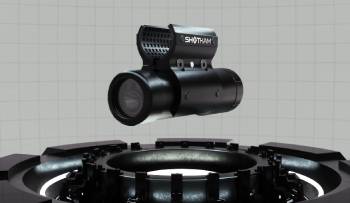
Pros of ShotKam: Why it leads in training
- Recoil-Activated Recording Logic: It features an internal accelerometer and gyroscope that intelligently detect when you close the action and pull the trigger: I found that this eliminates the need to manually start or stop recording: this results in a self-editing camera that only saves the highlights: I noticed that I never had to worry about running out of storage with “dead” air.
- Adjustable Video Reticle: It utilizes a patented system where you can align a crosshair or red dot to your gun’s exact point of aim via the app: I found this to be the most critical feature for identifying shooting errors: this provides a clear visual of whether you missed high, low, or behind: I noticed it revealed a slight cant in my mount that I never knew I had.
- Military-Grade Shock Absorption: It features a patented internal mechanism designed to handle the intense G-forces of a 12-gauge shotgun: I found the video remained perfectly steady during the shot: this results in crystal-clear footage where you can actually see the shot string traveling through the air: I noticed that other cameras often “vibrate” or blur during the peak of recoil.
- Internal Memory and High-Speed WiFi: It utilizes 128 GB of built-in storage and 6 Mbps WiFi for instant downloads to your phone: I found the connection to be very stable even in remote areas: this provides the ability to review your “misses” right at the range while the memory is still fresh: I noticed the download speeds were significantly faster than older generations.
- All-Day Battery Performance: It features a battery designed to stay in standby mode for up to 15 hours: I found that I could leave it on all day during a competition without charging: this results in a “set it and forget it” mentality: I noticed the Gen 4 model handled the cold weather much better than its predecessors.
Cons of ShotKam: The trade-offs for precision
- Premium Price Point: because the technology is so specialized and the build quality is military-grade: I found that the initial investment is significantly higher than most action cams: this results in a barrier for casual shooters who only get out once a year: I noticed that while it is expensive, the lack of a need for SD cards offsets the cost slightly.
- Limited Audio Range: because the camera is designed to prioritize the “bang” and protect the internal hardware from recoil: I found that you cannot record clear conversations or distant animal sounds: this provides a very narrow audio experience: I noticed that voices sound muffled or “slowed down” due to the frame rate.
- Heavier Barrel Weight: because it is made of solid aluminum and houses a large battery: I found that the 7.4-ounce weight was noticeable on the end of a lightweight upland gun: this results in a slight change to the balance of your swing: I noticed I had to practice with it on to ensure my muscle memory adapted.
- Narrow Field of View: because the lens is designed to mimic the human eye’s focus on a distant target: I found that it doesn’t capture much of the surrounding scenery or the shooter: this provides a “tunnel vision” effect in the videos: I noticed it is not the best tool for “vlogging” your entire hunting trip.
- Fixed Internal Battery: because the unit is sealed for waterproofing and shock resistance: I found that you cannot swap batteries in the field if you do run out of power: this results in the need for a portable power bank if you are on a multi-day trip without electricity: I noticed that charging takes about three hours to reach full capacity.
Pros and Cons of Tactacam: The hunter’s highlight reel
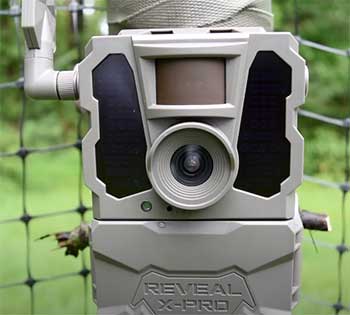
Pros of Tactacam: The hunter’s highlight reel
- One-Touch Operation with Vibration: It features a simple button that vibrates to let you know the camera is recording: I found this very intuitive even while wearing heavy winter gloves: this results in a quick start-up when an animal suddenly appears: I noticed the haptic feedback meant I didn’t have to look at the camera to know it was on.
- Superior Audio and Environment Capture: It utilizes a microphone that is better at picking up the “story” of the hunt: I found that I could hear the wind, the rustle of leaves, and my own whispers: this provides a much more immersive video for social media: I noticed it captured the “thwack” of a bow shot perfectly.
- Lightweight Polymer Construction: It features a design that only weighs about 4 ounces: I found that it barely affected the balance of my rifle or bow: this results in a more comfortable carry during long stalks: I noticed that I forgot it was even there after an hour of walking.
- Versatile Mounting Options: It utilizes a wide array of mounts for scopes, barrels, and even compound bows: I found it much easier to move between different weapon platforms: this provides a “universal” feel for the multi-season hunter: I noticed the underscope mount was particularly stable for long-range rifle shooting.
- Expandable SD Card Storage: It features a slot for external micro SD cards up to 128 GB or more: I found this convenient for swapping cards during a long trip: this results in the ability to record hours of continuous footage: I noticed that I could keep separate cards for different hunts to keep my files organized.
Cons of Tactacam: The drawbacks for serious shooters
- Lack of Aiming Reticle: because the camera is a general POV device rather than a training tool: I found that it was much harder to tell why I missed a shot: this results in videos that are fun to watch but not very educational: I noticed that without a crosshair, the target often looks like it’s just “somewhere” in the middle of the screen.
- Recoil Distortion and Shake: because it lacks a dedicated internal shock-absorption system comparable to the ShotKam: I found that the video would “jump” or blur significantly at the moment of impact: this provides a less professional-looking replay: I noticed that high-recoil slugs made the footage almost unwatchable for a split second.
- Manual Editing Required: because the camera does not have the intelligence to save only the recoil events: I found myself with 20-minute files of me just sitting in a tree stand: this results in hours of work at the computer to find the 10 seconds of action: I noticed that my hard drive filled up much faster than expected.
- Plastic Housing Durability: because the exterior is made mostly of reinforced polymers rather than metal: I found that it felt less “indestructible” than its competitors: this provides a slight worry if you accidentally drop your gun on a rocky surface: I noticed some wear and tear on the mounting threads after a few months.
- Shorter Continuous Battery Life: because it is designed for smaller bursts of recording rather than all-day standby: I found that the battery drained much faster if I forgot to turn it off: this results in needing spare batteries on hand for a full day of activity: I noticed the recording time drops significantly when using 4K at 60 fps.
Tactacam Vs. Other Brands
- Tactacam Vs. Stealth Cam
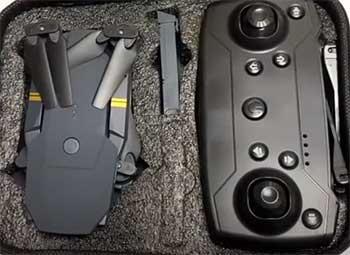
I found that when comparing the Tactacam to a Stealth Cam, you are looking at two very different philosophies of scouting.
You should realize that Stealth Cam is primarily known for trail cameras that sit on a tree and wait for motion.
I noticed that while Stealth Cam does make some action-style units, they don’t have the gun-specific mounting and stabilization that I found in the Tactacam.
I believe that the Tactacam is a much better choice for “point of view” action, whereas Stealth Cam is what you buy to see what’s happening at your feeder when you aren’t there.
I noticed that the Tactacam 6.0’s 4K video quality is significantly more tailored for high-speed movement than most stationary trail cams.
- ShotKam Vs. GoPro
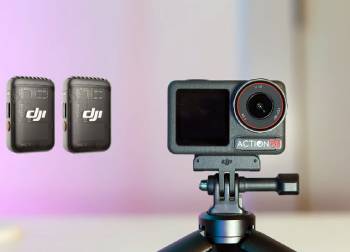
I found that many people try to use a GoPro as a barrel camera, but I noticed it fails almost immediately in the recoil department.
You should realize that a GoPro has a fish-eye lens that makes a 40-yard target look like it’s a mile away.
I noticed that the ShotKam’s magnification and narrow field of view are designed specifically for the distance of a typical shot.
I believe that the ShotKam’s recoil-activated logic is a massive upgrade over the GoPro’s manual “record” button.
I noticed that the GoPro will often shut down or corrupt the file if the recoil is too heavy, which I found never happens with the ShotKam.
Frequently Asked Questions (FAQs)
Tactacam is better for POV barrel-mounted action, while Stealth Cam is superior for stationary trail monitoring and scouting.
ShotKam is best for clay shooting (trap, skeet, sporting clays) and bird hunting where you need to analyze your lead and form.
ShotKam is a USA-based company and primarily ships from its headquarters in Florida.
Yes, but it is limited to the sound of the shot and the action; it is not designed to record high-quality ambient conversation.
Final Thoughts
You should buy the ShotKam if your main goal is to improve your shooting scores and understand exactly why you are missing targets.
I have found that for most of you, the Tactacam is the better choice if you are a hunter who wants to capture the thrill and story of the hunt for entertainment.
I believe that as long as you match the camera to your specific intent, you will be incredibly happy with the high-definition memories you capture.
I hope this helps you make the right choice for your next trip to the range or the woods!