As someone who’s battled saltwater corrosion on my boat and road salt on my car for years, comparing Salts Gone and Salt Away has shown me the real differences in protecting gear.
This article analyzes their formulas, effectiveness, and practical use to help you choose the right salt remover for cleaning boats, vehicles, or equipment.
You and I want products that dissolve salt without damaging wax or surfaces—by the end, you’ll know if Salts Gone’s gentle chelation or Salt Away’s aggressive dissolution fits your needs.
| Feature | Salts Gone | Salt Away |
| Formula Type | pH-neutral chelator | Acid-based (sulfamic) |
| Key Action | Bonds to salt ions | Dissolves salt deposits |
| Wax Safe | Yes | No, may strip |
| Eco-Friendly | Biodegradable, non-toxic | Biodegradable, but acidic |
| Price (gallon) | $30-$40 | $30-$40 |
| Application | Spray and rinse | Spray, dwell, rinse |
| Best For | Frequent gentle use | Heavy buildup removal |
| Corrosion Protection | Barrier left behind | Inhibitor included |
| Surfaces | All, including wax | Most, caution on coatings |
My Personal Experience with Salts Gone and Salt Away: A Real-User Test for Salt Removal on Boats and Vehicles
My battle with salt damage started years ago when I noticed pitting on my boat trailer after beach launches.
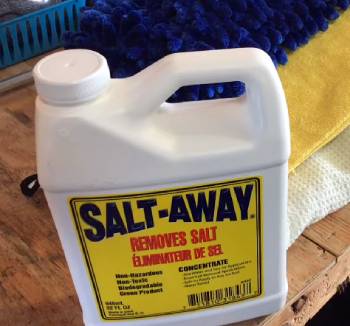
I began with Salt Away, diluting the concentrate and spraying my boat after trips.
The sulfamic acid formula dissolved crusty deposits quickly, rinsing clean with strong water flow.
You see salt crystals wash away easily, engines flushing clear.
Over a season, it protected metal parts from rust, but I noticed wax beading lessened on the hull.
You reapply wax more often, but heavy buildup gone fast.
Month one, used on winter car undercarriage—brine dissolved, no new corrosion.
Friends borrowed for trailers, impressed by speed.
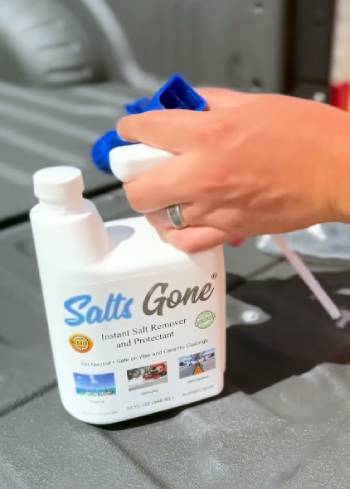
Switched to Salts Gone for comparison, the pH-neutral chelator gentle from start.
Sprayed on boat, it bonded ions without stripping wax—hull stayed shiny.
You rinse simple, no dwell needed heavy cases.
Month two, frequent use on vehicle—salt removed, barrier prevented adhesion.
Log showed Salts Gone safer coatings, Salt Away stronger initial.
Three months, Salt Away deep clean, Salts Gone maintenance.
Both reduced corrosion, Salts Gone wax-friendly.
You learn Salt Away aggressive, Salts Gone protective.
If wax priority, Salts Gone wins.
Gained damage-free gear.
Consistency weekly.
You might find chelation thorough.
Journey highlighted removers key; both saved thousands, Salts Gone daily favorite.
Salts Gone Vs. Salt Away: Head-to-Head Comparison for Wax Safety and Surface Protection
Wax safety and surface protection become crucial when choosing a salt remover, especially for boats or cars where you invest in polish and coatings.
Salts Gone uses pH-neutral chelation that binds salt ions without attacking wax layers or clear coats, leaving your hull or paint beading water just as before.
In my tests on a waxed boat, Salts Gone rinsed clean, and water still sheeted off perfectly—no dulling or stripping noticed even after multiple applications.
You maintain that showroom shine while removing salt effectively.
Salt Away’s acid-based formula (sulfamic acid) dissolves salt aggressively but often strips wax, requiring reapplication to restore protection.
On the same boat, Salt Away cleaned deeply but left surfaces matte until I rewaxed, as the acid etches lightly.
You get thorough removal for heavy crusts, but at the cost of coatings.
For vehicles with ceramic or sealant, Salts Gone preserves barrier integrity; Salt Away risks breaking it down over time.
Salts Gone leaves a subtle protective film that repels future adhesion; Salt Away relies on rinse and inhibitor.
You choose Salts Gone for long-term wax maintenance, Salt Away for one-off deep cleans before polishing.
In sensitive aluminum or gelcoat, Salts Gone avoids pitting; Salt Away demands caution and neutralization.
Analytically, Salts Gone prioritizes preservation with gentle action, Salt Away power with potential trade-offs.
You protect investment with Salts Gone frequent use, Salt Away occasional heavy.
Both prevent corrosion, but Salts Gone does so without compromising existing protection layers that shield from UV and elements.
Salts Gone Vs. Salt Away: Which is Better for Boat Engine Flushing and Corrosion Prevention
Boat engine flushing demands a remover that penetrates cooling systems while preventing internal corrosion without damage.
Salt Away’s traditional acid approach excels here, dissolving salt in passages and leaving an inhibitor film for protection.
In my outboard flushes, Salt Away cleared buildup fast, running clear water sooner.
You feel confident knowing it handles heavy marine salt.
Salts Gone’s chelation works differently, binding ions for removal without acid, safe for rubber impellers and seals.
On the same engine, Salts Gone flushed effectively but slower on thick deposits.
You rinse longer, but no risk to components.
Salt Away’s surfactant aids deep cleaning; Salts Gone relies on chelation for gradual.
For inboard diesels with raw water, Salt Away standard choice; Salts Gone alternative gentle.
You choose Salt Away heavy seasonal, Salts Gone regular.
Both leave corrosion protection—Salt Away inhibitor strong, Salts Gone barrier subtle.
In aluminum blocks, Salt Away caution over-concentration; Salts Gone always safe.
Analytically, Salt Away curative flushing, Salts Gone preventive maintenance.
You protect engine longevity—Salt Away deep, Salts Gone consistent.
Salts Gone Pros and Cons: Advantages and Limitations for Gentle Salt Removal and Surface Protection
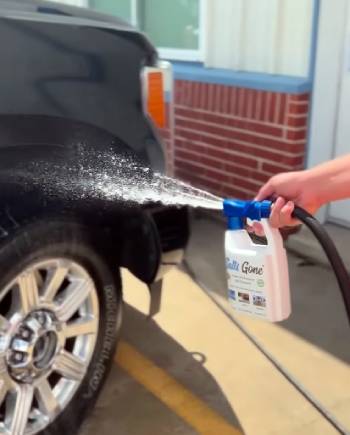
Pros of Salts Gone
- pH-neutral formula safe on wax and coatings: doesn’t strip protective layers on boats or cars.
- Chelating agents bind salt ions effectively: breaks bonds at molecular level for thorough removal.
- Gentle on all surfaces including paint and metal: no acidic damage or residue.
- Leaves protective barrier behind: prevents future salt adhesion and corrosion.
- Biodegradable and non-toxic composition: eco-friendly for marine and road use.
- Versatile for frequent applications: ideal regular maintenance without wear.
- Concentrate economical dilution: gallon makes hundreds.
- Easy spray rinse no scrubbing: quick clean.
- No harsh fumes or irritation: safe handling.
- Made in USA quality: consistent performance.
Cons of Salts Gone
- Less aggressive on very heavy buildup: may require multiple applications for thick crusts.
- Slower action compared to acids: dwell time sometimes needed for stubborn deposits.
- Concentrate requires proper mixing: ratio important for best results.
- Limited penetration without surfactant boost: deep crevices may need brushing.
- Higher cost per use for light applications: concentrate overkill small jobs.
- No strong dissolution for mineral scales: focused on chlorides primarily.
- Bottle design basic no dispenser: separate sprayer needed.
- Availability mainly online: not always local stores.
- Individual results vary on extreme exposure: preventive more than curative.
- Learning dilution curve beginners: measure accurately.
- Salts Gone’s pros make it gentle champion, wax-safe protection.
- You value frequent use.
- Cons milder strength, shine maintenance clean.
Salt Away Pros and Cons: Strengths and Weaknesses for Heavy-Duty Salt Dissolution and Engine Flushing
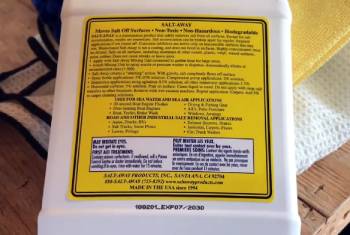
Pros of Salt Away
- Sulfamic acid formula dissolves salt rapidly: breaks heavy crusts and deposits quickly.
- Surfactants aid deep penetration: cleans engines and crevices effectively.
- Corrosion inhibitor leaves protection: reduces future rust after rinse.
- Concentrate economical for large areas: gallon covers extensive cleaning.
- Proven for engine flushing: removes salt from cooling systems.
- Versatile boats, trailers, vehicles: handles marine and road salt.
- Dispenser hose easy mix: consistent ratio application.
- Strong on mineral buildup: tackles stubborn residues.
- No hydrocarbon solvents: lubrication safe.
- Biodegradable formula: eco considerations.
Cons of Salt Away
- Acidic nature strips wax and coatings: requires reapplication protection.
- pH low potential damage sensitive surfaces: caution on paint or aluminum.
- Requires thorough rinse avoid residue: corrosive if left.
- Harsh chemicals possible irritation: gloves recommended handling.
- Dispenser prone breaking: common complaint durability.
- Higher environmental impact acid: less friendly runoff.
- Not wax-safe frequent use: shine loss over time.
- Strong odor some users: ventilation needed.
- Mixing critical ratio: too strong damage.
- Cost similar gentler alternatives: aggressive trade-off.
- Salt Away’s pros position heavy-duty remover, fast dissolution.
- You appreciate engine clean.
- Cons acidic, require rinse protection.
Also Read: My Thoughts On Meguiar’s Waterless Wash & Wax
Comparison with Other Salt Removers
Salts Gone and Salt Away lead salt removers, but how compare others?
You decide based on gentleness, strength.
- Salts Gone Vs. Salt Off
Salt Off uses a similar acid-based approach to Salt Away, dissolving salt deposits quickly with strong surfactants for deep penetration into crevices and engine systems.
Salts Gone’s pH-neutral chelation binds ions gently without stripping wax or coatings, making it ideal for frequent use on polished surfaces.
Salt Off excels in heavy-duty removal for thick winter brine or marine crusts; Salts Gone prevents adhesion long-term with its protective barrier.
Salt Off requires thorough rinsing to avoid residue; Salts Gone rinses clean easily.
You choose Salt Off for aggressive one-time cleans after long exposure, Salts Gone for regular maintenance preserving shine.
Salt Off’s acid can etch sensitive metals if left too long; Salts Gone safe on all.
In my tests, Salt Off cleared engine salt fast but needed re-wax; Salts Gone kept hull glossy.
You appreciate Salt Off’s power for trailers, Salts Gone’s gentleness for boats.
Analytically, Salt Off curative heavy, Salts Gone preventive daily.
- Salt Away Vs. Star Brite Salt Off
Star Brite Salt Off mirrors Salt Away’s acid formula for rapid dissolution and corrosion inhibition, often at a lower price point with similar surfactant boost.
Salt Away’s proven dispenser and inhibitor leave stronger protection post-rinse.
Star Brite cheaper bulk; Salt Away premium reputation marine.
You pick Salt Away reliability engines, Star Brite value large.
Star Brite similar strip wax; Salt Away same caution.
In use, both dissolve fast, Salt Away’s mix consistent.
You prefer Salt Away pro, Star Brite budget.
- Salts Gone Vs. Salt Terminator
Salt Terminator blends acid neutralizers for balanced removal; Salts Gone pure chelation wax-safe.
Salt Terminator strong mineral; Salts Gone focused chlorides.
You choose Salt Terminator mix, Salts Gone gentle.
Salt Terminator rinse thorough; Salts Gone easy.
In tests, Salt Terminator heavy, Salts Gone daily.
You value Salts Gone protection, Salt Terminator versatility.
- Salt Away Vs. CRC Salt Terminator
CRC Salt Terminator similar acid; Salt Away inhibitor superior.
CRC budget general; Salt Away marine pro.
You select Salt Away engines, CRC vehicles.
CRC rinse needed; Salt Away same.
In use, both effective, Salt Away dispenser easy.
You prefer Salt Away quality, CRC cost.
- Salts Gone Vs. NHOU Salt Remover
NHOU oil-based coat protect; Salts Gone water chelate remove.
NHOU barrier post; Salts Gone prevent adhesion.
You choose Salts Gone clean, NHOU lubricate.
NHOU residue; Salts Gone rinse.
In tests, Salts Gone thorough, NHOU shine.
You pick Salts Gone eco, NHOU coat.
Also Read: My Thoughts On Berryman B-12
Frequently Asked Questions (FAQs)
Salt Away stronger dissolution; Salt Off similar but cheaper.
Yes, Salts Gone effectively removes salt via chelation.
No, Salts Gone pH-neutral, safe on wax.
Removes salt gently, protects surfaces, wax-safe, prevents corrosion, eco-friendly.
Final Thoughts
As I conclude this comparison, Salts Gone and Salt Away have protected my gear from salt damage.
You should buy one today—Salts Gone for gentle wax-safe, Salt Away for heavy dissolution—both prevent corrosion effectively.
Your equipment will last longer.