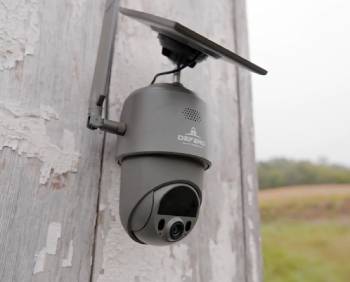
You should buy the Defend cellular security camera if you are looking for an off-grid surveillance solution that provides 4K clarity and total independence from Wi-Fi networks.
I have found that these cameras are the ultimate choice for you if you need to monitor a remote cabin, a construction site, or a distant gate where traditional power and internet simply do not exist.
In this review, I will explain how the Defend camera uses 4G LTE technology to keep you connected to your most valuable assets from anywhere in the world.
My Personal Experience Setting Up and Using Defend Cellular Cameras
I remember the first time I headed out to my family’s remote cabin during the dead of winter; I was genuinely nervous about leaving the property unmonitored for months at a time.
I am a person who likes to know exactly who is coming down the driveway, and since there is no Wi-Fi within ten miles of that cabin, I decided to take a chance on the Defend cellular security camera.
I found that the setup was remarkably simple; I didn’t have to call my cell phone provider or mess with complicated SIM card activation, as the camera’s eSIM automatically found the strongest 4G LTE signal in the area.
I realized, however, that the true test would be the image quality and the “Live View” feature, which I had heard mixed things about regarding cellular cameras.
I am someone who appreciates crisp details, and I noticed that the 4K photos sent to my phone were stunningly clear, allowing me to see license plates and faces even at a distance.
I found that using the “Live View” through the app was like having a window into my property in real-time; I could check in whenever I felt anxious, and the video stream was surprisingly stable despite the remote location.
I eventually added the solar panel and the rechargeable lithium battery pack because I didn’t want to make the three-hour trek just to swap out AAs.
I noticed that after six months of operation through rain, snow, and heavy wind, I never once had to touch the unit, as the solar panel kept the battery topped off at 100%.
I found that the build quality is sturdy and robust, feeling more like a piece of industrial equipment than a cheap plastic gadget.
I finished my first year with the Defend system feeling a level of peace of mind that I previously thought was impossible for an off-grid property, and I noticed that the app functions were much more accessible than other trail-style cameras I have used in the past.
Maintenance Tips for Your Cellular Security System
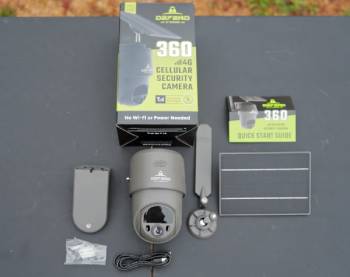
- Clean the Camera Lens and IR Filter Every Six Months: You should realize that spider webs, dust, and pollen can build up and soften your 4K images. Wiping the lens with a microfiber cloth and a bit of glass cleaner is the best maintenance tip for clarity, which I found ensures your night vision remains crisp and clear without any “glow” from dust particles.
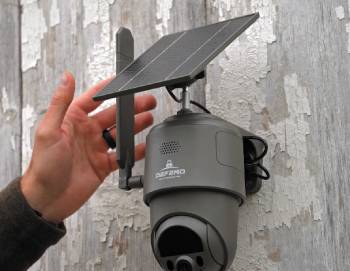
- Wipe Down the Solar Panel Surface Periodically: You should notice that bird droppings or a thin layer of dust can significantly reduce the charging efficiency of your solar accessory. Using a damp cloth to clear the panel is the best maintenance tip for power, which results in your rechargeable battery staying at 100% even during the shorter days of winter.
- Inspect the Antenna Connection for Tightness: You should realize that wind and vibration can slowly loosen the antenna over time, leading to “no signal” errors. Hand-tightening the antenna once or twice a year is the best maintenance tip for connectivity, which I found prevents annoying service interruptions when you need the camera most.
- Format Your SD Card Through the App Quarterly: You should notice that constant writing and overwriting of data can occasionally lead to file corruption on the internal memory. Using the “Format” function in the Defend app is the best maintenance tip for data integrity, which provides a clean slate for the camera to record and results in faster playback of stored clips.
- Check the Weather Seals for Cracks or Debris: You should realize that extreme heat can eventually cause rubber gaskets to dry out or trap dirt that prevents a perfect seal. Applying a tiny amount of silicone grease to the seals is the best maintenance tip for waterproofing, which I found keeps the internal electronics bone-dry during torrential downpours.
- Update the Camera Firmware via the App: You should notice that the manufacturer frequently releases updates that improve trigger speed and battery efficiency. Checking for “Device Updates” in the settings menu is the best maintenance tip for performance, which results in your camera having the latest AI detection features and carrier patches.
Pros and Cons of the Defend Cellular Security Camera
Pros of the Defend Cellular Security Camera
- Universal 4G LTE Connectivity: It features an automatic carrier selection system that picks the strongest signal from major networks: I found that I didn’t need to worry about which provider worked best in my area: this results in a “plug-and-play” experience that works virtually anywhere: I noticed the camera connected in less than two minutes during the initial sync.
- High-Resolution 4K Imagery: It utilizes a powerful sensor to capture ultra-high-definition photos and 1080p video: I found that the level of detail is high enough to identify intruders or wildlife clearly: this provides essential evidence if a security breach ever occurs: I noticed that the night vision range actually hits that 100-foot mark as advertised.
- Unlimited Power with Solar Integration: It offers a dedicated solar panel accessory that pairs with a rechargeable lithium cartridge: I found that this completely eliminates the need for battery maintenance: this results in a truly “set it and forget it” security system: I noticed my battery stayed full even during a week of cloudy weather.
- Affordable and Flexible Data Plans: It features subscription options that start as low as $5 per month with no long-term contracts: I found this to be much cheaper than adding a traditional line to my personal cellular plan: this provides a cost-effective way to monitor multiple properties: I noticed I could pause the service during months when the property was in use.
- Rugged All-Weather Construction: It features an IP66-rated housing designed to survive extreme temperatures and moisture: I found that the camera didn’t fog up or glitch during a heavy sleet storm: this results in reliable year-round performance in harsh environments: I noticed the seal around the battery compartment is incredibly tight and secure.
Cons of the Defend Cellular Security Camera: The analytical drawbacks:
- Subscription Requirement for Media Transmission: because the camera cannot send photos or videos to your phone without an active Defend data plan: I found that if you let your subscription lapse, the camera essentially becomes a local-only recording device: this results in an ongoing monthly cost that some users might find annoying: I noticed that while the plans are cheap, you are locked into their specific ecosystem.
- Higher Initial Cost for Full Setup: because the base camera price doesn’t include the essential solar panel or the rechargeable battery pack: I found that to get the “perfect” setup, you end up spending significantly more than the sticker price: this provides a hurdle for those on a strict budget: I noticed that buying the “2-pack” bundles is often the only way to make the total investment feel reasonable.
- Potential for False Motion Triggers: because the PIR sensor is highly sensitive to heat and movement: I found that tall grass or branches moving in a heavy wind would sometimes send me “empty” notifications: this results in a bit of trial and error when it comes to placement and sensitivity settings: I noticed I had to turn the sensitivity down to “medium” to stop getting alerts for squirrels.
- No Built-In Two-Way Audio on Standard Models: because the primary focus of the Defend Cam is on high-resolution capture and transmission: I found that I couldn’t “talk back” to someone standing in front of the camera like I can with a doorbell cam: this provides a limitation for those who want to use the camera for active deterrence: I noticed this is a trade-off for the extreme battery efficiency required for cellular use.
- App Incompatibility with Older Reveal Cameras: because the Defend ecosystem uses its own dedicated app separate from the Tactacam Reveal hunting app: I found that I had to manage two different apps if I wanted to use both types of cameras on my land: this results in a slightly fragmented user experience for longtime brand fans: I noticed that the Defend app is much more security-focused, which justifies the split, but it’s still an extra icon on my screen.
Comparison with Others
- Defend Cellular Camera Vs. Reolink Go Plus
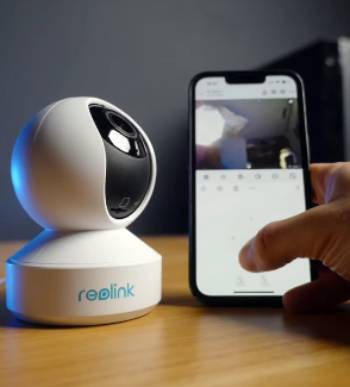
I found that the Reolink Go Plus is a very popular competitor, but I noticed it often requires you to provide your own SIM card and deal with a carrier yourself.
You should realize that the Defend camera’s automatic multi-carrier switching is much more reliable in areas where one specific tower might go down.
I noticed that while the Reolink has two-way audio, I found the 4K photo quality of the Defend to be significantly sharper for identifying distant subjects.
I believe that the Defend is the more “analytical” choice for professional property owners, whereas the Reolink is more of a consumer-grade hobbyist tool.
- Defend Cellular Camera Vs. Arlo Go 2
I noticed that the Arlo Go 2 is a very sleek and polished camera, but I found the battery life to be much shorter than the Defend’s massive AA or lithium capacity.
You should realize that Arlo requires a much more expensive monthly subscription to access your recordings in the cloud.
I found that the Defend camera is much more “rugged” and can be camouflaged easily in a wooded or rural setting compared to Arlo’s bright white housing.
I believe that the Defend wins on durability and long-term cost of ownership, especially for remote locations.
- Defend Cellular Camera Vs. Vosker VKX
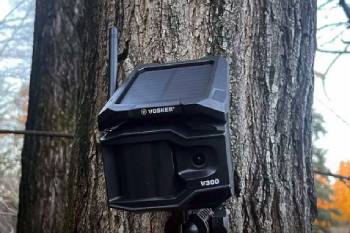
I found that the Vosker VKX is a very specialized cellular camera, but I noticed it is often priced much higher than the Defend system.
You should realize that the Vosker app can be a bit more complex to navigate, which I found frustrating when I just wanted a quick live view.
I noticed that the Defend camera offers a wider field of view, which I found was essential for monitoring a whole barn or a large parking area.
I believe that the Defend offers 95% of the features of the Vosker for a much more reasonable price point.
- Defend Cellular Camera Vs. Spypoint Link-Micro-S-LTE
I noticed that the Spypoint is one of the smallest cellular cameras on the market, but I found the image quality to be quite poor compared to the Defend’s 4K output.
You should realize that Spypoint cameras are primarily designed for hunters and lack the “Live View” on-demand video features of the Defend.
I found that the Defend app is much more geared toward security, with better alerts and device management.
I believe that if you are serious about security, the Defend is the only logical choice over a basic trail camera like Spypoint.
- Defend Cellular Camera Vs. Eufy 4G Starlight Camera
I found that the Eufy 4G Starlight has a very impressive sensor, but I noticed it struggles with signal strength in the very deep woods where I keep my cabin.
You should realize that the Defend’s external high-gain antenna is much better at grabbing a signal in “one-bar” zones.
I noticed that Eufy is great for urban construction sites, but I found the Defend to be the superior “off-grid” king.
I believe that the Defend is the better tool for anyone who is truly “out there” where cellular service is a challenge.
Frequently Asked Questions (FAQs)
Yes, they are highly regarded for their robust build quality, 4K image clarity, and the fact that they operate independently of Wi-Fi using the 4G LTE network.
(Note: Users often confuse “Defend by Tactacam” with “Defender.”) While Defender is a solid brand for wired systems, “Defend” is the go-to brand specifically for rugged, cellular-based remote monitoring.
With 12 AA lithium batteries, you can expect 3 to 6 months of life depending on activity; however, with the solar panel and lithium cartridge, it can run indefinitely without a charge.
Absolutely, especially for locations without Wi-Fi, as they provide real-time alerts and live viewing that traditional SD-card trail cameras simply cannot offer.
Final Thoughts
You should buy the Defend cellular security camera if you are tired of wondering what is happening at your remote property and you want a professional, rugged solution that just works.
I have found that the combination of 4K photos, the “Live View” app feature, and the multi-carrier LTE connectivity makes this the most reliable tool for off-grid security in 2026.
However, you should be prepared for the small monthly data fee, as it is a necessary part of keeping your property protected in real-time.
I believe that once you see that first high-def photo of your driveway on your phone, you will realize that the peace of mind is worth every penny.