
Have you ever found yourself in a dilemma between two insanely similar products?
Well, I know the feeling. Deciding between Hensley arrow and ProPride can be just as overwhelming.
The main difference between the two hitches is that the ProPride 3P has an adjustable hitch bar that matches any towing vehicle, while the Hensley comes with a solid component. Let’s get this show on the road and explore the distinctions between these two hitches.
Shall we?
Brief Comparison Table
| Specifications | Hensley Arrow | ProPride |
| Hitch bar | Firm | Adjustable |
| Cost | Higher | Lower |
| Weight distribution jacks | On top | Outside |
| Performance | Good | Excellent |
| Flexibility | Higher | Slightly lower |
| Installation | Drilling | No drilling |
| Weight | 190 lbs | 195 lbs |
Key Differences Between ProPride And Hensley Arrow
- Hitch bar
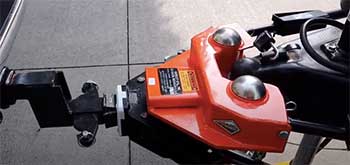
The most significant difference between the two brands is the hitch bar.
So when picking one, you can base your choice on that factor.
ProPride comes with an adjustable hitch bar.
This means that the tow vehicle and trailer heights can be matched, saving you time and money if a different offset is needed while switching tow vehicles or trailers.
On the other hand, the Hensley arrow has a firm hitch bar. This feature allows you to control trailer sway without any friction whatsoever.
However, if you’re looking for zero sway, then Hensley, without a doubt, is the way to go.
Also Read: Differences Between Reese Goose Box And Gen-Y Hitch.
- Cost
This is a sensitive factor to most people (me included) since it usually goes down. Is it worth the price?
Hensley arrow is a bit pricier as compared to ProPride. The hitch does the best job at eliminating sways, so definitely worth the money.
However, 3P is the significantly improved model with excellent performance, yet the cost is lower.
Having said that, if you’re on a budget, you might want to opt for ProPride; it has so many upgraded and unique features.
- Weight Distribution Jacks
Another not-so-prominent difference, yet the crucial difference, is the hitches’ weight distribution jacks.
The weight distribution jacks hang outside the frame for the Hensley arrow. On the other hand, they sit on top of the frame regarding the 3P hitch. This provides better leverage for the spring bars by ensuring they’re permanently fixed so you can control the weight distributed to the tow vehicle.
In terms of effective weight distribution, I would say go for the 3P hitch because it’s better adapted.
- Performance
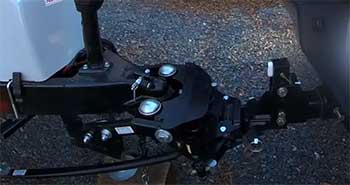
One thing for sure is that the ProPride hitch will always be a step ahead in performance. So, why I’m I saying this?
ProPride is the advanced version of Hensley that came with significant exquisite features and innovations.
For example, when it comes to weight distribution hitch location, there is more leverage and absolutely no possibility of bending the pin.
Even better, the 3P contains a one-piece yoke that holds the hitch head firmly to the front of the trailer to eradicate pivoting.
Considering all this, if you want the best out of your hitch, then ProPride should be your pick with no second thoughts.
- Flexibility
There is a slight difference in flexibility between these two hitches, which may not be as impactful as the others.
So, are you looking for a hitch that will give you more flexibility? Worry not because Hensley has your need covered.
With Hensley, you can easily take the hitch on and off and smoothly transfer it from an old trailer to a new one.
Also, you can easily make free and easy turns with no fear. It all comes down to your personal needs.
- Installation
Another comparison factor is the installation process.
When using Hensley, you must drill into the frame while setting it up. In contrast, you don’t have to drill in 3P, which is so much easier and more convenient.
You have to remove any hardware attached to your trailer if any, and then move to set up the hitch bar.
If you’re thinking of an easy installation technique, then a 3P hitch is the winner. you.
- Weight
The difference in the weights of the two hitches is quite tiny.
Hensley arrow weighs 190 lbs while ProPride weighs 195 lbs.
As I said, the difference is minor, but still something you can consider again, based on your personal needs.
If you’re looking for a lighter hitch and any additional weight is significant, then.
Hensley will work for you.
Also Read: Is Andersen Weight Distribution Hitch Worth It?
Pros of The Hensley Arrow
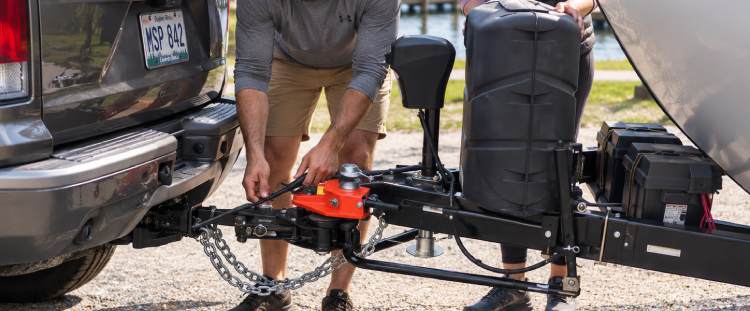
- Higher current capacity ceiling: If I am shopping for a heavy travel trailer and I want published headroom, the Ultimate Hensley Arrow’s 16,000 lb / 1,600 lb figures are the strongest plus on the spec sheet.
- Sway elimination that does not depend on pad friction: I do not want my safety plan to fade when the pads glaze or the weather changes. Mechanical lockout is the point.
- Often a lower purchase price than the current ProPride Hitch: A few hundred dollars is not everything, but it is not nothing when the hitch already costs more than some used cars I have owned.
- Strut design you can see and adjust: I like hardware I can inspect. Struts that square the head give me a visual check during walk-around.
- Fixed-bar option if you want less complexity: Not every owner needs an adjustable bar. A known truck-and-trailer pair can live happily on a fixed bar.
- Current no-drill path and a claimed 90-minute install window: The modern package closed one of the old objections. You are not automatically committed to drilling the A-frame.
- Made in the USA with long market history under the Hensley Arrow name: The name has been in campgrounds for decades. That does not prove your particular unit is perfect, but it means parts, knowledge, and used examples exist.
- Fifth-wheel-like tracking on the highway: The pro that owners repeat is simple: you stop bracing for the next gust. That mental quiet is worth money if you tow often.
Cons of The Hensley Arrow
- Still a very expensive hitch compared with friction systems: You can buy a respected 4-point friction hitch for a fraction of the price. The Hensley Arrow only makes sense if sway elimination, not sway damping, is the goal.
- Heavy hardware that adds to tongue and handling weight: About 190 lb is a lot of steel hanging on the coupler area. You must count it in payload and hitch-weight math.
- Learning curve on hookup and backing: You back the bar into a box, match angles with jacks, and close latches. It is not a drop-the-ball-and-go coupler. The first month includes some muttering.
- Older reputation for drilling still follows the name: Even if the current Ultimate Hensley Arrow uses no-drill brackets, you will still hear stories from earlier installs. That noise can confuse a first-time buyer.
- Fixed bar on some packages can be a pain if you change vehicles: If you buy the simpler bar and then lift the truck, you may be shopping for a different bar sooner than you wanted.
- Sits farther back, so chains and cords may need extensions: This is a small con that becomes a real one in a dark rest area when the 7-way does not reach.
- Premium price does not remove the need for correct loading: The hitch will not save a trailer with 400 lb of tongue weight and a cargo-loaded rear bumper.
Pros of The ProPride Hitch
- Adjustable hitch bar is part of the core product: I rank this as the friendliest long-term feature. Trucks change. Trailers change. An adjustable bar absorbs some of that chaos.
- One-piece yoke aimed at zero slop on the ball: If the design does what the company describes, you get a cleaner lockout during hard braking and fewer chances for the coupler to start a yaw.
- No-drill brackets as a long-running standard: You are not betting that this year’s brochure remembered to fix last decade’s install complaint. The bolt-on story has been consistent.
- Thicker links and a refined box if you care about structure: I like knowing the control links are specified at 3/4 inch. That is a pro you can measure.
- Precise jack-based weight distribution: Dialing in load transfer without lying on the ground wrestling chains is a quality-of-life pro that you feel every travel day.
- Lifetime warranty and a parts ecosystem: Locks, lot bars, extra bars, bushings, and service parts exist. A hitch this costly needs a spare-parts path.
- Same family of geometry as the Hensley Arrow, with later hardware choices: You are not leaving the Jim Hensley idea. You are buying the generation that added the adjustable bar and yoke changes.
- Highway manners that owners describe as flat and quiet: The pro that sells the hitch is the same as its rival: passing trucks become a non-event.
Cons of The ProPride Hitch
- Higher typical street price: You pay more up front than the current Hensley Arrow package in most comparisons I ran. You need to want the specific hardware upgrades.
- Lower published max rating than the Ultimate Hensley Arrow: 14,000 lb and 1,400 lb will cover a huge number of travel trailers. It will not cover every new luxury bumper-pull that is creeping toward the top of Class IV.
- Nearly 195 lb of hitch to mount, move, and weigh: Same problem as the Hensley Arrow, plus a few pounds. If you unhitch and store the head, you are lifting gym weight.
- Hookup is still a process: Adjustable bar or not, you are aligning a large box, setting jacks, and thinking about extensions. It rewards patience and punishes rushing.
- Extra length behind the bumper: You may need longer chains, a longer 7-way, and a breakaway extension. Forget that once and you are in a parts store on a Saturday.
- Overkill for light, occasional towing: If you move a small trailer four times a year on calm roads, this hitch is a lot of money and mass for the job.
- Brand comparisons can sound like a family argument: Because both products descend from the same inventor, the marketing on each site can feel pointed. You have to filter that and look at the parts.
Which Hitch Is Better For You?
Now, let’s get to the bottom of it. Which hitch should you choose?
The good news is we can solve this dilemma by considering the two most significant factors; individual needs and performance.
If you’re looking for a flexible hitch that will eliminate sway with no friction whatsoever, then Hensley is ultimately the best option.
Other than that, I would say that ProPride is undoubtedly the perfect option for cost, performance, convenience, and greater weight distribution.
So now the ball is on your court. You can pick the hitch that ticks your boxes depending on your preference.
Also Read: Blue Ox Or Roadmaster Tow Bars?
Frequently Asked Question (FAQ)
The Hensley arrow weighs approximately 190 lbs.
The total weight of a ProPride hitch is 195 lbs.
The ProPride 3P works by setting a virtual pivot location close to the tow vehicle’s rear axle such that the vehicle’s pivot is not at the hitch ball when there is force.
Hensley arrow is the only kind of hitch that can eliminate trailer sway with absolutely no friction.
Conclusion
To wrap up the comparison between Hensley arrow and ProPride hitch, I can gladly say that the 3P is the better option based on performance. Since it comes with various innovations and magnificent features, it will yield better results.
Also, if you’re on a budget, you might want to consider this hitch. But if flexibility as a factor is top in your mind, then ProPride should be your to-go-to hitch.
Having owned and towed with both, I vote Hensley Arrow over the P3. The yoke makes fine adjustments very challenging compared to the Arrow’s strut bars. And since the yoke mount is only held by the u-bolts, it can shift during use. This is supposed to be a “safety factor” built into the hitch. The Arrow never has never shifted, bent or sheared off one of the bolts. Lastly, Hensley is now offering an adjustable stinger with their hitch also. Your article did not mention that Hensley offers free exchanges for the hitch bars when you purchase your hitch from them.